 Snohomish
 Siding in Monroe: A Different Set of Problems Than the City
Monroe sits in the Skykomish River valley, east of the more built-up parts of Snohomish County, where the terrain opens into farmland, foothills, and newer subdivisions pushing out from the historic downtown core. Homes here run the full spectrum — century-old farmhouses, 1970s ranch-style houses on acreage, and newer developments built in the last fifteen years. What they share is exposure to a valley climate that's wetter and shadier than people expect, with weather patterns pulling moisture up from the Puget Sound lowlands and dumping it against tree lines, north-facing walls, and low-lying lots near the river.
That combination — driving rain, marine air moving through the valley, and long stretches where a wall or roofline simply doesn't dry out between storms — is hard on a house exterior. It's the reason siding choice in Monroe isn't just a cosmetic decision. The wrong product, or a right product installed poorly, shows its weaknesses here faster than it would in a drier part of the state.
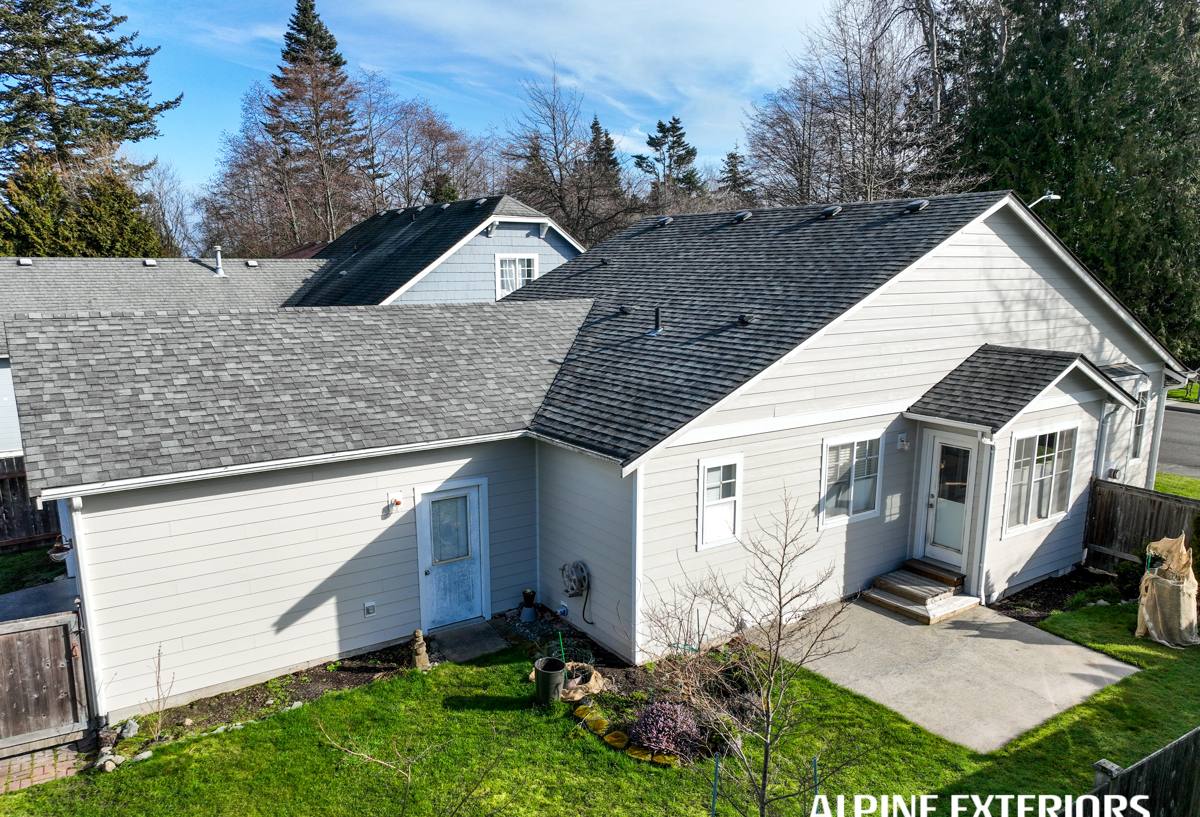
What the Local Climate Actually Does to a House
Moss and Sustained Moisture
Snohomish County runs a long moss season — often eight months or more where conditions favor growth on any surface that stays damp and shaded. Roofs get the most attention, but moss and algae will colonize siding too, especially on the north and west elevations of homes tucked against trees or hillsides, which describes a lot of Monroe properties. Moss holds water against a wall surface long after the rain has stopped, which is exactly the condition that rots wood-based siding and stresses caulk and flashing details.
Driving Rain and Wind-Driven Wet
Storms coming through the valley aren't always straight-down rain. Wind pushes water sideways into seams, laps, and trim intersections — the places where a siding system either sheds water correctly or slowly lets it in. Gable ends and upper stories catch the worst of it. This is where installation detail (proper overlaps, correctly flashed windows and doors, sealed penetrations) matters as much as the siding material itself.
Freeze-Thaw Swings
Monroe sees more genuine cold snaps than areas closer to the Sound, since the valley traps cold air on clear winter nights. Materials that absorb moisture and then freeze are prone to cracking, splitting, and delamination over repeated cycles. A siding product's ability to resist water absorption in the first place — not just shed rain on the surface — determines how well it survives a Monroe winter.
Why We Only Install James Hardie Fiber Cement
We made a deliberate decision years ago to install one siding system: James Hardie fiber cement. We don't offer vinyl, LP SmartSide, Cemplank, Allura, primed spruce, or cedar as alternatives, and we think homeowners deserve to know why before they hire us.
Fiber cement is a mix of cement, sand, and cellulose fibers, engineered specifically to resist the failure modes above:
- Non-combustible — it carries a Class A fire rating, which matters given wildfire smoke seasons that have become more common east of the I-5 corridor.
- Low water absorption — it doesn't swell, warp, or wick moisture the way wood-based products can, which is the difference-maker in a valley with a long wet season.
- Factory-applied ColorPlus finish — the color is baked on at the factory under controlled conditions, not brushed on-site, which produces a more consistent, longer-lasting finish than field-applied paint.
- HZ5 product engineering — Hardie makes climate-specific formulations, and the HZ5 line is built for the freeze-thaw and moisture conditions common in the Pacific Northwest.
- Pest resistance — cement-based siding gives carpenter ants and woodpeckers nothing to work with, unlike cedar or primed wood products.
None of this means other products are junk. Vinyl is inexpensive and easy to install. Cedar looks beautiful when new. LP SmartSide and similar engineered-wood products have real fans. But each of those comes with a trade-off — vinyl's seams and heat sensitivity, cedar's ongoing maintenance and moisture vulnerability, engineered wood's dependence on perfect field sealing at every cut edge — that we're not willing to install and then have to explain to a homeowner five years later. Fiber cement, installed correctly, removes most of those trade-offs.
How a Siding Job Works, Start to Finish
1. On-Site Assessment
We walk the exterior, check for existing rot, moisture intrusion, and flashing problems, and look at how the specific lot — tree cover, drainage, sun exposure — will affect the job. A house tucked against a wooded lot in Monroe needs a different ventilation and moisture strategy than one sitting open in a newer subdivision.
2. Tear-Off and Sheathing Repair
Old siding comes off, and we inspect the sheathing underneath. This is often where hidden damage shows up — soft spots, old water staining, or improperly flashed penetrations from a previous install. Any compromised sheathing gets replaced before anything new goes on; covering up rot with new siding just delays a much more expensive repair.
3. Weather-Resistive Barrier and Flashing
A correctly lapped weather barrier and properly flashed windows, doors, and penetrations are what actually keep water out — more than the siding material itself. This step is where a lot of installation quality gets decided, and it's the step that's easiest to rush if a crew is inexperienced or under-supervised.
4. Hardie Installation to Manufacturer Spec
Fiber cement has specific nailing patterns, gapping, caulking, and clearance requirements. Installed off-spec, it can still fail even though the material itself is sound — trapped moisture behind panels, cracked caulk joints, or nail pops. We install to Hardie's published specifications, which is also what keeps the manufacturer warranty valid.
5. Trim, Color, and Final Detail
Corner boards, trim, and color selection get finalized, with attention to how the finish will read against the tree cover and light conditions typical of Monroe lots.
Beyond Siding: Roofing, Windows, and Decks
Siding rarely fails in isolation. A roof that's shedding water onto a wall, windows with degraded flashing, or a deck ledger board rotting into the rim joist all put moisture into the same wall assembly a new siding job is supposed to protect. Because we handle roofing, windows, and decks in addition to siding, we can look at a Monroe property as one connected system rather than fixing one component while ignoring a problem feeding water into it from somewhere else.
Roofing
A roof under-performing in moss resistance or shedding capacity puts extra runoff and organic debris directly onto siding below it. We check roof condition and gutter performance as part of any siding estimate.
Windows
Old or poorly flashed windows are one of the most common hidden sources of wall moisture. Replacing siding around a failing window just relocates the problem.
Decks
Ledger boards and deck-to-house connections are notorious weak points for water intrusion, especially on older Monroe properties where the deck was added after the original build.
Comparing Siding Options for a Monroe Home
| Material | Moisture Behavior | Maintenance | Fire Rating | Typical Lifespan |
|---|---|---|---|---|
| James Hardie Fiber Cement | Low absorption, engineered for wet climates | Low — factory finish, occasional wash | Class A, non-combustible | 30+ years with proper install |
| Vinyl | Doesn't rot, but seams and gaps can let water behind panels | Low, but limited repair options if damaged | Combustible, can warp near heat | 20-30 years, fades over time |
| Cedar | Absorbs moisture, prone to rot if not maintained | High — regular staining/sealing | Combustible | 15-30 years depending on upkeep |
| Engineered Wood (LP SmartSide-type) | Vulnerable at cut edges and unsealed joints | Moderate — field sealing critical | Combustible | 20-30 years if perfectly maintained |
What to Ask Before Hiring Anyone for Exterior Work
- Are they licensed and insured in Washington, and can they provide proof?
- Do they install to the manufacturer's published specifications, or their own shortcuts?
- Will the manufacturer warranty stay valid based on how they install the product?
- Do they inspect and repair sheathing before covering it, or just install over existing conditions?
- Can they explain their flashing and moisture-barrier approach in plain language?
- Are they a local crew who will still be around if a warranty issue comes up in five or ten years?
Why a Local Crew Matters in Monroe
Monroe isn't a dense urban market, and that changes who's willing to do good work here. Larger regional outfits sometimes treat outlying Snohomish County jobs as an afterthought — longer response times, less familiarity with how a specific valley lot drains or where moss tends to build up on a given elevation. A crew that regularly works Snohomish County knows what a wet fall and a cold snap actually do to a house here, not just in general terms but in the specific way it plays out on local lots, tree cover, and drainage patterns.
Local presence also matters after the job is done. Warranty claims, minor touch-ups, and questions that come up years later are easier to resolve with a company that's still working in the area, not one that moved on to the next region over.
Cost Factors for a Monroe Siding Project
| Factor | Why It Matters |
|---|---|
| Home size and complexity | More corners, dormers, and trim details increase labor time |
| Existing sheathing condition | Rot or water damage found during tear-off adds repair cost |
| Siding profile and color | Lap width, texture, and ColorPlus finish selection affect material pricing |
| Access and site conditions | Tree cover, slope, or tight lot access can affect labor and staging |
| Scope beyond siding | Bundling roofing, window, or trim work can affect overall project pricing |
We give straightforward, itemized estimates rather than vague ranges, because every Monroe property is different and a homeowner deserves to know exactly what they're paying for before work starts.
If you're weighing siding options for a home in Monroe, we're happy to come take a look, walk the exterior with you, and give you an honest, no-pressure estimate — including what we'd recommend and why.