 Snohomish
 Monroe's Climate Puts Real Demands on Siding
Monroe sits in the Snohomish River valley, close enough to Puget Sound that homes here deal with moisture-laden marine air on top of everything else the Pacific Northwest throws at a house. That combination — damp air moving up the valley, long stretches of driving rain in the fall and winter, and shaded, tree-lined lots that stay wet well after a storm passes — is a tough environment for exterior cladding. Add in a moss and mildew season that can run six months or longer on north-facing walls and shaded siding, and you have conditions that expose weak siding products and sloppy installations faster than most parts of the country.
We install siding in Monroe regularly, and the homes we see have a lot in common: older farmhouse-style siding that's absorbed decades of moisture cycling, newer developments where builder-grade product is already showing wear, and everything in between. The lesson is consistent — in this valley, the material and the installation both have to be right, because the climate doesn't give bad work anywhere to hide.
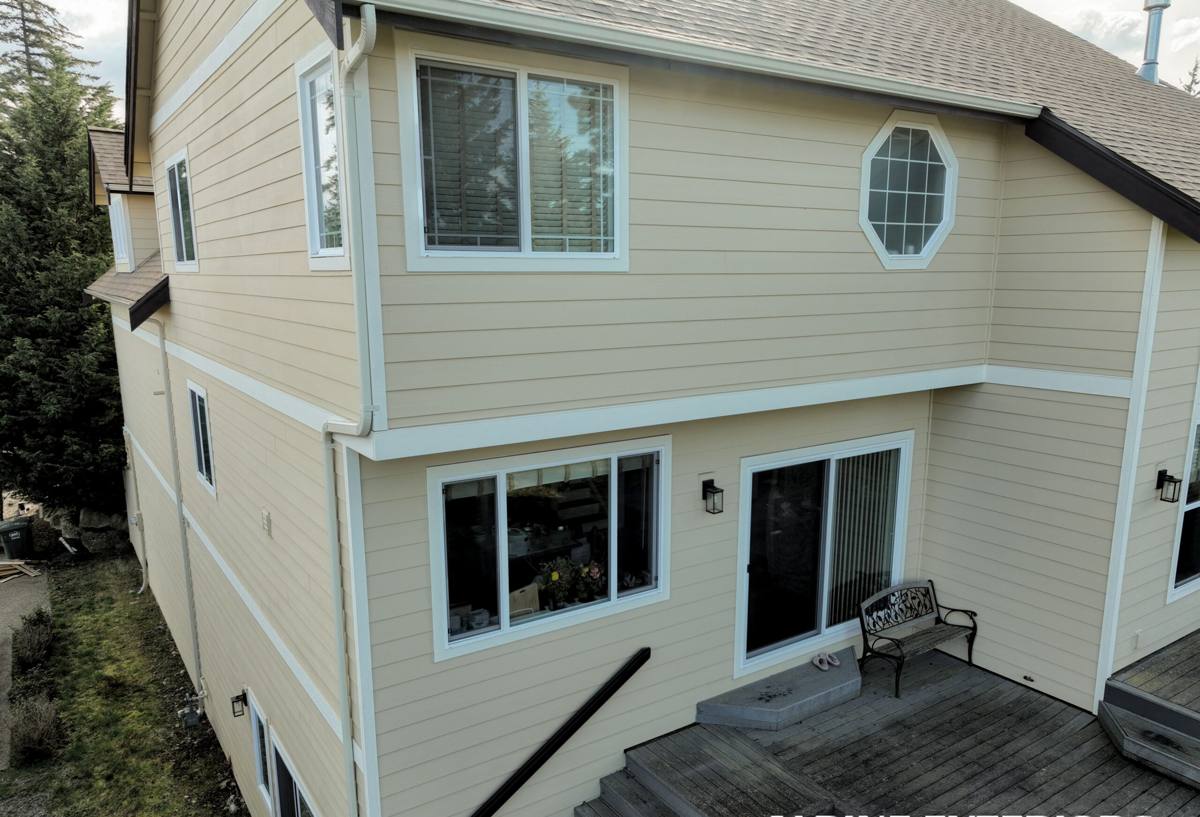
What Monroe Homes Actually Need From Their Siding
Moisture Management Comes First
More siding failures around Monroe come from water getting behind the cladding than from the cladding itself wearing out. A correct installation starts with a drainage plane — typically a weather-resistive barrier installed shingle-style so water sheds outward instead of pooling — with rainscreen furring where the wall assembly calls for it. That gap lets bulk water drain and lets the wall dry out between rain events, which matters enormously in a climate where "between rain events" might only be a few days.
Flashing and Clearances
Windows, doors, deck ledgers, and roof-to-wall intersections are where siding jobs actually fail. Every penetration needs proper head, sill, and kick-out flashing integrated with the water-resistive barrier — not just caulked and hoped for. Siding also needs to stop short of grade, decks, patios, and roof lines by the manufacturer's minimum clearance, so splashback and standing moisture don't wick into the bottom courses. Skipping this is the single most common shortcut we see undone on older Monroe homes.
Fastening for the Long Haul
Fiber cement has to be fastened correctly — proper nail size, spacing, and penetration into framing or sheathing rated for it — or the boards will work loose over years of freeze-thaw and wind-driven rain cycling. Under-driven or over-driven fasteners are an easy thing to rush and a hard thing to fix later without pulling boards.
Why We Only Install James Hardie Siding
We standardized on James Hardie fiber cement for every job we take, including in Monroe, and we don't install vinyl, LP SmartSide, Cemplank, Allura, or bare cedar. That's not a marketing position — it's a professional standard built around what actually holds up in this climate over decades, not just the first few years.
- Non-combustible core: fiber cement doesn't feed a fire the way wood-based or vinyl products can, which matters more every year in Washington.
- Moisture resistance: Hardie's fiber cement doesn't swell, delaminate, or rot the way engineered wood siding can when it takes on repeated moisture in a wet valley climate.
- Factory-applied ColorPlus finish: baked-on color resists the fading, chipping, and moss/mildew staining that field-painted siding shows first, especially on shaded elevations.
- Climate-engineered product lines: Hardie's HZ10 formulation is built specifically for wetter, cooler climates like ours, rather than a one-size-fits-all product.
- Warranty structure: a strong, transferable manufacturer warranty backs the product when it's installed to spec — which protects the homeowner, not just the installer.
Vinyl is inexpensive and low-maintenance in the sense that it needs no painting, but it can warp in temperature swings, fade unevenly over time, and it's not carrying the fire performance of fiber cement. LP SmartSide and other engineered wood products perform well when the factory coating and seals stay perfectly intact, but any cut edge, fastener hole, or caulk failure gives moisture a path into a wood-fiber substrate — a real risk in a valley that stays damp as long as Monroe does. Cedar is a beautiful, traditional look, but it demands an ongoing maintenance schedule (staining, sealing, moss treatment) that most homeowners underestimate until the siding is already showing damage. We'd rather put a product on your home that's engineered to shrug off this exact climate than sell you something that looks fine on day one.
Quick Comparison
| Material | Moisture Behavior in a Wet Valley Climate | Maintenance | Fire Performance |
|---|---|---|---|
| James Hardie fiber cement | Engineered for moisture cycling; doesn't rot or swell | Occasional wash; no painting needed with ColorPlus | Non-combustible |
| Vinyl | Doesn't absorb water, but can warp/gap over time | Low; limited repair options if damaged | Combustible |
| LP SmartSide / engineered wood | Vulnerable at any breach in the factory coating | Requires caulk/seal inspection over time | Wood-based |
| Cedar | Absorbs moisture; prone to moss/mildew without upkeep | Ongoing staining and sealing schedule | Combustible |
Our Monroe Installation Process
- On-site assessment: we walk the exterior, check the existing wall assembly, note moisture damage, and identify problem areas around windows, decks, and roof lines.
- Tear-off and sheathing check: old siding comes off and we inspect sheathing and framing underneath for rot or damage before anything new goes up — this step catches problems a lot of estimates skip.
- Weather-resistive barrier and rainscreen: a properly lapped barrier goes on, with furring or a rainscreen product where the wall needs a drainage gap.
- Flashing integration: every window, door, and penetration gets flashed and tied into the barrier before siding starts.
- Hardie installation: boards, panels, or shingles are cut, fastened, and clearanced to manufacturer spec — including the ground, roof, and deck clearances that keep water away from the bottom of the wall.
- Trim, caulking, and finish details: corners, trim boards, and joints are sealed with products compatible with the ColorPlus finish so the whole system performs together.
- Final walkthrough: we go over the finished job with the homeowner before we consider it done.
Signs a Monroe Home Needs New Siding
- Soft or spongy spots when you press on the siding, especially near the bottom courses or under windows
- Persistent moss or dark streaking that comes back within weeks of cleaning
- Visible gaps, warping, or buckling boards
- Paint that's peeling or bubbling repeatedly on the same wall sections
- Rising energy bills that track with drafty or damaged exterior walls
- Siding that's original to a home built more than 20–25 years ago, especially wood-based products
Cost Factors for a Monroe Siding Job
Every home is different, but the same handful of factors drive the price of a siding project here:
| Factor | Why It Matters |
|---|---|
| Home size and wall complexity | More square footage, corners, and dormers mean more labor and material |
| Condition of existing sheathing | Rot repair found during tear-off adds cost but is essential to fix, not skip |
| Siding profile chosen | Lap, shingle, and panel Hardie products differ in material and install time |
| Trim and detail work | Corner boards, window trim, and accent details add labor |
| Access and site conditions | Tree cover, tight lots, and multi-story walls affect staging and time |
We give straightforward, itemized estimates so you know what you're paying for — no vague lump-sum numbers.
Why a Crew That Already Works Monroe Matters
Siding installation isn't just about the product — it's about knowing how a specific site behaves. A crew that already works this part of the valley knows which elevations hold moisture longest, how shade patterns from mature trees affect drying time, and where moss tends to establish first. That local pattern recognition shapes decisions on the job — where to add extra flashing attention, where rainscreen matters most, and how to sequence the work around Monroe's weather rather than fighting it. It also means a company that's still around and reachable if a warranty question comes up years down the line, not a crew that worked the area once and moved on.
After Installation: Keeping Hardie Siding Performing
- Rinse siding annually with a garden hose to keep pollen, dust, and early moss growth from building up
- Keep gutters clear so overflow doesn't run down and saturate wall sections
- Trim back vegetation and tree limbs that keep siding shaded and damp
- Re-caulk trim joints if you notice separation, rather than waiting for water intrusion
- Watch ground-level clearance over time as landscaping or mulch beds are added or built up
Fiber cement with a factory finish needs far less attention than wood or repainted surfaces, but a little seasonal maintenance goes a long way toward hitting its full service life in this climate.
If your Monroe-area home needs new siding or you're dealing with moisture damage, moss buildup, or aging cladding, we're glad to take a look. Request a free, no-pressure estimate using the form below and we'll walk the property with you and talk through what your home actually needs.