 Snohomish
 Siding in Lynden: A Climate That Doesn't Forgive Shortcuts
Lynden sits in the Nooksack Valley, close enough to the Salish Sea that the same marine weather system driving Whatcom County's winters reaches every home in town: long stretches of low, gray drizzle, wind-driven rain that comes in sideways during fall and winter storms, and a humidity level that rarely lets siding, trim, or fascia boards fully dry out between rain events. Add a moss season that can stretch from October through April, and you've got an exterior envelope that's under near-constant moisture pressure for most of the year.
Homes here don't fail because of one bad storm. They fail slowly, from siding that absorbs water instead of shedding it, from caulk joints that never got a chance to cure properly, from paint film that traps moisture behind it instead of letting the wall assembly breathe. By the time a homeowner notices soft spots, bubbling paint, or dark streaking on the north side of the house, the damage underneath is usually further along than it looks from the driveway.
That's the backdrop for every siding decision we make in Lynden. It's also why we don't install every product on the market — we install the one we've found actually holds up to this specific climate, year after year, without asking the homeowner to baby it.
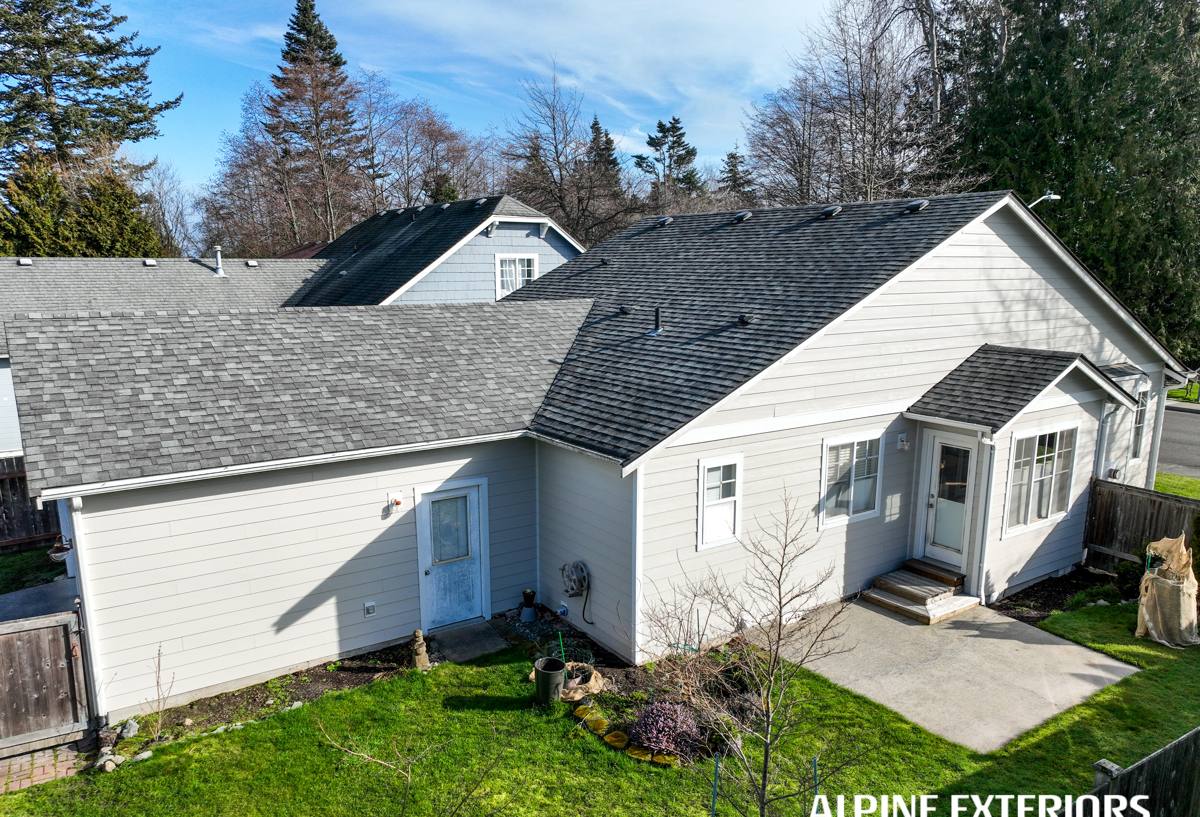
Why We Only Install James Hardie Fiber Cement
We get asked fairly often why we don't offer vinyl, LP SmartSide, or one of the other fiber cement or composite brands on the market. It's a fair question, and the honest answer is that we standardized on James Hardie because it's the product that consistently performs in Pacific Northwest conditions without the maintenance burden or moisture risk that comes with the alternatives.
Vinyl is inexpensive and low-maintenance in dry climates, but it expands and contracts significantly with temperature swings, can warp or crack in cold snaps, and its seams and J-channels give moisture more places to find its way behind the cladding. Wood-based composite siding products use an engineered wood core that, however well-treated, is still wood — meaning it's vulnerable to swelling, edge deterioration, and rot if the factory coating is ever compromised by a nail gun mistake, a poor cut, or years of standing moisture at a butt joint. Cedar and primed spruce are beautiful but demand a repainting and caulking schedule that most homeowners can't realistically keep up with in a climate this wet.
James Hardie fiber cement is cement, sand, and cellulose fiber — it doesn't rot, it isn't a food source for moss and mildew the way wood is, and it's non-combustible. It's not a perfect product for every situation (it's heavier, requires specific fasteners and clearances, and installation quality matters more than with vinyl), but when it's installed to spec, it's the siding we're most comfortable standing behind on a Whatcom County home.
What "Installed to Spec" Actually Means
Fiber cement's reputation lives or dies on installation quality. Hardie's own warranty documentation is specific about clearances, fastener patterns, and flashing details, and skipping those steps is the single biggest reason fiber cement siding underperforms in wet climates. We follow Hardie's published installation instructions as a floor, not a suggestion.
James Hardie Product Lines We Install
Hardie makes several distinct product lines, and matching the right one to a Lynden home depends on the style of the house, the exposure of each wall, and the look the homeowner wants.
HardiePlank Lap Siding
The most common choice for traditional and farmhouse-style homes in this area. It comes in several exposure widths and textures (smooth or cedar-grain) and installs in horizontal courses, similar to traditional wood lap siding but without the rot risk.
HardiePanel Vertical Siding
Used for board-and-batten looks, accent walls, and gable ends. Popular on newer builds and additions where a more modern or barn-style aesthetic fits the property.
HardieShingle
A staggered or straight-edge shingle profile for homes that want a shingle-style look without the maintenance of cedar shakes, which are especially prone to moss growth in this climate.
HardieTrim
Fiber cement trim boards for corners, window and door casing, and fascia — used to keep the entire exterior system in one non-combustible, low-maintenance material rather than mixing fiber cement field siding with wood trim that will age differently.
ColorPlus Technology
Most of what we install uses Hardie's factory-applied ColorPlus finish rather than field paint. It's baked on in a controlled environment, resists fading and chipping better than a job-site paint job, and comes with its own finish warranty separate from the product warranty. For a climate where repainting is a multi-day job you're racing the weather to complete, a finish that doesn't need repainting for many years is a real practical advantage, not just a marketing point.
Comparing Siding Options for a Lynden Home
| Material | Moisture Behavior | Typical Maintenance | Fire Rating |
|---|---|---|---|
| James Hardie Fiber Cement | Does not absorb/swell; sheds water when properly flashed | Occasional wash; no repainting with ColorPlus for many years | Non-combustible |
| Vinyl | Doesn't rot, but seams/panels can allow water behind cladding | Low, but prone to warping, fading, cracking in cold | Combustible, can melt/deform near heat sources |
| LP SmartSide / Wood Composite | Engineered wood core vulnerable if coating is breached | Moderate; watch cut edges and fastener points | Combustible |
| Cedar / Primed Spruce | Absorbs moisture readily; prone to rot and moss growth | High — regular painting, caulking, moss treatment | Combustible |
This isn't a claim that the other materials are unusable everywhere — vinyl and composite sidings have their place in drier climates or on lower-budget projects. It's simply why, for the rain load and moss pressure a Lynden home sees, we've settled on fiber cement as the standard we're willing to install and warranty.
Beyond Siding: The Whole Exterior Envelope
Siding doesn't work in isolation. We handle roofing, windows, and decks alongside siding because a home's exterior is one connected system — a roof that's shedding water improperly, or a window that's not flashed correctly, will undermine even a perfectly installed fiber cement wall.
Roofing
Roof condition directly affects siding longevity. Poor roof drainage, missing kickout flashing at roof-to-wall intersections, or clogged gutters send water straight down the face of the siding, concentrating moisture exactly where it does the most damage.
Windows
Window flashing details are one of the most common sources of hidden water intrusion in this climate. When we're re-siding a home, we treat window flashing as part of the job, not an afterthought — it's far easier to get right while the wall is open than to retrofit later.
Decks
Decks attached to the house create another intersection point where flashing and drainage matter. We build and maintain decks with the same moisture-first mindset we apply to siding.
Why a Local Crew Matters in Lynden
A crew that works Whatcom County regularly knows the difference between a normal wet-season weather window and a stretch of days where you genuinely can't get a proper seal on a caulk joint or a clean cure on a finish coat. That judgment call — when to push forward and when to hold off — affects how long the work lasts. It also means someone local answers the phone years later if a question comes up, rather than a homeowner chasing down a crew that came through once and moved on.
Maintenance Checklist for Fiber Cement Siding
- Rinse siding annually with a garden hose to clear pollen, dust, and early moss growth — avoid high-pressure washing directly into seams
- Inspect caulk joints at trim and window edges each spring for cracking or gaps
- Keep gutters clear so overflow doesn't run down the siding face
- Trim back vegetation and tree limbs that hold moisture against the wall or shade siding from drying out
- Watch for moss or algae buildup on north-facing and shaded walls, and address it before it spreads
- Check the base of the siding near grade and hardscaping for splash-back staining or standing moisture
What Affects the Cost of a Lynden Siding Project
Every home is different, but a few factors consistently move the price on a fiber cement siding job in this area:
- Whether existing siding needs full removal versus siding over an already-sound wall assembly
- The condition of the sheathing and any hidden water damage found once old siding comes off
- House complexity — roof lines, gables, and trim details add labor time
- Product line and finish choice (smooth vs. cedar-textured, standard vs. premium ColorPlus colors)
- Whether windows, trim, or flashing are being replaced or upgraded as part of the same project
Hidden water damage is the biggest unknown on almost any re-siding project in this climate — it's common enough that we budget conversations around it rather than treating it as a surprise.
If you're weighing your options for a home in Lynden, we're glad to come take a look, walk the exterior with you, and give you a straightforward, no-pressure estimate — no obligation, no pressure tactics, just an honest read on what your home needs.