 Snohomish
 Two Materials, One Wet Climate to Survive
If you're replacing siding in Snohomish, you're really choosing a material that has to survive a specific set of conditions: months of driving rain off the Puget Sound lowlands, a long moss and mildew season under our tree cover, and enough humidity swings between summer and winter to stress any product with a seam, a joint, or a cut edge. Two materials dominate the conversation for homeowners moving away from vinyl or aging cedar: engineered wood siding (most commonly sold under the LP SmartSide brand) and fiber cement siding (most commonly James Hardie). Both are legitimate upgrades over vinyl. They are not the same product, and they do not age the same way on a house in this part of Washington.
We install only James Hardie fiber cement. That's not a marketing position — it's the conclusion we came to after years of tear-offs, warranty claims, and repair calls on both products. This page lays out what each material actually is, where engineered wood genuinely earns its place in the market, and why the trade-offs pushed us to standardize on fiber cement for every house we side.
What Engineered Wood Siding Actually Is
Engineered wood siding is made from wood strands or wood fiber, bound together with resins and waxes under heat and pressure, then coated with a resin-saturated overlay for weather resistance. It's a real engineering improvement over old-school hardboard siding from the 1980s and 90s, which had a well-documented history of swelling and delaminating in wet climates. Modern engineered wood is a better, more consistent product than what it replaced.
It's also, at its core, still a wood-based product. The strands and the resin coating resist moisture, but the material is not moisture-proof — it's moisture-resistant, and that resistance depends entirely on an intact factory coating and a tight installation. Where that coating is compromised — a cut end, a nail-gun overdrive, a scuff from a ladder or a pressure washer — the wood fiber underneath is exposed, and wood fiber that gets wet repeatedly over years will eventually swell, soften, or delaminate.
Where Engineered Wood Gets It Right
- Lighter weight — easier to handle on tall walls and awkward framing, which can mean faster installation.
- Lower material cost — typically less expensive per square foot than fiber cement, which matters on a tight budget.
- Workability — cuts and nails more like traditional wood siding, which some crews find faster to install.
- Wood grain texture — a warmer, more traditional look that some homeowners prefer over fiber cement's texture options.
Those are real advantages, and we won't pretend otherwise. For a drier climate, or a house that gets consistent maintenance attention, engineered wood can be a reasonable choice.
What Fiber Cement Siding Actually Is
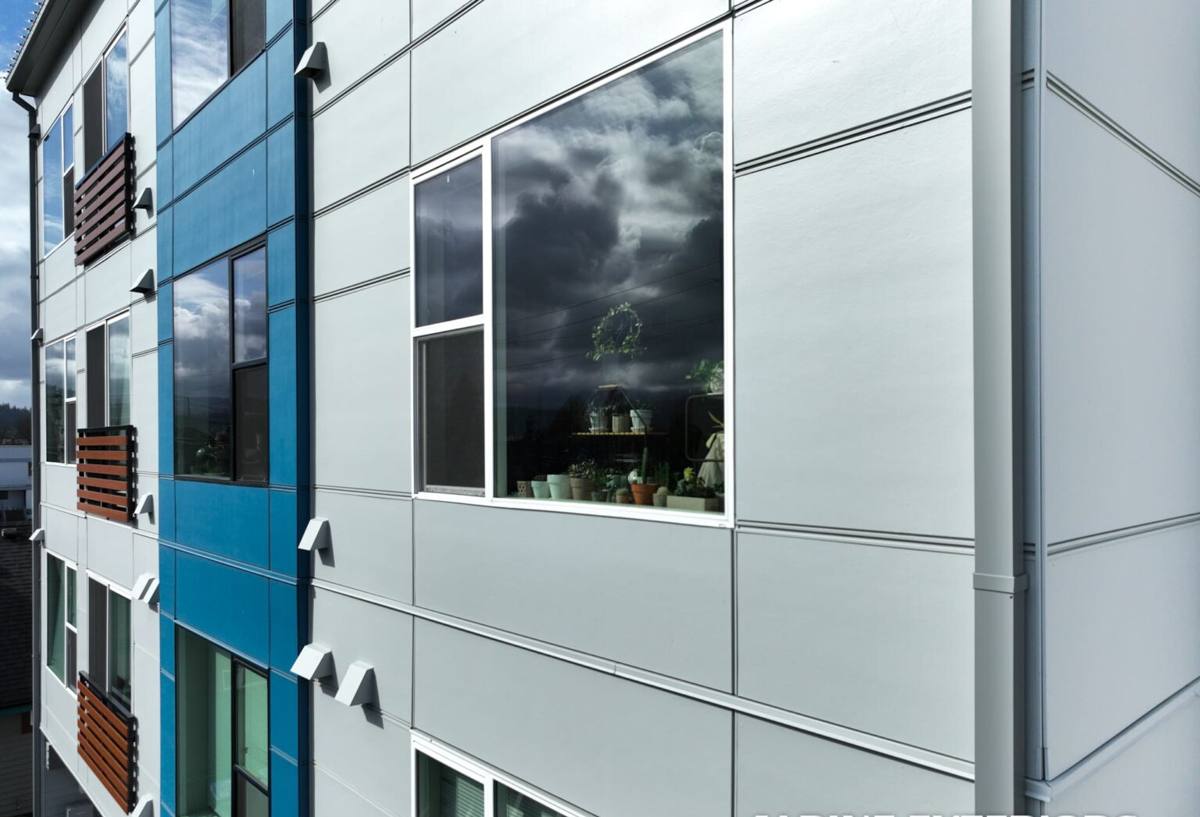
Fiber cement is a mix of Portland cement, sand, and cellulose fibers, formed under pressure and cured. There is no wood fiber in the finished product — the cellulose acts as a binder in manufacturing, not as a structural wood component in the wall. The result is a material that doesn't rot, doesn't attract carpenter ants or woodpeckers, and doesn't expand and contract with moisture the way wood-based products do. James Hardie factory-applies its ColorPlus finish using a baked-on process that's considerably tougher than field-applied paint, and its HZ5 product line is engineered specifically for cold, wet Pacific Northwest conditions — including freeze-thaw cycling, which Snohomish sees plenty of most winters.
Fiber cement is also non-combustible, which matters given how many Snohomish County properties back onto greenbelt, wooded lots, or seasonal brush that dries out by late summer.
The Trade-Offs That Made Us Choose Fiber Cement
Moisture Is the Whole Ballgame Here
Snohomish doesn't get the driest siding weather in the country. Rain drives sideways in a winter storm, moss colonizes anything shaded and damp, and a north-facing wall under fir trees can stay wet for weeks at a stretch. Engineered wood siding is built to handle normal rain exposure when it's installed and caulked correctly and the coating stays intact. The risk is cumulative: over 10, 15, 20 years, small breaches in that coating — a hairline crack at a butt joint, a fastener that backed out slightly, caulking that's due for renewal and got missed — let moisture into the wood fiber a little at a time. Fiber cement doesn't have that failure mode, because there's no wood fiber to swell in the first place.
Maintenance Burden Over the Life of the Siding
Both products need periodic caulk and paint maintenance at a factory-finished level — that part is similar. Where they diverge is what happens when maintenance gets deferred. On engineered wood, a missed re-caulk cycle or a scraped corner left unaddressed is a moisture entry point into a material that can soften. On fiber cement, the same deferred maintenance is a cosmetic issue, not a structural one. Given how easy it is for siding maintenance to slip a homeowner's mind for a year or two, we'd rather install a product that's forgiving of that reality.
Warranty Structure
James Hardie backs its fiber cement products with a 30-year non-prorated warranty on the substrate and a separate finish warranty on ColorPlus factory paint, and the warranty is transferable to a subsequent homeowner — a real factor at resale. Engineered wood warranties have improved substantially over the older generation of hardboard products, but they typically carry different terms around moisture-related claims and edge sealing requirements that homeowners need to read closely, since a moisture claim can turn on whether cut edges were field-sealed exactly to spec.
Fire Exposure
Fiber cement is non-combustible by composition. Engineered wood siding sold today generally carries a Class A fire rating through its treatment and coating process, which is a meaningful improvement — but that rating depends on the coating remaining intact, the same dependency that shows up in its moisture performance.
Side-by-Side Comparison
| Factor | Engineered Wood (LP SmartSide) | Fiber Cement (James Hardie) |
|---|---|---|
| Core material | Wood strand/fiber with resin, coated overlay | Cement, sand, cellulose fiber — no wood fiber |
| Moisture behavior | Resistant while coating is intact; can swell if breached | Doesn't swell, rot, or delaminate from moisture |
| Weight | Lighter, faster to handle | Heavier, requires more installer skill and labor |
| Fire resistance | Class A rated (coating-dependent) | Non-combustible |
| Pest resistance | Treated against insects, still wood-based | Not a food or nesting source for insects |
| Typical material cost | Lower per square foot | Higher per square foot |
| Finish durability | Factory-primed or overlay-coated | Baked-on ColorPlus factory finish |
| Warranty (non-prorated, transferable) | Varies by product line and terms | 30 years on substrate, transferable |
Why Installation Quality Matters Even More With Fiber Cement
Fiber cement's durability advantage only shows up if the installation follows James Hardie's published specifications. That means correct fastener placement and depth, proper clearances from grade, decks, and roof lines, sealed and primed cut edges on-site, and butt joints and penetrations flashed and caulked to spec — not just nailed up and painted. A poorly installed fiber cement job can still trap moisture behind it, usually from a missing weather-resistive barrier detail or a caulked joint that should have been flashed instead. This is why we don't treat installation as a formality: it's the difference between a 30-year sided house and a 10-year callback.
What a Correct Fiber Cement Installation Includes
- A continuous, correctly lapped weather-resistive barrier behind the siding
- Proper minimum clearance from roof lines, decks, and grade to keep the bottom edge out of standing moisture
- Factory or field-primed cut edges before installation, not after
- Fasteners driven flush, not overdriven, at manufacturer-specified spacing
- Butt joints and panel seams treated per Hardie's flashing and sealing details
- Rainscreen or drainage gap detailing on walls where it's warranted by exposure
Cost Considerations Beyond the Material Price
Fiber cement typically costs more upfront in both material and labor — it's heavier, requires carbide-tipped blades or shears to cut, and takes a more experienced crew to install to spec. Engineered wood usually installs faster and lighter, which shows up as a lower initial bid. The number that matters more, though, is cost per year of service life. A fiber cement installation done to spec is designed to go 30-plus years without a moisture-driven material failure. If a homeowner is planning to stay in the house long-term, or is siding a home in an exposed, rain-heavy, or moss-prone location, the higher upfront cost usually pencils out over the ownership period. If the horizon is shorter, or the budget is the deciding factor, that's a legitimate reason to weigh engineered wood — we just won't be the ones installing it.
A Practical Checklist Before You Decide
- How exposed is each wall to driving rain, shade, and moss growth — not just the house in general?
- What does the warranty actually cover if a cut edge or joint fails years down the road?
- Is the finish factory-baked, or will it need field priming and painting?
- Does the contractor's crew carry manufacturer installation certification for the product you're choosing?
- How does the total installed cost compare over a 20-30 year horizon, not just the upfront bid?
- Will the siding be transferable under warranty if you sell the house?
Where We Landed
Engineered wood siding is a genuine improvement over its predecessors, and for the right house and the right maintenance commitment, it performs reasonably well. But after years of siding homes across Snohomish and watching how each material actually holds up against salt air drifting in from the Sound, sustained driving rain, and a moss season that doesn't let up until late spring, we made a professional call: we install James Hardie fiber cement exclusively. It gives us a product we can install to a documented spec, back with a strong transferable warranty, and stand behind without hedging on how it'll look in year fifteen.
If you're weighing your options for a siding replacement, we're happy to walk your specific house — sun exposure, tree cover, wall orientation — and talk through what actually makes sense for your situation. Reach out for a free, no-pressure estimate.