 Snohomish
 Two Very Different Products, One Big Decision
If you're re-siding a home in Snohomish, you've probably already run into the two names that dominate the conversation: vinyl and fiber cement. They get compared constantly because they sit at opposite ends of the same job — covering and protecting your home's exterior — but they are built from completely different materials, age in completely different ways, and cost completely different amounts of money over the life of a house.
We install James Hardie fiber cement siding exclusively. We don't install vinyl. That's a real business decision, not a marketing line, and we think homeowners deserve the honest reasoning behind it rather than a sales pitch. So this page isn't going to tell you vinyl is garbage — it isn't. It's going to walk through what each product actually is, how each one holds up against the wet, mossy, rain-heavy climate we live with here in Snohomish County, and why we ended up standardizing on one of them.
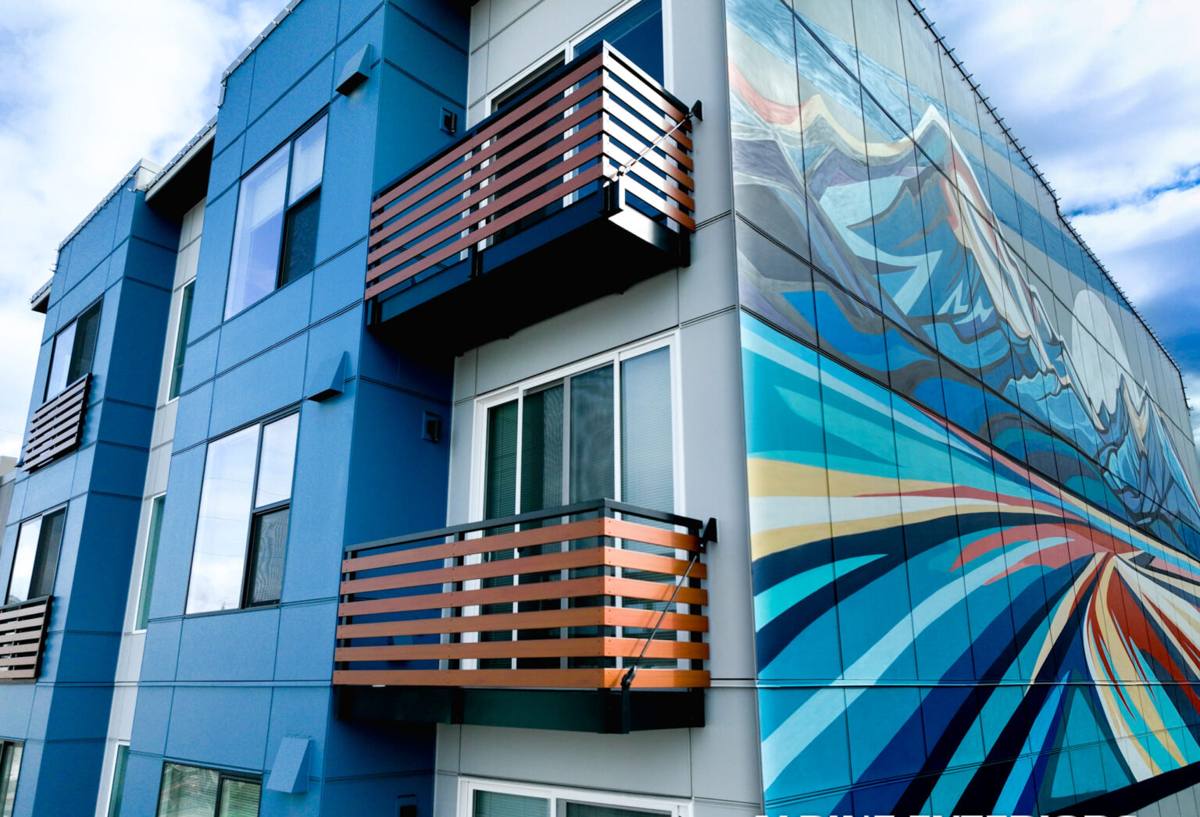
What Vinyl Siding Actually Is
Vinyl siding is extruded PVC (polyvinyl chloride) plastic, formed into interlocking panels and usually color-integrated during manufacturing rather than painted afterward. It's been the most common siding material in the country for decades for good reasons.
Where Vinyl Genuinely Performs Well
- Lower material and installation cost than fiber cement, often by a significant margin
- Never needs painting — the color runs through the material
- Doesn't rot, and insects don't eat it
- Fast to install, which keeps labor costs down
- Widely available with a large range of colors and profiles
For a homeowner on a tight budget who needs a functional, low-maintenance exterior, vinyl isn't an unreasonable choice in a lot of parts of the country. Our issue with it isn't that it's a bad product in the abstract — it's how it behaves specifically in this region, over the long haul, on homes we're putting our name on.
What Fiber Cement Actually Is
Fiber cement is a mix of Portland cement, sand, and cellulose fibers, formed under pressure and cured. It's rigid, dense, and heavy compared to vinyl — closer in feel to a masonry product than a plastic one. James Hardie, the manufacturer we use exclusively, builds its boards in engineered regional formulations under the HZ5 designation for our climate zone, meaning the product is specifically formulated for areas with prolonged moisture exposure rather than a one-size-fits-all national blend.
The factory finish, called ColorPlus, is baked on in a controlled environment and backed by its own finish warranty — a different approach than field-painted or color-integrated products, and one of the reasons the color holds up more evenly over time.
How Each Material Handles Our Climate
This is really the heart of the comparison, because siding doesn't fail in a showroom — it fails, or doesn't, after fifteen winters of driving rain and the kind of moss growth that's just part of life west of the Cascades.
Vinyl in Wet, Mossy Conditions
Vinyl itself doesn't absorb water, but that's not really where the vulnerability is. The vulnerability is at the seams, the J-channels, and the overlapping panel joints, which are mechanically interlocked rather than sealed. Over years of Snohomish's long wet season, moisture works into those laps, and moss and algae find plenty of texture to grab onto in shaded, north-facing wall sections. Vinyl also expands and contracts more than fiber cement with temperature swings, which over time can loosen the panel lock and telegraph waviness across a wall — usually most visible on darker colors that absorb more heat.
Fiber Cement in Wet, Mossy Conditions
Fiber cement doesn't expand and contract nearly as much, so panels stay tight and true for the life of the installation when the job is flashed and caulked correctly. It's also non-combustible and dimensionally stable enough that moss and algae have less opportunity to establish at loose joints — though no exterior material is immune to moss in a climate this wet, and any siding still needs the roofline, gutters, and landscaping kept clear so water and debris aren't sitting against the wall. Homes closer to Puget Sound also deal with salt-laden air, which over time can be harder on softer or more porous materials; fiber cement's density holds up well against that kind of steady, low-grade exposure.
Side-by-Side: The Honest Numbers
| Factor | Vinyl Siding | James Hardie Fiber Cement |
|---|---|---|
| Typical material + install cost | Lower | Higher |
| Expected lifespan (properly installed) | 20-30 years | 30-50+ years |
| Fire rating | Combustible plastic | Non-combustible |
| Color source | Integrated through material | Factory-baked ColorPlus finish |
| Repainting needed | No, but fades over time | Not for finish life of ColorPlus warranty |
| Impact resistance | Can crack or shatter, especially when cold | Resists impact well; can chip if struck hard |
| Dimensional movement | Higher — expands/contracts with heat | Minimal |
| Typical warranty structure | Prorated, often not transferable | Non-prorated, transferable to one subsequent owner |
A prorated warranty means the manufacturer's payout shrinks every year you own the home — by year fifteen of a twenty-five-year warranty, you may be entitled to a small fraction of replacement cost, not a fresh install. That structure is common across vinyl manufacturers and is worth reading closely before you decide a warranty is a deciding factor.
The Trade-Offs We Weren't Willing to Build Around
None of what follows is a claim that vinyl siding is defective. It's a description of the trade-offs that, added up, moved us away from installing it.
- Heat sensitivity: Dark-colored vinyl can warp or deform if reflected sunlight from a nearby window hits it at the wrong angle — a real, documented phenomenon in the industry, not a rare fluke.
- Brittleness in cold: Vinyl gets more brittle in freezing temperatures, and impacts that would just dent fiber cement can crack a vinyl panel outright.
- Seam appearance: Panel laps and corner posts are visually part of the product; from a distance vinyl reads as "vinyl" in a way factory-finished fiber cement generally doesn't.
- Moisture at penetrations: Because panels aren't sealed at the laps, water management depends heavily on correct house-wrap and flashing detail underneath — mistakes there are hidden for years before they show up as rot in the sheathing.
- Warranty erosion: The prorated structure described above means the "lifetime warranty" marketing language rarely means what a homeowner assumes it means by year twenty.
Individually, most of these are manageable with a careful installer and a reasonable budget. Together, they're the reason we stopped installing vinyl rather than trying to install it well.
What the Higher Upfront Cost of Fiber Cement Buys You
Fiber cement isn't cheap, and we're not going to pretend the price difference doesn't matter to a real household budget. What that difference buys is a siding system engineered specifically for climates like ours, a factory finish with its own long-term warranty separate from the substrate warranty, a non-combustible wall assembly, and a product that holds its shape and color instead of drifting over two or three decades. For a lot of homeowners planning to stay in their house long-term, or planning to sell into a market where buyers increasingly ask what the siding is, that math works out in fiber cement's favor even before you factor in fewer replacement cycles.
Installation Determines Almost Everything
This part applies to both materials, and it's worth saying plainly: a poorly installed fiber cement job will fail faster than a well-installed vinyl job. The material is only half the equation.
What correct fiber cement installation actually requires:
- Proper water-resistive barrier and flashing at every window, door, and penetration before a single board goes up
- Correct fastener type, spacing, and depth — over-driven nails are one of the most common causes of early failure
- Manufacturer-specified clearances at grade, roofline, and any horizontal trim to keep boards from sitting in standing water
- Proper caulking at butt joints and penetrations, with joints back-primed if field-cut
- Correct panel gapping for the region's seasonal moisture cycles
We install to James Hardie's published specifications because those specs are the difference between a wall that performs for decades and one that develops problems in five years — and because doing it right the first time costs far less than doing it twice.
Where This Leaves Snohomish Homeowners
If your budget is the primary constraint and you're not planning to stay in the home for decades, vinyl is a legitimate product installed by plenty of reputable contractors — it's just not what we put on houses. If you're planning to stay put, want a material engineered for driving rain and a long moss season rather than adapted to it, and want a factory finish and warranty structure that doesn't erode with age, fiber cement is the more durable answer for this climate. That's the comparison we'd want if we were the ones buying, and it's why James Hardie is the only siding system we install.
If you'd like to talk through what this looks like for your specific home — style, color line, and a real number, not a ballpark guess — we're happy to walk the property and put together a free, no-pressure estimate.