 Snohomish
 Machias and the Western Washington Exterior Climate
Machias sits in the mix of small unincorporated communities and rural residential streets that surround Snohomish, and like the rest of Snohomish County, it gets the full Western Washington weather cycle: long wet winters, a short dry summer, and a lot of in-between weeks where the siding on a house barely gets a chance to dry out before the next system rolls through. That's the backdrop for almost every exterior problem we see out here — not one big storm, but months of steady moisture exposure working on wood trim, seams, and paint film year after year.
Homes in and around Machias run the gamut — older farmhouses on larger lots, newer subdivisions built in the last couple of decades, and everything in between. What they share is exposure to the same regional pattern: salt-tinged marine air moving inland off Puget Sound, driving rain that comes in sideways during winter storms, and a moss season that can stretch from fall through spring on shaded roof and wall surfaces. A contractor who works this area regularly gets a feel for which walls take the worst of it — usually north and west-facing elevations that stay damp longest and see the least direct sun.
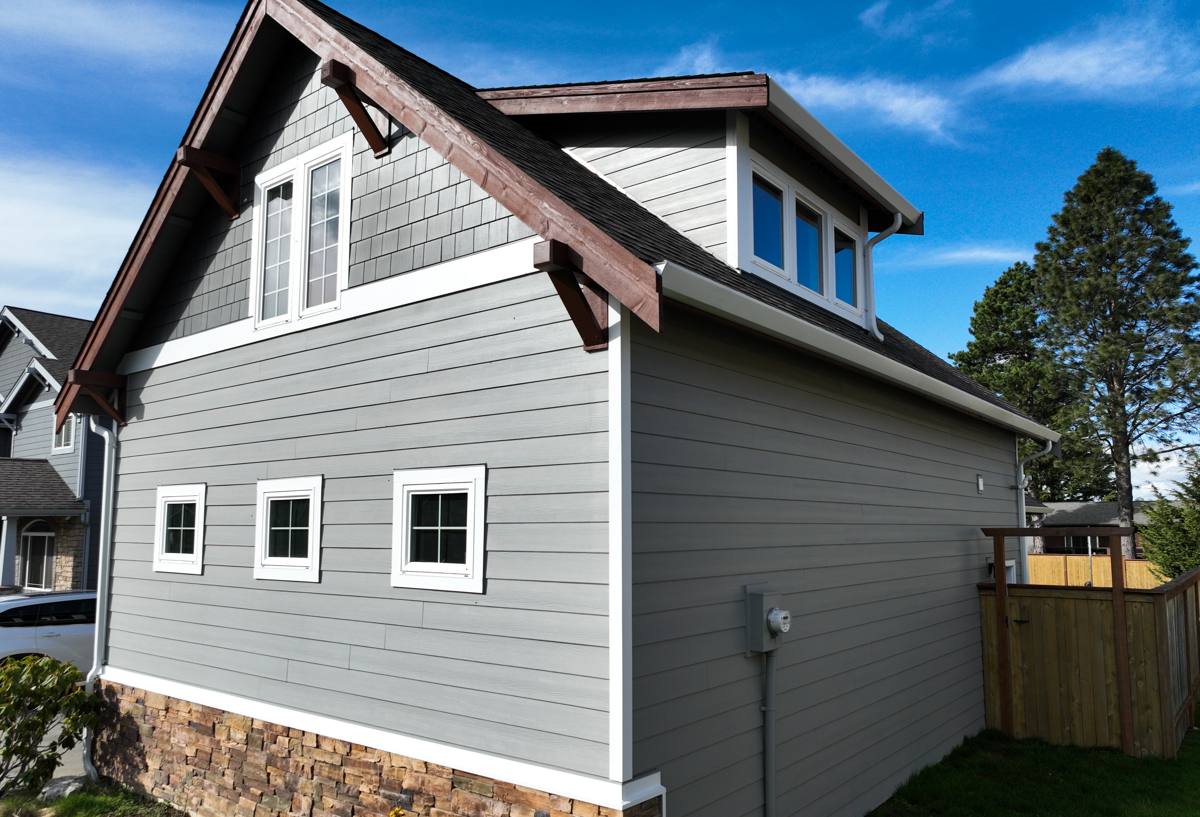
What Salt Air, Driving Rain, and a Long Moss Season Do to Siding
Each of these factors attacks a house a little differently, and understanding the mechanism matters when you're deciding what to put back on the walls.
Salt Air
Airborne salt is corrosive to exposed metal fasteners, flashing, and trim hardware, and it also holds moisture against surfaces longer than dry inland air would. Over years, that combination accelerates rust bleed on lower-grade fasteners and speeds up the breakdown of paint films that aren't rated for coastal-influenced exposure.
Driving Rain
Wind-driven rain doesn't just wet the face of a wall — it gets pushed sideways and upward into laps, seams, and butt joints that were never designed to shed water from that angle. This is where installation detail matters as much as the material itself: correct lap exposure, properly flashed joints, and the right fastener pattern are what keep driving rain from finding its way behind the cladding.
Moss Season
On shaded siding and especially on roofs, moss and algae take hold anywhere organic material and consistent dampness meet. Wood-based siding products give moss and mildew something to root into; the surface stays damp longer, and over time that constant moisture cycling softens the substrate underneath, even when the paint still looks intact from the ground.
Why We Install Only James Hardie Fiber Cement in This Area
We made a deliberate decision as a company: we install James Hardie fiber cement siding, and we don't install vinyl, LP SmartSide, Cemplank, Allura, primed spruce, or cedar. That's not a marketing line — it's a standard we hold ourselves to because of exactly the conditions described above.
Fiber cement is not an organic material, which means moss, algae, and rot don't have the same foothold that they get on wood-based products. It's also non-combustible, which matters increasingly in Washington as wildfire smoke seasons and insurance underwriting both put more weight on exterior fire resistance. Hardie's ColorPlus factory finish is baked on and warrantied to resist fading and chipping better than field-applied paint, which reduces the repainting cycle that wood siding demands in a wet climate like ours.
We're not going to tell you cedar looks bad — it doesn't, and plenty of homeowners love the look. But cedar and primed spruce need consistent refinishing, are more vulnerable to moisture intrusion at end grain and seams, and in a climate with this much sustained dampness, that maintenance burden is real and ongoing. Vinyl is low-maintenance but it's a combustible plastic product that can warp under sustained heat and doesn't hold paint if a homeowner ever wants to change the color. LP SmartSide, Cemplank, and Allura all have their own trade-offs in moisture behavior, installation tolerances, or warranty structure that led us to standardize on Hardie instead. When we explain this to Machias homeowners, we're explaining our own professional standard — not attacking another product on the market.
Hardie Product Lines: Matching the Product to the House
James Hardie makes several distinct product lines, and part of doing this job right is specifying the correct one for the wall assembly and exposure level of a given home.
| Product | Best Use | Why It Fits This Region |
|---|---|---|
| HardiePlank Lap Siding | Most wall areas, traditional lap look | Climate-engineered HZ10 formulation for the Pacific Northwest's wet cycle |
| HardiePanel Vertical Siding | Accent walls, gables, modern designs | Clean vertical lines with the same moisture-resistant core |
| HardieTrim | Corner boards, window and door trim | Non-combustible trim that won't rot at cut ends like wood trim does |
| HardieSoffit | Eaves and overhangs | Resists the moss and mildew buildup common in shaded, damp eave areas |
Hardie's HZ10 formulation is specifically engineered for regions like ours that see extended wet seasons, which is a meaningful distinction from a generic fiber cement product — it's built for this exact moisture cycle rather than a one-size-fits-all national spec.
The Machias Siding Replacement Process
A siding job on an older or weather-worn Machias home usually follows the same core sequence, though the details shift based on what we find once the old material comes off.
- Walkthrough and moisture inspection, including probing suspect areas around windows, decks, and low-clearance walls
- Removal of existing siding and inspection of the sheathing and framing underneath for rot or water damage
- Repair or replacement of any compromised sheathing before new material goes on — this step gets skipped by corner-cutting crews and it's the single biggest source of callback problems in wet climates
- Installation of a code-compliant weather-resistive barrier and correct flashing at every penetration, window, and door
- Installation of James Hardie siding, trim, and soffit to manufacturer spec, with attention to lap exposure and fastener placement
- Final walkthrough and cleanup
That sheathing inspection step is worth dwelling on. A house can look fine from the street and still have soft sheathing behind the siding, especially on north-facing walls or anywhere water has been sneaking behind trim for years. Replacing the visible siding without addressing what's underneath just means you'll be dealing with the same rot problem again down the road, hidden behind a brand-new wall.
Roofing, Windows, and Decks: The Whole Exterior Envelope
Siding doesn't work in isolation. The same driving rain and moss pressure that affects walls in Machias also hits the roof, and a roof that's shedding granules or holding moss is going to push more water toward the wall assembly below it. We handle roofing, window replacement, and deck work alongside siding because these systems interact — a leaking roof valley or a poorly flashed window can undermine even a perfectly installed wall.
Windows in particular are a common failure point on older homes in this area. Original single-pane or early double-pane units often have deteriorated seals and poor flashing integration by the time a siding job comes around, and it's far more efficient to address window flashing while the wall is already open than to come back later. Decks face their own version of the same moss-and-moisture problem — ledger board connections and any wood-to-wall junction need the same attention to flashing and drainage that we bring to siding work.
Why a Local Crew Matters
Working this specific stretch of Snohomish County repeatedly teaches you things a general contractor passing through wouldn't necessarily catch — which lot orientations tend to hold moisture longest, how local permitting and inspection processes run, and what typical construction vintages in the area tend to have underneath the siding. A crew that's done several homes in and around Machias isn't guessing at what they'll find when the old siding comes off; they've usually seen a similar house a few streets over.
Being local also means being reachable after the job is done. Warranty support, a question about maintenance, or a follow-up on a trim detail is a phone call and a short drive, not a call center ticket routed somewhere else.
What to Look For When Hiring for Exterior Work in Machias
- Manufacturer-certified installation experience with the specific product being installed
- A written scope that includes sheathing inspection and repair, not just siding removal and reinstall
- Clear flashing and moisture-barrier details in the proposal, not just "siding replacement"
- Proof of licensing, bonding, and insurance specific to Washington State
- A willingness to explain product trade-offs honestly rather than pushing the cheapest option
- References or completed work you can actually go look at in the local area
Cost for a siding project depends heavily on the condition of the sheathing underneath, the size and complexity of the home, trim and detail work, and how much of the existing material needs to come off versus being reused. Any honest estimate should walk through those variables rather than quoting a flat number sight unseen.
Getting Started
If you're in Machias or anywhere else around Snohomish and dealing with siding that's showing its age — moss buildup, soft spots near the bottom courses, paint that won't hold anymore — we're happy to come take a look. We'll give you a straight assessment of what we find, walk you through why we recommend James Hardie for this climate, and put together a free, no-pressure estimate for the work. There's a form below to get that started.