 Snohomish
 Woodinville sits in the Sammamish River valley, near where King and Snohomish counties meet, and homes here deal with a version of the same climate pattern that shapes exterior work across the whole Puget Sound region: salt-tinged marine air working in from the Sound, long stretches of driving rain rather than quick passing showers, and a moss season that can run for most of the year on shaded or tree-covered walls. We're based out of Snohomish and work this area regularly, and that climate is exactly what's shaped which siding products we're willing to put our name behind and how we detail every job we do.
What the Climate Does to a Woodinville-Area Home
Homes around Woodinville aren't fighting one isolated weather problem — they're dealing with several factors that stack on top of each other over the life of a house. Understanding how each one works is the difference between exterior work that holds up and exterior work that looks fine for a season and then starts showing problems.
Salt Air and Driving Rain
Marine air moving in off the Sound carries salt that accelerates corrosion on exposed fasteners, hardware, and any metal flashing that isn't detailed correctly. Combine that with the region's tendency toward sustained, wind-driven rain rather than brief showers, and water gets pushed into seams, laps, and fastener points at angles that a lot of siding and trim details were never built to handle. It's not dramatic, one-time damage — it's a slow accumulation that shows up years later as rot, staining, or failed caulk joints.
A Long Moss Season
Woodinville's tree cover and the valley's tendency to hold moisture mean walls, especially north-facing ones or anything shaded by mature trees, stay damp longer between rain events than more open, sun-exposed sites. That extended dampness is exactly what moss, algae, and mildew need to establish themselves, and once they take hold on a wood-based or wood-look surface, they're a recurring maintenance problem rather than something you clean once and forget.
None of this means an exterior is doomed to fail here. It means the margin for error is smaller than it would be in a drier climate, and materials or installation shortcuts that might get away with being "good enough" somewhere else tend to get exposed faster around Woodinville.
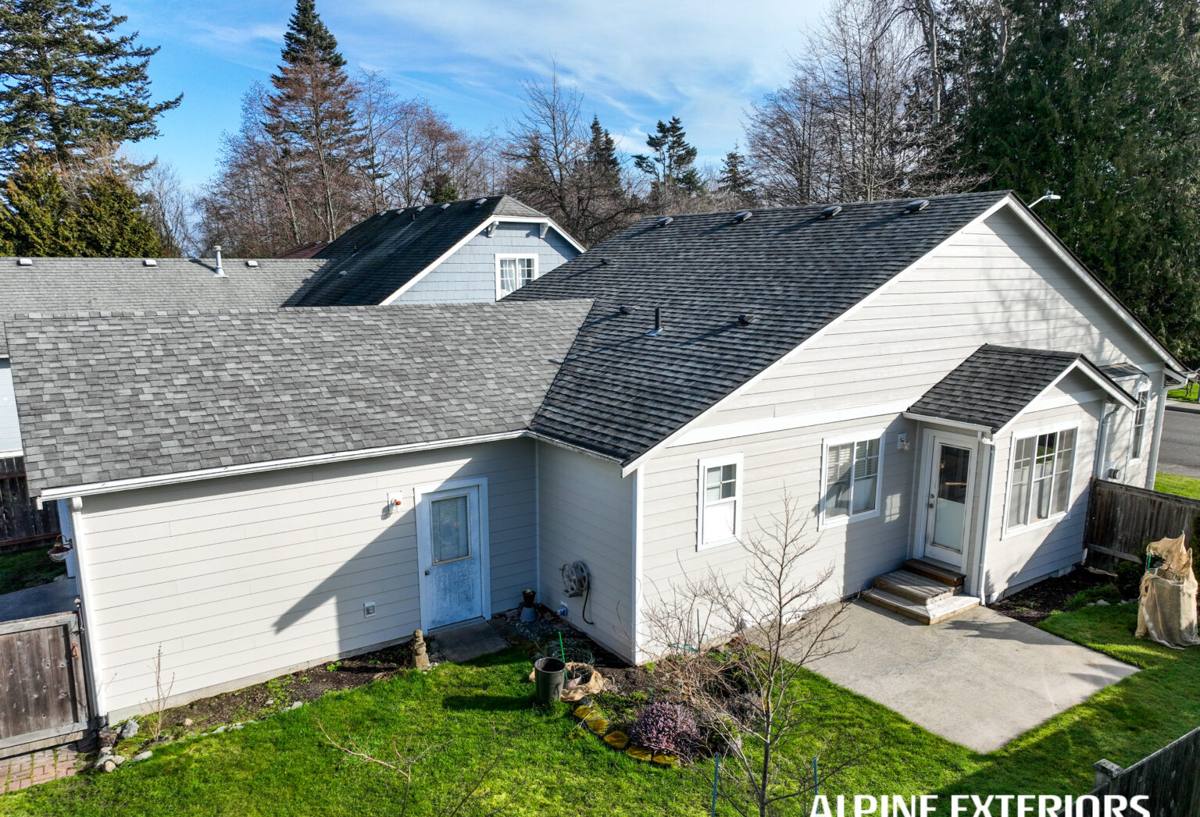
Why We Install Only James Hardie Fiber Cement
We don't install vinyl, LP SmartSide or other engineered wood siding, primed spruce, cedar, or competing fiber cement brands like Cemplank or Allura. That's a standard we set on purpose, not a limitation in what we're capable of installing. Every one of those products can be installed correctly and can look good the day it goes up — what we care about is how it behaves five, ten, and twenty years into a climate like this one.
Wood-based and wood-look siding absorbs moisture at the fiber level, so sustained damp exposure eventually shows up as swelling, cupping, or delamination at cut edges, particularly on shaded walls that don't dry out quickly. Vinyl doesn't absorb water the same way, but it expands and contracts noticeably with temperature swings, and over years that movement can open gaps at seams and J-channels that let wind-driven rain track in behind the panel. Field-applied coatings and paint films on wood-based products also break down under repeated wet-dry cycling, which means a maintenance schedule that only gets more demanding as the wall ages.
James Hardie fiber cement is engineered around a different set of trade-offs. It's non-combustible, dimensionally stable, and doesn't swell or wick moisture the way wood-based siding does. Hardie's ColorPlus finish is baked on at the factory under controlled conditions and backed by its own finish warranty, which matters in a climate that's hard on painted surfaces. Hardie also builds climate-engineered HZ product lines specifically for regions like the Pacific Northwest, which is a level of climate-matching most competing products don't offer. Paired with a strong transferable warranty and installation to manufacturer spec, it's the material we're willing to stand behind on homes in this area.
Siding Material Comparison for This Climate
| Material | How It Handles Moisture Here | Long-Term Consideration |
|---|---|---|
| James Hardie fiber cement | Dimensionally stable; doesn't absorb and swell like wood-based products | Correct fastening and joint sealing at install is what protects long-term performance |
| Vinyl siding | Doesn't absorb water but expands/contracts significantly with temperature | Seams and J-channels can open over time, letting wind-driven rain behind panels |
| LP SmartSide / engineered wood | Wood-fiber core absorbs moisture readily at cut edges and damaged coating | Prone to edge swelling in shaded, slow-drying wall areas common in wooded lots |
| Cedar / primed wood | Absorbs and releases moisture continuously with humidity changes | Cupping, checking, and repeated repainting or restaining over the siding's life |
Our Full Exterior Scope Around Woodinville
Siding is usually the first conversation homeowners have with us, but we treat a home's exterior as a connected system rather than a set of unrelated projects. Water management, ventilation, and material choices all interact with each other, and a repair or replacement done in isolation can leave a weak point somewhere else.
- Siding: James Hardie fiber cement installation and full re-sides, with flashing, fastening, and clearance detailing set for this climate
- Roofing: repair and replacement work that accounts for the same wind-driven rain and moss exposure that affects siding
- Windows: replacement windows installed with attention to flashing integration at the siding plane, a common failure point when trades aren't coordinated
- Decks: construction and repair built to shed water and resist the same damp, shaded conditions that affect exterior walls
Coordinating these scopes under one crew means the flashing at a window doesn't get an afterthought treatment because it's "someone else's trade," and the transition between a deck ledger and the wall siding gets built to actually stay dry.
What a Local Snohomish Crew Brings to a Woodinville Job
We're based in Snohomish, and we work this general region regularly rather than treating Woodinville as an occasional out-of-territory stop. That matters for a few practical reasons. A crew that's regularly in this part of the Puget Sound area has seen how the same climate factors play out on different lot conditions — heavily wooded properties, more open sites, homes closer to the river valley floor versus higher ground — and brings that pattern recognition to an estimate instead of guessing.
It also matters for accountability after the job is done. A crew based nearby is a crew you can reach easily if a question comes up during a warranty period, not a name from a one-time out-of-area promotion. We're not the biggest outfit in the Puget Sound region, and we don't try to be everywhere — we'd rather do consistent, well-detailed work in the areas we actually know.
The Moss, Mold, and Maintenance Cycle
A long moss season doesn't just affect appearance — it's a signal worth paying attention to. Moss and algae hold moisture against a surface longer than bare siding would on its own, and on wood-based products that moisture retention accelerates the underlying damage even when the surface still looks mostly fine from the ground. On James Hardie fiber cement, moss growth is a cosmetic issue that periodic gentle washing addresses; it isn't feeding into the kind of moisture absorption that leads to structural decay.
A few signs worth watching for on any home in this area, regardless of what's currently on the walls:
- Persistent moss or algae staining that returns quickly after cleaning
- Soft spots, bubbling, or visible swelling at siding seams or panel edges
- Peeling or chalking paint on wood-based siding, especially on north-facing walls
- Gaps opening at caulked joints, trim, or J-channels on vinyl siding
- Water staining on interior walls near exterior corners after heavy rain
- Musty odors near exterior walls, which can indicate moisture getting behind the cladding
None of these on their own mean a full re-side is necessary, but they're worth a professional look before the next wet season sets in.
What to Expect From a Free Estimate
When we walk a Woodinville property, we're looking at more than just the siding surface. We check flashing and trim details around windows and doors, look at how water is currently being shed off the roofline and away from walls, and assess how much shade and moisture exposure different sides of the house are actually dealing with. That assessment shapes the recommendation — not every wall needs the same approach, and not every project needs to be a full re-side.
We'll walk through material options honestly, including why we don't offer certain products, what a realistic cost range looks like given the scope, and how the timeline fits around weather. There's no pressure to sign anything on the spot, and we'd rather you have the information to make a decision that's right for your home and your budget.
If you're weighing a siding replacement, dealing with a roof or window issue, or just want an honest read on how your current exterior is holding up against this climate, we'll walk the property with you and put together a free, no-pressure estimate.