 Snohomish
 Why We Made James Hardie the Only Siding We Install
Most siding contractors carry two or three product lines and let the homeowner pick based on budget. We don't do that. Every job we run in Snohomish goes on with James Hardie fiber cement, full stop. That's not a sales pitch — it's a standard we set after years of watching how different siding materials actually perform once they're up against a Western Washington winter, not how they perform in a manufacturer's brochure.
This page explains the reasoning plainly: what the regional climate does to exterior walls, where other common products fall short for this area, and what James Hardie's fiber cement system gets right when it's installed correctly. We'd rather you understand the trade-offs before you sign a contract than find out about them ten years into ownership.
What Snohomish's Climate Actually Does to a Wall System
Snohomish sits in the Puget Sound lowlands, close enough to tidal water and the Snohomish River basin that homes here deal with a near-constant moisture load for eight or nine months of the year. That combination — humid marine air, long stretches of driving rain, and short winter days that don't dry a wall out between storms — is exactly the environment where cheap siding decisions get expensive.
Three things define the local exposure risk:
- Driving rain. Wind-driven storms off the Sound push water sideways into siding joints and butt seams, not just straight down. Products with weak seam performance or poor water management take on moisture at exactly those points.
- Long moss season. Shade, moisture, and mild temperatures mean moss and algae get a running start here and rarely fully dry out until summer. Anything porous or with a factory finish that degrades under constant damp exposure will show green and black staining faster than it would in a drier climate.
- Salt-influenced air. Proximity to Puget Sound means a low but steady dose of salt-laden moisture in the air, which accelerates corrosion on fasteners and finishes that aren't rated for it.
None of this is exotic — it's just what Snohomish weather does, year after year, to whatever material is on the outside of a house. The question is which products hold up under that pattern without constant homeowner intervention.
The Trade-Offs We Saw in Other Products
We don't install these products, but that doesn't mean they're junk — each one has a real use case. Here's the honest version of why we stopped putting them on Snohomish homes.
Vinyl Siding
Vinyl is inexpensive and low-maintenance in the sense that it doesn't need painting. But it's a thin plastic skin that expands and contracts with temperature swings, and in wind-driven rain it relies entirely on lap geometry — not sealed seams — to keep water out. It also softens and warps at temperatures most homes will see near dark-colored trim or reflective surfaces, and it's not rated to stop fire spread the way fiber cement is. For a region with this much sustained moisture exposure, we don't think it's the right long-term investment.
LP SmartSide (Engineered Wood)
LP SmartSide is wood strand siding with a resin-treated engineered core, and it installs fast and holds paint well when new. The trade-off is that it's still wood-based — if the factory-applied seal is compromised at a cut edge, fastener hole, or joint that isn't field-treated exactly to spec, moisture can get into the substrate and cause swelling or delamination. In a climate where a wall might not fully dry out for weeks at a stretch, that margin for installation error is thinner than we're comfortable with.
Cemplank and Allura (Other Fiber Cement Brands)
These are legitimate fiber cement competitors to James Hardie, and the raw material science is similar. Where we see the gap is in the factory finish system, the depth of climate-specific engineering (Hardie builds region-specific HZ formulations; we haven't found the same tier of climate zoning from these brands), and the warranty backing. We standardized on one manufacturer so we can guarantee installation consistency and stand behind a single, well-documented warranty — not because the raw board is inherently inferior.
Primed Spruce and Cedar
Real wood siding has a look nothing else fully replicates, and we understand why some homeowners want it. But solid wood in this climate needs a repaint cycle every 3-5 years, careful back-priming, and vigilant caulk maintenance to keep moss and rot at bay. It's a siding choice that demands an ongoing maintenance relationship from the homeowner, and most people underestimate that commitment until year six or seven.
What James Hardie Gets Right for This Region
Non-Combustible Core
James Hardie fiber cement is roughly 90% sand, cement, and cellulose fiber. It doesn't contribute fuel to a fire the way wood-based or vinyl products can, which matters both for direct wildfire ember exposure and for standard homeowner's insurance conversations.
ColorPlus Factory Finish
Rather than field-painting siding after installation, ColorPlus finish is baked on in a controlled factory environment through multiple coats, with UV-cured technology that resists fading and chipping far longer than a job-site paint job. In a climate that barely dries out, keeping moisture from finding a foothold at the finish layer is one of the biggest long-term maintenance wins.
HZ5 Climate Engineering
James Hardie manufactures different formulations for different climate zones. The HZ5 line is engineered for regions with freeze-thaw cycling and sustained moisture exposure — which describes the Snohomish weather pattern well. That's a level of climate-matching we can't get from a one-size-fits-all product.
The Product Lines We Install
| Product Line | What It Is | Typical Use |
|---|---|---|
| HardiePlank | Lap siding boards in multiple widths and textures | Primary siding on most homes |
| HardiePanel | Vertical fiber cement panels | Modern facades, accent walls, gable ends |
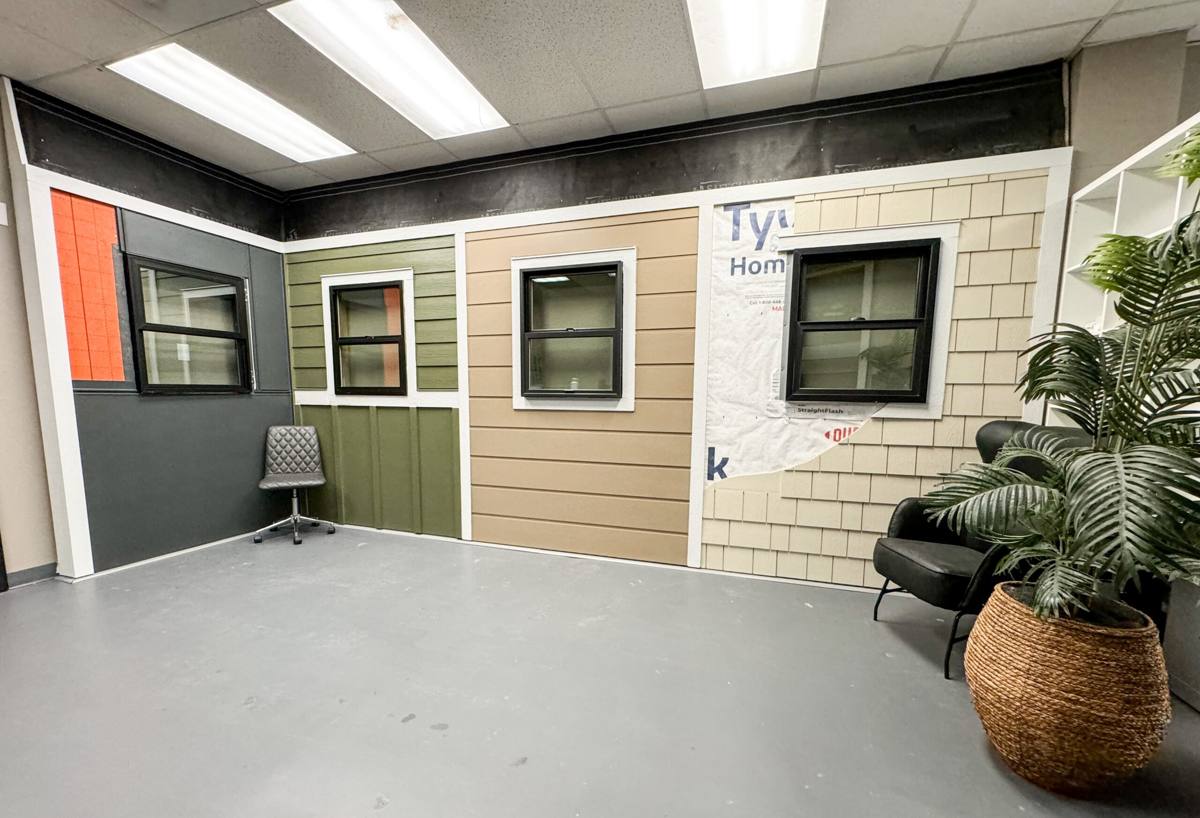
| HardieShingle | Staggered or straight-edge shingle panels | Craftsman and cottage-style accents |
| HardieTrim | Fiber cement trim boards | Corner boards, window and door casing, fascia |
Most Snohomish projects use HardiePlank as the field siding with HardieTrim around openings, sometimes mixing in HardieShingle or HardiePanel for accent detailing on gables or entry features.
Installation Is What Makes or Breaks Fiber Cement
Fiber cement is only as good as the crew putting it up. A correctly installed Hardie system and a poorly installed one can look identical for the first year and behave completely differently by year five. This is where we spend the most attention.
- Proper weather-resistive barrier and flashing details behind every board, not just at obvious penetrations
- Correct nail placement and fastener spacing per Hardie's published installation instructions
- Minimum clearances from grade, roofing, and decking so the bottom edge of the siding never sits in standing water or trapped debris
- Factory-cut or properly sealed field cuts — an unsealed cut edge is the single most common cause of moisture problems in fiber cement
- Correct caulking at butt joints and trim intersections, using products compatible with ColorPlus finish
- Verified rain-screen or drainage gap where the wall assembly calls for one
Any siding contractor can hang boards. Getting the water management details right, on every wall, on every job, is the actual skill — and it's the reason we don't diversify into products where we can't control every variable in the assembly.
Warranty: What's Actually Transferable
James Hardie backs its fiber cement products with a non-prorated limited warranty, and the ColorPlus finish carries its own separate finish warranty covering fading, chipping, and cracking. Both are transferable to a new owner if the home sells, which matters for resale — a buyer's inspector or agent recognizing a documented, transferable warranty is a tangible asset, not just a talking point. We register every installation properly so that warranty coverage is actually in force, not just theoretical.
Cost Factors Homeowners Should Understand
| Factor | Why It Moves the Price |
|---|---|
| Existing siding removal | Tear-off and disposal of old material adds labor and haul-away cost |
| Wall condition underneath | Rotted sheathing or framing found during tear-off requires repair before new siding goes on |
| House complexity | Dormers, multiple gables, and cut-up facades increase labor time and trim work |
| Product line mix | Panel and shingle accents cost more per square foot than field lap siding |
| Color and finish | Custom ColorPlus selections and specialty trim profiles add to material cost |
We won't quote a number without seeing the house — anyone who does is guessing. What we can tell you honestly is that fiber cement carries a higher upfront cost than vinyl and often LP SmartSide, and that the gap narrows considerably once you account for repaint cycles and maintenance most other products require over a 20-30 year ownership window.
What to Expect When You Switch
If you're replacing existing siding, expect a tear-off phase, a sheathing and moisture-barrier inspection (this is often where hidden problems surface — better to find them now than to side over them), then installation with full flashing and drainage detailing, followed by trim and caulk finish work. A typical single-family home in this area runs from a few days to a couple of weeks depending on size and complexity.
If you'd like an honest look at your home's siding situation and what a James Hardie installation would actually involve, we're happy to walk the property with you and put together a straightforward, no-pressure estimate using the form below.