 Snohomish
 Silver Firs: A Neighborhood That's Hard on Siding
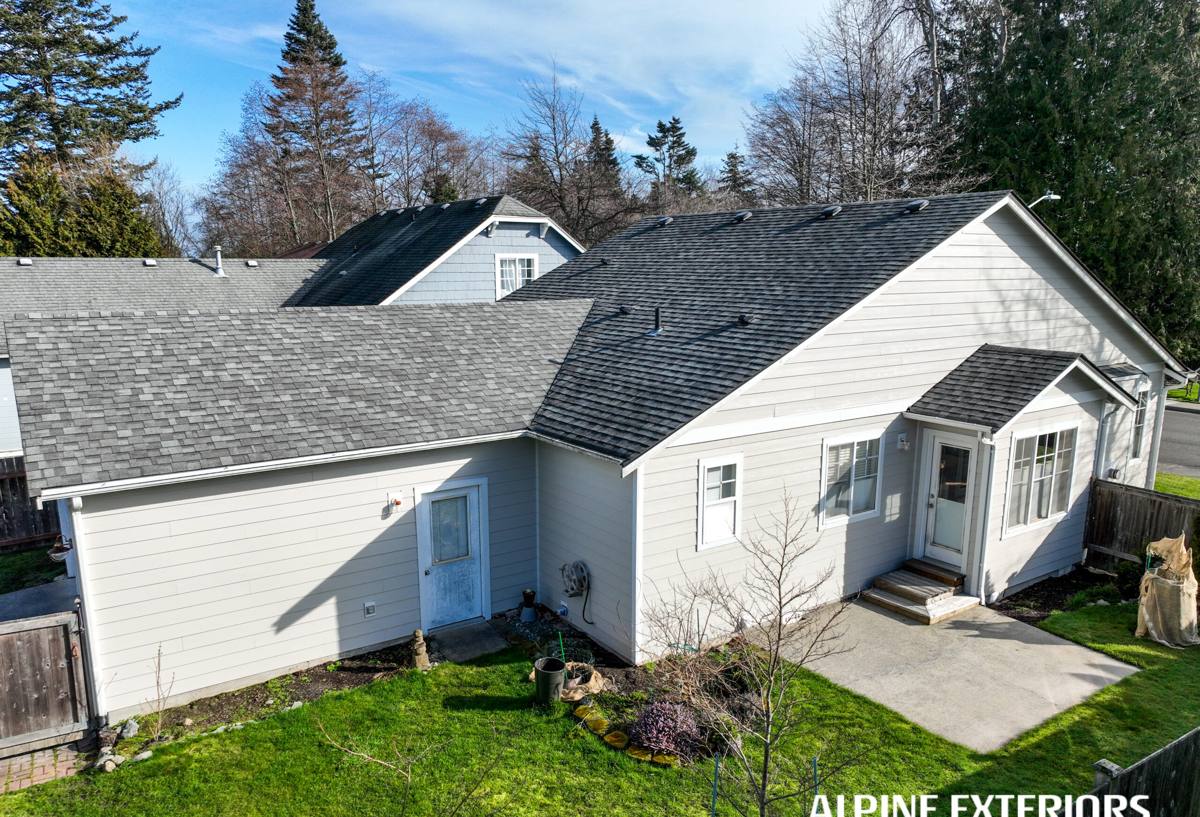
Silver Firs sits among the tree-covered, rain-fed neighborhoods that make up the Snohomish County landscape between Everett, Mill Creek, and Snohomish proper. Homes here range from split-level and daylight-basement builds from the 1970s and 80s to newer two-story construction tucked into wooded lots. What almost all of them share is exposure to a climate that never really lets a house dry out completely for months at a stretch, and siding that's been asked to handle far more moisture cycling than the manufacturer's marketing photos ever show.
We've worked on enough homes in this pocket of Snohomish County to know the pattern: north-facing walls and anything shaded by mature Douglas fir or cedar trees develop moss and algae faster than open, sun-exposed elevations. Gutters overflow onto siding during the heavier fall and winter storms. And older wood or wood-composite siding that looked fine five years ago starts showing soft spots, peeling paint, and swelling at the bottom courses right around the time homeowners start asking questions.
What the Regional Climate Actually Does to a Home's Exterior
Western Washington's climate isn't dramatic — it's persistent, and that's what wears materials down. A few specific mechanisms matter more here than in drier parts of the country:
Driving Rain and Wind-Driven Moisture
Storms coming off the Sound don't just fall straight down — wind pushes rain sideways into wall assemblies, working into seams, butt joints, and anywhere caulking has started to fail. Over years, that moisture finds its way behind poorly installed siding and starts rot at the sheathing level, which is a far more expensive repair than the siding itself.
A Long Moss and Algae Season
Shade, humidity, and mild temperatures mean moss and algae have a long growing window here — often eight months of the year or more on shaded elevations. Porous or absorbent siding materials hold onto that moisture and give organic growth a foothold; the surface finish matters as much as the substrate underneath.
Salt-Influenced Air
Snohomish County sits close enough to Puget Sound that homes throughout the region see some salt-air influence carried inland on weather systems, particularly during winter storms. It's a slower, cumulative effect on fasteners, trim, and unprotected finishes rather than a dramatic one, but it's part of why we pay attention to corrosion-resistant fastening and factory-applied finishes rather than field-painted surfaces that will need recoating.
Freeze-Thaw at the Margins
Snohomish County doesn't see extreme cold most winters, but it does see enough freeze-thaw cycling — especially overnight lows near freezing followed by daytime rain — to stress any siding material that has already absorbed moisture. Material that swells and contracts with water content, rather than staying dimensionally stable, is the material that cracks and delaminates first.
Why We Install Only James Hardie Fiber Cement
We made a deliberate decision as a company to stop installing several products that are common elsewhere in the industry — vinyl siding, LP SmartSide, primed spruce and cedar, and composite fiber cement alternatives like Cemplank or Allura. That's not a knock on every homeowner who has one of those products on their home today; plenty perform adequately when installed and maintained correctly. It's that after years of doing tear-offs and repairs across this climate, we didn't want our name on installations we knew would create maintenance headaches or premature failures for homeowners in ten or fifteen years.
James Hardie fiber cement is engineered specifically to resist the failure modes that matter most in a wet, moss-prone climate:
- It's non-combustible, which matters increasingly for insurance underwriting and wildfire-adjacent building codes across Washington.
- It doesn't feed moss and algae growth the way wood fiber and some composite products can.
- ColorPlus factory-applied finish is baked on under controlled conditions, resisting fade and chipping far longer than field-applied paint.
- It's dimensionally stable — it doesn't swell, warp, or cup the way solid wood and some engineered wood products can when repeatedly wetted.
- Hardie backs the product with a strong, transferable warranty that follows the home, not just the original owner.
None of that means Hardie is maintenance-free or installation-proof. Fiber cement still needs to be installed to manufacturer spec — correct clearances, proper flashing, and factory-cut or properly sealed field cuts — or it will fail just like anything else. The material gives you a much wider margin for error and a much longer service life when it's done right, which is exactly why we standardized on it rather than offering a menu of products with very different long-term outcomes.
Hardie Product Lines for This Climate
Hardie makes climate-specific formulations under its HardieZone system, and we spec the version engineered for wetter, more humid climates like ours rather than a generic national product.
| Product | Typical Use | Why It Fits This Region |
|---|---|---|
| HardiePlank lap siding | Primary wall cladding | Most common profile; available in smooth and cedar-textured finishes, engineered for HZ10 (wet climate) performance |
| HardiePanel vertical siding | Accent walls, gables, modern facades | Clean vertical lines popular on newer Silver Firs builds; same moisture and fire resistance as lap siding |
| HardieTrim boards | Window and door trim, corners, fascia | Resists the rot that commonly hits wood trim around openings exposed to driving rain |
| HardieSoffit panels | Eaves and overhangs | Vented options help manage attic moisture, a common issue in older regional homes |
How We Approach an Installation
Fiber cement siding is only as good as the assembly behind it. Our process on Silver Firs homes generally includes:
Tear-Off and Sheathing Inspection
We remove the existing siding and inspect the sheathing underneath for rot, soft spots, or prior water intrusion — issues that are common on homes where the old siding had been trapping moisture for years without anyone knowing until the wall was opened up.
Weather-Resistive Barrier and Flashing
A correctly lapped weather-resistive barrier, properly integrated window and door flashing, and drainage gaps behind the siding are what actually keep wind-driven rain from becoming a rot problem. This is the part of the job that's invisible once the siding goes back on, and it's also the part that separates a durable installation from one that looks fine for a few years and then doesn't.
Fastening and Clearances
Hardie specifies exact nailing patterns, fastener types, and clearances from grade, roofing, and decks. We follow those specs to keep the manufacturer's warranty intact — a shortcut here voids coverage even if the material itself is sound.
Finish Work
Factory-primed cut edges get sealed in the field, caulking is used at penetrations and transitions rather than as a substitute for proper flashing, and trim details are finished to match the home's existing lines rather than looking like an obvious retrofit.
Signs Your Current Siding May Be Due for Replacement
- Visible swelling, bubbling, or soft spots when you press on the siding, especially near the bottom courses or below windows
- Persistent moss or algae staining that returns within months of cleaning
- Paint that's peeling, chalking heavily, or needs recoating more often than every 6-8 years
- Visible gaps at seams, corners, or trim where caulking has failed or shrunk
- A musty smell or visible staining on interior walls that share an exterior wall with problem siding
- Warping or cupping visible from an angle, especially on wood or wood-composite products
Beyond Siding: Roofing, Windows, and Decks
Siding rarely fails in isolation. A roof that's shedding water improperly, windows with failed flashing, or a deck ledger board that's trapping moisture against the house all contribute to the same underlying problem: water finding its way into places it shouldn't be. Because we handle roofing, windows, and decks in addition to siding, we look at the whole exterior envelope during an estimate rather than quoting siding in isolation and missing a roofing or flashing issue that will undermine the new siding within a few years. For a lot of Silver Firs homes, especially ones in the 30-45 year age range, a siding project is also a natural point to address aging windows or a roof nearing the end of its service life at the same time, rather than paying for scaffolding and labor mobilization twice.
What Drives Cost on a Project Like This
| Factor | Why It Matters |
|---|---|
| Home size and number of stories | More surface area and access complexity (ladders vs. scaffolding) directly affect labor hours |
| Extent of sheathing repair needed | Rot discovered during tear-off adds material and labor beyond the original siding scope |
| Trim and detail complexity | Homes with more windows, gables, and architectural detail require more custom trim work |
| Siding profile and finish selected | Smooth vs. textured, and standard vs. premium ColorPlus finishes, carry different material costs |
| Tear-off and disposal of existing siding | Removing and hauling away old material, especially layered siding, adds to labor scope |
Why a Local Crew Matters
Anyone can order Hardie siding. The difference in outcome comes down to whether the crew understands how it needs to be flashed, fastened, and detailed for this specific climate — and whether they're still around in five or ten years if a warranty question comes up. We work throughout Snohomish County, including Silver Firs, Snohomish, Mill Creek, and the surrounding communities, which means we've seen how these homes age in this exact climate rather than applying a one-size-fits-all national playbook.
If your siding is showing its age, or you're planning ahead rather than reacting to a problem, we're happy to take a look and give you a straightforward assessment. There's no cost and no pressure to a free estimate — just a clear picture of what your home actually needs and what it would take to fix it right.