 Snohomish
 Bellingham's Exterior Climate: What Homes Are Really Up Against
Bellingham sits where marine weather off the Salish Sea meets a wet, shaded, densely wooded landscape, and that combination is hard on exterior materials. Homes here don't get one kind of weather stress — they get several, stacked on top of each other for most of the year. Understanding what's actually happening to your siding, trim, and roof edges is the first step in choosing materials and a contractor that can handle it.
Salt Air and Marine Exposure
Properties closer to Bellingham Bay and the surrounding waterways deal with a steady drift of salt-laden air. Salt is corrosive to exposed metal fasteners, flashing, and hardware, and it accelerates the breakdown of paint films and lower-grade siding finishes. Over years, homes in these exposures show chalking, fading, and fastener corrosion well ahead of homes further inland.
Driving Rain and Wind-Driven Moisture
This part of Washington gets a lot of rain, and a lot of it doesn't fall straight down — it comes in sideways off marine winds. Driving rain finds every weak seam, unsealed joint, and poorly lapped piece of trim on a house. Siding systems that rely on caulk and paint film alone to stay watertight tend to fail here faster than they would in a drier, calmer climate, because the water pressure against the wall is simply higher and more sustained.
Moss, Algae, and a Long Damp Season
Bellingham's tree cover, cloud cover, and cool, moist air add up to a moss and algae season that runs much longer than most of the country ever deals with. North-facing walls, shaded siding runs, and anything under overhangs or tree canopy stay damp for extended stretches. Materials that absorb moisture or swell when wet give moss and algae something to root into; materials that stay dimensionally stable and don't take on water hold up far better.
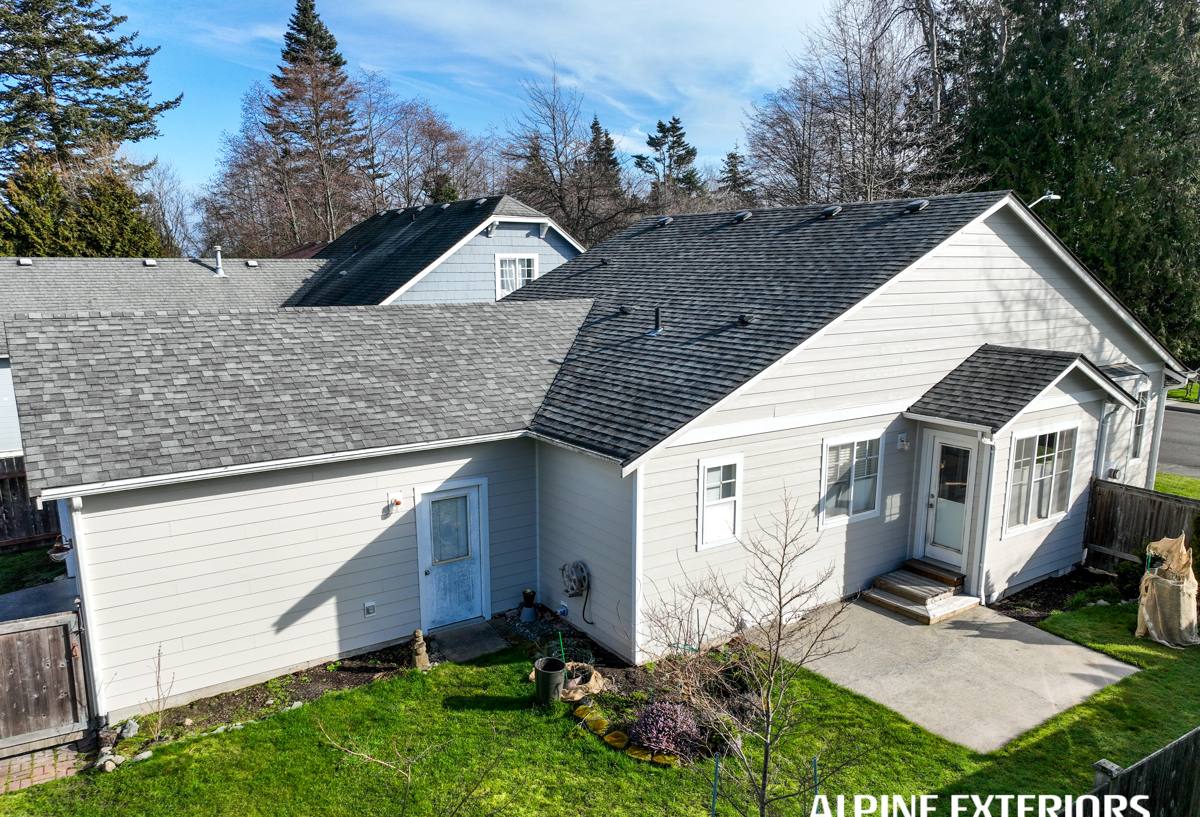
Why the Siding Material You Choose Matters More Here Than in a Dry Climate
In a dry inland climate, a wider range of siding products will perform acceptably for years. In Bellingham's marine environment, the gap between a good product and a mediocre one shows up fast — usually as swelling, delamination, moss staining, or paint failure well before a homeowner expects to be dealing with exterior repairs.
| Material | Behavior in Wet, Salt-Air Climates | Typical Long-Term Concern |
|---|---|---|
| Vinyl | Doesn't absorb water, but flexes and warps with temperature swings; seams can allow moisture behind the panel | Fading, warping, moisture tracking behind panels with no drying path |
| Untreated or primed wood (cedar, spruce) | Attractive but absorbs moisture readily; needs consistent refinishing | Swelling, cupping, rot at joints and end cuts, high maintenance |
| Engineered wood (LP-type products) | Resists some weather better than raw wood but is still a wood-fiber product | Edge and seam moisture sensitivity if any gap in the finish is compromised |
| James Hardie fiber cement | Cement-based composition doesn't swell, rot, or feed moss the way wood-based products can | Requires correct installation (flashing, clearances, fastening) to perform to spec |
No siding material is completely maintenance-free, and no material is magic — installation quality matters as much as the product itself. But in a climate like Bellingham's, starting with a material that's inherently resistant to moisture absorption and dimensional movement removes one of the biggest variables.
Why We Install Only James Hardie Fiber Cement Siding
We made a decision as a company to install James Hardie fiber cement exclusively, and it's a decision that holds up especially well in a climate like this one. Hardie's siding is engineered from cement, sand, and cellulose fiber — it doesn't absorb water the way wood-based or wood-composite products do, and it holds its shape through the wet-dry, warm-cool cycles that are constant in the Pacific Northwest.
A few specifics that matter for homes in this area:
- Non-combustible composition, which also happens to resist the kind of moisture-driven deterioration that shortens the life of organic siding materials
- ColorPlus factory-applied finish, baked on under controlled conditions rather than field-painted, which holds color and resists the fading and chalking that salt air accelerates
- HZ5 product engineering, developed specifically for climates with significant moisture exposure, versus generic siding built for a national average climate
- A strong transferable manufacturer warranty backing the product when it's installed to spec
We won't install LP SmartSide, vinyl, Cemplank, Allura, primed spruce, or cedar on the homes we work on — not because those products have no merit, but because after years in this trade we've settled on the one system that gives Bellingham homeowners the best combination of moisture resistance, finish durability, and long-term value for what our climate actually does to a house.
Siding Doesn't Work in Isolation — Roofing, Windows, and Decks
A house is a system. Siding that's installed perfectly but paired with a roof edge that's dumping water where it shouldn't, or window flashing that's not integrated correctly with the siding plane, will still develop problems. That's why we handle siding, roofing, windows, and decks — not because we're trying to sell more services, but because these components have to work together to actually keep water out of a wall assembly in a climate that gets this much of it.
When we're on a Bellingham property for a siding project, we're looking at the whole envelope: how the roofline sheds water onto or away from the walls, whether window flashing ties in properly with the new siding, and whether deck ledger connections and any adjoining structures are creating a moisture path into the house. Fixing siding while ignoring an obvious roofing or flashing problem just moves the failure point somewhere else.
What a Siding Project Looks Like on a Bellingham Home
Inspection and Moisture Assessment
We start by actually looking at what's there — checking for soft spots, existing moisture damage, moss buildup patterns that indicate chronic dampness, and any places where old flashing or trim details are letting water in. This tells us not just what siding to install, but what underlying issues need to be corrected first so the new siding isn't going over a problem that will resurface.
Installation to Manufacturer Spec
Fiber cement siding performs the way it's engineered to only when it's installed correctly — proper clearances from grade and roof lines, correct fastener placement and spacing, properly lapped and sealed joints, and flashing details that actually shed water rather than trap it. This is where a lot of siding jobs, regardless of material, go wrong. Installation quality is the difference between a product performing for its full expected lifespan and one that develops problems in five years.
Finish and Detail Work
Trim, corners, and transitions around windows and doors are where water intrusion most often starts. We pay particular attention to these details because they're both the most visible parts of the job and the most common failure points if rushed.
Maintenance in a Wet, Mossy Climate
Even with a low-maintenance material like fiber cement, a Bellingham home benefits from some basic seasonal attention. None of this is complicated, but it makes a real difference over the life of the siding.
- Rinse siding periodically to remove built-up grime, pollen, and the early stages of algae or moss growth, especially on shaded or north-facing walls
- Keep gutters clear so overflow isn't running down the siding face or pooling at the base of walls
- Trim back vegetation and tree limbs that keep siding sections shaded and damp longer than necessary
- Inspect caulking and sealant at trim joints and penetrations annually, and have any cracked or missing sealant addressed before the wet season sets in
- Watch for moss or algae staining as an early signal rather than a cosmetic annoyance — it usually means a section of wall is staying wet longer than it should
Cost Factors for a Bellingham Siding Project
Every home is different, and we don't quote sight-unseen, but a few factors consistently move the price on projects in this area:
| Factor | Why It Affects Cost |
|---|---|
| Extent of moisture damage found during tear-off | Rotted sheathing or framing behind old siding has to be repaired before new siding goes on |
| Home size and wall complexity | More corners, dormers, and trim detail mean more labor and material cuts |
| Siding profile and ColorPlus color selection | Different Hardie profiles and factory finishes carry different material costs |
| Access and site conditions | Steep lots, limited access, or mature landscaping close to the house can add setup and protection time |
| Scope beyond siding | Bundling roofing, window, or deck work can improve efficiency but adds to total project cost |
Why a Local Crew Matters
Exterior work in a climate like this rewards experience with the specific conditions — knowing which wall orientations tend to hold moisture, how aggressive the moss season really gets, and what flashing details actually need extra attention around here versus a drier region. A crew that's installed siding across the varied conditions of western Washington brings that judgment to your project instead of applying a generic approach that was developed for a different climate entirely.
We're also around after the job is done. If a warranty question comes up or you want a second opinion on something you're noticing on the exterior a few years down the road, you're dealing with the same company that installed it, not chasing down a crew that's moved on.
If your Bellingham home's siding is aging, showing moss staining, or you're planning ahead for a replacement, we're happy to take a look and walk you through what we're seeing — no pressure, no obligation. Reach out using the form below to schedule a free estimate.