 Snohomish
 Deck Replacement for Monroe Homes
Monroe sits in a part of Snohomish County where decks take a beating most homeowners don't expect until the boards start going soft underfoot. Between the long stretch of wet months, the moss that creeps in wherever sun doesn't reach, and the salt-tinged air that drifts in off Puget Sound on a west wind, a deck out here ages differently than the same deck would in a drier inland climate. We build and replace decks for homeowners across Monroe and the surrounding Snohomish area, and we size every job to what this specific climate actually does to wood, fasteners, and footings over time.
This page is about deck replacement specifically — not a repair, not a fresh build on bare ground, but taking out a deck that's reached the end of its useful life and replacing it correctly, from the framing up.
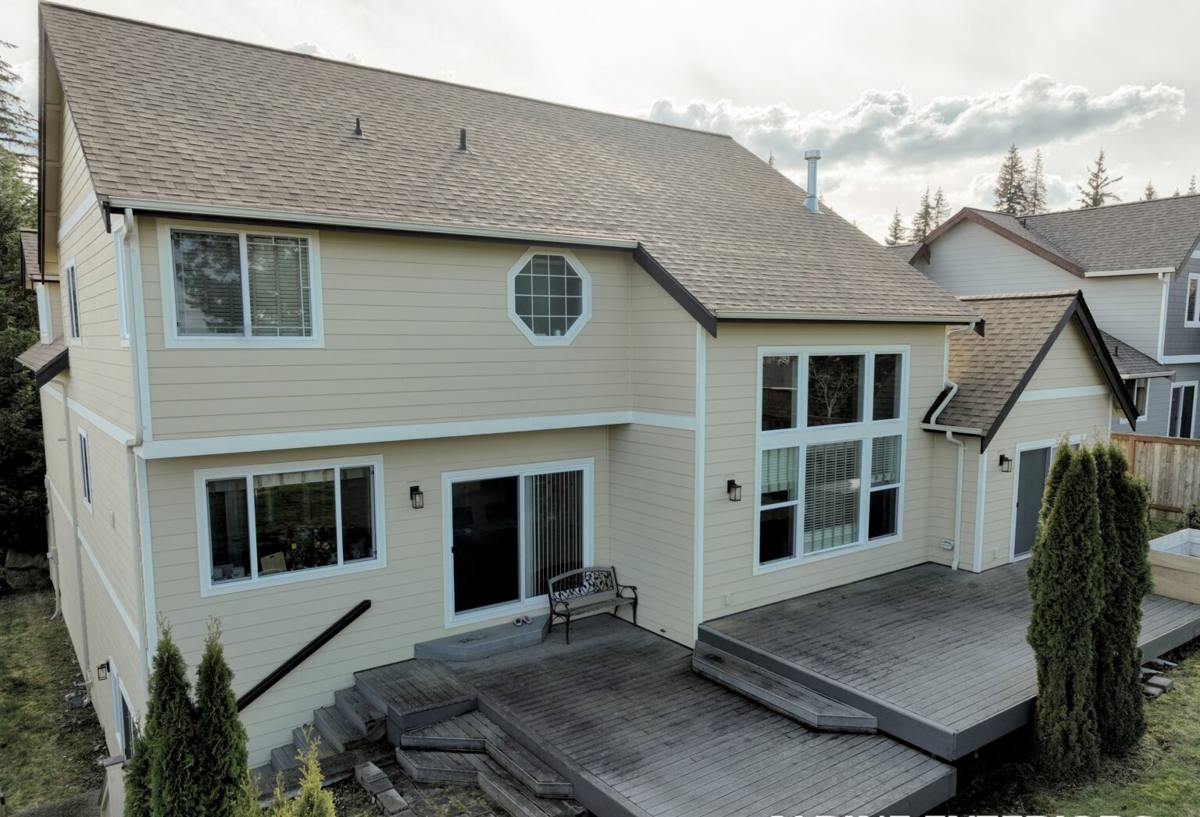
Why Decks Fail Faster in This Climate
Moisture that never fully leaves
Snohomish County gets a long wet season, and Monroe's mix of tree cover and low winter sun angles means a lot of decks stay damp for weeks at a stretch. Wood that never gets a real chance to dry out between rain events is wood that rots from the inside before it ever looks bad on the surface.
Moss and organic buildup
Moss doesn't just look bad — it holds water against the deck boards and framing underneath, and it works its way into fastener holes and board gaps. A deck with heavy moss growth is usually holding more moisture than the owner realizes, and that moisture is doing damage year-round, not just in winter.
Salt-tinged air and metal fatigue
Homes closer to the water pick up airborne salt that accelerates corrosion on fasteners, joist hangers, and any exposed metal hardware. Corroded hardware is one of the most common hidden failure points we find when we pull up an old deck — the boards can look fine while the connections holding everything together are already compromised.
Freeze-thaw cycling on footings
Monroe gets enough cold snaps most winters that ground moisture in and around deck footings freezes and expands. Over years, that cycle can heave or crack undersized or shallow footings, which shows up as a deck that's started to feel uneven or bouncy.
Signs Your Monroe Deck Needs Replacement, Not Repair
- Soft or spongy spots in the decking when you walk across it, especially near the house or in shaded corners
- Visible rot, splitting, or delamination at board ends and around fastener locations
- Ledger board (where the deck attaches to the house) shows staining, softness, or gaps — a common source of structural failure
- Railings that flex or feel loose when pushed
- Joist hangers or fasteners showing heavy rust or corrosion
- Persistent moss or algae that comes back within weeks of cleaning
- Footings that have shifted, cracked, or settled unevenly
- The deck is 15-25+ years old and has never had the substructure inspected
If it's mostly surface graying and the frame underneath is sound, that's usually a repair or refinish, not a full replacement. We'll tell you honestly which category your deck falls into rather than sell you a bigger job than you need.
What a Correct Deck Replacement Involves
Full teardown and inspection
We remove the old decking, railings, and framing down to the ledger and footings so we can actually see what's underneath — not just replace boards over a frame that may already be compromised. This is where hidden rot and corroded hardware usually turn up.
Ledger and flashing done right
The ledger board connection is the single most important structural point on an attached deck, and it's also the point most exposed to water intrusion in a climate like ours. Proper flashing that directs water away from the house band joist matters more here than in drier regions, because a poorly flashed ledger in a wet climate can lead to rot inside the wall itself, not just the deck.
Framing sized for wet-climate longevity
We use pressure-treated framing rated for ground contact where it's called for, and we pay attention to joist spacing and beam sizing so the structure isn't relying on the decking material for rigidity. Proper spacing between boards and airflow underneath the deck both help wood dry out between rain events instead of staying saturated.
Fasteners and hardware that hold up near salt air
Given the corrosion issues we see on older decks in this area, we use coated or stainless fasteners and hangers rated for exterior and coastal-adjacent exposure rather than standard interior-grade hardware.
Footings sized for local frost and soil conditions
We set footings below the local frost depth and size them to the deck's actual load, which protects against the freeze-thaw heaving that causes so many older Monroe decks to go uneven over time.
Decking Material Options
The right material comes down to how much upkeep you want to do versus what you want to spend up front. Here's how the common options actually perform in this climate:
| Material | Moisture/Moss Behavior | Maintenance | Typical Lifespan |
|---|---|---|---|
| Pressure-treated wood | Absorbs moisture, needs regular sealing to resist moss and rot | Annual cleaning and re-staining/sealing | 10-15 years with upkeep |
| Cedar | Naturally rot-resistant but still needs sealing in a wet climate | Sealing every 1-2 years | 15-20 years with upkeep |
| Composite decking | Doesn't absorb water like wood, but moss and algae can still grow on the surface and need washing | Periodic cleaning, no sealing/staining | 25-30 years |
| PVC decking | Fully synthetic, sheds water and resists moss buildup best of the common options | Occasional washing | 25-30+ years |
We install both real wood and composite/PVC systems and will walk through the honest tradeoffs for your specific deck — how much sun or shade it gets, how exposed it is to wind-driven rain, and what upkeep you're realistically willing to do.
What It Costs
Deck replacement cost depends heavily on size, material, height off grade, and how much of the substructure needs upgrading. As a rough guide for a straightforward attached deck in this area:
- Pressure-treated wood: generally the most affordable option per square foot, with ongoing maintenance cost added over the deck's life
- Cedar: a step up in material cost with a similar maintenance commitment to treated wood
- Composite: higher upfront cost, lower long-term maintenance cost
- PVC: the highest upfront cost, lowest long-term maintenance cost
Height, stairs, railings, built-in features, and how much of the existing footings and framing can be reused all move the number as well. We give a firm, itemized quote after we've actually looked at the deck — not a phone-guess.
Our Process for a Monroe Deck Replacement
- On-site assessment: we inspect the existing deck, ledger, footings, and framing to determine the real scope of work
- Honest scope and quote: we tell you what's structurally necessary versus what's optional, with a clear written estimate
- Permitting: most deck replacements in Monroe and unincorporated Snohomish County require a permit — we handle that process
- Teardown: full removal of old decking, railings, and any compromised framing or footings
- Rebuild: new footings where needed, framing sized for local conditions, proper ledger flashing, and your chosen decking material
- Final walkthrough: we go over the finished deck with you before calling the job done
Why Hire a Crew That Already Works in Monroe
A deck built for a dry climate isn't built the same as one built for Snohomish County's wet, moss-prone conditions. Crews who don't work here regularly can miss the details that matter most locally — proper ledger flashing for driving rain, hardware rated for salt-tinged air, footing depth for our freeze-thaw pattern, and board spacing that actually lets a deck dry out between storms. We work decks in Monroe and the surrounding area regularly, so these aren't things we're guessing at — they're standard practice on every job we build here.
We're also around after the job is done. If a question comes up about maintenance, sealing schedule, or how the deck is handling its first wet season, you're calling a crew that's still local, not a name from an out-of-area company that's moved on to the next region.
Get a Free Estimate
If your Monroe deck is showing soft spots, loose railings, corroded hardware, or has just never had the frame checked, we're happy to take a look. Reach out for a free, no-pressure estimate — we'll give you a straight answer on whether you need a full replacement or something less, and what it'll actually take to do it right for our climate. Use the form below to get started.