 Snohomish
 Cathcart Sits in a Tough Climate for Exterior Materials
Cathcart is a small, mostly rural pocket north of the city of Snohomish, tucked in along the river valley where fog settles in the low ground and tree cover keeps roofs and siding shaded and damp for long stretches of the year. Like the rest of Snohomish County, homes here sit inside the broader Puget Sound marine climate — mild temperatures, long wet winters, and air that carries enough moisture and salt influence off the Sound to accelerate corrosion and organic growth on anything not built to handle it. That combination is hard on siding in ways homeowners in drier parts of the country never have to think about.
The pattern we see on Cathcart homes is consistent: driving rain pushed sideways by wind finds its way into seams and laps that were never properly flashed, tree cover and shade keep north and west-facing walls wet far longer than they should stay wet, and moss and algae get a running start every fall and don't really let go until late spring. None of that is unique to any one house — it's what this stretch of Western Washington does to exterior materials, year after year, and it's the starting point for every siding conversation we have out here.
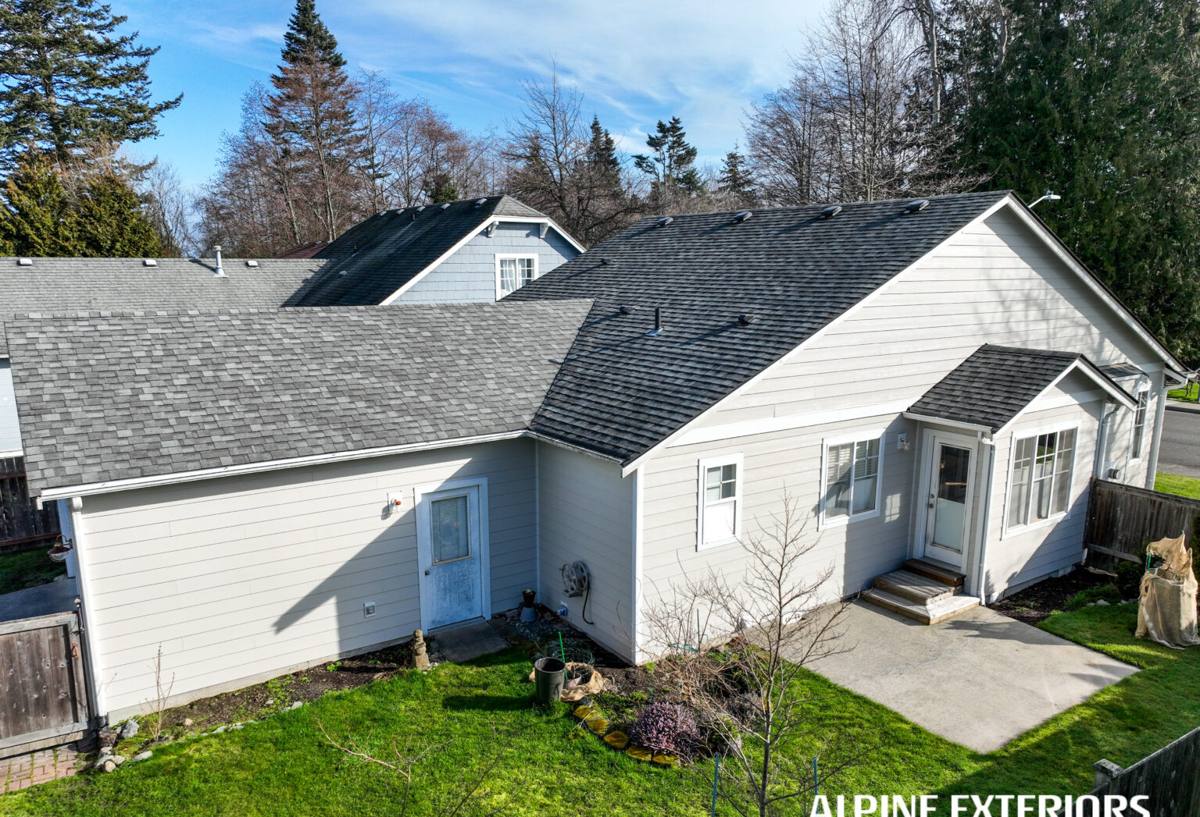
What This Climate Does to Common Siding Materials
Different siding products handle sustained moisture and moss pressure very differently. This is the core of why we made the call, years ago, to stop installing certain products even though they're cheaper up front.
| Material | Moisture/Moss Resistance | Maintenance Burden | Fire Rating | Typical Lifespan Here |
|---|---|---|---|---|
| Vinyl | Doesn't rot, but seams and J-channels trap moisture behind the panel | Low, but cracks and fades; can't be repainted easily | Combustible, can warp near heat | 15–25 years before visible failure |
| Primed spruce / cedar | Poor — absorbs water, feeds moss and rot at end grain and laps | High — repainting and caulking every few years | Combustible | 10–20 years, often less on shaded walls |
| LP SmartSide (engineered wood) | Better than raw wood, but still wood-based and sensitive to unsealed cut edges | Moderate — edge sealing and caulk maintenance is critical | Combustible | 20–30 years with diligent upkeep |
| James Hardie fiber cement | Excellent — cement-based, doesn't absorb water like wood, resists moss anchoring | Low — factory finish holds up, occasional wash | Non-combustible | 30–50 years with correct install |
That table isn't a knock on every other product's engineering — vinyl and engineered wood both have legitimate uses in drier climates or budget-driven projects. But for a neighborhood like Cathcart, where a wall can stay wet for days at a time during a normal winter, the material's relationship with water is the whole ballgame.
Why We Standardized on James Hardie Fiber Cement
We install James Hardie exclusively — not vinyl, not LP SmartSide, not Cemplank or Allura, not primed spruce or cedar. That's a deliberate professional standard, not a sales pitch, and it's worth explaining honestly.
What Hardie Gets Right for This Climate
- Non-combustible core: fiber cement doesn't feed a fire, which matters as wildfire smoke and dry-season risk have become a bigger part of Western Washington summers.
- Moisture behavior: cement-based board doesn't swell, cup, or rot the way wood-based products can when it stays wet for days.
- ColorPlus factory finish: the finish is baked on at the factory under controlled conditions, which holds color and resists the fading and chalking that field-applied paint struggles with under constant UV and moisture cycling.
- HZ5 engineered formulation: Hardie's HZ5 product line is specifically formulated for climates like ours — freeze-thaw cycling, sustained humidity, and heavy rain — rather than a one-size-fits-all board.
- Transferable warranty: a strong, structured warranty that follows the house, which matters to buyers if you ever sell.
The Honest Trade-Offs
Fiber cement costs more upfront than vinyl and is heavier and more labor-intensive to install correctly — it requires proper fastener patterns, specific blade and dust-control handling during cutting, and correct flashing and gapping at every joint. Installed poorly, any siding fails; installed well, Hardie is the product we're willing to put our name behind in this climate. That's the honest trade: more upfront cost and installation discipline, in exchange for a material that's genuinely built for what Snohomish weather does to a house over decades.
Why a Local Crew Matters in a Neighborhood Like Cathcart
Cathcart isn't downtown Seattle, and it isn't identical to Snohomish's more built-up neighborhoods either — it's got more tree cover, more exposure to river-bottom fog, and homes on a mix of lot sizes and ages. A crew that works this specific stretch of Snohomish County regularly knows which walls tend to hold moss the longest, which roof-to-wall transitions tend to leak first, and how local permitting and inspection through Snohomish County typically goes. That local knowledge shows up in small decisions — how much rain-screen gap to build in on a shaded north wall, where to add extra flashing attention around window heads — that a crew unfamiliar with the area might not think to flag.
It also matters for response time. A punch-list item, a warranty question, or a storm-damage inspection request gets handled faster by a crew that's already routing through the area than by a contractor working three counties away.
Signs a Cathcart Home May Need New Siding
Because moss and moisture damage build slowly, a lot of homeowners don't notice a problem until it's well established. Worth checking for:
- Soft or spongy spots when you press on siding, especially near the bottom courses and around window trim
- Moss or dark streaking that keeps coming back within weeks of cleaning
- Paint that's peeling, bubbling, or chalking heavily, particularly on north- and west-facing walls
- Visible gaps, warping, or cupping in individual boards or panels
- Rising utility bills that suggest wall insulation is compromised by moisture intrusion
- Rot or discoloration at butt joints, corners, and anywhere trim meets siding
Any one of these on its own isn't necessarily an emergency, but a few of them together usually mean water has been getting behind the siding for a while.
Siding Doesn't Work in Isolation — Roofing, Windows, and Decks
Most of the moisture problems we find on siding jobs didn't start with the siding — they started at a roof-to-wall transition, a window that was never properly flashed, or a deck ledger board that's been quietly rotting the wall behind it. Because we handle siding, roofing, windows, and decks as one crew, we look at the whole envelope rather than patching one piece and leaving the actual water path untouched. On a Cathcart property specifically, that usually means paying close attention to roof overhangs and gutter performance — under-sized or clogged gutters push water directly down exterior walls that are already dealing with more rain exposure than most.
What a Full Exterior Assessment Looks Like
- Walk the exterior and identify moisture entry points, moss buildup, and any soft or damaged siding
- Check roof-to-wall flashing, gutter condition, and downspout drainage away from the foundation
- Inspect window and door flashing for gaps or failed caulking
- Assess any deck ledger connections and attached structures for water intrusion into the wall
- Put together a written scope that addresses the actual cause, not just the visible symptom
What Installation Looks Like, Done Right
Correct Hardie installation isn't complicated, but it's unforgiving of shortcuts. Boards need proper fastener spacing and depth, correct gapping at butt joints and trim to allow for expansion, a functioning rain-screen or drainage plane behind the siding, and flashing at every horizontal transition — window heads, roof lines, deck ledgers. Skipping any one of those steps is how a good product ends up with a bad reputation. It's also why we don't rush crews through a Hardie install just to hit a faster schedule; the install quality is what determines whether the material delivers the 30-to-50-year lifespan it's capable of.
What Drives the Cost of a Siding Project
| Factor | Why It Matters |
|---|---|
| Square footage and home shape | More corners, dormers, and cutouts mean more labor and material waste |
| Existing wall condition | Rot or moisture damage found during tear-off adds repair scope before new siding goes on |
| Siding profile and trim detail | Lap width, shingle-style accents, and trim complexity affect both material and labor cost |
| Access and site conditions | Tree cover, tight lot lines, and multi-story walls affect staging and scaffolding needs |
| Color and finish | Factory ColorPlus finishes cost more than field paint but eliminate a repaint cycle |
We won't quote a number without seeing the house — every one of these factors changes the math, and giving a homeowner a made-up ballpark isn't useful to anyone.
Maintaining Fiber Cement Siding in a Wet Climate
Hardie siding is low-maintenance, not no-maintenance. A yearly rinse to knock down moss and organic buildup before it gets a foothold, a walk-around after major windstorms to check for impact damage, and keeping gutters clear so water isn't sheeting down the wall will keep a properly installed system performing for decades. None of that requires a contractor — it's the kind of upkeep any homeowner can build into a fall routine.
If you're seeing early signs of trouble on a Cathcart home, or you're just planning ahead for a siding, roofing, window, or deck project, we're happy to walk the property and give you an honest, no-pressure assessment. Use the form below to request a free estimate.