 Snohomish
 Two Fiber Cement Products, One Decision
If you've gotten quotes from a few siding contractors in Snohomish, you may have noticed that not everyone is talking about the same siding. Some crews install Cemplank. We install James Hardie, exclusively, on every fiber cement job we take on. Homeowners reasonably ask why — especially when both products are marketed as fiber cement and both look similar on a sample board.
This page is our honest answer. Cemplank is a legitimate fiber cement product, not a scam or a knockoff, and we're not going to pretend otherwise. But after years of installing and servicing siding in Snohomish County's wet, marine-influenced climate, we standardized on one manufacturer for reasons that matter more once the siding has been on a house for ten or fifteen years than they do on install day.
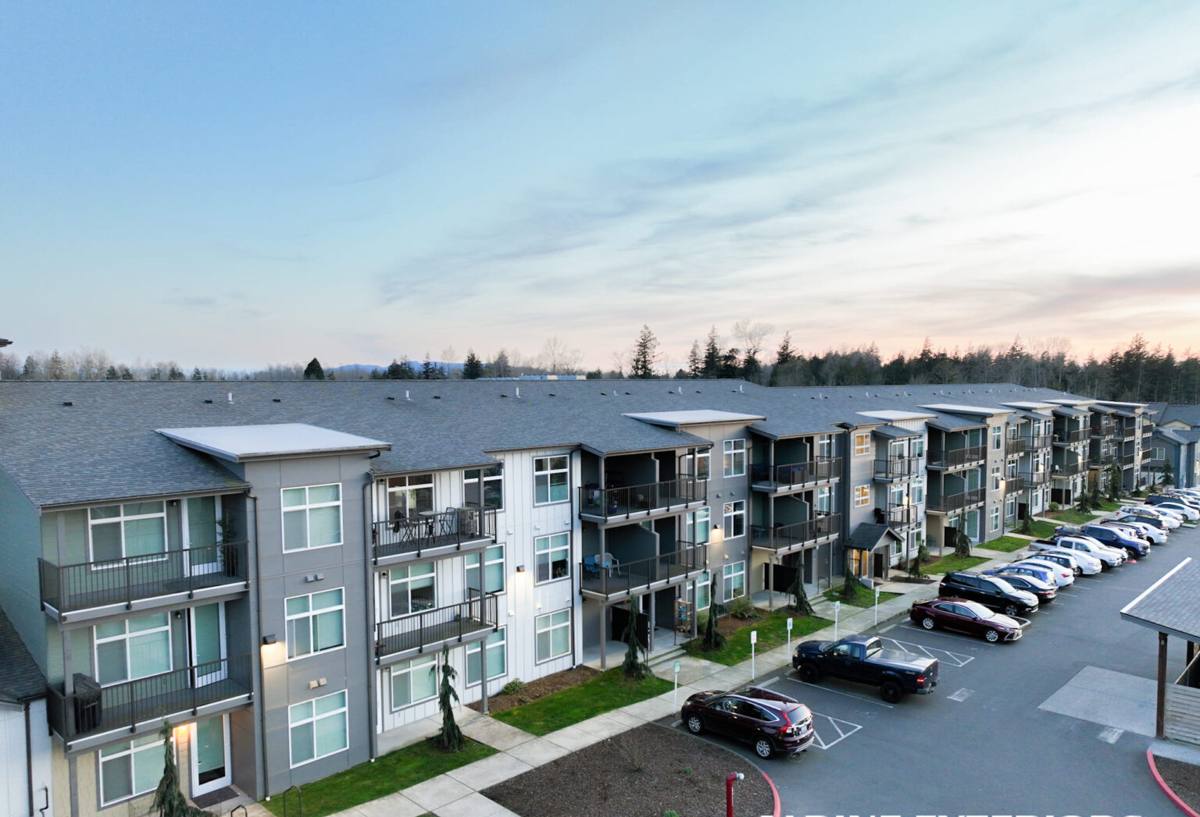
What Fiber Cement Siding Actually Is
Before comparing brands, it helps to know what fiber cement is in the first place. It's a manufactured siding material made from a mix of Portland cement, sand, cellulose fiber, and water, cured under controlled factory conditions into dense, rigid boards or panels. Compared to wood or engineered wood siding, fiber cement doesn't absorb moisture the way raw wood does, it doesn't attract wood-boring insects, and it holds paint or factory finish far longer than cedar or primed spruce.
Both Cemplank and James Hardie fall into this same general category, and both are used in lap siding, panel siding, and trim applications. On paper, a spec sheet comparison between the two can look close. The differences that matter to a homeowner show up in the details underneath the spec sheet — finish process, product engineering, and what happens when something needs to be repaired or matched years down the road.
Where the Two Products Overlap
- Both are cement-based composite siding, not vinyl, not wood, not engineered wood.
- Both are non-combustible in the sense that they won't ignite and contribute fuel to a fire the way wood siding can.
- Both resist rot in a way that raw wood siding cannot.
- Both are installed using similar fastening methods, and both require correct flashing, clearances, and caulking details to perform as intended.
- Both come in lap, panel, and trim profiles that can mimic traditional wood siding styles.
Where the Two Products Actually Diverge
Factory Finish and Color Consistency
This is the biggest practical difference homeowners notice, and it's also the one that shows up years later, not on install day. James Hardie's ColorPlus finish is baked on in a controlled factory process, formulated specifically for fiber cement, and backed by a separate finish warranty in addition to the product warranty. That matters because fiber cement expands and contracts slightly with temperature and moisture, and a finish that isn't engineered for that movement is more prone to fading unevenly, chalking, or peeling at the surface over time.
Cemplank offers primed and pre-finished options as well, but the finish programs, color libraries, and warranty backing behind them are structured differently. When we've had to match or repair siding on Cemplank jobs years after original install, color consistency and finish sourcing have been noticeably harder to manage than on a Hardie job, where the ColorPlus color library and touch-up products are standardized and traceable.
Climate-Engineered Product Lines
James Hardie engineers its siding into different HZ (HardieZone) formulations tuned to regional climate conditions — moisture exposure, freeze-thaw behavior, and humidity all factor into which HZ line ships to a given region. Western Washington falls into a wet marine climate zone, and the product we install is manufactured with that specific exposure profile in mind, not as a generic one-size-fits-all board.
Cemplank does not offer the same depth of regionally engineered product lines. That doesn't mean Cemplank siding is destined to fail here — plenty of installations hold up fine with correct installation — but it does mean the manufacturer hasn't built the same climate-specific engineering into the product that Hardie has, and in a region with as much sustained wet-weather exposure as ours, that's a difference we take seriously.
Warranty Structure and Transferability
James Hardie backs its siding with a long, transferable limited warranty that stays with the house through a sale, which matters to buyers and matters to resale value. Cemplank's warranty coverage exists too, but the terms, length, and transferability differ, and in our experience homeowners find Hardie's warranty paperwork and claims process more straightforward when an issue does come up. A warranty is only as useful as the manufacturer's ability to honor it consistently and the network of installers trained to document work correctly — and that's an area where Hardie's scale and installer certification programs give homeowners more backing.
Installer Training and Support Network
James Hardie runs a formal contractor training and certification program, with technical bulletins, installation specs, and a large enough installed base in the Pacific Northwest that best practices for our climate are well documented and widely shared among crews. Cemplank's installer network and manufacturer-direct technical support are thinner in this region, which in practice means fewer local reference points when a tricky detail — a dormer, a chimney chase, a low-clearance deck ledger — comes up on a real job.
Why Regional Climate Tips the Decision
Snohomish sits inland from Puget Sound but still sees the same weather pattern that defines siding performance across western Washington: long stretches of driving rain, salt-tinged air carried in off the Sound on wind events, and a moss season that runs from fall through spring on any north-facing or shaded wall. None of that is unique to us, but it's persistent in a way that drier climates don't experience, and it's exactly the kind of exposure that separates siding products that are "fine on paper" from siding products that hold up over two decades on an actual house.
Moisture cycling — wet, dry, wet, dry, week after week for months — is hardest on the finish layer and the board's dimensional stability at seams and butt joints. This is where the depth of a factory finish and the climate-specific engineering of the substrate matter more than they would in a milder or drier region. It's a large part of why we don't treat fiber cement as a commodity product where any brand will do.
Climate Factors We Weigh Before Recommending a Product
| Climate Factor | Why It Matters for Siding |
|---|---|
| Sustained driving rain | Tests flashing details, caulk joints, and finish adhesion over repeated wet cycles |
| Salt-influenced air near the Sound | Accelerates fastener corrosion and finish breakdown if materials aren't suited for it |
| Long moss and algae season | Shaded, north-facing walls stay damp longer, stressing finish and substrate |
| Freeze-thaw swings | Repeated freezing and thawing stresses any seams or micro-cracks in the finish |
| Limited direct sun on many lots | Slower drying times mean siding spends more hours wet than in drier climates |
What Standardizing on One Product Means for You
Installing a single manufacturer's product across every job isn't about brand loyalty for its own sake. It changes how we run the business in ways that benefit the homeowner directly:
- Consistent installation specs. Our crews install the same flashing, clearance, and fastening details on every job because they're working with one product's requirements, not switching methods between brands.
- Reliable color and product matching. If a section of siding needs replacement after a storm or a remodel years later, we can source matching material and finish far more reliably.
- One warranty process to understand. Homeowners deal with a single, well-documented manufacturer warranty rather than trying to track down coverage terms for whichever product a past contractor happened to install.
- Deeper product knowledge. Our crews aren't relearning installation quirks for a different product on every other job — they know this system inside and out.
Cost Considerations
Cemplank is often positioned as a lower-cost alternative to James Hardie, and material pricing between fiber cement brands can vary. But material cost is only part of the real cost of a siding job. Installation labor is typically the larger share of any siding project regardless of brand, and the long-term cost of a siding system includes repainting cycles, repair and matching availability, and how the warranty holds up if something goes wrong.
| Cost Factor | What to Ask About |
|---|---|
| Material price per square | Get an apples-to-apples quote for the same profile, thickness, and finish type |
| Factory finish vs. field-painted | Field painting after install shifts long-term repainting cost back onto you |
| Warranty length and transferability | Ask what's covered, for how long, and whether it transfers if you sell |
| Repair and color-match availability | Ask how easily damaged sections can be matched years from now |
| Installer certification | Ask whether the crew is manufacturer-trained on the specific product being quoted |
Questions Worth Asking Any Siding Contractor
Whether or not you end up hiring us, these are fair questions to ask any contractor quoting fiber cement siding in this area:
- Is the product factory-finished, or will it need to be field-painted after installation?
- What HZ or climate-zone rating is the product manufactured for, and is it appropriate for western Washington?
- What is the length and transferability of the manufacturer's warranty, separate from the installer's workmanship warranty?
- Is the crew certified or trained by the manufacturer on this specific product?
- How available is matching material and finish for future repairs?
Our Standard, Plainly Stated
We're not going to tell you Cemplank is a bad product — it isn't, and plenty of homes wear it fine. What we will tell you is that after weighing factory finish depth, climate-specific product engineering, warranty transferability, and the strength of the local installer support network against what our clients deal with year-round in Snohomish's wet, moss-prone, salt-air-touched climate, James Hardie is the product we're willing to put our name behind. Standardizing on one manufacturer lets us install to spec every time, match repairs reliably, and give homeowners a warranty process that's actually easy to use if it's ever needed.
If you're weighing siding options for your Snohomish home, we're happy to walk through what James Hardie's HZ5 product line and ColorPlus finish would look like on your house, no pressure and no obligation. Reach out for a free estimate and we'll give you a straight answer about what your home actually needs.