 Snohomish
 Siding Built for Marysville's Wet Side of the Mountains
Marysville sits low in the Snohomish County lowlands, close enough to Puget Sound and its estuaries that homes here deal with a specific mix of weather: long stretches of driving rain, air that carries a faint edge of salt off the water, and enough cloud cover and tree canopy to keep north- and east-facing walls damp for days at a time. None of that is dramatic on its own, but stacked up year after year, it's exactly the kind of slow, steady exposure that separates siding materials that hold up from siding materials that don't.
We install James Hardie fiber cement siding exclusively. Not as a marketing angle, but because after years of servicing homes in this climate, it's the one product we're willing to stand behind for the long haul. This page walks through what Marysville homes actually deal with, how our siding, roofing, window, and deck work fits into that picture, and why having a crew that actually works this area matters more than it might seem.
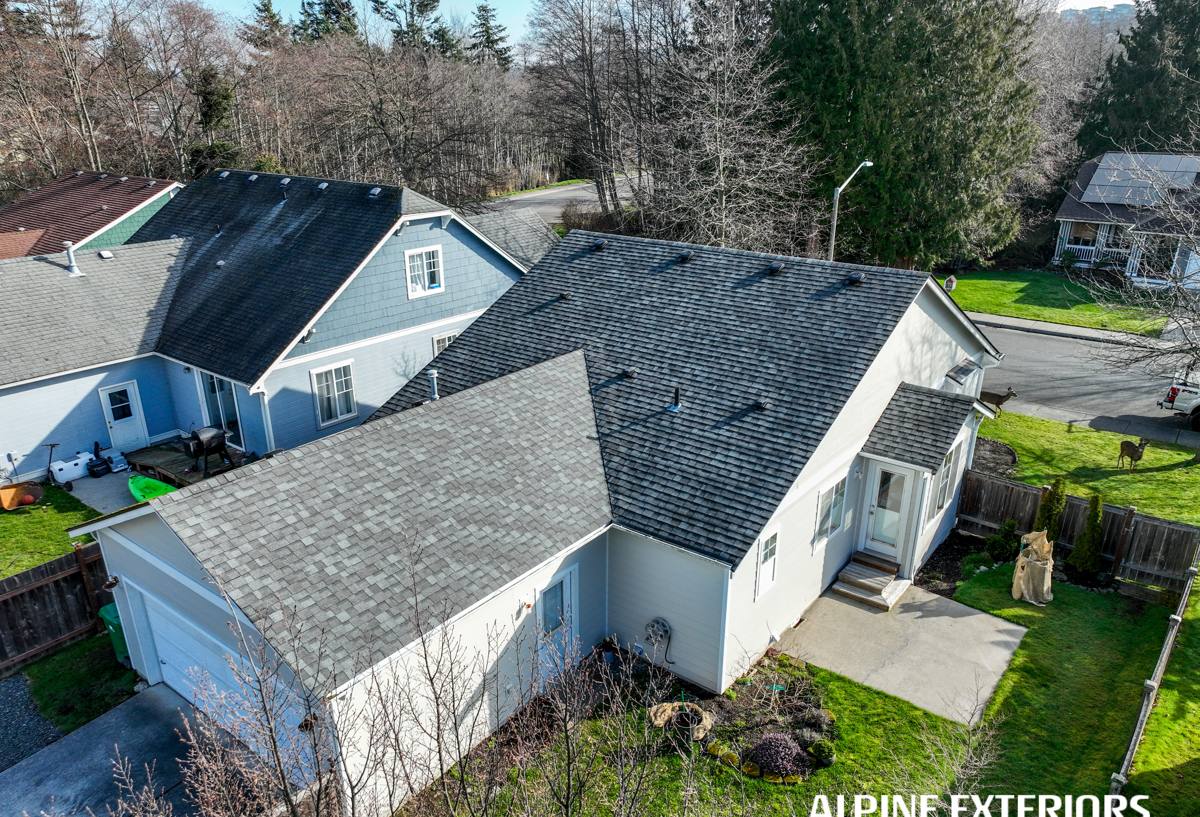
What This Climate Does to a House Over Time
Moss and Algae Season Runs Long
In this part of Snohomish County, moss and algae aren't a summer nuisance — they're closer to a year-round tenant. Shaded lots, mature evergreen cover, and the region's extended damp season give organic growth a long runway on any siding that holds moisture at the surface or in its seams. Once moss gets a foothold on a wall, it holds even more water against the material, which accelerates whatever damage was already starting underneath.
Driving Rain Finds Every Weak Point
Wind-driven rain off the Sound doesn't just fall straight down — it gets pushed sideways into seams, laps, and trim joints. Siding that depends on paint film or a factory coating to stay watertight is only as good as that coating's weakest point. Once water gets behind the surface, it doesn't dry out quickly here; the same humidity that keeps lawns green keeps damp wall cavities damp.
Salt Air, Even a Few Miles Inland
You don't have to be waterfront to feel it. Salt-laden air drifts inland on marine winds and settles on exterior surfaces, accelerating corrosion of fasteners and trim and breaking down certain coatings faster than they'd wear in a drier inland climate. It's a slower process than storm damage, but it's constant.
Temperature Swings and Repaint Cycles
Western Washington's freeze-thaw swings are mild compared to the Midwest, but they're frequent — damp, cold nights followed by wetter days, over and over, all winter. Materials that expand and contract with moisture rather than temperature take a different kind of beating here, and it shows up first as hairline cracking, then as peeling paint, then as rot underneath.
Why We Standardized on James Hardie
James Hardie fiber cement is engineered specifically for climates like this one. It's non-combustible, dimensionally stable in the face of constant moisture cycling, and finished at the factory with ColorPlus technology — a baked-on finish that resists fading, chipping, and peeling far longer than field-applied paint. Hardie's HZ5 product line in particular is formulated for the Pacific Northwest's wetter, cooler weather pattern, which is the exact pattern Marysville sits in.
We get asked fairly often why we don't install vinyl, LP SmartSide, cedar, or other fiber cement brands like Cemplank or Allura. Each of those products has legitimate strengths, and we're not here to tell you they're junk. But after years of tracking how materials actually perform on homes in this specific climate — the moss, the driving rain, the salt air — we made the call to only put our name behind one system. Vinyl can warp and fade under UV and doesn't hold paint if you ever want a different color. Cedar and primed wood look great initially but need real maintenance discipline to fight rot in a climate this wet. We'd rather install one product correctly than offer five and hope one of them holds up.
That's a business decision we're upfront about: we install Hardie because we trust it, not because it's the only siding that exists.
More Than Siding — A Full Exterior Approach
Siding doesn't fail in isolation. A roof leak, a failing window seal, or rot creeping up from a deck ledger board all show up eventually as siding damage, even though siding wasn't the actual problem. Because we handle siding, roofing, windows, and decks under one crew, we look at the exterior as one connected system rather than four separate trades that don't talk to each other.
- Roofing: a roof in poor condition is the single biggest threat to new siding — bad flashing and worn shingles dump water exactly where it does the most damage.
- Windows: failed window flashing is one of the most common hidden causes of rot found behind siding during tear-off.
- Decks: ledger boards and deck-to-house attachment points are frequent leak sources if not properly flashed against the wall.
- Siding: the visible layer, but only as good as what it's tied into.
When we quote a siding job, we're looking at the whole envelope, not just what's peeling.
Why a Local Crew Matters Here
Marysville's mix of housing stock — older homes closer to the core of town alongside newer subdivisions built out over the last couple decades — means every job comes with its own quirks: different sheathing types, different original siding materials, different degrees of moisture damage hiding underneath. A crew that works this specific area regularly gets a feel for what's common locally: which wall orientations tend to hold moss, where original construction shortcuts tend to show up, and how to sequence a tear-off so the house isn't sitting exposed during an actual rain event.
That local familiarity also shapes scheduling. We plan installs around this region's weather patterns rather than working from a generic calendar, because a fiber cement install done in the wrong conditions doesn't seal the way it should.
What Installation Actually Involves
Correct installation matters as much as the product choice — Hardie's own warranty terms are tied to installation following their specifications. Our process generally includes:
- Full exterior inspection, including a check of sheathing and framing once old siding is removed, not just a surface look.
- Repair of any rot, moisture damage, or failed flashing found underneath — this gets addressed before new siding goes up, not papered over.
- Installation of a proper weather-resistive barrier and correctly lapped flashing at every window, door, and penetration.
- Hardie panels or lap siding installed to manufacturer spacing and fastening specifications, including proper clearance from grade, decks, and roof lines.
- Final trim, caulking at appropriate joints only, and a walk-through so you know exactly what was done.
Cost Factors to Expect
Every home is different, but these are the variables that most affect a Marysville siding quote:
| Factor | Why It Matters |
|---|---|
| Extent of hidden moisture damage | Rot repair found after tear-off is common in this climate and affects total scope |
| Home size and wall complexity | More corners, gables, and trim detail means more labor and material |
| Siding profile chosen | Lap, panel, and shingle-style Hardie products carry different material and labor costs |
| Story height and access | Two-story walls and tight lot access add equipment and labor time |
| Existing material removal | Tear-off of old siding versus new construction changes the scope significantly |
| Integrated roof, window, or deck work | Addressing related exterior issues at the same time can be more efficient than separate projects |
We'll never guess at a number over the phone — an accurate quote requires actually looking at the home.
Simple Maintenance Once Hardie Is Installed
Fiber cement is low-maintenance, not no-maintenance. A few habits keep it performing for the long run in this climate:
- Rinse siding annually, focusing on shaded or north-facing walls where moss and algae take hold first.
- Keep gutters clear so overflow doesn't run down the wall face repeatedly.
- Trim back vegetation and tree limbs that keep siding shaded and damp.
- Re-caulk trim joints if you notice gaps or cracking — small gaps let water behind the material.
- Watch for any soft spots near ground level or below decks and windows, and have them checked early.
Get an Honest Look at Your Home
If your siding is showing moss, chalky paint, soft spots, or you're just planning ahead for a home in the Marysville area, we're happy to come take a look and give you a straight answer about what's going on and what it would take to fix it — no pressure, no upsell script. Request a free estimate through the form below and we'll get a local crew out to walk the exterior with you.