 Snohomish
 Why Monroe Homes Need Siding Built for This Climate
Monroe sits inland along the Skykomish River valley, but it still gets the full Western Washington weather package: long stretches of driving rain from fall through spring, heavy tree cover that keeps siding shaded and damp, and the kind of humid, salt-tinged marine air that pushes up from Puget Sound and settles into the valleys of Snohomish County. That combination is hard on exterior materials. Wood-based products absorb moisture and swell. Vinyl gets brittle and fades. Anything with seams or joints that weren't sealed correctly becomes a slow, hidden entry point for water behind the wall.
James Hardie fiber cement siding was engineered specifically for climates like this. It doesn't rot, it doesn't feed moss and mildew the way wood-based siding does, and it holds its factory finish through repeated wet-dry cycles instead of cracking or peeling. For a Monroe home surrounded by evergreens and getting hit with months of steady rain, that's not a luxury feature — it's the baseline a siding product needs to meet.
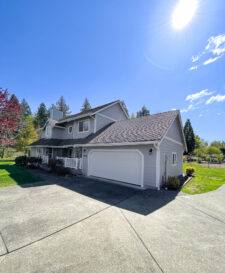
What James Hardie Siding Brings to a Monroe Home
James Hardie is fiber cement: a mix of cement, sand, and cellulose fibers pressed and cured into planks, panels, and shingles. It's non-combustible, dimensionally stable, and manufactured with climate-specific engineering built in.
HZ5 Engineering for the Pacific Northwest
James Hardie makes region-specific "HZ" (HardieZone) products, and the HZ5 line is formulated for the wetter, more humid climates found throughout Western Washington. The formulation accounts for the freeze-thaw and moisture-cycling conditions that are normal here, which matters more than most homeowners realize — a siding product engineered for a dry climate doesn't perform the same way once it's on a home getting soaked eight months out of the year.
ColorPlus Factory Finish
Most Hardie products installed in this area come with the ColorPlus finish option: a baked-on, multi-coat finish applied at the factory under controlled conditions, rather than field-painted after installation. It resists fading and chipping far better than a job-site paint job, and it means the color is consistent across every board on the house, including cut edges when trimmed correctly.
The Local Risk Factors: Moss, Moisture, and Shade
Monroe's mix of mature tree canopy, river-valley humidity, and long wet seasons creates a specific set of problems for exterior walls that a generic siding overview won't cover.
A Long Moss Season
Moss doesn't just grow on roofs here — it establishes on any exterior surface that stays damp and shaded long enough, and shaded north- and east-facing walls under tree cover are prime territory. Moss holds moisture directly against the surface it's growing on. On wood-based siding, that trapped moisture accelerates rot from the outside in. Fiber cement doesn't provide the same organic food source or absorb water the way wood does, which slows moss establishment and makes the buildup that does occur much easier to rinse off without damaging the material underneath.
Driving Rain and Wind-Driven Moisture
Rain in this region rarely falls straight down. Storms off the Sound push rain sideways into walls, which means water gets forced into any gap, seam, or fastener hole that wasn't detailed correctly. This is why installation quality matters as much as the product itself — the best siding material in the world will still let water in if the flashing, caulking, and overlaps aren't done right.
Humidity and Wall Assembly Moisture
Even without direct rain contact, the ambient humidity in a river valley like Monroe's keeps moisture pressure on exterior walls higher than in drier parts of the state. Siding needs to shed bulk water while still allowing the wall assembly behind it to dry out between wet spells. That's a function of correct installation — house wrap, drainage gaps, and flashing detail — not just the siding material on its own.
What a Correct Installation Actually Involves
James Hardie siding is only as good as the installation behind it. A rushed or under-detailed job can undercut every advantage the product offers. On a Monroe home, we pay particular attention to the following:
- Proper weather-resistive barrier (house wrap) installed and lapped correctly before any siding goes up
- A drainage plane or rainscreen gap behind the siding so incidental moisture can escape instead of sitting against the wall
- Correct fastener placement and spacing per James Hardie's published installation specs, not generic siding nailing patterns
- Minimum clearances at grade, roof lines, decks, and any horizontal surface, so siding never sits in standing water or snow
- Factory-primed or ColorPlus-finished cut edges properly sealed, since an unsealed cut edge is the most common point of moisture intrusion
- Correct flashing and kickout details at every window, door, and roof-to-wall intersection
- Butt joints and trim seams sealed with a high-quality, paintable sealant rated for the movement and moisture cycling this climate produces
Every one of those items is spelled out in James Hardie's manufacturer installation guidelines, and skipping any of them can also void the product warranty. That's the detail work that separates a siding job that looks right on install day from one that still performs correctly ten winters later.
Our Process for Monroe Projects
1. On-Site Assessment
We start by walking the exterior with the homeowner, looking at existing siding condition, moisture staining, moss patterns, trim and flashing condition, and any areas where past water intrusion has already caused damage. This tells us what's happening behind the current siding, not just what's visible on the surface.
2. Tear-Off and Substrate Check
Old siding comes off and we inspect the sheathing underneath before anything new goes up. Any soft, water-damaged, or compromised sheathing gets repaired or replaced before house wrap goes on — covering a rotten substrate with new siding just hides the problem for a few more years.
3. Weather Barrier and Drainage Plane
House wrap goes on correctly lapped, and we build in a drainage gap so the wall can dry out between the region's frequent wet stretches. This step matters more here than in drier climates, and it's one of the most commonly shortcut steps on lower-quality jobs.
4. Siding Installation to Manufacturer Spec
Panels, planks, or shingles go up following James Hardie's fastening, spacing, and clearance requirements, with flashing detailed at every penetration and transition.
5. Final Walkthrough
We walk the finished exterior with the homeowner, check every seam and joint, and confirm the work matches what was scoped and quoted before calling the job complete.
Choosing the Right Hardie Product Line for a Monroe Home
James Hardie makes several distinct product lines, and the right one depends on the home's existing architecture, siding profile, and how much of the trim and detailing needs to be replaced along with the field siding.
| Product | Typical Use | What It's Good For |
|---|---|---|
| HardiePlank lap siding | Traditional horizontal lap profile | Most common choice for standard Monroe home styles; wide range of textures and exposures |
| HardiePanel vertical siding | Vertical board-and-batten or modern panel look | Accent walls, gables, and homes going for a more contemporary exterior |
| HardieShingle siding | Staggered or straight-edge shingle profile | Homes wanting a cedar-shake look without the moisture and moss issues real cedar shingles develop |
| HardieTrim boards | Corner boards, window/door trim, fascia | Finishing out a full Hardie system so trim and field siding age and perform consistently together |
Cost Factors for a Monroe James Hardie Project
Every project is different, but the same set of factors drives cost up or down on most Monroe homes. We walk through these with every homeowner during the estimate so there are no surprises once work starts.
| Factor | Why It Matters |
|---|---|
| Tear-off scope | Removing multiple layers of old siding or dealing with hidden damage adds labor before new siding can even start |
| Sheathing repair | Rot found during tear-off has to be addressed before house wrap goes on; this is common on older homes with a history of moisture issues |
| Product line and profile | Plank, panel, and shingle profiles carry different material and install-labor costs |
| Trim and detail work | Homes with more corners, dormers, gables, and window trim take more time to flash and finish correctly |
| Finish choice | Factory ColorPlus finish costs more up front than primed siding but avoids a field-paint job and repainting cycles down the road |
| Access and site conditions | Multi-story sections, steep grades, and tight lot lines around mature trees affect staging and labor time |
Maintenance: What Monroe Homeowners Should Expect
James Hardie siding is low-maintenance compared to wood or vinyl, but "low-maintenance" doesn't mean "no maintenance," especially in a climate that grows moss on nearly everything left alone long enough. A simple annual routine keeps it performing the way it was designed to:
- Rinse the exterior yearly, focusing on shaded, tree-covered walls where moss and grime build up fastest
- Keep gutters clean and flowing so overflow doesn't run down the siding face repeatedly
- Trim back vegetation and tree limbs that keep any wall section in constant shade and dampness
- Check caulked joints and trim seams every year or two and re-caulk any that have cracked or pulled away
- Watch for any siding that stays visibly wet longer than the rest of the house after a rain — that's usually a sign of a flashing or drainage issue, not a siding failure
- Repaint only if the finish is a primed (non-ColorPlus) product reaching the end of its paint cycle
Why a Crew That Already Works Monroe Matters
Installation quality is what makes or breaks how James Hardie siding performs over time, and that's shaped directly by whether a crew understands the conditions they're building for. A crew based in Snohomish that regularly works Monroe and the surrounding Snohomish County area already knows how much drainage detail a shaded, tree-covered wall needs, what the local permitting and inspection process looks like, and how the region's rain patterns actually hit a house through a full winter — not just how the product performs on paper. That local track record matters more than a low bid from a crew installing Hardie for the first time in this climate. It shows up ten years later in whether the seams are still tight and the walls behind the siding are still dry.
If you're planning a siding project in Monroe and want a straight answer about what your home actually needs, we're happy to take a look and put together a free, no-pressure estimate. There's no obligation — just a clear picture of the work, the product, and the cost before you decide anything.