 Snohomish
 Siding Built for Mill Creek's Pacific Northwest Weather
Mill Creek homes near Snohomish sit in a part of Washington where the exterior of a house works hard almost year-round. Long stretches of rain, heavy marine moisture moving through the Puget Sound region, and short, low-angle winter sun combine to create conditions that most siding materials were never designed to handle for decades on end. If you've owned a home here for any length of time, you already know the signs: green streaking on north-facing walls, soft spots where trim meets siding, or paint that needs touching up again just a few years after the last job.
We install siding, roofing, windows, and decks for homeowners throughout the Snohomish area, and Mill Creek is one of the neighborhoods where we see this pattern most consistently. It isn't bad luck or bad maintenance — it's the climate doing what it does every year. The question isn't whether your siding will be tested. It's whether the material and the installation were built to take that testing without breaking down.
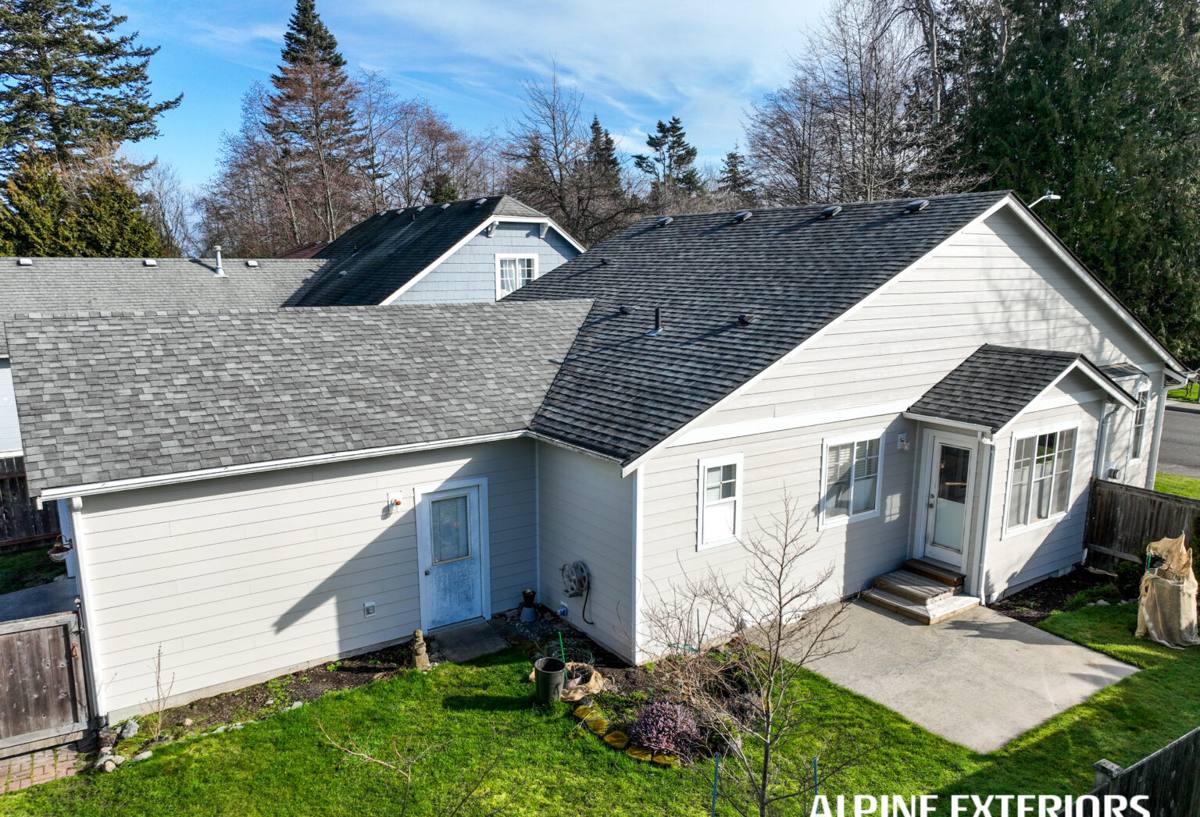
What the Local Climate Actually Does to Siding
Persistent Moisture
Western Washington doesn't get dramatic storms as often as it gets long, low-intensity rain that sits against a house for days. That kind of exposure is harder on siding than a single heavy downpour, because it gives water time to work into seams, fastener holes, and any spot where caulking has started to fail. Materials that swell, absorb moisture, or rely on a perfect paint film to stay sealed are the ones that struggle most.
Moss and Algae Season
Shaded, moisture-retaining walls in this region — especially on the north and west sides of a home, or anywhere tree cover blocks direct sun — support moss and algae growth for a large part of the year. On porous or wood-based siding, that growth isn't just cosmetic. It holds moisture against the surface and accelerates rot from underneath, often before it's visible from the ground.
Temperature Swings and UV
Even in a mild climate, siding goes through repeated cycles of getting wet, drying out, and taking sun exposure in between. Over years, that cycle is what causes paint to chalk, seams to open, and engineered wood products to swell at the edges. It's a slow process, which is exactly why it's easy to underestimate until repair costs show up.
Why We Standardized on One Siding Product
We install James Hardie fiber cement siding exclusively. We don't offer vinyl, LP SmartSide, Cemplank, Allura, or primed wood siding, and that's a deliberate decision, not a lack of options. Each of those alternatives has real strengths, but each also has a specific vulnerability that shows up in exactly the kind of weather Mill Creek gets.
Vinyl is affordable and low-maintenance in dry climates, but it isn't a moisture management system — it relies on the wall assembly behind it to do that work, and it can warp or crack in temperature extremes. LP SmartSide and other engineered wood products perform well when installation and caulking are done perfectly and maintained on schedule, but any lapse in that maintenance lets moisture into the wood fiber core, and swelling follows. Primed spruce and cedar are traditional, attractive choices, but they're wood — they need repainting on a real schedule and they're the most vulnerable of the group to the moss and rot cycle described above.
Fiber cement, and James Hardie specifically, is cement, sand, and cellulose fiber. It doesn't feed moss, it doesn't swell when it gets wet, and it isn't a food source for the organic growth that thrives in this climate. It's also non-combustible, which matters as wildfire smoke and fire risk have become a bigger part of Pacific Northwest summers in recent years.
How the Options Compare
| Material | Moisture Behavior | Moss/Algae Resistance | Maintenance Need | Combustibility |
|---|---|---|---|---|
| James Hardie fiber cement | Does not swell or rot | Does not feed organic growth | Low — factory finish, periodic wash | Non-combustible |
| Vinyl | Doesn't absorb, but can warp/crack | Can support surface growth | Low, but limited repair options | Combustible |
| Engineered wood (LP SmartSide) | Vulnerable if seals fail | Moderate risk if moisture intrudes | Moderate — caulk/paint upkeep | Combustible |
| Primed spruce/cedar | Absorbs moisture readily | High risk without upkeep | High — repaint on a schedule | Combustible |
James Hardie's ColorPlus Finish and HZ Product Lines
Beyond the base material, James Hardie's ColorPlus factory finish is baked on and cured under controlled conditions before the boards ever reach a job site — it holds color and resists fading and chipping far better than field-applied paint, which is the finish that fails first on most repainted siding jobs in this region. Hardie also engineers its products by climate zone (their HZ5 line is built for the kind of wet, temperate weather the Pacific Northwest sees), so what goes on a Mill Creek home is matched to the moisture and temperature patterns it will actually face, not a generic national spec.
The product carries a strong transferable warranty as well, which matters if you plan to sell the home — new buyers in this area increasingly ask what the siding is and how it's held up, and a documented, still-active warranty answers that question directly.
What Correct Installation Actually Involves
Fiber cement performs the way it's supposed to only when it's installed to manufacturer spec, and this is where a lot of the difference between a good siding job and a problem job actually comes from. We follow Hardie's installation requirements closely, including:
- Proper clearance between siding and grade, decks, and roof lines to keep splash-back and standing water away from the bottom edge
- Correct fastener type, spacing, and penetration depth so panels stay secure without cracking
- A weather-resistive barrier and rainscreen or drainage gap behind the siding, appropriate for our rainfall totals
- Properly flashed and caulked window, door, and penetration points — the most common failure point on any siding job, regardless of material
- Correct joint and butt-seam treatment to keep water from tracking behind panels
Skipping or rushing any one of these steps is how even a high-quality material ends up with a moisture problem a few years down the road. It's also why we treat installation quality as seriously as the product decision itself.
A Full Exterior, Not Just Siding
Siding doesn't work in isolation — the roof, windows, and any attached deck are all part of the same building envelope, and in this climate they all face the same moisture and temperature stress. We handle roofing, window replacement, and deck construction alongside siding work, which lets us look at a Mill Creek home as one system instead of a set of unrelated projects.
That matters in practical terms: flashing details where a roofline meets a wall, or where a deck ledger board attaches to the house, are common places for water intrusion if they aren't coordinated. A crew that handles all of it can catch and fix those transition points instead of leaving them for whoever tackles the next project.
Why a Local Crew Matters for This Kind of Work
Snohomish County's weather isn't exotic, but it is specific, and a crew that works in it every week makes different, better-informed decisions than one that doesn't — how much drainage gap to leave, how to sequence work around a wet forecast, which details need extra attention on shaded, moss-prone walls. That local familiarity shows up in the finished product years later, not on installation day.
What to Look For When Vetting a Contractor
- Manufacturer training or certification on the specific siding product being installed
- A written scope that specifies fastener type, flashing details, and drainage plane — not just "install siding"
- Proof of active licensing and insurance, checked directly rather than taken on faith
- References or completed local work you can actually see, in a climate similar to yours
- A clear explanation of warranty coverage — both the manufacturer's and the installer's own labor warranty
Thinking About the Long-Term Investment
Siding is one of the more expensive exterior projects a homeowner takes on, and it's also one of the least visible in terms of ongoing cost — you don't see moisture damage building behind a wall the way you'd notice a leaking roof. The real cost comparison between materials isn't the install-day price; it's install cost plus repainting, caulking, panel replacement, and moisture repair over 20-30 years. Fiber cement's higher upfront cost is offset by a maintenance schedule that's far lighter than wood or engineered wood siding typically requires in this climate.
If your Mill Creek home has siding showing its age — chalking paint, soft trim, moss buildup that keeps coming back no matter how often it's cleaned — it's worth having someone look at what's actually happening before deciding whether it's a repair, a partial replacement, or a full re-side. We're happy to come out, take an honest look, and put together a free, no-pressure estimate so you know exactly what you're working with and what your options are.