 Snohomish
 Siding Built for Maltby's Climate
Maltby sits in a stretch of Snohomish County that gets the full Pacific Northwest treatment: long wet winters, a short dry summer window, and enough tree cover in the surrounding area to keep moisture and shade lingering on exterior walls well after a storm has passed. Homes here aren't dealing with hurricane-force weather, but they are dealing with something arguably harder on siding over time — steady, driving rain for months at a stretch, damp air that never fully clears, and a moss and algae season that can run from fall through spring. That combination is exactly what wears out the wrong siding material years before it should fail.
We're a Snohomish-based exterior contractor, and Maltby is squarely in our regular service area. That matters more than it sounds like it should. A crew that works this specific corridor of Snohomish County day in and day out knows how the north and west-facing walls on a property tend to hold moisture longer, how tree-lined lots trap humidity against siding, and how a house set back from the road in shade behaves differently than one out in the open. That local pattern recognition shapes how we approach every estimate.
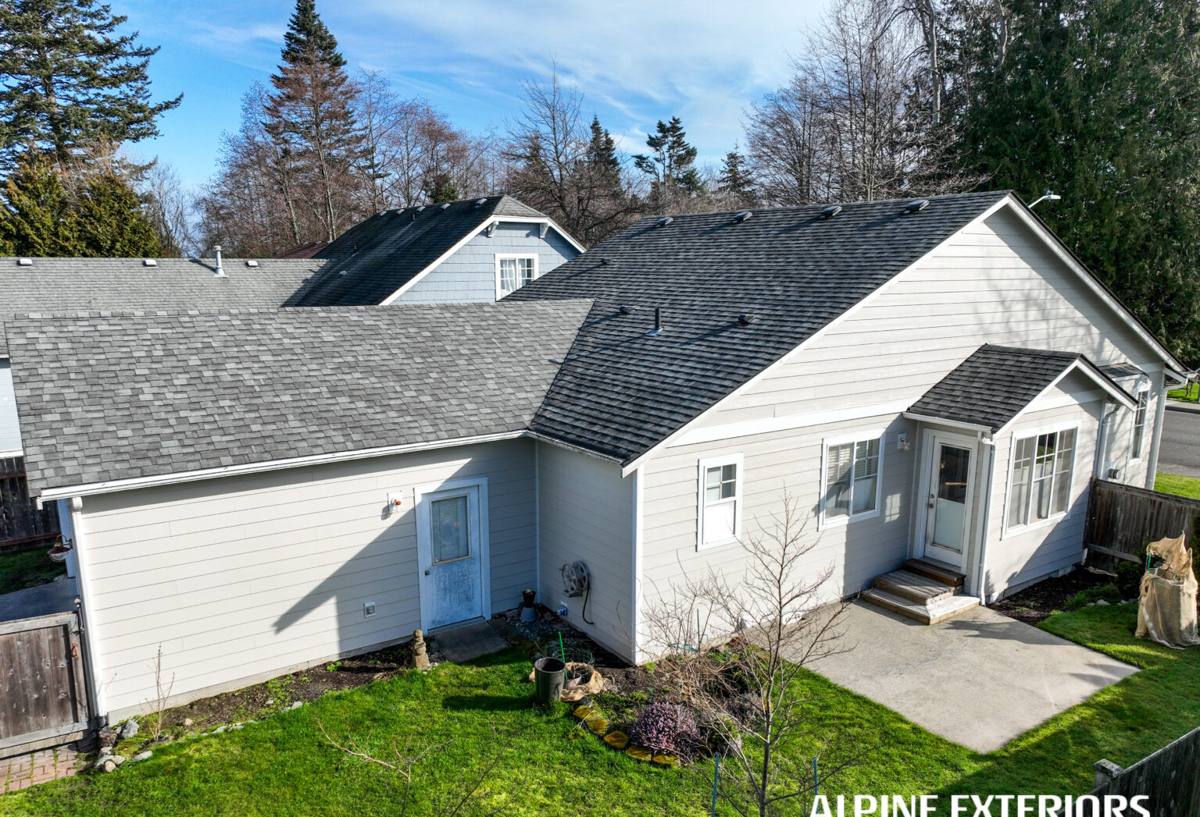
What Local Homes Are Up Against
If you've owned a home in this area for more than a few years, you've probably already seen some of this firsthand:
- Driving rain that gets pushed sideways into wall assemblies during winter storms, testing every seam, joint, and piece of trim on the exterior.
- Extended moss and algae growth on shaded or north-facing siding, especially near mature trees or close plantings that block sun and airflow.
- Slow-drying cycles — walls that get wet in October may not fully dry out until a stretch of sun in spring, which is hard on any material that absorbs moisture or swells.
- Freeze-thaw stress during cold snaps, where trapped moisture in siding or trim expands and contracts, opening up cracks and paint failure points.
- UV and heat exposure in the drier summer months, which can be surprisingly hard on siding that's already been weakened by a wet winter.
None of this is dramatic, day-to-day damage. It's cumulative. Siding that "looks fine" for the first several years can be quietly absorbing moisture, feeding mold growth behind the surface, or losing paint adhesion — and by the time it's visibly failing, the fix is a lot more than a fresh coat of paint.
Why This Pushes Us Toward One Material
We install James Hardie fiber cement siding exclusively. We don't install vinyl, LP SmartSide, Cemplank, Allura, primed spruce, or cedar, and that's a deliberate standard, not a default. In a climate like Maltby's, the material differences between siding options aren't cosmetic — they show up directly in how a house ages.
Why We Don't Install Other Siding Products Here
Wood-Based and OSB Composite Siding (LP SmartSide, primed spruce, cedar)
Engineered wood and natural wood siding products have real strengths — they look good, they're workable for trim detail, and plenty of homes around the region still carry them. The trade-off in a climate like this one is moisture sensitivity. Wood and wood-composite substrates can swell, delaminate at cut edges, or take on rot if water gets past the paint film or into an unsealed cut — and in an area with this much sustained dampness and shade, that exposure happens more than homeowners expect. Cedar in particular needs regular refinishing to keep ahead of moisture and UV, which is a real ongoing cost most owners don't budget for.
Vinyl Siding
Vinyl is affordable and low-maintenance in the sense that it doesn't need repainting, but it has its own limits. It expands and contracts significantly with temperature swings, which over time can loosen fastening and open gaps at seams — exactly where wind-driven rain wants to get in. It also traps moisture behind it if the wall assembly beneath isn't managed carefully, and it's not fire-resistant, which matters more every year in this region.
Cemplank and Allura
These are other fiber cement manufacturers, and fiber cement as a category is the right call for this climate — dimensionally stable, moisture-resistant, and non-combustible. Our reason for standardizing on James Hardie specifically comes down to manufacturing consistency, the ColorPlus factory-applied finish, climate-engineered product lines built for exactly this kind of weather, and a warranty structure we've found to be stronger and more consistently honored. We'd rather install one product exceptionally well, backed by real manufacturer support, than juggle several.
What We Install Instead: James Hardie Fiber Cement
James Hardie siding is made from cement, sand, and cellulose fibers, engineered to resist moisture absorption, hold paint far longer than wood, and stand up to freeze-thaw cycling without cracking or warping. It's also non-combustible, which is an increasingly relevant consideration as wildfire smoke and fire risk become a more regular part of Pacific Northwest summers.
HZ5 vs HZ10 — Product Lines Built for Region
James Hardie makes region-specific formulations under its HZ system, engineered for the moisture and freeze-thaw conditions of specific climate zones rather than a one-size-fits-all product.
| Feature | HZ5 | HZ10 |
|---|---|---|
| Engineered for | Cold, wet, freeze-thaw climates | Hot, humid climates |
| Typical fit for Maltby / Snohomish area | Yes — standard choice | Not applicable here |
| Moisture resistance focus | High, tuned for sustained wet seasons | Tuned for heat and humidity, different profile |
ColorPlus Technology
Most of our installs use Hardie's ColorPlus factory-applied finish rather than field-painted siding. It's baked on in a controlled facility, resists fading and chipping better than a site-applied paint job, and comes with its own finish warranty. In a climate where UV exposure and driving rain both take a toll on paint film, that factory finish is a meaningful upgrade over painting boards on site.
How We Approach a Maltby Project
The process is the same rigor whether the home is a smaller single-story or a larger two-story with more elevation to cover, but the details of the assessment shift based on the property.
- On-site assessment. We walk the exterior, check existing siding and trim condition, look at moisture patterns tied to shade and tree cover, and inspect for any existing water intrusion or rot at vulnerable points — corners, window trim, and lower wall sections.
- Water management review. Correct flashing, house wrap, and drainage behind the siding matter as much as the siding itself. A lot of siding failures we see on older homes trace back to water management details, not the cladding material.
- Product and color selection. We help homeowners pick the right Hardie plank or panel profile and ColorPlus color for the home's style and the light conditions on the property — shaded lots and sun-exposed lots don't always suit the same color the same way.
- Installation to manufacturer spec. Hardie's performance and warranty both depend on installation done correctly — proper fastening, clearances, and joint treatment. We install to that spec, not around it.
- Final walkthrough. We go over the finished work with the homeowner, including care and maintenance expectations, before calling the job done.
Beyond Siding: Roofing, Windows, and Decks
Siding rarely fails in isolation. A roof that's shedding water onto a wall, windows with failing flashing, or a deck ledger board holding moisture against the house can all undermine even the best siding job. Because we handle roofing, windows, and decks alongside siding, we can flag those connected issues during an estimate instead of treating the siding as a problem in a vacuum. If your roof is due for attention or your windows are original to an older build, it's worth mentioning during the walkthrough — it often changes the right sequencing for the work.
Maintenance in This Climate
Even with a low-maintenance material like fiber cement, this region's moss and moisture season means siding isn't fully "set it and forget it." A short seasonal checklist for homeowners:
- Rinse siding gently once or twice a year to keep moss and algae from establishing, especially on shaded or north-facing walls.
- Keep gutters clear so overflow isn't running down and pooling against siding during heavy rain.
- Trim back vegetation and tree limbs that hold shade and moisture directly against exterior walls.
- Check caulking at trim, window, and door joints annually — small gaps are cheap to fix and expensive to ignore.
- Watch for any soft spots, staining, or bubbling paint, which can signal moisture getting past the surface.
What Drives Cost on a Siding Project
Every home is different, but a few factors consistently move the estimate up or down:
| Factor | Why it matters |
|---|---|
| Home size and elevation count | More square footage and more complex rooflines mean more material and labor |
| Current siding removal | Tear-off and disposal of old material adds time, especially with wood or vinyl over sheathing that needs repair |
| Trim and detail work | Corner boards, window trim, and architectural detail take more precision than flat wall runs |
| Water management repairs | Rot or flashing issues found underneath old siding need fixing before new siding goes on |
| Product profile and finish | Plank width, panel style, and ColorPlus finish selection affect material cost |
We don't quote a project without seeing it — anything else is a guess, and this climate has too many hidden variables (shaded moisture pockets, older flashing, tree-adjacent rot) to price accurately from a photo or a phone call alone.
Get an Estimate
If you're in Maltby or anywhere in the surrounding Snohomish area and want a straight answer on your siding's condition — or you're planning ahead for a roof, window, or deck project alongside it — we're happy to come take a look. The estimate is free, there's no pressure, and you'll get an honest read on what your home actually needs.