 Snohomish
 Metal Roofing Built for Silver Firs Homes
Silver Firs sits in a part of Snohomish County where roofs earn their keep. Between the marine-influenced air moving in off Puget Sound, the long stretches of driving rain through fall and winter, and a moss season that seems to start earlier every year, a roof here is under more or less constant low-grade attack. Metal roofing has become a popular answer for homeowners who are tired of re-treating moss, chasing granule loss, or replacing a roof every fifteen to twenty years. Done correctly, it's one of the few roofing systems that genuinely gets ahead of this climate instead of just tolerating it.
This page is specifically about metal roofing for homes in and around Silver Firs — what the local weather actually does to a roof, what a correct metal roof installation looks like, and what to expect if you hire a crew that already knows this neighborhood's housing stock and conditions.
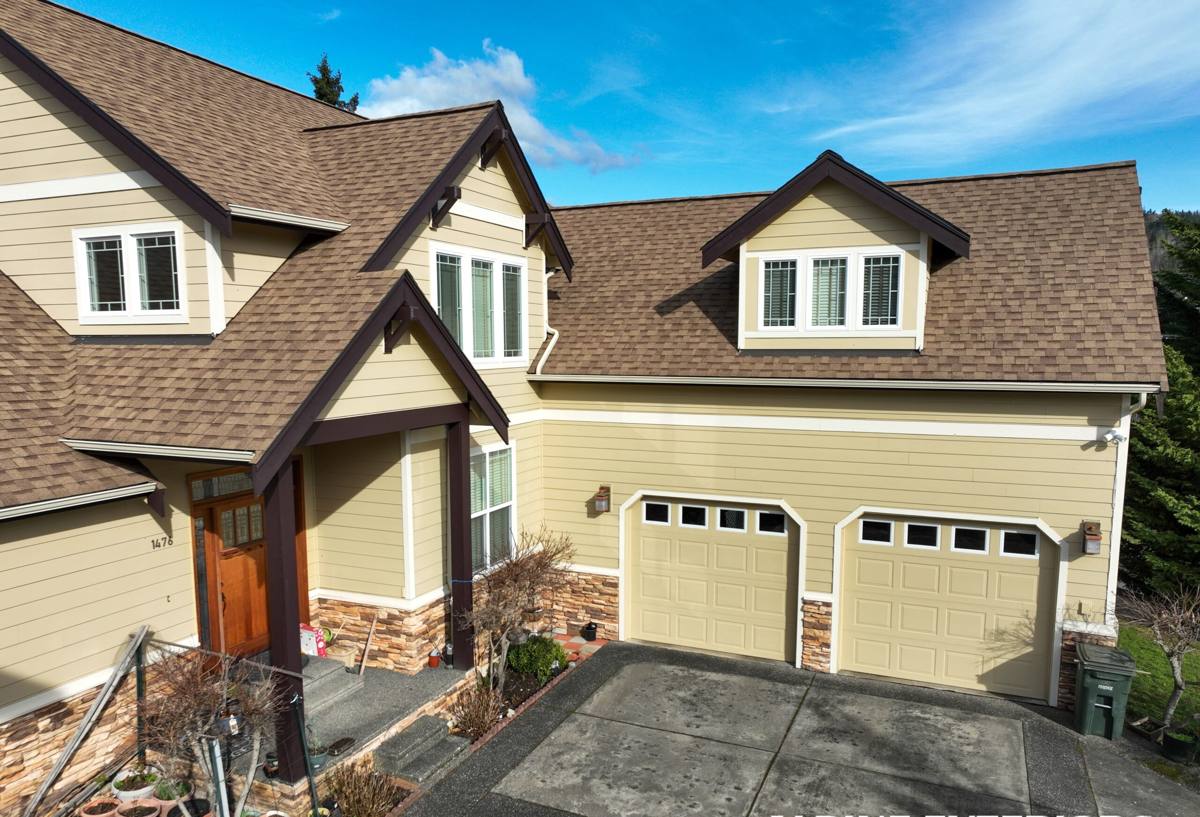
What Snohomish County Weather Does to a Roof
Three things drive most of the roofing problems we see in this area, and they compound each other over time.
Salt-Influenced, Moist Air
Homes in Snohomish County sit close enough to Puget Sound that the air carries a low but steady level of salt and moisture. On its own that's manageable, but it means fasteners, flashing, and any exposed metal need to be rated for a coastal-adjacent environment, not just a generic interior climate. Cheaper or mismatched hardware corrodes faster here than it would further inland.
Driving Rain
Wind-driven rain doesn't just fall on a roof, it pushes sideways and works its way under laps, around penetrations, and into any gap that a fair-weather installation might get away with. A roof that's only been tested by straight-down rain can still leak the first time a real Pacific storm comes through sideways.
A Long Moss Season
Shade, moisture, and mild temperatures are exactly what moss wants, and Silver Firs has all three for a good part of the year. On asphalt shingles, moss roots into the granule surface and lifts shingle edges, which is how a moss problem becomes a leak problem. It's a slower process on metal, but it isn't zero — moss and organic debris can still build up in valleys, around penetrations, and on lower-slope sections if a roof is never cleaned.
Why Metal Roofing Fits This Climate
Metal isn't magic, and it isn't maintenance-free, but its physical properties line up well with what this area throws at a roof year-round.
- Smooth surface: moss and lichen have a much harder time getting a foothold on a coated metal panel than on a granular shingle surface.
- Fast water shed: steeper effective drainage and tight seams move driving rain off the roof quickly rather than letting it sit and work its way under laps.
- Coating systems: modern factory-applied coatings are formulated to hold up against UV, moisture cycling, and mild salt exposure without chalking or fading prematurely.
- Long service life: a correctly installed metal roof in this climate can outlast two or three asphalt roof replacements, which matters when you're weighing the higher upfront cost.
None of that means a metal roof is maintenance-free. Debris still needs to come off, valleys still need to stay clear, and fasteners on exposed-fastener systems still need periodic checking. It's a lower-maintenance roof, not a no-maintenance one.
What a Correct Metal Roof Installation Involves
Most metal roof problems we get called out to inspect trace back to installation shortcuts, not the material itself. In a climate with driving rain and moisture in the air, the details underneath the panels matter as much as the panels themselves.
Underlayment
A high-temperature, self-adhered underlayment (not standard felt) belongs under a metal roof in this region, especially at eaves, valleys, and around penetrations where wind-driven rain concentrates. This is the backup layer that protects the deck if water ever gets past the panel seams.
Fastening and Panel Movement
Metal expands and contracts with temperature swings. Fasteners and clips need to allow for that movement, or you get oil-canning, stress cracks, and loosened seams over time. This is one of the most common places we see corners cut on lower-bid jobs.
Flashing and Penetrations
Chimneys, vent stacks, skylights, and roof-to-wall transitions are where the large majority of roof leaks actually start, on any roofing material. Flashing has to be formed to shed water downhill at every layer, not caulked into place as a substitute for proper metal work.
Ventilation
Proper intake and exhaust ventilation keeps moisture from condensing on the underside of the deck, which matters in a humid, moderate climate where that moisture doesn't dry out quickly. Poor ventilation can rot a deck from underneath even when the roof surface is holding up fine.
Choosing the Right Metal Roofing System
Not every metal roofing system is the same, and the right choice depends on your roof's slope, budget, and how the home looks architecturally. Here's how the main options compare for a Silver Firs home.
| System | Best For | Maintenance | Relative Cost |
|---|---|---|---|
| Standing seam | Most roof styles; hidden fasteners for the cleanest, longest-lasting result | Low | Higher |
| Exposed-fastener panel | Simpler rooflines, outbuildings, budget-conscious projects | Moderate — fasteners need periodic checks | Moderate |
| Metal shingles/shakes | Homes wanting a traditional look with metal's durability | Low to moderate | Moderate to higher |
Standing seam is generally our default recommendation in this climate because its concealed fastening system removes the most common long-term failure point — exposed screws that can back out or their washers degrade over years of moisture cycling. Exposed-fastener panels are a reasonable choice on simpler structures where budget is the driving factor, as long as the homeowner understands the fastener check-up schedule that comes with it.
Our Process for Silver Firs Metal Roofing Projects
- On-site assessment: we look at your existing roof deck, slope, ventilation, and any problem areas before recommending a system.
- Honest system recommendation: based on your roof's actual conditions and your budget, not a one-size-fits-all pitch.
- Deck prep: we address any soft, rotted, or under-ventilated deck sections before a single panel goes down — covering up a bad deck is how new roofs fail early.
- Underlayment and flashing first: the waterproofing layer goes in correctly before panels are installed, not as an afterthought.
- Panel installation: fastened or seamed to spec, with room for thermal movement and attention to every valley, edge, and penetration.
- Final walkthrough: we go over the finished roof with you, including what maintenance to expect and when.
Moss, Debris, and Long-Term Maintenance
A metal roof resists moss far better than shingles, but "resists" isn't "immune." Needles, leaves, and organic debris still collect in valleys and against any obstruction, and once that debris holds moisture against the panel for long enough, moss and grime can start to grow on top of the coating rather than into it. The fix is straightforward and infrequent compared to a shingle roof, but it shouldn't be skipped.
- Clear needles and leaf debris from valleys and low-slope sections once or twice a year
- Keep gutters clean so water isn't backing up against the roof edge
- Trim back overhanging branches that keep sections of the roof shaded and damp
- Check exposed fasteners on exposed-fastener panel systems every few years
- Have flashing around chimneys and vents visually checked after major storms
- Avoid pressure washing — a soft rinse and, if needed, a manufacturer-approved cleaner is enough
Why Hiring a Crew That Already Works Silver Firs Matters
A lot of roofing problems in this area aren't about the material choice at all — they're about whether the crew understood the conditions before the first panel went up. A contractor who works across a wide range of climates might default to a generic install spec. A crew that regularly works Silver Firs and the surrounding Snohomish County area already knows which underlayment holds up to the region's driving rain, how much ventilation a typical local roof deck actually needs, and where moss tends to collect first on homes with this area's tree cover and shade patterns.
That local familiarity shows up in small decisions — flashing details at a valley, fastener spacing on an exposed panel system, how a roof is sequenced around a wet forecast — that don't show up on a spec sheet but make the difference between a roof that performs for decades and one that needs attention within a few years.
Get a Free, No-Pressure Estimate
If you're weighing a metal roof for your Silver Firs home, or you want a straight answer on whether your current roof needs attention before the wet season sets in, we're happy to take a look and walk you through your options. There's no obligation and no pressure — just an honest assessment from a crew that works this area. Fill out the form below to get started.