 Snohomish
 Siding Installation Built for Lynden's Climate
Lynden sits in the low, flat farmland of the Nooksack River valley, and that geography matters more than most homeowners realize when it comes to siding. Cold air pools in the valley on winter mornings, fog lingers longer than it does on higher ground, and the marine-influenced weather that moves through Whatcom County brings long stretches of driving rain rather than quick, drying showers. Add in a moss season that can run from fall through spring, and you have conditions that are hard on any exterior wall covering that isn't installed correctly from the start.
This isn't a page about siding installation in general. It's about what one job — replacing or installing new siding on a Lynden home — actually requires when you take the local climate seriously instead of treating every house in Whatcom County the same as a house in a dry inland climate.
What Driving Rain and a Long Moss Season Do to the Wrong Siding
Two things drive most siding failures in this part of the state: sustained moisture exposure and the biological growth that thrives in it. Rain here doesn't just fall — it's often driven sideways by wind, which pushes water into laps, seams, and butt joints that were never meant to see standing moisture. Over a wet season, siding that isn't properly flashed and lapped will start pulling water behind the cladding instead of shedding it.
Moss and algae are the second problem. Shaded, damp exterior walls — common on homes tucked under mature trees or set close together on Lynden lots — stay wet longer between rain events. That constant dampness is exactly what moss needs to establish itself on a wall surface, and once it's growing, it holds even more moisture against the siding underneath it. On wood-based products, that combination accelerates rot. On products with weaker factory finishes, it accelerates fading, staining, and coating failure.
None of this means Lynden is an unusually harsh place to own a home. It means the margin for error on a siding installation is smaller here than it is in a dry climate, and the details that get skipped on a rushed job show up faster.
Why We Install Only James Hardie Fiber Cement
We don't install vinyl, LP SmartSide, primed wood, or cedar. We install James Hardie fiber cement exclusively, and on a climate-driven page like this one it's worth explaining why in plain terms rather than just stating it as policy.
Fiber cement doesn't rot, and it isn't a food source for the moss and algae that thrive in a wet, shaded valley environment the way wood-based siding can be. It's also non-combustible, which matters in a region that sees wildfire smoke and periodic burn concerns even outside the immediate wildland-urban interface. James Hardie's ColorPlus factory finish is baked on under controlled conditions rather than field-applied, which gives it more consistent adhesion and weather resistance than a coating applied on-site in variable temperature and humidity — conditions Lynden has in abundance for a good chunk of the year. And Hardie's HZ5 product line is engineered specifically for climates with freeze-thaw cycles and sustained moisture, which describes this part of Whatcom County well.
We're not going to tell you every other product on the market is worthless — vinyl and engineered wood both have legitimate uses and reasonable installations elsewhere. We simply won't put our name on a job using a product that we don't think holds up to what this specific climate does to a house over 20, 30, or 40 years.
What a Correct Installation Involves
Tear-Off and Substrate Inspection
Every job starts by removing the old siding down to the sheathing, not installing over it. This is the only point in the project where hidden rot, soft sheathing, or old moisture damage can actually be found and fixed. Skipping this step to save time is the single most common shortcut that leads to problems five or ten years later.
Weather-Resistive Barrier and Drainage Plane
Behind the siding, a correctly installed water-resistive barrier and drainage gap give any moisture that does get past the cladding a way out instead of a place to sit against the wall sheathing. In a climate with as much sustained rain as this one sees, a drainage plane isn't optional — it's the difference between water passing through harmlessly and water accumulating.
Flashing and Trim Details
Windows, doors, roof lines, and any wall penetration need flashing installed in the correct sequence — under the barrier on top, over it on the bottom — so water is always directed outward and down. This is detail work that either gets done right the first time or becomes a leak years later that's expensive to trace back to its source.
Fastening and Spacing to Manufacturer Spec
James Hardie has specific requirements for fastener type, spacing, and clearance from grade, roofing, and other trim. Following those specs isn't just good practice — it's what keeps the manufacturer's warranty valid. Installers who don't follow it are the reason "we installed Hardie" and "we installed Hardie correctly" aren't the same claim.
Caulking and Paint Lines
ColorPlus finished siding comes factory-painted, so field work is limited to touch-up at cut edges and correct sealant at joints — not full-surface painting. Getting this step right preserves the factory finish's warranty and keeps color consistent across the whole wall.
Our Installation Process, Step by Step
- On-site assessment: We walk the exterior, check existing siding condition, and look for signs of trapped moisture or rot before quoting anything.
- Written estimate: A clear scope covering tear-off, any sheathing repair contingency, product line and color, and timeline.
- Tear-off and sheathing inspection: Old material comes off, and any damaged sheathing is identified and addressed before anything new goes up.
- Weather barrier and flashing installation: Drainage plane, window and door flashing, and penetration flashing are installed to spec.
- Hardie panel or plank installation: Fastened, spaced, and lapped according to manufacturer requirements for this climate zone.
- Trim, caulking, and touch-up: Final detail work at joints, corners, and cut edges.
- Final walkthrough: We review the finished work with you before calling the job complete.
Cost Factors for a Lynden Siding Project
Every home is different, and we'll always give you a specific number after seeing the house — but these are the main variables that move the price up or down on a typical Lynden siding installation.
| Factor | Why It Matters |
|---|---|
| Condition of existing sheathing | Rot or moisture damage found during tear-off adds repair scope before new siding can go on |
| Home size and wall complexity | More corners, dormers, and trim detail mean more labor per square foot |
| Siding profile (lap, shingle, panel) | Different Hardie profiles have different material and labor costs |
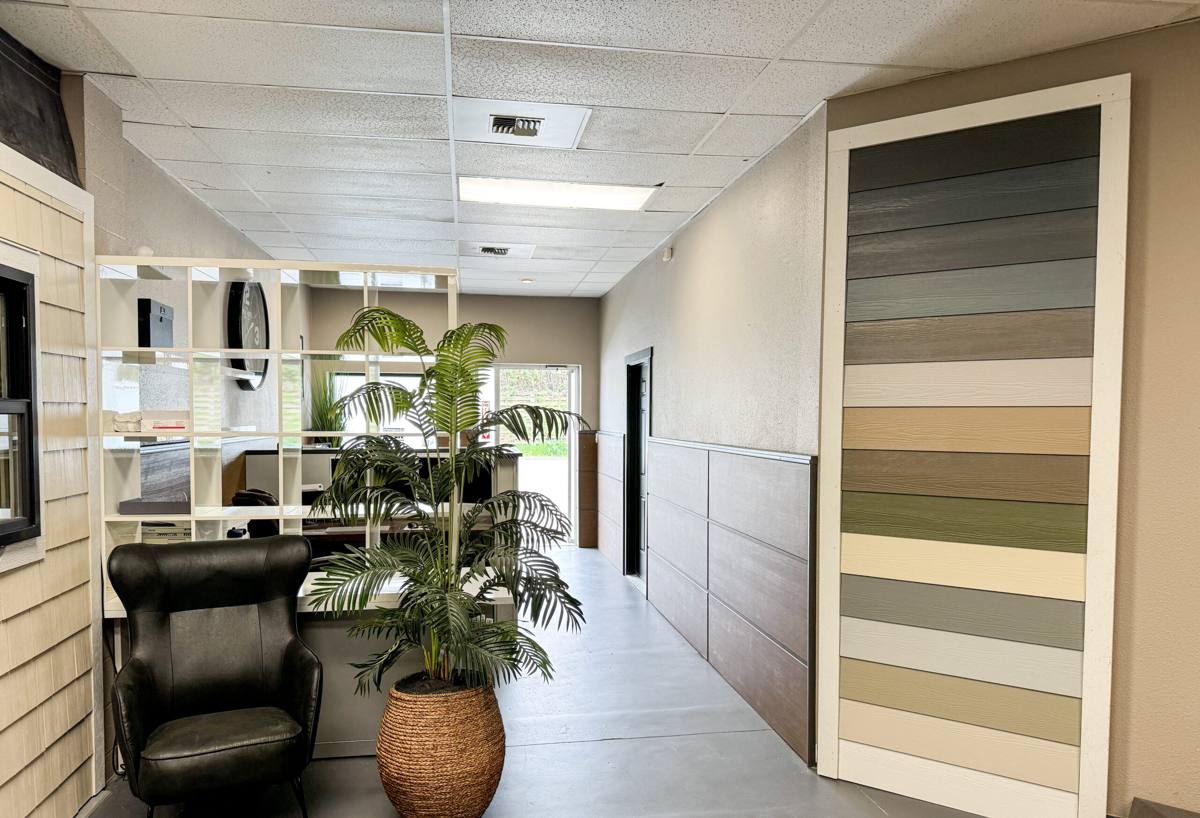
| Color selection | Factory ColorPlus finishes vary in price by line; custom field-painted color is a different cost structure |
| Access and site conditions | Tight lots, landscaping, or multi-story walls affect equipment and labor time |
| Removal and disposal of old siding | Volume and type of material being torn off affects disposal cost |
Signs Your Current Siding Is Already Behind the Curve
Homeowners often wait until siding looks obviously bad before calling anyone. In this climate, the damage underneath is usually ahead of what's visible on the surface. Watch for:
- Soft or spongy spots when you press on the siding, especially near the bottom courses
- Persistent moss or dark streaking that comes back shortly after cleaning
- Peeling, bubbling, or chalky paint on wood or engineered wood siding
- Visible gaps or warping at seams and butt joints
- Interior signs like musty smells or discoloration on walls that back up to exterior siding
- Siding that was installed directly over old siding with no visible drainage gap
Any one of these is worth a look. Several together usually mean the sheathing behind the siding is already compromised.
Why a Crew That Already Works in Lynden Matters
Siding installation isn't just a product — it's a set of judgment calls made on-site: how much clearance to leave at grade, how to flash around a particular window style, how aggressive the drainage plane needs to be given a home's sun and shade exposure. A crew that regularly works in Whatcom County has already made those calls dozens of times against this specific climate, not a generic manufacturer install guide written for the whole country. That local repetition is what keeps small details from getting missed on your house.
Maintenance After Installation
Correctly installed James Hardie siding is low-maintenance, not zero-maintenance. A rinse-down once or twice a year knocks back moss and grime before it establishes itself, especially on shaded or north-facing walls. Caulked joints and trim should get a visual check periodically, since sealant is the one component that wears faster than the siding itself. Beyond that, there's no repainting cycle to plan around — the factory finish is designed to hold its color for years under exactly the kind of weather this region delivers.
If your Lynden home needs new siding or you're not sure whether what's on the walls now is still doing its job, we're happy to take a look and give you a straightforward, no-pressure estimate — no obligation, just an honest read on where things stand.