 Snohomish
 Windows Built for the Bothell Stretch of Snohomish County
Homes in the Bothell area near Snohomish deal with a specific mix of weather that most window manufacturers design around in general terms but that a local crew deals with on every job: salt-tinged air moving in off the Sound and river valleys, long stretches of driving rain angled sideways by wind, and a moss season that seems to start earlier and last longer every year. None of that is dramatic on its own. What it does is slow and cumulative — it finds the weak point in a window assembly and works on it for months at a time. A window that's fine in a dry climate can fail here in five years instead of twenty, and the failure is usually not visible from the street until it's already inside the wall.
Custom windows, done right for this specific area, aren't about a fancier look. They're about matching frame material, glazing, and installation detail to what actually happens to a window here — repeated wetting and drying, UV exposure between rain systems, and organic growth (moss, algae, mildew) that thrives in the shade and moisture pockets around window trim.
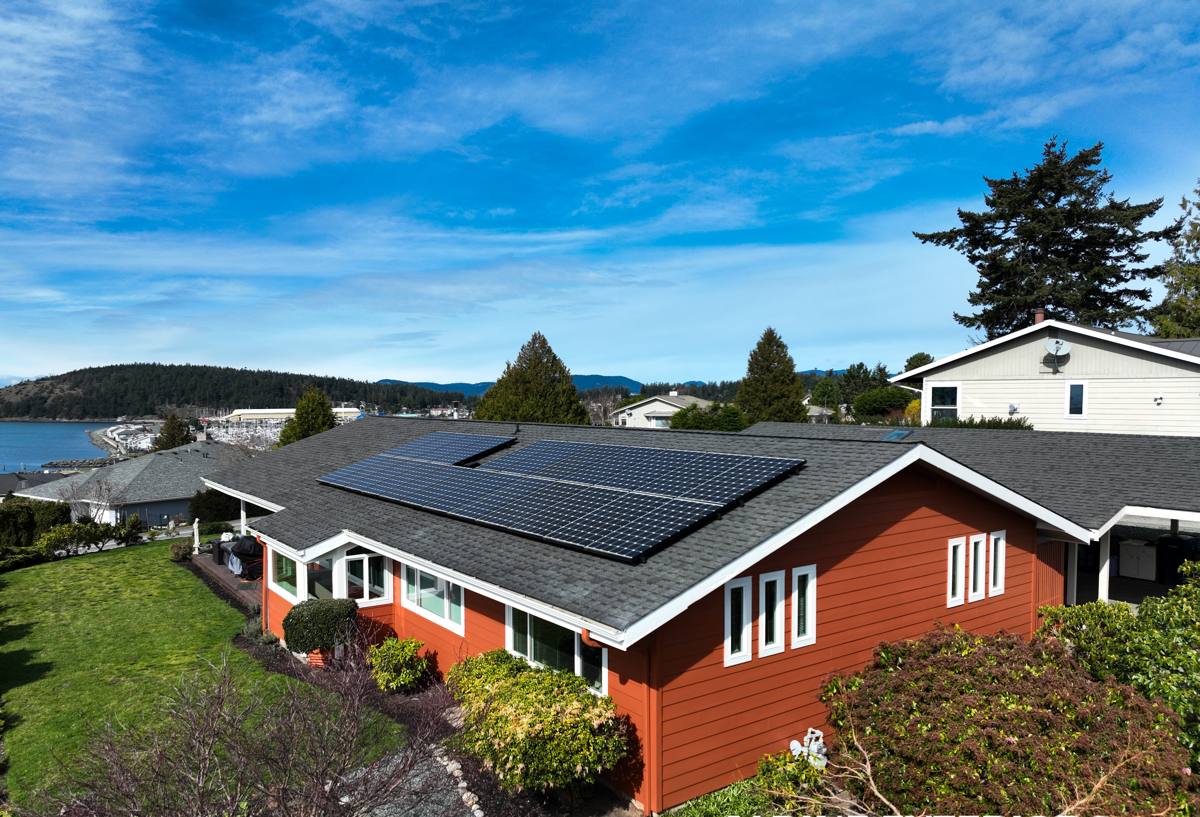
What "Custom" Means for a Bothell-Area Home
"Custom" doesn't have to mean unusual shapes or high-end architectural glass, though we do that when a home calls for it. More often it means the window is built and installed to fit the actual opening, the actual wall assembly, and the actual exposure of that specific house — not a stock size forced into a rough opening with extra shims and caulk covering the gaps.
Common reasons Bothell homeowners go custom instead of stock replacement
- Older homes with settled or slightly out-of-square openings that stock sizes don't fit cleanly
- Additions or remodels where a window needs to match sightlines from an existing custom unit
- Homes with heavy west or south wall exposure needing upgraded glazing to cut sun load and UV fade
- North-facing or shaded walls where moss and moisture retention are the bigger concern than sun
- Replacing failed or fogged units where the original opening has already been compromised by rot
The Problems We Actually See in This Area
Every region has its own failure pattern, and after years of window work around Snohomish and the surrounding communities including Bothell, the pattern here is consistent enough to plan around.
Moisture intrusion at the sill and corners
This is the number one issue. Driving rain doesn't just hit a window straight on — wind pushes it sideways and up under trim, sills, and flashing that were installed assuming rain falls straight down. Over time, water finds the seam between the window frame and the wall, and once it's behind the exterior finish, it stays wet far longer than it would in a drier climate. That's how sill rot and hidden framing damage happen, often well before there's any visible sign at the surface.
Moss and organic growth around frames
Moss doesn't attack a window directly, but it holds moisture against the frame and trim constantly, extending the time the wood or composite stays wet after every rain. On shaded walls and north exposures especially, that near-permanent dampness accelerates rot at the corners and under sills long before the window's glass or hardware shows any wear.
Salt-influenced corrosion on hardware and frames
Even set back from open water, air movement through the county carries enough salt content to matter over a couple of decades. Cheaper hardware — hinges, cranks, locks — corrodes and seizes faster than it would inland. Cladding and trim finishes can chalk or pit earlier than their rated lifespan suggests.
Condensation and seal failure from temperature swings
Cool, damp mornings followed by warmer afternoons stress the seal between glass panes in an insulated unit. Once that seal fails, moisture gets between the panes permanently — you'll see it as fogging that never clears, and it only gets worse.
Material and Frame Options: What Actually Holds Up Here
There's no single "best" window material for every home — it depends on exposure, budget, and how the rest of the house is built. Here's how the common options stack up specifically against this area's conditions.
| Frame Material | Moisture/Salt Resistance | Maintenance Needs | Typical Fit |
|---|---|---|---|
| Vinyl | Good — won't rot, minimal corrosion risk | Low — occasional cleaning | Budget-conscious replacements, rental properties |
| Fiberglass | Very good — dimensionally stable in wet/dry cycling | Low | Homes wanting durability without wood upkeep |
| Wood-clad (exterior clad, wood interior) | Good if cladding and flashing details are correct | Moderate — interior wood finish upkeep | Homes prioritizing interior appearance |
| Solid wood | Poor without diligent upkeep in this climate | High — regular sealing/painting required | Historic homes where authenticity matters more than low maintenance |
| Aluminum | Fair — can corrode faster near salt air without proper coating | Low to moderate | Modern/architectural styles, larger openings |
We don't push one material on every job. We do have a professional standard, though: for a Bothell-area home with real weather exposure, we steer clients away from bare solid wood on exterior-facing walls unless they're committed to a real maintenance schedule, because the upkeep burden in this climate is significant and the failure mode — rot at the joints — is expensive to fix once it starts.
What a Correct Installation Actually Involves
The window itself is maybe half the job. The other half — the part that determines whether it lasts 10 years or 30 — is the installation detail around it.
- Opening inspection before anything goes in. We check the existing sill, framing, and any prior water damage before setting a new unit. Installing a good window into a compromised opening just hides the problem.
- Proper flashing sequence. Flashing has to be layered so water sheds outward and downward at every point, with the sill pan flashing sloped and sealed correctly — this is the single most common corner-cutting we see undone from other installs.
- Correct sealant and backer rod use. Caulk alone isn't a substitute for proper flashing. It's a secondary seal, not the primary water barrier.
- Insulation around the frame, not just at the interior trim. Gaps left in the rough opening create both energy loss and condensation points.
- Weep holes and drainage paths kept clear. Built-in drainage only works if it isn't blocked by sealant, trim, or debris during install.
Our Process for a Bothell Window Job
The process is straightforward, and we keep it that way on purpose — surprises during a window job usually mean something was skipped.
- On-site assessment. We look at every opening being replaced, note existing damage, exposure direction, and any moss or moisture staining around current trim.
- Honest scope and options. We tell you what material and glazing options make sense for that specific wall, and what we'd avoid, with the reasoning explained plainly.
- Measurement and custom fabrication. Units are built to the actual opening, not forced to fit a stock size.
- Removal and opening prep. Any rot or damage found during removal is addressed before the new window goes in — not covered over.
- Installation with full flashing and sealing detail. This is where most of the long-term performance is decided.
- Final check and walkthrough. Operation, seals, and finish are checked before we call it done.
Living With the Windows Afterward
A good installation reduces maintenance, but it doesn't eliminate it in a climate like this. A few habits keep windows performing for their full lifespan:
- Rinse frames and sills a couple of times a year to clear salt residue and organic buildup before it takes hold
- Keep gutters and downspouts clear so overflow isn't running down the wall directly above window openings
- Trim back vegetation and clear moss from nearby siding and trim so shaded, damp conditions don't concentrate around the window
- Check exterior caulking annually — it's a secondary seal and does wear down faster in constant damp conditions
- Address any fogging between panes or stiff operation early — both are early signs of seal or hardware wear, not cosmetic issues
Why Hiring a Crew That Already Works This Area Matters
A window contractor unfamiliar with this specific stretch of Snohomish County will still install a window — but they're often working from general-climate assumptions rather than what actually happens here. A crew that regularly works Bothell and the surrounding Snohomish area already knows which exposures need extra flashing attention, which older homes commonly have hidden sill damage, and which materials hold up versus which ones look fine in the showroom but struggle here after a decade of real weather. That familiarity shows up in the details that don't get skipped, not in a sales pitch.
Ready to Talk Through Your Windows?
If you're dealing with drafty, foggy, hard-to-operate, or visibly worn windows on a Bothell-area home, we're happy to take a look, explain what we're seeing, and lay out honest options — no pressure, no obligation. Use the form below to request a free estimate and we'll get back to you to schedule a time that works.