 Snohomish
 Why Bellingham Siding Takes a Different Approach
Bellingham sits close enough to the water that salt air is a real factor in how siding ages, and far enough north that the region gets a long, wet winter followed by a mossy, shaded spring on almost every north-facing wall. Add in driving rain that comes sideways off Bellingham Bay during winter storms, and you have a climate that is genuinely harder on exterior siding than most of the country deals with. A siding job that would hold up fine in a dry inland climate can start failing here within a few years if it wasn't built for this specific combination of moisture, salt, and shade.
We install siding for homes throughout the broader region, including a local crew that regularly works in Bellingham. That matters more than it sounds like it should. A crew that only shows up in this area once or twice a year doesn't build the habits that keep siding performing here for decades. A crew that works Bellingham regularly knows which walls take the worst weather, where moss establishes first, and how to detail a job so water never gets a foothold.
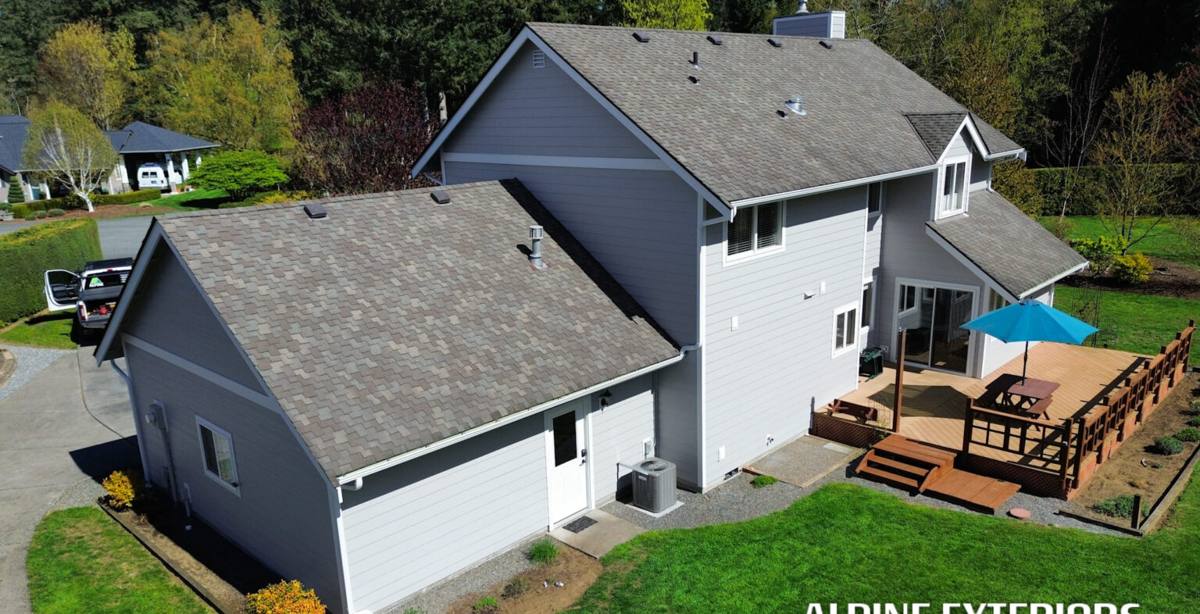
What Bellingham's Climate Actually Does to Siding
Salt Air and Moisture
Homes closer to the water deal with airborne salt that settles on exterior surfaces and accelerates corrosion of fasteners, trim metal, and any siding material that isn't rated for coastal exposure. Over time, salt-laden moisture also works its way into seams and joints that weren't sealed correctly, which is where most siding failures actually start — not from a flaw in the siding itself, but from water finding a way behind it.
Driving Rain
Wind-driven rain doesn't just fall on siding, it gets pushed sideways and upward under laps, around window trim, and into any gap the installer left. This is a wind-exposure issue as much as a material issue. Correct lap spacing, proper flashing, and tight seams around penetrations matter more here than they would in a calmer climate.
Long Moss Season
Shaded, north-facing walls in Bellingham can stay damp for months at a stretch, which is exactly the environment moss and mildew need to take hold. Siding material that absorbs moisture gives moss something to grow into, not just onto — and once it's established, it holds water against the wall surface and shortens the life of everything underneath, including the sheathing.
What a Correct Siding Installation Involves Here
A proper siding job in Bellingham isn't just about the visible product — it's about everything happening behind it. The sequence matters:
- A weather-resistive barrier installed correctly, lapped shingle-style so water sheds downward and never gets trapped behind the siding
- Rainscreen furring or a drainage gap where the wall assembly calls for it, so any moisture that does get behind the siding has somewhere to drain and dry out
- Flashing at every window, door, and penetration — this is where the vast majority of moisture problems start on any home, in any climate
- Correct fastener type and placement, since the wrong fastener in a salt-air environment corrodes and eventually lets siding panels work loose
- Proper lap and seam sealing sized for wind-driven rain, not just standard exposure
- Factory-finished siding with a coating built to resist moss and mildew growth, rather than a field-applied paint that will need recoating far sooner
Skip any one of these steps and the siding might look fine for a year or two before the underlying problems show up — usually as staining, soft spots, or moss creeping in at seams that were never fully sealed.
Why We Install Only James Hardie Fiber Cement
We standardized on James Hardie fiber cement siding for every home we work on, including in Bellingham, because it's the product that holds up best against exactly the conditions this area produces. Fiber cement doesn't absorb water the way wood-based products do, which matters directly for moss resistance on those long-shaded walls. It's also non-combustible, which is a meaningful long-term durability advantage regardless of climate.
James Hardie's ColorPlus factory finish is baked on in a controlled environment rather than applied on-site, which gives it far better resistance to fading, chipping, and the kind of moisture-driven breakdown that field-applied paint struggles with in a climate this wet. Hardie also builds climate-specific HZ product lines engineered for regions like the Pacific Northwest, and backs the product with a strong transferable warranty when it's installed to spec — which is the key phrase, because siding warranties are only as good as the installation underneath them.
We don't install vinyl, LP SmartSide, Cemplank, Allura, primed spruce, or cedar. Each of those products has situations where it performs reasonably well, but none of them match fiber cement's combination of moisture resistance, fire performance, and finish durability in a climate that combines salt air, sustained rain, and heavy shade the way Bellingham does. We'd rather install one product correctly and stand behind it than offer several options and hope the cheaper ones hold up.
Comparing Siding Options for Bellingham's Climate
| Factor | James Hardie Fiber Cement | Vinyl | Wood / Cedar |
|---|---|---|---|
| Moisture absorption | Very low | Doesn't absorb, but seams can trap moisture behind it | High — feeds moss and rot |
| Salt air resistance | Strong when installed correctly | Can become brittle over time in coastal exposure | Poor without frequent maintenance |
| Moss / mildew resistance | Strong factory finish resists growth | Moderate — surface growth is common | Low — a known weak point in shaded areas |
| Fire performance | Non-combustible | Combustible | Combustible |
| Finish longevity | Factory-baked finish, long repaint intervals | Color molded in, but can fade and chalk | Requires regular repainting or staining |
Our Process for a Bellingham Siding Installation
1. On-Site Assessment
We walk the home and look specifically at wall exposure — which sides take the worst wind-driven rain, which stay shaded and damp longest, and where the existing siding or sheathing shows signs of moisture damage that needs to be addressed before new siding goes up.
2. Wall Prep and Moisture Barrier
Any damaged sheathing gets replaced, not covered over. The weather-resistive barrier and drainage plane are installed to correctly manage water that gets behind the siding, which in a climate like this one is a matter of when, not if.
3. Flashing and Detail Work
Every window, door, and penetration gets flashed before siding installation begins. This is the step that determines whether a home stays dry for the next 30 years or develops hidden rot in five.
4. Hardie Panel or Lap Installation
Siding is installed to James Hardie's published specifications for fastener spacing, lap exposure, and clearances — the details that keep the manufacturer's warranty valid and keep the assembly performing as designed.
5. Final Walkthrough
We review the finished work with the homeowner, including how the new siding will hold up through Bellingham's wet season and what, if any, simple maintenance it will need going forward.
What to Check Before Hiring Anyone for Siding Work in This Area
- Do they have direct, ongoing experience working in Bellingham or comparably wet, coastal Northwest conditions — not just general siding experience
- Are they installing a moisture-managed wall assembly with a proper drainage plane, or just nailing siding over the existing wall
- Do they flash every window, door, and penetration as standard practice, not as an upgrade
- Are they licensed, insured, and able to speak specifically to how their installation protects the manufacturer's warranty
- Can they explain why they chose the products they install, rather than offering "whatever the customer wants" with no clear standard
A crew that treats every wall the same regardless of exposure or climate is a crew that hasn't spent much time solving the problems Bellingham's weather actually creates.
Cost Factors for Bellingham Siding Installation
| Factor | Why It Affects Cost |
|---|---|
| Existing wall condition | Sheathing repair or replacement adds labor and material beyond straightforward siding installation |
| Home size and wall complexity | More corners, windows, and rooflines mean more flashing and cutting |
| Siding profile chosen | Lap, panel, and shingle-style Hardie products vary in material and labor cost |
| Removal of old siding | Tear-off and disposal of existing material adds time, especially with wood or vinyl that's been painted or coated |
| Access and site conditions | Steep lots, tight setbacks, and limited staging area affect scaffolding and labor time |
Long-Term Maintenance in a Wet Climate
Even correctly installed fiber cement siding benefits from periodic attention in a climate like Bellingham's. Keeping gutters clear so water doesn't overflow onto wall surfaces, trimming back vegetation that keeps walls shaded and damp, and doing a visual check after major storms for any caulking or trim that needs touch-up will all extend the life of the installation well beyond what a "set it and forget it" approach would achieve. None of this is heavy maintenance — it's the difference between a job that looks good for a decade and one that looks good for three.
If you're planning a siding project in Bellingham and want a straight answer about what your home actually needs, we're happy to take a look and put together a free, no-pressure estimate using the form below.