 Snohomish
 Windows Built for Arlington's Wet Side of the Mountains
Arlington sits in Snohomish County, close enough to Puget Sound to pick up salt-laden air on a west wind and close enough to the foothills to get pounded by driving rain off the Cascades most of the year. That combination is hard on windows in ways homeowners from drier climates don't expect. It isn't one big storm that causes trouble — it's months of low-grade moisture exposure, freeze-thaw cycles in the shoulder seasons, and long stretches of shade and dampness that let moss and algae get a foothold on anything that stays wet. A window that's a quarter-inch out of level, or flashed wrong, or caulked instead of properly sealed, won't fail the day it's installed. It fails two or three winters later, quietly, behind the trim, where you can't see it until the drywall is already soft.
Window installation in Arlington isn't fundamentally different work than anywhere else — it's the same trade, the same physics. What changes is the margin for error. In a dry climate, a sloppy install might just mean a drafty room. Here, it can mean water intrusion, rot in the framing, and mold you don't discover until you're chasing a musty smell. We treat every Arlington install like the building has to shed water for the next twenty-plus years, because it does.
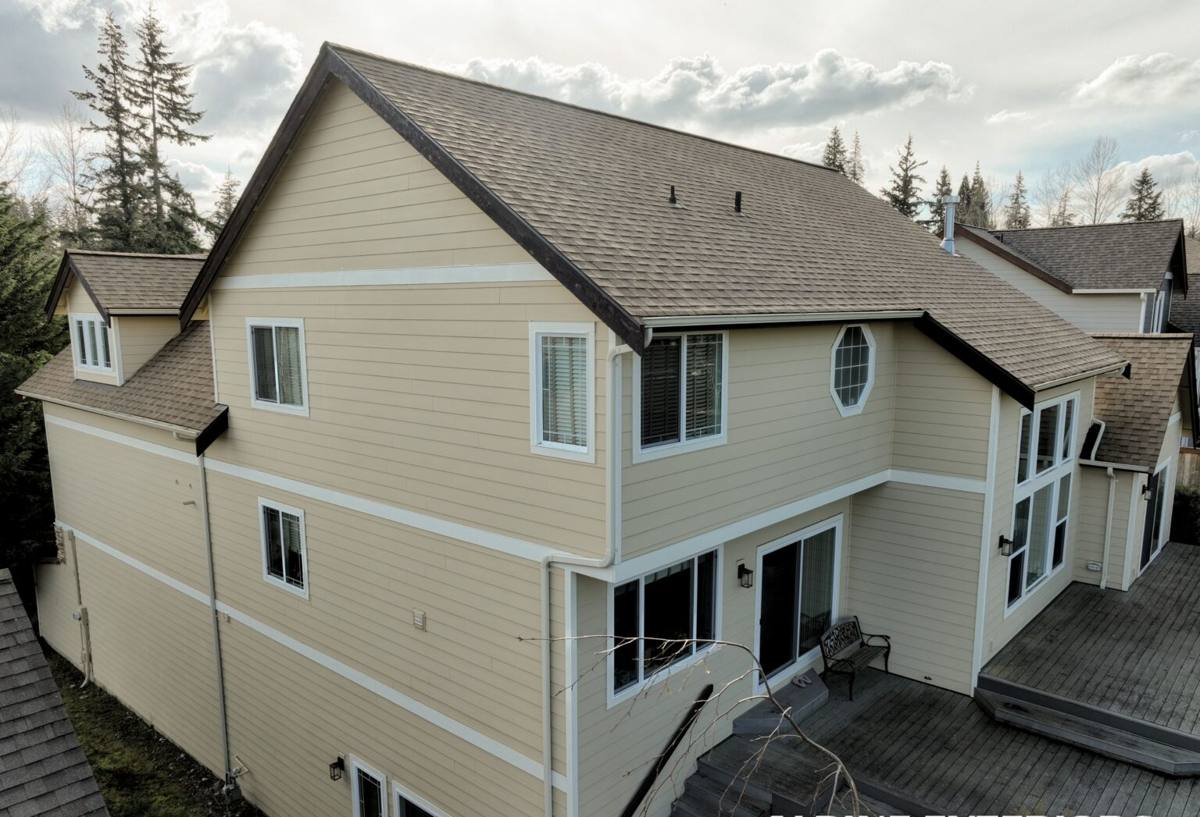
What "Correct" Window Installation Actually Involves
A window is only as good as the opening it sits in and the way it's tied into the wall's water management system. New glass in a bad opening still leaks. Here's what we're actually doing on install day, beyond just setting a unit in a hole.
Water Management First
Before a window ever goes in, the rough opening gets a sill pan to catch and direct any water that gets past the window itself — a basic but frequently skipped step. Flashing tape gets integrated with the house's weather-resistive barrier in the correct shingle-lap order (bottom, sides, top) so water is always directed outward and downward, never trapped behind the siding. This is the single most important part of the job in a climate like ours, and it's also the part that's invisible once the trim goes back on.
Fit, Shim, and Fasten
The window has to be plumb, level, and square in the opening — not just "close enough to look right." We shim to manufacturer spec, fasten through the nailing flange or jambs per the manufacturer's installation instructions (this matters for warranty coverage, not just performance), and check for racking that can bind the sash or stress the seals over time.
Insulate and Seal Without Overdoing It
Gaps around the frame get filled with a low-expansion window-and-door foam or backer rod and sealant — never standard high-expansion foam, which can bow the frame and cause the sash to bind. Exterior sealant goes at the specific joints designed to be sealed, not slathered everywhere as a substitute for proper flashing.
Interior and Exterior Finish
Once the window is set and weatherproofed, interior trim and exterior casing or brick mold get reinstalled or replaced, and any disturbed siding is properly re-integrated with the flashing underneath it — not just caulked over the top, which traps water instead of shedding it.
Signs an Arlington Home's Windows Need Attention
Because moisture damage here tends to be gradual, it helps to know what to check for before a small problem becomes a framing repair.
- Fogging or a visible haze between panes — the seal has failed and the insulating gas has escaped
- Soft or discolored wood on the interior sill or exterior trim
- Visible moss, algae, or black streaking on the sill or frame that keeps coming back
- Drafts you can feel with a hand near the frame on a windy day
- Difficulty opening, closing, or locking a sash that used to move freely
- Paint that bubbles or peels specifically around the window, not elsewhere on the wall
- A musty smell in the room that doesn't go away with cleaning
Any one of these on its own might be minor. Two or three together, especially on a window that faces prevailing weather, usually means water is getting past the seal or flashing and it's worth having it looked at before the trim or framing is involved.
Choosing a Window Material for This Climate
Frame material matters more here than in drier parts of the state, because whatever you choose is going to sit in damp air for months at a stretch every year. There's no single right answer — it depends on your budget, your home's style, and how much upkeep you want to take on.
| Frame Type | Moisture Behavior | Maintenance | Typical Trade-offs |
|---|---|---|---|
| Vinyl | Won't rot; handles damp climates well | Low — occasional cleaning | Budget-friendly; limited color/finish options; can look less premium on higher-end homes |
| Fiberglass | Excellent — very stable in wet, temperature-swinging conditions | Low | Higher upfront cost; strong long-term value |
| Wood-clad | Good if detailing and finish are maintained; interior wood needs protection from condensation | Moderate to high — finish upkeep matters | Best interior appearance; more sensitive to installation quality |
| Aluminum | Durable but conducts cold, prone to condensation in our damp winters | Low | Less common as a whole-house choice in this climate for that reason |
For most Arlington replacement projects, we steer homeowners toward vinyl or fiberglass for their resistance to moisture-related problems over time, and reserve wood-clad for homes where the interior look is a priority and the owner is comfortable with the added maintenance. We're glad to walk through the honest trade-offs for your specific home rather than push one product line.
Glass Package Matters Almost as Much as Frame
Double-pane, low-E, argon-filled glass is the practical standard here — it cuts heat loss and reduces condensation risk on cold, damp mornings. Triple-pane can make sense for north-facing rooms or homes near louder roads, but it adds weight and cost that isn't always necessary for a typical Arlington house. We size the glass package to the specific window's exposure rather than defaulting to the most expensive option.
Our Installation Process
- On-site assessment. We measure openings, check for existing water damage or rot, and evaluate how the current flashing and siding interact with the wall.
- Product selection. We go over frame material, glass package, and style options based on your home, budget, and how that opening is exposed to weather.
- Prep and removal. Old units come out carefully to protect surrounding siding and trim wherever it's being reused.
- Opening inspection and repair. Any rot or damage found once the old window is out gets addressed before the new one goes in — this is not an optional step, no matter how the schedule looks.
- Flashing and sill pan installation. Water management is built in before the window is set, integrated properly with the existing weather barrier.
- Setting, shimming, and fastening to manufacturer spec, checked for plumb, level, and square.
- Insulating, sealing, and finishing — interior trim, exterior casing, and siding integration.
- Final walkthrough to confirm smooth operation, tight seals, and a clean finish inside and out.
Cost Factors Worth Understanding
Window installation pricing varies by project, and we'll always give you a specific number after seeing the actual openings — but these are the main things that move the price up or down.
| Factor | Why It Affects Cost |
|---|---|
| Frame material | Vinyl is generally the most budget-friendly; fiberglass and wood-clad cost more up front |
| Number of openings | Per-window cost typically drops as the total project size grows |
| Existing damage | Rot or framing repair discovered during removal adds labor and material |
| Access and height | Second-story or hard-to-reach openings take longer and may need additional equipment |
| New construction vs. retrofit | Retrofit (insert) installs into an existing frame are typically less invasive than full-frame replacement |
| Glass package | Upgraded low-E coatings, gas fills, or triple-pane glass add cost per unit |
Why It Matters to Hire a Crew That Already Works in Arlington
A crew that regularly works Snohomish County jobs already knows how local moisture patterns behave against different siding types, what kind of flashing failures show up most often in homes of a certain age, and how to sequence work around a wet forecast instead of getting caught mid-install. That familiarity shows up in small decisions — how a sill pan is detailed, how siding is re-integrated after a swap, how a schedule is adjusted when a rain system moves in — that a crew unfamiliar with the region might not think twice about.
It also matters for permitting and code compliance. Requirements can vary by jurisdiction, and a local crew is used to working within Arlington and Snohomish County requirements rather than guessing.
Living With New Windows Through Moss Season
A correctly installed window doesn't need much from you, but a little seasonal attention keeps it performing for decades. Rinse sills and tracks periodically to keep moss and algae from building up in the damp months, check weep holes (the small drainage openings along the bottom of the frame) to make sure they're clear of debris, and take a look at exterior caulking once a year for cracking or separation. None of this is heavy maintenance — it's the same kind of upkeep any exterior feature needs in this climate, and it goes a lot further on a window that was flashed and sealed correctly in the first place.
If you're weighing a window project for your Arlington home, we're happy to take a look and give you a straightforward, no-pressure estimate — what your openings actually need, what it'll cost, and why. Use the form below to get started.