 Snohomish
 Why Woodinville's Climate Is Hard on Siding
Homes around Woodinville sit in a stretch of Western Washington that gets the worst of both worlds: wind-driven rain that pushes moisture sideways into seams and laps, and enough proximity to Puget Sound air that salt-laden moisture works its way into anything porous or poorly sealed. Add in the long, gray moss season that stretches from fall through spring, and you have a climate that punishes any siding material with weak spots at the joints, fasteners, or bottom edges. It's not one dramatic storm that causes damage here — it's the slow, repeated cycle of wet, humid, shaded conditions that never fully dries out between rain events.
That combination is exactly why the siding material and the installation quality matter more in Snohomish and Woodinville than they would in a drier part of the country. A product that performs fine in Eastern Washington or the Southwest can struggle here, and a good product installed with shortcuts will fail here faster than almost anywhere else in the state.
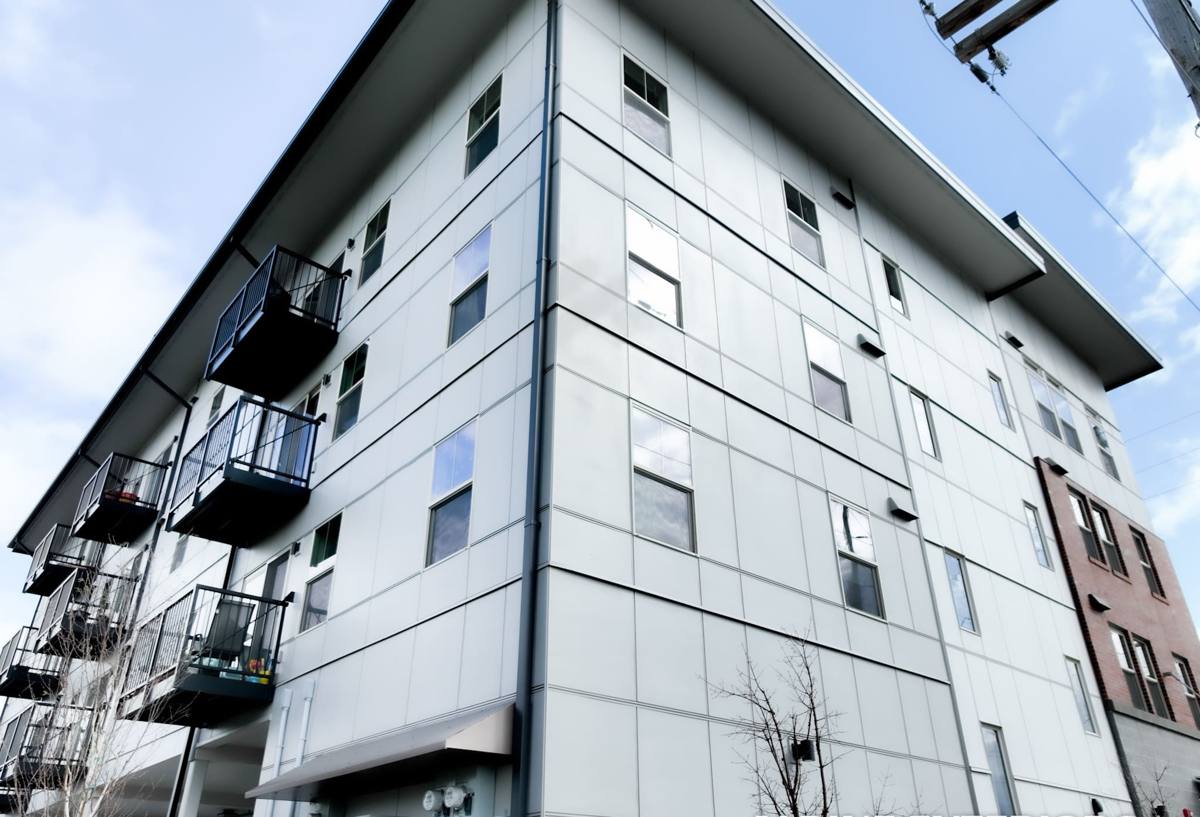
What Fiber Cement Solves for Local Homes
Fiber cement is a mix of cement, sand, and cellulose fiber, pressed and cured into a rigid board. Unlike wood-based products, it doesn't have an organic core that can absorb water and swell, delaminate, or feed mold and moss growth. Unlike vinyl, it doesn't expand and contract dramatically with temperature swings, and it holds paint and factory finishes without the chalking and fading that plagues vinyl over time. For a climate defined by driving rain and a moss season that can run half the year, a rigid, dimensionally stable material that doesn't feed on moisture is the right starting point.
That's also why we install only James Hardie fiber cement siding on the homes we work on. We don't install LP SmartSide, vinyl, Cemplank, Allura, or bare cedar or spruce siding — not because those products have no legitimate use anywhere, but because after years of servicing homes in this specific climate, Hardie's engineered fiber cement, factory finish, and warranty structure are what we're willing to put our name behind. We'd rather turn down a job than install something we don't believe will hold up on a Woodinville roofline.
Where Other Products Fall Short Here
| Material | Behavior in driving rain & salt air | Moss/algae resistance | Typical maintenance |
|---|---|---|---|
| Vinyl siding | Sheds bulk water but seams and J-channels can trap moisture; panels flex and can loosen over time | Moderate — surface algae still grows in shaded, damp areas | Low, but panels crack, fade, and can't be repainted |
| Engineered wood (LP SmartSide and similar) | Wood-strand core is vulnerable if the factory seal is breached at cuts, edges, or fasteners | Requires diligent edge sealing and gutter maintenance to avoid swelling | Moderate to high — edge sealing, repainting, moisture checks |
| Bare cedar or primed spruce | Absorbs moisture directly; performs only as well as the paint/stain schedule behind it | Low without frequent treatment; a common host for moss in shaded areas | High — refinishing every few years |
| James Hardie fiber cement | Non-combustible, non-organic core resists water absorption and doesn't swell | Factory-finished surface resists moss and algae far better than porous materials | Low — periodic rinsing and caulk checks |
What a Correct Fiber Cement Install Actually Involves
Fiber cement is only as good as its installation. The material itself resists moisture, but a siding system is a collection of overlapping parts — flashing, house wrap, starter strips, fasteners, and caulk joints — and any one of those done wrong creates a path for water to get behind the boards. In a climate that stays wet for months at a time, a small installation error doesn't show up as a quick leak; it shows up a year or two later as trapped moisture, staining, or rot in the sheathing behind the siding.
What we check and control on every job
- Correct water-resistive barrier and flashing details at every window, door, and penetration before a single board goes up
- Proper starter strip and bottom clearance so the lowest course doesn't wick moisture from grade or hardscape
- Manufacturer-specified fastener spacing and depth — over-driven nails crack the board and create entry points for water
- Correct gaps at butt joints and trim, sealed with a paintable, flexible sealant rated for exterior use
- Rainscreen or drainage gap where conditions call for it, so incidental moisture behind the siding can actually get out
- Field-cut edges sealed per Hardie's specifications, since a raw cut edge is the one place factory protection doesn't reach
None of this is exotic. It's documented in James Hardie's own installation guidelines. The problem is that skipping steps is faster and cheaper, and a homeowner can't see the difference from the driveway. The difference shows up five or ten years later, which is exactly why the crew doing the work matters as much as the product.
The James Hardie Lines We Use in This Area
James Hardie makes several fiber cement profiles, and we select based on the home and its exposure rather than defaulting to one product for everything.
| Product | Typical use | Why it fits this climate |
|---|---|---|
| HardiePlank lap siding | Most common horizontal siding replacement | Rigid, resists cupping and warping under sustained wet conditions |
| HardiePanel vertical siding | Accent walls, gables, modern facades | Fewer horizontal joints where water can collect |
| HardieShingle siding | Shingle-style sections and accents | Non-organic alternative to cedar shingle in shaded, moss-prone areas |
| HardieTrim boards | Corners, fascia, window and door trim | Matches the siding's moisture behavior so trim doesn't fail first |
Most of what we install carries Hardie's ColorPlus factory finish, a baked-on finish applied under controlled conditions rather than field-painted on site. It resists fading and holds up to UV and moisture exposure better than a site-applied paint job, and it comes with its own finish warranty separate from the substrate warranty. For homes in this region, Hardie also offers its HZ5 formulation — engineered specifically for colder, wetter climate zones like ours, as opposed to the HZ10 formulation built for hot, humid regions. That distinction matters: siding engineered for the wrong climate zone can perform worse here than a product built for exactly these conditions.
Our Process for a Woodinville Fiber Cement Job
Every job starts with an on-site inspection, not a phone estimate. We look at the current siding's condition, check for existing moisture damage at penetrations and low corners, and assess the water-resistive barrier if it's exposed during tear-off. We don't install over rot or compromised sheathing — that gets addressed first, in writing, before siding goes up.
- Inspection and moisture assessment of the existing wall assembly
- Written scope covering tear-off vs. overlay, flashing repairs, and any sheathing replacement
- Removal of old siding and correction of any water-resistive barrier or flashing issues found underneath
- Installation of James Hardie siding, trim, and accessories to manufacturer spec
- Final inspection of caulk lines, fastener pattern, and clearances before cleanup
We don't skip the tear-off inspection step even when it slows a job down, because on a house that's been absorbing driving rain and sitting under moss cover for years, what's behind the old siding often tells us more than what's on the surface.
Living With Moss Season: What Maintenance Actually Looks Like
Correctly installed Hardie siding is low-maintenance, not maintenance-free. In a region with a moss season this long, a little seasonal attention goes a long way toward keeping the siding looking and performing the way it should.
- Rinse siding annually, especially on shaded north- and west-facing walls where moss and algae take hold first
- Keep gutters clear so overflow doesn't run down the siding face during heavy rain
- Trim back vegetation and tree cover that keeps siding damp and shaded longer than necessary
- Inspect caulk joints at trim and penetrations every year or two and re-caulk before gaps open up
- Address any paint chips or exposed cut edges quickly rather than waiting for a full repaint cycle
None of this requires refinishing or re-coating the way wood siding does. It's closer to the kind of light upkeep most homeowners already do for gutters and exterior trim.
Why a Crew That Already Works in Woodinville Matters
Manufacturer installation guides assume ideal conditions. A crew that's spent years working on homes throughout Snohomish and the Woodinville area knows where those guidelines need extra attention locally — tighter flashing details at exposed corners, more conservative clearances near grade, and a bias toward drainage details on walls that stay shaded and damp for months. That's knowledge that comes from repeated exposure to this specific climate, not from a general contractor doing siding as a side offering.
It also matters for warranty support. James Hardie's product and finish warranties are strongest when the installation follows spec and the contractor stands behind the work. A crew with a track record in the area is easier to hold accountable — and easier to reach — if something needs a look years down the road.
Get a Straight Answer for Your Home
If your current siding is showing moss staining, soft spots, or failing paint, or you're planning ahead for a replacement, we're happy to take a look and give you a straightforward assessment — no pressure, no inflated scope. Use the form below to request a free estimate for James Hardie fiber cement siding on your Woodinville home.