 Snohomish
 Why Edmonds Siding Wears Differently Than Siding Inland
Edmonds sits on the water, and that changes what siding has to survive. Homes here deal with a combination most inland Snohomish County properties don't see in the same intensity: salt-laden air off Puget Sound, wind-driven rain that gets pushed sideways into wall assemblies rather than falling straight down, and a moss and algae season that can run most of the year in the shaded, damp conditions common to this part of Western Washington. None of these factors are dramatic on their own. Together, over ten or fifteen years, they're exactly what breaks down siding that wasn't built or installed for this climate.
Salt air is corrosive to exposed metal fasteners and trim, and it accelerates the breakdown of coatings that aren't formulated to resist it. Driving rain finds every gap in flashing, caulking, and butt joints, and pushes moisture behind the siding rather than just against it. And moss doesn't just sit on the surface — given enough time, organic growth holds moisture against the siding face, which is a slow but steady path to rot, especially on wood-based products or lower grades of composite siding.
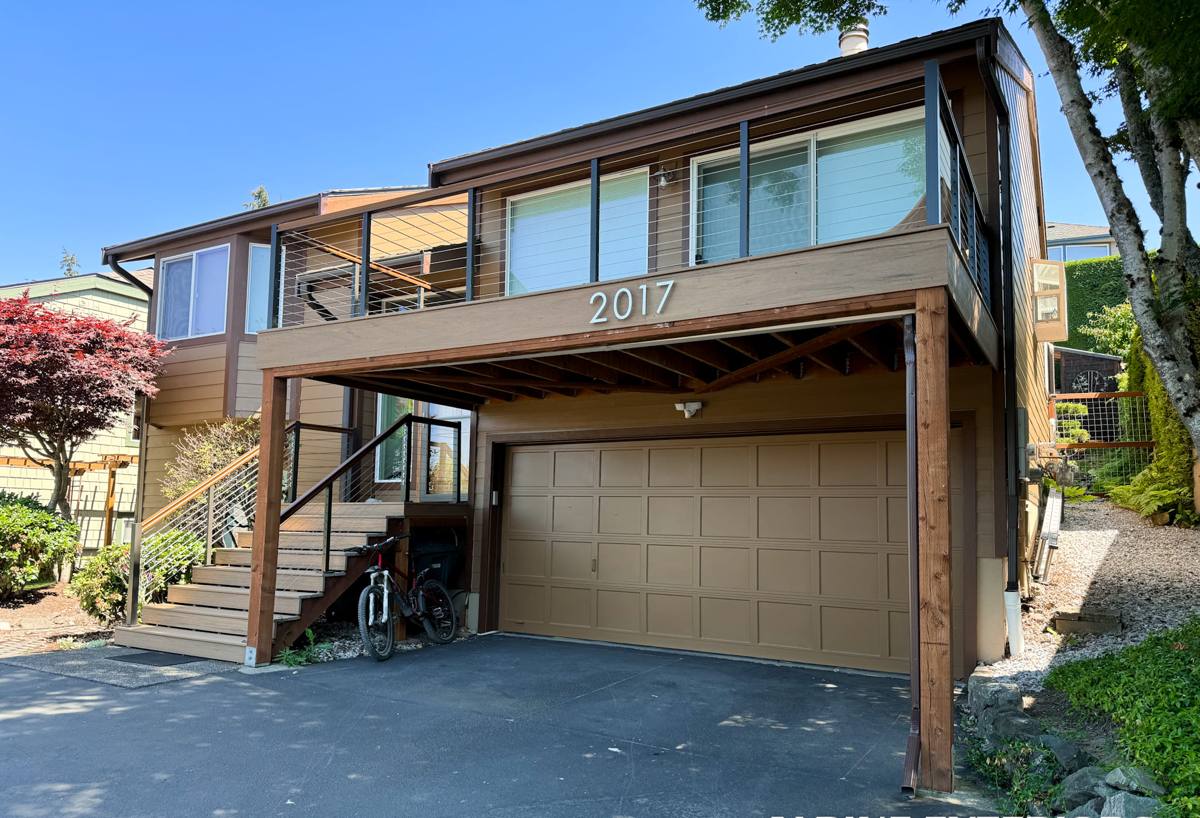
Signs an Edmonds Home Needs Replacement, Not Repair
Not every siding problem calls for a full tear-off. But a few signs generally mean patching won't hold, and replacement is the more honest answer:
- Soft or spongy spots when you press on the siding, especially near the bottom courses or below windows
- Visible swelling, delamination, or crumbling at panel edges and seams
- Paint that won't hold anymore even after repeated repainting — a sign the substrate underneath is failing
- Persistent moss or algae staining that comes back within a season or two of cleaning
- Gaps that have opened at butt joints, corners, or trim over multiple wet seasons
- Interior signs — musty smell, discoloration on interior drywall near exterior walls, or bubbling paint — that point to moisture already past the siding
If you're seeing two or more of these, especially on the sides of the house that catch the most wind and rain, it's worth having someone look at the sheathing underneath before deciding whether repair is realistic.
What a Correct Siding Replacement Actually Involves
Siding replacement isn't just pulling off old panels and nailing up new ones. On a water-exposed property like an Edmonds home, the parts you don't see matter more than the parts you do. A correct job includes:
Full tear-off and inspection
Old siding comes off completely so the sheathing and framing underneath can actually be inspected, not guessed at. This is usually the point where hidden rot or past water intrusion gets found — better to find it now than to seal it behind new siding and deal with it again in five years.
Repair before cover-up
Any soft or damaged sheathing gets cut out and replaced. Covering rotted wood with new siding doesn't stop the rot, it just hides it.
A proper drainage plane
A weather-resistive barrier goes on correctly lapped, shingle-style, so water is directed down and out rather than trapped. In a climate with as much driving rain as Edmonds gets, this layer is doing as much work as the siding itself.
Flashing at every penetration
Windows, doors, hose bibs, vents, and any other wall penetration need proper flashing integrated with the drainage plane — not just caulk. Caulk fails; flashing sheds water by design and keeps working after the caulk eventually doesn't.
Correct fastening and clearances
Fasteners need to be the right type and depth for the product, and siding needs proper clearance from grade, roof lines, and decks so water doesn't wick up from below.
Material Choice Matters More Here Than in a Dry Climate
In a climate that doesn't get much rain, a mediocre siding installation can survive for years on luck alone. Edmonds doesn't offer that margin. The material has to actually perform in wet, salty, moss-prone conditions — which is why we standardized on James Hardie fiber cement and don't install vinyl, LP SmartSide, or other wood-based composite products.
Fiber cement doesn't have the same moisture vulnerability that wood-based composites do. It's not going to swell at cut edges or delaminate the way OSB-based products can if water gets past a seam. It's also non-combustible, which matters increasingly for insurance and code considerations even in a wet climate. James Hardie's ColorPlus factory finish is baked on and warranted against fading and peeling, which matters in salt air where lesser coatings chalk and fade faster than they would inland.
| Factor | Fiber Cement (James Hardie) | Vinyl | Wood-Based Composite |
|---|---|---|---|
| Moisture/rot resistance | High — cement-based, doesn't rot | High, but relies on tight seams | Moderate — vulnerable at cut edges and seams |
| Salt air / coastal exposure | Factory finish engineered for UV and weather | Can chalk and become brittle over time | Coatings wear faster in salt air |
| Moss/algae resistance | Doesn't feed organic growth | Doesn't feed growth, but seams can trap moisture | Organic material can support growth if coating fails |
| Fire resistance | Non-combustible | Melts/deforms under heat | Combustible |
| Impact resistance | Strong, resists cracking | Can crack in cold, dent easily | Moderate |
This isn't to say every alternative product fails immediately — plenty perform fine in mild, dry climates. But Edmonds isn't a mild, dry climate, and we'd rather install one product correctly and stand behind it than offer several and hope the cheaper ones hold up.
Our Process for Edmonds Siding Replacement Projects
- Inspection and estimate — we look at the current siding, check for soft spots and moisture signs, and give you a straightforward assessment of what repair or replacement actually requires.
- Tear-off — full removal of old siding and trim so the wall assembly can be properly evaluated.
- Sheathing repair — any damaged sheathing or framing is replaced before anything goes back on the wall.
- Weather-resistive barrier and flashing — installed and lapped correctly at every seam, window, door, and penetration.
- Hardie installation — panels, fasteners, and joints installed to manufacturer spec, which is also what keeps the warranty valid.
- Trim and finish — corners, trim boards, and caulking finished to shed water rather than just look finished.
- Final walkthrough — we go over the completed work with you before calling the job done.
What Drives Cost on an Edmonds Siding Replacement
Every home is different, so we won't quote a number here that doesn't mean anything without seeing your house. What we can tell you is what actually moves the price up or down:
| Cost Factor | Why It Matters |
|---|---|
| Size and complexity of the home | More wall area and more corners, dormers, and trim details mean more labor and material |
| Condition of the sheathing underneath | Hidden rot found during tear-off adds repair scope that can't be quoted sight-unseen |
| Existing siding type | Some materials come off faster and cleaner than others |
| Access and site conditions | Slopes, tight side yards, and landscaping near the walls affect how efficiently a crew can work |
| Trim, color, and profile choices | Custom trim details and certain Hardie profiles and colors carry different material costs |
| Number of stories | Second-story and taller work requires more staging and time |
Why a Crew That Already Works Edmonds Makes a Difference
Siding installation isn't one-size-fits-all across Western Washington. A crew that regularly works waterfront and near-waterfront Snohomish County properties already knows how to detail flashing for wind-driven rain, where moss tends to establish first on a north- or west-facing wall, and how salt exposure changes fastener and finish choices. That's not something you pick up doing occasional jobs in drier inland areas — it's pattern recognition built from repetition in this specific climate.
There's also a practical side: a local crew knows the permitting expectations for the jurisdiction, shows up reliably for follow-up if anything needs attention, and has a reputation in the community that's worth protecting. That accountability matters more than it sounds like it should when you're trusting someone with the biggest exterior investment your home will see in a decade or more.
What to Look For When Hiring for Siding Replacement
- Washington contractor license and proof of current bonding and liability insurance
- Manufacturer training or certification for the specific product being installed
- A written scope that specifies tear-off, sheathing inspection, weather barrier, and flashing details — not just "install siding"
- A workmanship warranty separate from the manufacturer's material warranty, and clarity on what each one actually covers
- Willingness to show you the sheathing before it's covered, if damage is found
- References or past work in your immediate area, not just general regional experience
If a contractor can't answer these plainly, that's worth noticing before you sign anything.
If your Edmonds home has siding that's showing its age — or you just want an honest read on whether you're looking at repair or replacement — we're happy to take a look. The estimate is free, there's no pressure, and you'll get a straight answer about what your home actually needs.