 Snohomish
 Composite Decking Built for a Wet, Wooded Corner of Washington
Woodinville homeowners deal with a specific combination of conditions: mature tree cover on a lot of properties, long stretches of overcast and rain through fall and winter, and the general marine-influenced climate that sits over the whole Puget Sound region. That combination is exactly what wears out a wood deck over the years — cupping boards, soft spots, moss creeping into the grain, and a refinishing job every couple of summers that never quite keeps up. Composite decking exists to get out of that cycle, but only if it's built correctly for the site it's going on. A composite deck installed the same way you'd frame a deck in a dry climate will still trap water, grow moss, and fail early. This page covers what we actually do differently for a Woodinville lot, and what to look for whether you hire us or someone else.
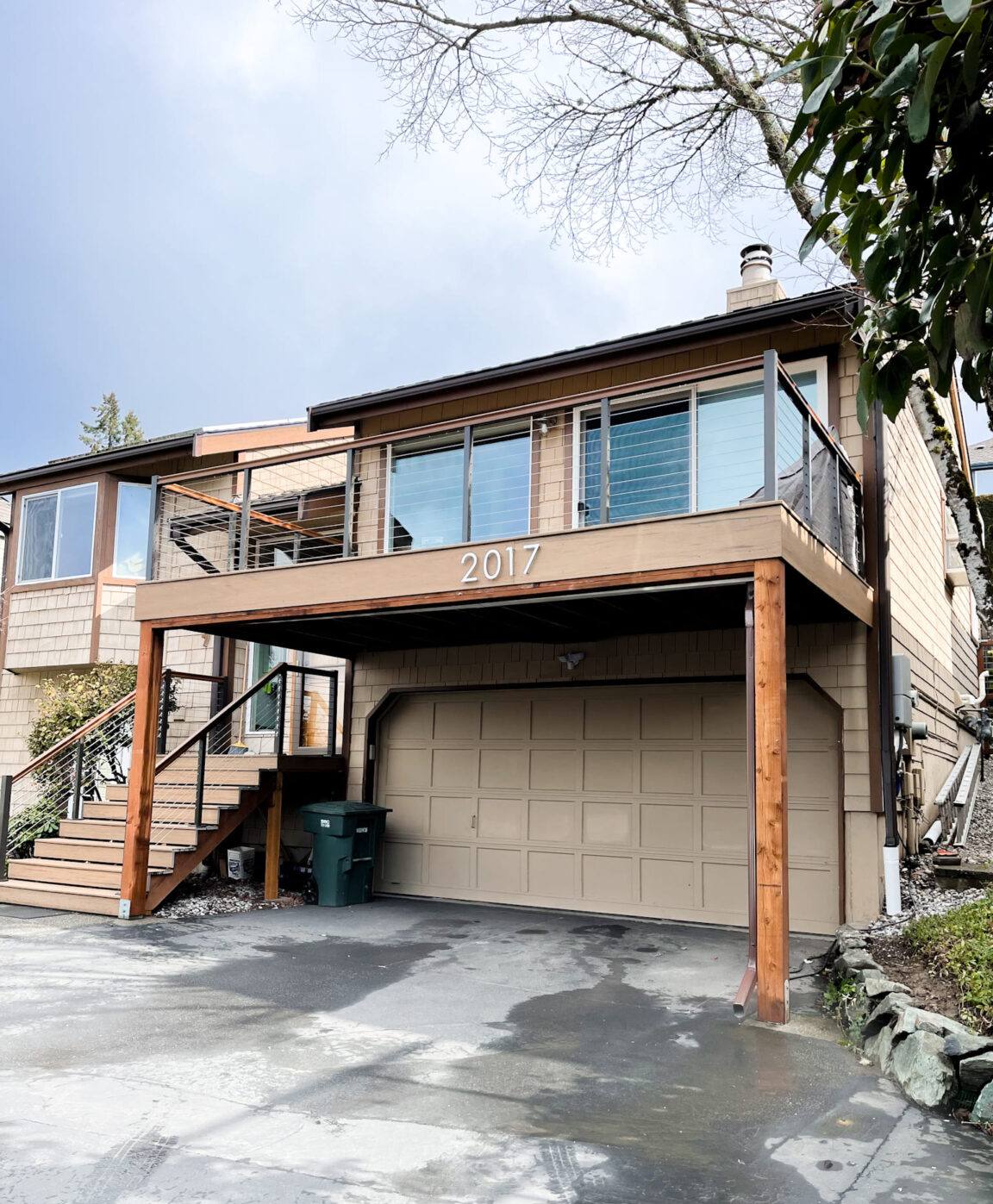
What This Climate Does to a Deck Over Time
Snohomish County and the surrounding area get a long wet season, and a shaded, tree-covered lot — common in and around Woodinville — stays damp longer after each rain than an open, sunny yard. That extra dry-out time is the single biggest factor in how fast moss, algae, and mildew take hold on any outdoor surface, decks included. Composite boards don't rot the way wood does, but the surface can still host mold and algae growth if organic debris — leaf litter, pollen, seed pods, needles — sits wet in the gaps and grooves for weeks at a time. Where composite decks actually run into trouble here isn't the board material itself; it's everything around it: gaps too tight to drain and dry, no airflow underneath, and flashing at the house that wasn't detailed for driving rain. Those are workmanship issues, not product issues, and they show up two or three years in, not on day one.
What a Correctly Installed Composite Deck Involves
Substructure and Framing
The frame underneath is still wood or engineered lumber even when the decking on top is composite, so it needs the same moisture protection as any other framing in this climate. We run joist tape (a self-adhering butyl membrane) over the top of every joist before boards go down, so fasteners bite through a sealed surface instead of bare, exposed wood. Joist spacing matters more than people expect — manufacturers generally call for tighter spacing (often 12 inches on-center instead of the standard 16) for diagonal or picture-frame layouts, and skipping that step is a common corner-cutting move that shows up as bounce or board sag down the road.
Fastening, Spacing, and Drainage
We use hidden fastener systems on capped composite boards rather than face-screwing, which keeps water from pooling in screw heads and keeps the surface looking clean. Board gap width is set to the manufacturer's spec — enough to let water and airflow through, and to allow for the board's natural thermal expansion and contraction, without gaps so wide that they're a nuisance or a tripping hazard for narrow heels. Board direction is planned around how the deck sheds water; on a sloped or partially shaded lot we pay attention to where runoff wants to go so it drains off the structure instead of pooling against the house or under a picture-frame border. A picture-frame edge without a weep gap is a classic spot for water to get trapped.
Flashing Where the Deck Meets the House
This is the step that most affects your siding, not just your deck. The ledger board — where the deck attaches to the house — has to be flashed correctly (proper Z-flashing, integrated with the house wrap or weather barrier, sealed at every penetration) or water works its way behind the siding and into the wall framing over time. Since siding is our core trade, we treat deck-to-house flashing as a siding detail, not an afterthought, and it's one of the most common things we find done wrong on decks we're asked to repair or rebuild.
Choosing the Right Composite Board for a Shaded, Damp Lot
Modern capped composite — where the board core is wrapped in a protective polymer shell — is a different product than the uncapped composite boards sold years ago, which could absorb moisture at the surface and were more prone to staining and mold growth. We install capped composite as our standard on shaded, rain-exposed lots because the cap layer sheds water and resists staining far better, which matters more here than in a dry climate. Board color is worth thinking through too: very dark boards show pollen, dust, and water spotting differently than a lighter, streaked or multi-tonal color, which tends to hide the everyday debris of a wooded lot between cleanings. We work with the major composite manufacturers — brands like Trex, TimberTech, and Fiberon are common examples — and help you compare their lines rather than pushing one brand regardless of fit.
| Board Tier | Moisture & Mold Resistance | Typical Warranty | Best Fit |
|---|---|---|---|
| Entry-level capped composite | Good — capped on wear surface | Budget-focused projects, less shaded areas | |
| Mid-tier capped composite | Very good — capped on more sides | 25–30 years, typical | Most Woodinville lots with partial shade |
| Premium capped composite | Best available — fully encapsulated core | Longest offered, varies by line | Heavy shade, high moss exposure, or long-term low-maintenance priority |
Our Process, Start to Finish
- On-site visit to look at the existing deck or bare area, note shade patterns, drainage, and how the deck ties into your siding and roofline
- Material selection — board tier, color, and railing style based on your budget and the site conditions we just looked at
- Permit check and structural plan where required, including footing and ledger details
- Removal of the old deck (if applicable) and framing or reframing of the substructure, with joist tape applied before decking goes down
- Flashing and sealing at the ledger board and any point the deck meets the house
- Composite board installation with hidden fasteners, correct spacing, and drainage-aware board direction
- Railing, fascia, stairs, and finish details
- Final walkthrough covering how the deck was built and how to care for it going forward
Living With a Composite Deck Here: Realistic Maintenance
Composite decking cuts down maintenance a lot compared to wood, but "low-maintenance" isn't "no-maintenance," especially under tree cover. A little regular upkeep keeps moss from ever getting a foothold, which is much easier than removing it once it's established.
- Sweep leaves, needles, and seed pods off the deck promptly, especially in fall — wet organic debris left in place is the main driver of moss and algae growth
- Rinse or brush debris out of the board gaps a few times a year so drainage paths stay open
- Keep any gutters or downspouts above or near the deck clear so runoff isn't dumping directly onto it
- Clean with a soft-bristle brush and a composite-safe cleaner rather than a high-pressure wash aimed close to the board surface, which can damage the cap layer
- Don't let planters, storage bins, or furniture sit in one spot for months without moving them — trapped moisture underneath is exactly what moss needs
- Trim back overhanging branches where reasonable to let in more light and airflow, which slows moss regrowth
- Do a yearly look at the ledger flashing and any spot where the deck meets the house for early signs of water staining
Cost Factors to Expect
Composite decking installed correctly runs a broad range depending on a handful of factors, and we'll give you an exact number after seeing the site rather than guessing over the phone. The board tier you choose is one factor, but it's often not the biggest one — deck size and shape, whether the existing substructure needs repair or full replacement, railing material (composite, cable, or metal), and add-ons like built-in lighting or a picture-framed border all move the price. A straightforward rectangular deck on a sound existing frame costs meaningfully less than a multi-level deck with custom railing and lighting, even with the same composite boards on top.
Why a Crew That Already Works in Woodinville Matters
A deck built for a dry-climate playbook doesn't hold up the same way here. Crews who work this area regularly know to plan for shaded, tree-heavy lots, longer wet seasons, and the moss and algae pressure that comes with both — it shapes decisions on board tier, gap spacing, drainage direction, and how much airflow the substructure needs, before the first board ever gets cut. It also means familiarity with local permitting and inspection expectations, and a crew that's still around and reachable a few years later if a flashing detail or a warranty question comes up. Since we do siding work throughout Snohomish County and the surrounding area, we're already thinking about how your deck ties into your home's exterior moisture management as a whole, not as a separate project bolted onto the side of the house.
If you're weighing a new composite deck or replacing a tired wood one, we're glad to come take a look and walk you through the options — no pressure, no obligation. Use the form below to request a free estimate.