 Snohomish
 Why Window Replacement in Clearview Is Its Own Job
Clearview sits in that in-between zone that a lot of Snohomish County homes share: close enough to Puget Sound to pick up salt-laden marine air on a regular basis, but also tucked into tree cover and low-lying terrain that holds moisture long after a storm has passed. Add in the region's long stretch of gray, wet months, and windows here take a beating that homes in drier climates never have to deal with. Frames swell and shrink with humidity swings, seals get tested by wind-driven rain, and north-facing glass rarely gets enough sun to dry out fully between storms.
That's the backdrop for every window replacement estimate we write in this area. A window that performs well in a dry inland climate can still fail early here if it isn't installed with the right flashing, the right sealants, and the right expectations about how much water this region actually throws at a house. We treat Clearview jobs as local jobs, not generic ones — because the failure points we see in this neighborhood are specific and predictable.
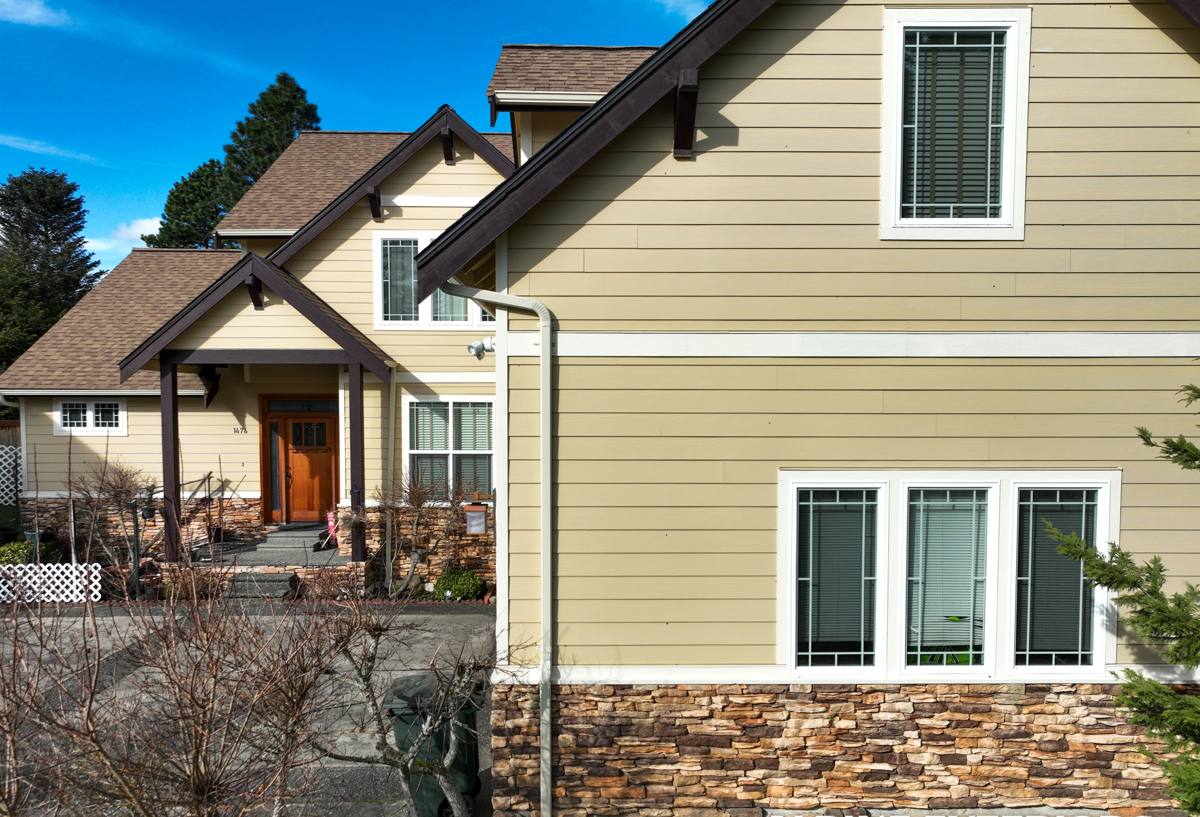
What the Regional Climate Does to Older Windows
Three conditions do most of the damage to windows in and around Snohomish:
- Salt air: Even at a distance from the water, marine air carries fine salt particles that accelerate corrosion on aluminum hardware, screws, and older window balances.
- Driving rain: Wind-driven storms push water sideways into wall assemblies, not just straight down. Old flashing details and worn caulk lines are exactly where that water finds its way in.
- Moss season: Extended damp periods mean moss and algae get a foothold on sills, trim, and anywhere water sits instead of draining. Beyond looking bad, moss holds moisture against wood and finishes for weeks at a time.
Individually, none of these is dramatic. Together, over ten or fifteen years, they're what turns a tight, efficient window into one with soft sills, foggy glass, and drafts you can feel from across the room.
How the Damage Usually Shows Up
We don't see catastrophic failures very often. What we see is slow, cumulative wear: a wood sill that's gone soft under the paint, a double-pane unit with visible fogging between the glass (a sign the seal has failed and the gas fill is gone), or hardware that's seized up from corrosion so the window won't latch tight anymore. None of these are emergencies on day one — but they compound, and they all point toward the same fix.
Signs a Clearview Home Is Ready for Replacement
Homeowners usually notice one or two of these before they call:
- Visible fog or moisture trapped between panes of glass
- Drafts near the frame, especially noticeable on windy, rainy days
- Wood trim or sills that feel soft, spongy, or show paint bubbling
- Windows that are difficult to open, close, or lock
- Condensation forming on the inside of the glass during cold, damp stretches
- Visible gaps between the window frame and siding or trim
- A noticeable rise in heating costs without any other explanation
Any one of these is worth a look. Several at once usually means the windows are past the point where caulk and weatherstripping will hold, and full replacement is the more honest recommendation.
What a Correct Window Replacement Job Actually Involves
Swapping in a new window is the easy part to picture. The part that determines whether it lasts is everything around the window — the flashing, the sealing, and how the new unit ties into the existing wall assembly. In a climate like this one, that detail work matters more than the window itself.
Removal and Inspection
Every old window comes out carefully so we can see what's actually happening in the rough opening — not just what the interior trim shows. This is where we find out if there's hidden water damage, soft framing, or old flashing that was never installed correctly in the first place. Catching that now is far cheaper than discovering it later.
Flashing and Weatherproofing
This is the step that separates a window that lasts twenty-plus years from one that starts failing in five. Proper flashing directs any water that gets past the exterior cladding back out and away from the framing, using a shingled, gravity-fed layering that never traps moisture behind the new unit. Skipping or rushing this step is the single most common cause of early window failure we see when we're called in to fix someone else's install.
Setting the Window
The new window has to be shimmed level, plumb, and square, then fastened according to the manufacturer's specification — not just "however it fits." An out-of-square install puts stress on the frame, makes hardware wear out faster, and can compromise the seal from day one.
Sealing and Insulating
Low-expansion foam or backer rod and sealant fill the gap between the window and the rough opening, cutting drafts and giving the assembly a continuous air barrier. Exterior caulking gets matched to the siding material and finished so water sheds away from the joint instead of collecting in it.
Interior and Exterior Finish
Trim goes back on clean, hardware gets tested under real operation — not just a quick open-close — and the job site gets cleaned up before we call it done.
Choosing the Right Window for a Marine-Influenced Climate
There's no single "best" window material for every home — it depends on your home's exposure, your budget, and how much upkeep you want to take on. Here's how the common options actually perform under Snohomish-area conditions:
| Frame Material | How It Handles Salt Air & Rain | Maintenance | Typical Trade-Off |
|---|---|---|---|
| Vinyl | Won't corrode or rot; handles moisture well | Low — occasional cleaning | Fewer color/finish options than wood or fiberglass |
| Fiberglass | Very stable in wet, swinging humidity; resists warping | Low | Higher upfront cost than vinyl |
| Wood (clad exterior) | Good if the exterior cladding is intact; interior wood adds warmth | Moderate to high — exposed wood needs monitoring | More sensitive to installation quality; any breach in the cladding invites rot |
| Aluminum | Prone to corrosion and condensation in salt-influenced, humid climates | Moderate | We generally steer homeowners here away from bare aluminum frames for this reason — it's a maintenance and moisture-behavior trade-off, not a claim that it can't be made to work |
For most Clearview homes, we point people toward vinyl or fiberglass simply because they hold up with the least fuss in a climate that doesn't give materials much of a break. Wood-clad windows are a fine choice too, provided the cladding and flashing details are done right and the homeowner is comfortable with a bit more long-term attention.
Our Process, Start to Finish
- Free on-site estimate: We walk the exterior and interior, check existing window condition, and talk through your priorities — energy efficiency, noise reduction, appearance, or simply stopping active leaks.
- Written proposal: A clear scope, window specifications, and price — no vague allowances.
- Scheduling: We plan around the weather where we can, since a dry install window matters for sealant cure time.
- Installation: Most homes are done in one to a few days depending on the number of openings, with the crew working room by room to keep the house weathertight overnight.
- Final walkthrough: Every window gets operated and inspected with you before we consider the job finished.
What Affects the Cost
We won't quote a number without seeing the home, but the main variables that move the price are consistent from job to job:
- Number of windows and their sizes
- Frame material (vinyl, fiberglass, or wood-clad)
- Whether it's a straightforward frame swap or a full-frame replacement with new flashing
- Condition of the existing rough opening — hidden rot adds repair time
- Glass package (double vs. triple pane, low-E coatings)
- Trim and interior finish work required
- Access — second-story or hard-to-reach openings take longer
Homeowners are often surprised that the labor and detail work around the window — not the window unit itself — is what separates a budget quote from one that's built to actually hold up through a Snohomish winter.
Why Local Experience in Clearview Matters
A crew that's worked this specific area knows which details get skipped by installers who don't deal with this climate day in and day out — the flashing shortcuts, the caulk that's fine in a dry climate but fails here in year three, the aluminum hardware that looks fine on delivery but corrodes fast once it's exposed to real marine air. We've seen what actually fails in this region, and we build every install to hold up against it, not against a generic national standard.
We're also familiar with how homes in this part of Snohomish County are typically built — the framing conventions, the common siding types, and the exposure patterns that come with the terrain and tree cover here. That local knowledge shows up in small decisions during the install that you'd never notice unless something went wrong.
Keeping New Windows Performing Through Moss Season
A correctly installed window needs very little upkeep, but a few habits extend its life considerably in this climate:
- Clear debris and moss from sills and tracks before the wet season sets in
- Check exterior caulk lines annually for cracking or separation
- Keep gutters clear so overflow doesn't run down onto window heads
- Operate every window periodically, even in winter, so hardware and weatherstripping stay flexible
- Wipe down interior sills after heavy condensation events to prevent long-term moisture damage
None of this is complicated, but it's the kind of small maintenance that determines whether a window replacement is a twenty-year investment or a ten-year one.
Get a Free, No-Pressure Estimate
If your windows are drafty, fogged, sticking, or just past their prime, we're happy to take a look and give you an honest read on what's going on — no obligation, no pressure. Use the form below to request a free estimate for your Clearview home.