 Snohomish
 Machias Sits Right in the Middle of Snohomish's Wet-Side Climate
Machias is one of those in-between places — close enough to the Snohomish River bottomlands to catch the damp air off the water, and far enough from town that many homes here are older, on larger lots, with trees crowding right up against the siding and window trim. That combination matters for windows. Homes in Machias deal with the same driving rain and long wet winters as the rest of Snohomish County, but the tree cover and proximity to low, moist ground often mean windows here hold moisture longer between dry spells than a similar house out in the open.
Over years of working windows throughout Snohomish and the surrounding unincorporated areas, we've seen a pattern in Machias specifically: it's not usually one catastrophic leak that ruins a window. It's the slow accumulation — a frame that never fully dries out, sash cords or balances that swell and stick, glazing seals that fail quietly over several seasons. By the time a homeowner notices fogging between the panes or a draft at the sill, the water intrusion behind the frame has often been going on for a while.
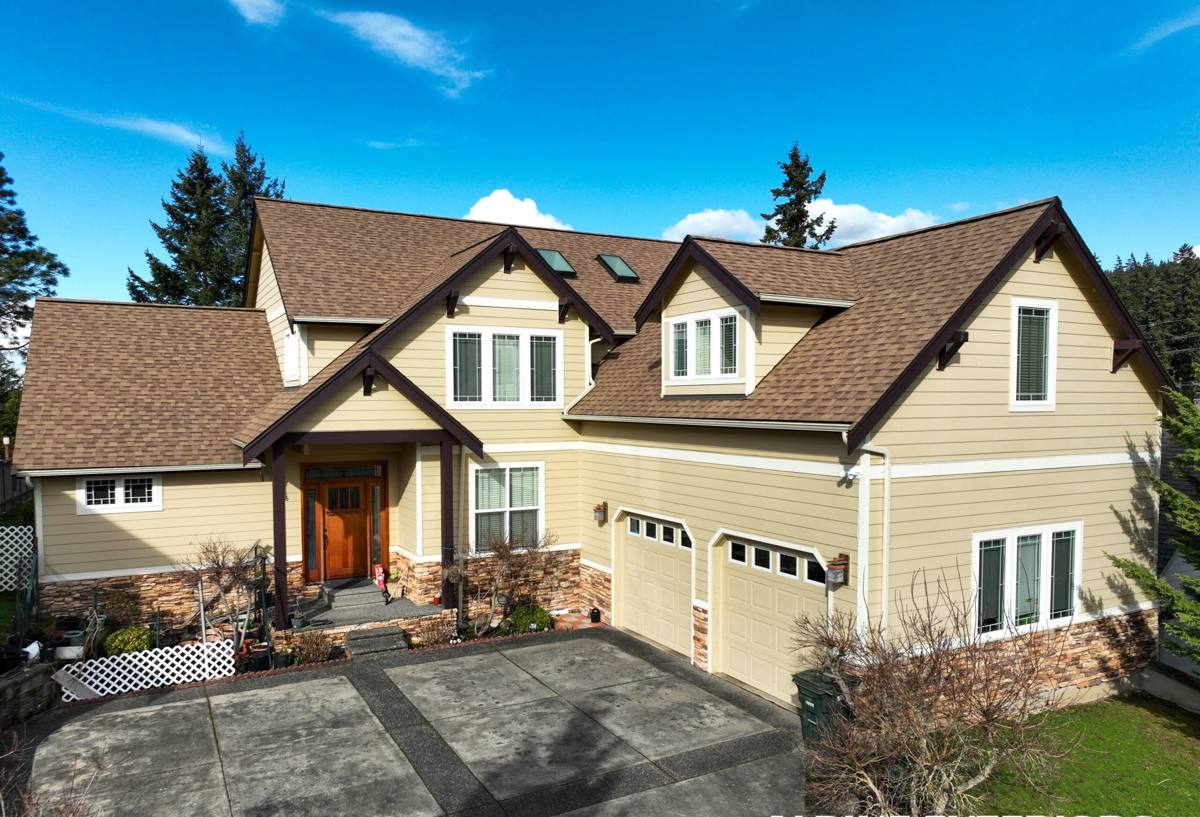
What Driving Rain and Moss Season Do to Old Windows
Snohomish County's wet season isn't just rain falling straight down — wind off the river valley pushes it sideways into west- and south-facing walls, which is exactly where a lot of Machias homes have their largest windows. Driving rain finds every gap in old caulking, worn weatherstripping, and flashing that was installed to a lower standard decades ago. Once water gets behind a window frame, it has nowhere to go but into the wall cavity, the sill plate, or the framing lumber underneath.
Moss season adds a second, slower problem. Moss and algae hold moisture against wood trim, painted sills, and even vinyl cladding far longer than bare material would dry on its own. On older wood-frame windows, that constant dampness is what actually causes rot — not the rain itself, but the moss and grime that trap it in place. We regularly find sills and lower sashes that look intact from a few feet away but are soft or crumbling under a coat of paint once you probe them.
Common Failure Points We See on Machias Homes
- Wood sills and lower sash rails soaked and softened under paint that looked fine on the surface
- Failed glazing seals on older dual-pane units, showing as permanent fog or moisture between the glass
- Weatherstripping that's compressed flat or missing, letting cold air and moisture in around the sash
- Flashing above windows that was never installed, or was installed under the siding instead of over it
- Wood or composite trim with moss growth holding damp against the wall year-round
- Single-pane or early dual-pane windows original to the home, now decades past their realistic service life
Signs a Machias Home Needs Replacement, Not Just Repair
Not every window problem means full replacement. A single failed seal or a stuck sash can sometimes be repaired. But there are signs that tell us the smarter, more cost-effective move is a full replacement rather than chasing repairs on a window that's already lost the fight against moisture.
- Soft, spongy, or visibly rotted wood at the sill, jamb, or lower corners
- Persistent fog or mineral streaking between panes on more than one window
- Windows that won't stay open, won't latch, or have visibly warped out of square
- Noticeable drafts or cold spots at the frame even with the window fully closed
- Paint that keeps failing on the same window no matter how often it's touched up
- Rising energy bills alongside a home that still has its original single- or early dual-pane glass
If a window shows one or two of these on an otherwise sound frame, repair may still make sense. If several show up together, or the wood structure itself is compromised, replacement is almost always the better long-term investment — repeated repairs on a failing frame rarely outlast a properly installed new window.
What a Correct Window Replacement Job Actually Involves
Window replacement is one of those jobs that looks simple from the outside — pull the old one out, set the new one in — but the parts nobody sees are what determine whether the window lasts fifteen years or fifty. Here's what we actually do at each stage.
Removal and Inspection
We don't just pop out the old sash and frame. Once a window is out, we inspect the rough opening, sill plate, and surrounding framing for hidden rot or moisture damage — which, given what we described above about Machias's slow-moisture problem, is common enough that we plan for it rather than treat it as a surprise. Any damaged wood gets addressed before a new window ever goes in. Installing a new window into a wet or rotted opening just hides the problem behind fresh trim.
Flashing and Water Management
This is the step that separates a durable install from one that fails again in a few years. Proper flashing directs water that reaches the window opening back out and away from the wall assembly — over the top, down the sides, and out at the sill — instead of letting it collect against the framing. Given how much driving rain this area gets, we treat flashing as non-negotiable, not an upsell.
Insulation and Air Sealing
The gap between the new window frame and the rough opening needs to be filled correctly — enough insulation to stop drafts and condensation, without overfilling in a way that bows the frame out of square. We seal and insulate that gap as a standard part of every install, not an add-on.
Trim and Finish Work
Interior and exterior trim gets reset or replaced so the finished window sheds water correctly and looks right against the rest of the home. On older Machias houses with painted wood trim, this is also the point where we address any moss-damaged trim nearby so the new window isn't immediately sitting next to the same conditions that damaged the old one.
Choosing the Right Window for a Machias Home
There's no single "best" window material — the right choice depends on the home's age, style, and how much upkeep the homeowner wants to take on. Here's how the common options compare for a climate like this one.
| Frame Material | Moisture Performance | Maintenance | Best Fit |
|---|---|---|---|
| Vinyl | Doesn't rot or absorb water; performs well in constant damp | Low — no painting, occasional cleaning | Most Machias homes prioritizing durability and value |
| Fiberglass | Excellent — very stable in wet/dry cycling, resists warping | Low to moderate | Homes wanting maximum longevity and paintable finish |
| Wood-Clad | Good if the exterior cladding is intact and well-sealed | Higher — cladding and interior wood need periodic attention | Older or higher-end homes prioritizing a traditional wood interior look |
| Aluminum | Poor thermal performance; prone to condensation in this climate | Low | Rarely our recommendation for full-time Snohomish County homes |
Our standard recommendation for most Machias homes is vinyl or fiberglass, because both handle constant damp without the ongoing maintenance burden wood cladding demands. That's a maintenance and moisture-performance judgment, not a knock on wood windows generally — a well-maintained wood-clad window can perform fine, but it asks more of the homeowner over time in a climate that doesn't give wood much of a break.
Our Process, From Estimate to Cleanup
Homeowners in Machias tend to want a straight answer about what's actually wrong and what it'll take to fix it — not a sales pitch. Our process is built around that.
- On-site visit to look at each window in question, including probing sills and trim for hidden moisture damage
- Honest read on repair-vs-replace for each window, not a blanket "replace everything" recommendation
- Clear, itemized estimate before any work begins, with no surprise add-ons mid-job
- Careful removal with protection for interior flooring and landscaping near the work area
- Correct flashing, insulation, and air-sealing on every unit — not treated as optional upgrades
- Finish trim work matched to the home's existing look, inside and out
- Full daily cleanup — old windows, packaging, and debris hauled off, not left for the homeowner
- Walkthrough at completion so the homeowner sees the finished work and how to operate and maintain the new windows
Cost Factors for Window Replacement in This Area
Every home is different, so we don't quote pricing without seeing the actual windows and openings — but the factors that move the price are consistent across most Machias jobs.
| Factor | Why It Matters |
|---|---|
| Number and size of windows | Larger openings and whole-house projects change both material and labor cost per unit |
| Hidden rot or framing damage | Discovered once old windows come out; repair of the opening adds time and material before install |
| Frame material chosen | Vinyl is typically the most cost-effective; fiberglass and wood-clad cost more upfront |
| Full-frame vs. insert replacement | Full-frame replaces down to the rough opening and flashing; inserts are faster but only appropriate when the existing frame is sound |
| Access and site conditions | Second-story windows, tree-crowded exteriors, or tight access add labor time |
As a broad guideline, homeowners should expect single-window replacement to run from the low thousands per window for standard vinyl units, up through several thousand for larger, higher-performance, or wood-clad windows — with the real number depending entirely on what we find once we're on-site. We'll always tell you honestly if a "quick fix" is really a bigger job once the old window comes off the wall.
Why Hiring a Crew That Already Works Machias Matters
Machias isn't a subdivision with a hundred identical houses — it's a mix of older farmhouses, mid-century homes, and newer builds, often on wooded lots with their own drainage quirks. A crew that's worked this specific area knows what to expect before the first window comes out: where moisture tends to hide in homes of this age and construction, how the tree cover and low ground around the river valley affect drying time, and what flashing details actually hold up here versus what looks fine on paper but fails in real driving rain.
That local familiarity isn't a marketing line — it changes how we bid a job and what we look for during removal. We're not guessing at what a "typical" Snohomish County home needs; we've opened up enough of them in and around Machias to know where the surprises usually are.
Permits, Codes, and Timing Considerations
Window replacement in Snohomish County generally falls under standard residential permitting rules, and requirements can shift depending on whether the replacement is like-for-like or changes the window's size or the structural opening. We handle the permit question as part of the estimate conversation rather than leaving homeowners to sort it out themselves — if a permit's needed for your specific project, we'll tell you before work starts, not after.
Timing is worth planning around too. Given the wet season here, we prioritize scheduling window replacements to minimize how long any opening sits exposed, and we work in stretches of weather that let flashing and sealants cure properly. A window installed in a rush during a downpour is a window more likely to leak within a year or two.
If you're seeing drafts, fogged glass, soft trim, or windows that just don't operate the way they used to, we're happy to take a look and give you a straight answer about what your home actually needs. Fill out the form below for a free, no-pressure estimate on window replacement for your Machias home.