 Snohomish
 Why Storm Damage Hits Granite Falls Roofs Differently
Granite Falls sits up the valley from Snohomish, closer to the foothills of the Cascades, and that location shapes how storms treat a roof here. Wind funnels through the river valley and picks up speed before it hits a rooftop, driving rain sideways under shingle edges instead of letting it run straight off. Add in a long, wet moss season that keeps roof surfaces damp for months at a stretch, and even a well-built roof is working harder here than the same roof would in a drier part of the state. Homes further down toward the Sound also pick up a share of salt-laden marine air during winter storm systems, which speeds up corrosion on exposed fasteners and metal flashing over time.
None of that means Granite Falls roofs fail faster than anywhere else in Snohomish County. It means storm damage here tends to show up in specific, predictable places — valleys, flashing, eaves, and anywhere moss has been sitting long enough to hold moisture against the roofing material. Knowing where to look, and what normal wear looks like versus actual storm damage, is most of the job before a single shingle gets replaced.
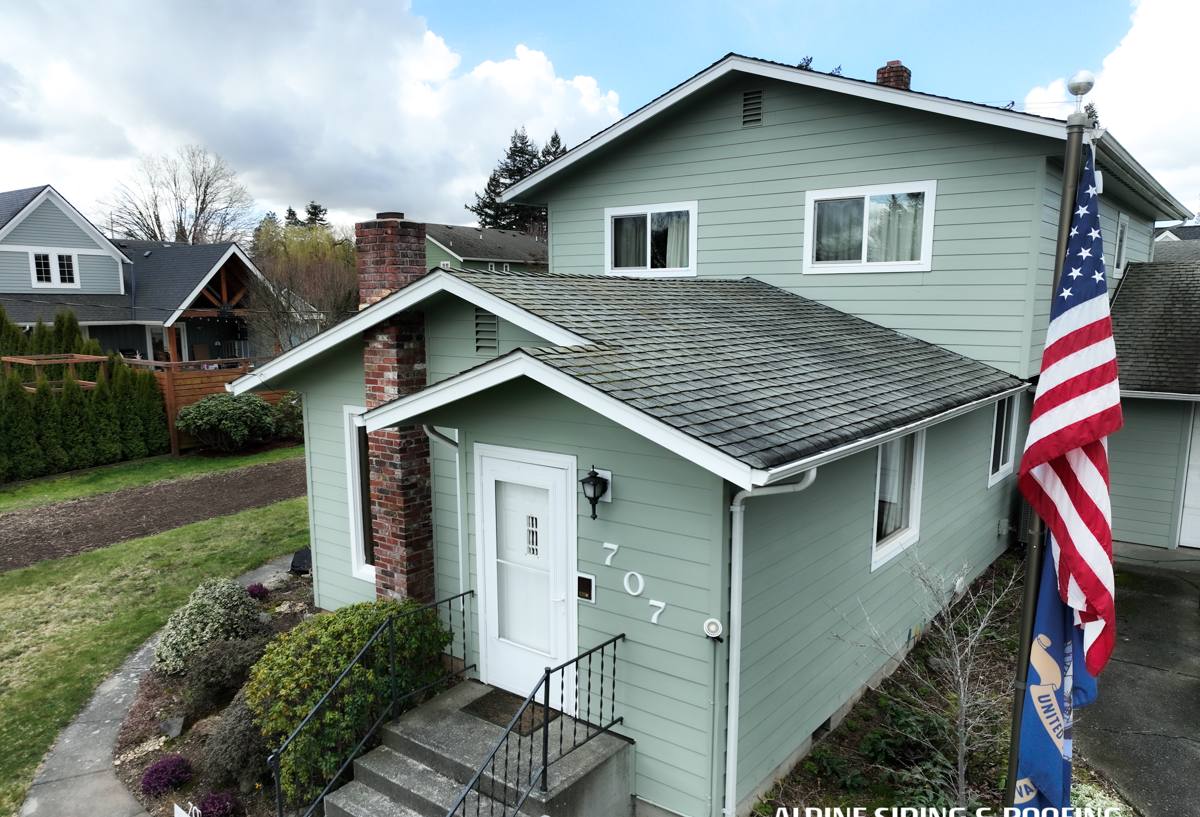
What Storm Damage Actually Looks Like
Homeowners often assume storm damage means a dramatic hole or missing section of roof, but most of what we find after a windstorm or heavy rain event is quieter than that — and easier to miss from the ground.
Signs Worth a Closer Look
- Shingles that look "lifted" or curled at the edges, even if none are missing outright
- Granule loss showing up in gutters or at the base of downspouts
- Soft or discolored ceiling patches inside the home after a storm
- Flashing around chimneys, vents, or skylights that looks bent, separated, or rusted
- Moss buildup thick enough that you can't see the shingle surface underneath
- Debris — branches, needles, gravel from asphalt shingles — collecting in valleys
Any one of these on its own might be minor. Several together, especially after a named windstorm or a stretch of heavy rain, usually means water has found a way past the surface layer and it's worth having someone look before the next storm makes it worse.
What a Correct Storm Damage Repair Involves
A repair that only replaces the shingles a homeowner can see from the driveway is not a repair — it's a patch that buys a few months. Doing it right means checking what's underneath before closing the roof back up.
The Layers We Actually Check
Storm damage repair on a Western Washington roof means working through the roof system, not just the top layer:
- Decking: the plywood or OSB sheathing underneath — if it's been wet long enough, it can be soft or delaminating and needs to be cut out and replaced, not covered over
- Underlayment: the water-resistant barrier between decking and shingles — a small tear here can let water travel far from the original damage point before it shows up as a stain inside the house
- Flashing: the metal at roof transitions, valleys, and penetrations — this is where storm damage repairs fail most often when they're rushed, because flashing has to be lapped and sealed correctly, not just caulked over a gap
- Shingles or roofing material: matched as closely as possible to the existing roof in both product line and color, since a mismatched patch stands out and can affect how water sheds off that section
Skipping any of these steps is how a $600 storm repair turns into a $6,000 interior water damage job two winters later. We'd rather tell a homeowner honestly that a section needs more work than the storm alone caused, than hand back a roof that looks fixed but isn't.
Our Process, Start to Finish
- Initial call and photo review. If you can send photos of visible damage, we can often get a rough sense of scope before we're on site, which helps us schedule the right crew and materials the first time.
- On-site inspection. We walk the roof (weather permitting) and check attic space from inside where accessible, looking for water staining, insulation damage, or daylight coming through decking.
- Written scope and estimate. You get a clear breakdown of what's damaged, what needs replacing, and what it will cost — no vague allowances.
- Insurance documentation, if needed. If you're filing a claim, we document damage in a way that holds up with adjusters and can meet on-site if that's useful to you.
- Repair. Damaged decking, underlayment, flashing, and roofing material are replaced and tied back into the surrounding roof correctly.
- Cleanup and walkthrough. Debris and old material hauled off, magnetic sweep for nails, and a final walk so you can see exactly what was done.
Storm Damage and Insurance Claims
A fair number of storm damage repairs in this area involve a homeowner's insurance policy, especially after a windstorm strong enough to make local news. A few things are worth knowing going in:
Insurance adjusters are evaluating a lot of roofs after a major regional storm event, and they're not always able to spend much time on any single one. Having clear photo documentation and a written scope from a roofer who inspected the same day or soon after can make a real difference in how a claim gets processed. We're not a public adjuster and we don't negotiate your policy for you, but we can give you an honest, detailed account of what we found and what it will take to fix it — the same information we'd want if we were the ones filing.
Be cautious of anyone who shows up unsolicited after a storm promising a "free roof" through insurance. Legitimate storm repair starts with an honest inspection, not a sales pitch about what your policy will supposedly cover before anyone's even looked at the damage.
Repair or Full Replacement? How to Tell
Not every storm-damaged roof needs to be repaired the same way, and not every damaged roof needs full replacement. The right call depends on a few honest factors.
| Factor | Leans Toward Repair | Leans Toward Replacement |
|---|---|---|
| Roof age | Under 12–15 years, otherwise sound | Nearing or past expected lifespan |
| Extent of damage | Isolated to one section or slope | Spread across multiple sections |
| Decking condition | Dry, solid underneath | Soft, delaminated, or repeatedly patched |
| Moss and wear history | Recent, well-maintained roof | Years of moss buildup and granule loss |
| Material availability | Matching shingles still available | Discontinued color or product line |
Broadly, isolated storm repairs on an otherwise healthy roof run in the low hundreds to a couple thousand dollars depending on scope. Once decking replacement, multiple slopes, or full material mismatches are involved, it starts making more financial sense to talk about a full re-roof instead of chasing repairs on a roof that's already near the end of its service life. We'll tell you which category your roof falls into and why, not just quote whichever job is bigger.
Materials and Workmanship Standards
For storm repair work, we match to what's already on the roof wherever we reasonably can, since that keeps cost down and avoids an obvious patch. When a full section needs to come off, we use roofing materials and underlayment rated for the wind and moisture exposure typical of this part of Snohomish County, with metal flashing detailed to actually shed water rather than rely on sealant to do the work sealant isn't designed to do long-term.
We don't cut corners by face-nailing shingles, skipping ice-and-water shield in vulnerable valleys, or reusing flashing that's already corroded just to save a trip to the supplier. Those shortcuts show up as callbacks within a year or two, and a callback roof costs everyone more than doing it right the first time.
Why a Crew That Already Works Granite Falls Matters
Roofing crews that only pass through this part of Snohomish County occasionally tend to treat every job the same way regardless of local conditions. A crew that regularly works Granite Falls knows which slopes on a foothill lot hold moss longest, how valley wind loading tends to lift shingles at specific roof edges, and which flashing details actually hold up through a wet Pacific Northwest winter instead of just looking finished on install day.
There's also a practical side to it: local crews can usually respond faster after a regional storm event, when demand for roofing repair spikes across the whole area at once, and we're not learning the neighborhood's typical roof pitches and access challenges for the first time on your job.
After the Repair: Keeping It From Happening Again
A good storm repair should hold, but a roof in this climate still needs basic upkeep to get its full lifespan. A short list of what actually matters:
- Keep gutters and downspouts clear so water isn't backing up under roof edges during heavy rain
- Address moss buildup before it gets thick enough to hold moisture against the shingle surface
- Trim back overhanging branches that scrape shingles in wind or drop debris into valleys
- Have the roof looked at after any major windstorm, even if nothing looks obviously wrong from the ground
- Don't ignore small interior stains — they're almost always cheaper to fix early than late
If you've got storm damage on a Granite Falls roof, or you're just not sure whether what you're seeing needs attention, we're happy to take a look and give you a straight answer. Fill out the form below for a free, no-pressure estimate.