 Snohomish
 Everett Decks Take a Different Kind of Beating
Everett sits close enough to Puget Sound that salt-laden air reaches decks even a few miles inland, and it combines with the long, wet Pacific Northwest fall and winter to create conditions that are genuinely hard on outdoor wood structures. It's not one single problem — it's several working together at once. Salt air accelerates corrosion on fasteners and metal connectors. Driving rain off the Sound gets pushed sideways under railings and around ledger boards instead of falling straight down. And the moss season, which in this part of Snohomish County can run from October well into April, keeps deck surfaces damp and shaded for months at a stretch, which is exactly the environment wood rot and slick growth need to take hold.
A deck built without this climate in mind — undersized flashing, the wrong fastener grade, decking laid flat with no drainage thought given to the structure underneath — will show problems years before it should. We've replaced plenty of decks in the Everett area that were structurally sound in concept but failed because of details that don't matter much in a drier climate and matter enormously here.
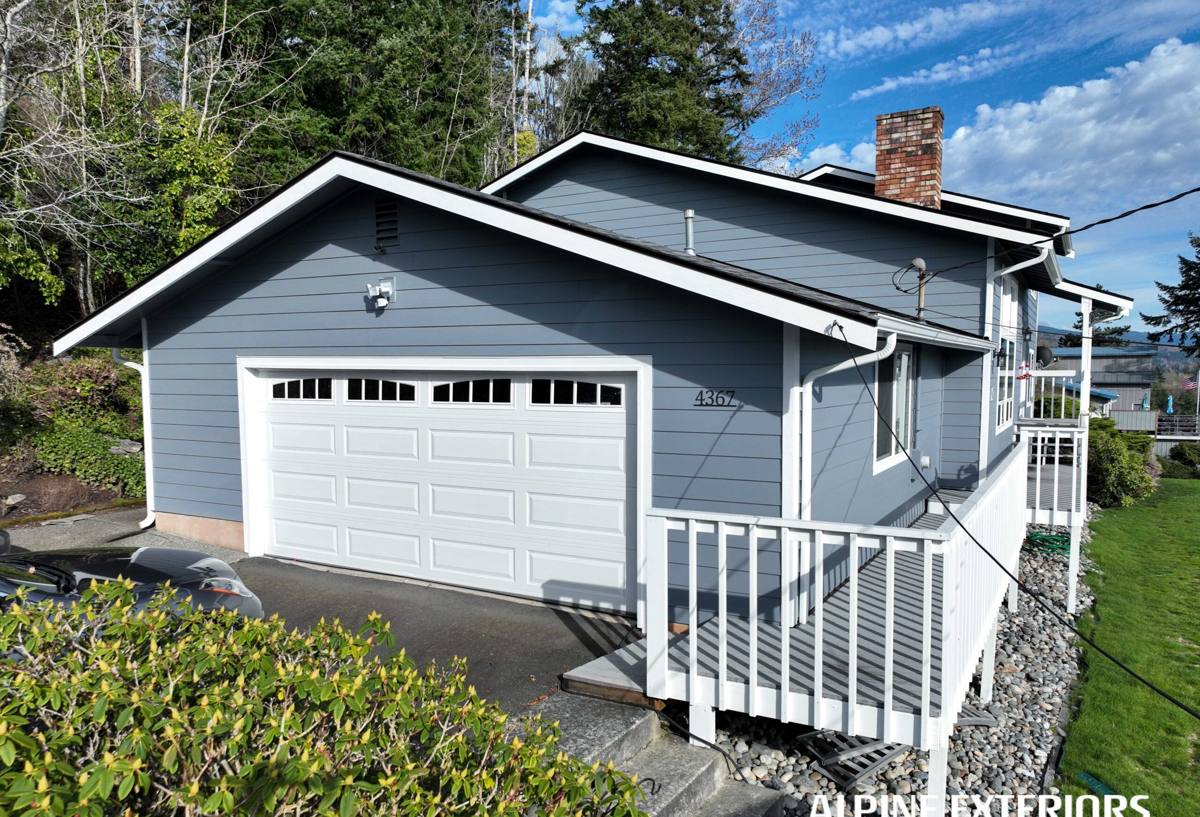
Signs Your Deck Needs Replacing, Not Just Repairing
Homeowners often call us assuming they need a few boards swapped, and sometimes that's true. But there's a point where patching a deck costs nearly as much as replacing it and leaves you with a structure that's only as strong as its weakest original part. Here's how we tell the difference on a typical Everett-area deck.
Repair usually makes sense when:
- A handful of deck boards are cupped, splintering, or soft, but the framing underneath is dry and solid
- Railings are loose at a few connection points but the posts themselves aren't rotted
- The deck is less than 10-12 years old and was built with pressure-treated framing that's been reasonably maintained
Replacement is the honest call when:
- A screwdriver sinks into the ledger board, rim joist, or support posts with light pressure — that's active rot, not surface weathering
- The deck feels spongy or bounces underfoot in more than one spot
- Flashing behind the ledger is missing or was never installed, which is common on older Everett-area homes and lets water track directly into the house band joist
- Footings have shifted, cracked, or were undersized for the deck's actual load in the first place
- You're seeing consistent moss and algae growth on the framing itself, not just the walking surface — that means moisture is sitting somewhere it shouldn't
If we come out for an estimate and find the framing is genuinely sound, we'll tell you repair is the right move. Talking someone into a full replacement they don't need isn't how we want to run this business.
What a Correct Deck Replacement Actually Involves
A deck is a structure, not just a surface, and the parts nobody sees are what determine whether it lasts 10 years or 30 in this climate.
Ledger and house connection
Where the deck attaches to the house is the single most common failure point we find in this region, because it's where wood meets wood meets siding, and any gap in the flashing lets water run straight into the wall assembly. A correct replacement uses proper ledger flashing that sheds water out and away from the house, with the housewrap or siding detailed to lap over it correctly — not caulk covering a gap and hoping.
Framing and fasteners
Given the salt air moving in off Puget Sound, we don't cut corners on hardware. Structural connectors, joist hangers, and fasteners need to be rated for the moisture and corrosion exposure this area actually sees, not the minimum a supplier stocks. Mixing incompatible metals (the wrong hanger with the wrong fastener) causes galvanic corrosion that can quietly weaken a connection for years before it's visible.
Footings and posts
Snohomish County soil and frost conditions mean footings need to be sized and set to current code depth, not just matched to whatever was there before — especially on older decks where the original footings were often undersized or set too shallow.
Drainage and airflow
Decks that sit low to the ground or have poor airflow underneath stay damp longer after every rain, which is exactly what feeds moss and slows wood decay. Where the design allows it, we build in enough clearance and consider drainage systems for decks with usable space underneath, so water has somewhere to go besides sitting on the framing.
Decking Material Options, Compared Honestly
There's no single right answer here — it depends on budget, how much upkeep you want to do, and how the deck will be used. What matters is picking a material with realistic expectations for our climate, not a sales pitch.
| Material | Upfront Cost | Maintenance in This Climate | Typical Lifespan Here |
|---|---|---|---|
| Pressure-treated wood | Lowest | Annual cleaning and re-sealing to fight moss and moisture; most exposed to rot if maintenance lapses | 10-15 years with upkeep |
| Cedar | Moderate | Regular sealing needed; naturally more rot-resistant than treated pine but still needs attention to stay ahead of moss | 12-18 years with upkeep |
| Composite decking | Higher | Periodic washing to keep moss and algae from taking hold on the surface; no sealing or staining required | 20-30 years |
| PVC/capped polymer | Highest | Lowest maintenance option; resists moisture absorption almost entirely, which matters most in a long wet season | 25-30+ years |
We'll be straight with you: composite and PVC cost more up front, but in a climate with this much sustained moisture, the maintenance savings and moisture resistance often make them the better long-term value — especially on a deck that gets shade for part of the day, which is common on many Everett-area lots and makes moss growth worse regardless of decking material.
How Our Process Works
We keep this straightforward because a deck project shouldn't feel like a mystery.
1. On-site estimate
We walk the existing deck, check the framing and ledger connection where possible, and talk through what you actually want from the new deck — size, material, railing style, whether you need permitting.
2. Written scope and pricing
You get a clear breakdown of what's included: demolition and disposal of the old deck, framing, footings, decking material, railings, flashing, and hardware. No vague line items.
3. Permitting, when required
Most full deck replacements in this area require a permit, especially if footings or the ledger connection are being redone. We handle the paperwork and inspections as part of the job.
4. Demo and structural work first
We remove the old deck down to what's being reused (usually nothing structural, if it's being replaced), reset or pour new footings as needed, and build the frame to current code before a single decking board goes down.
5. Decking, railings, and final details
Surface material, railings, stairs, and any lighting or accessory work happen last, followed by a walkthrough with you before we consider the job done.
Permits and Local Requirements
Deck permitting in Snohomish County and the City of Everett covers structural elements like footing depth, ledger attachment, guardrail height, and stair geometry — the things that matter most for safety and longevity anyway. Requirements can vary depending on your specific jurisdiction and deck height above grade, so we confirm what applies to your property before finalizing the scope rather than assuming. Skipping a required permit on a deck replacement isn't worth the risk — it can create real problems at resale and, more importantly, means the structural work never got an independent inspection.
Railings and Hardware That Hold Up Locally
Railings take direct weather exposure and constant hand contact, so hardware choice matters as much here as it does in the framing. We use fasteners and connectors rated for the corrosion exposure this area sees, and we pay attention to how railing posts are actually anchored to the frame — through-bolted into structural blocking, not just screwed to the rim joist, which is a common shortcut that fails under lateral load over time. For wood railings, the same moss and moisture pressure that affects decking applies, so material choice and finish matter just as much on the rail system as on the walking surface.
Keeping a New Deck in Good Shape Through the Wet Season
A well-built deck still needs a little seasonal attention in this climate. This isn't about heavy maintenance — it's a short list that heads off the moisture and moss problems before they start.
- Sweep leaves and debris off the surface regularly in fall — trapped wet leaves are one of the fastest ways to stain and soften decking
- Rinse or lightly scrub shaded areas a couple of times during moss season, since those spots stay damp longest and grow moss first
- Check that gaps between boards stay clear so water can drain through rather than pooling
- Inspect railing connections once a year for any looseness
- For wood decks, plan on resealing on the manufacturer's recommended schedule — skipping a season is when moisture starts winning
- Keep gutters and downspouts near the deck clear so roof runoff isn't dumping extra water onto or under the structure
Why It Matters That We Already Work in Everett
A deck replacement built to a generic national spec doesn't account for what actually happens to lumber and hardware a few miles from Puget Sound over a full Snohomish County winter. Working in this area regularly means we've already seen which details cause callbacks here — the ledger flashing that gets skipped, the fastener grade that corrodes faster than expected, the shaded corner that grows moss within a year — and we build those lessons into every deck from the start instead of learning them on your project. That's the difference between a deck that needs attention in year three and one that's still solid well past year twenty.
If you're weighing repair versus replacement, or just want an honest look at what your current deck needs, we're happy to come take a look. Fill out the form below for a free, no-pressure estimate.