 Snohomish
 Why Lynden Decks Wear Out Faster Than You'd Expect
A deck in Lynden doesn't fail because the lumber was bad or the crew that built it did sloppy work. Most of the time it fails because Whatcom County weather is relentless in ways that don't show up until years later. Driving rain works its way into joints and fastener holes. Salt-laden air off Puget Sound and the Strait accelerates corrosion on anything metal, including the hardware holding your deck together. And the long, gray moss season here means organic growth gets a head start on wood surfaces every fall and doesn't fully let go until late spring.
None of that is unusual for this part of Washington. What matters is whether a deck was built and maintained with that climate in mind. A lot of decks in and around Lynden were built to a baseline standard that assumes drier conditions than we actually get. Over time, that gap between "built to code" and "built for this climate" is exactly where deck problems start.
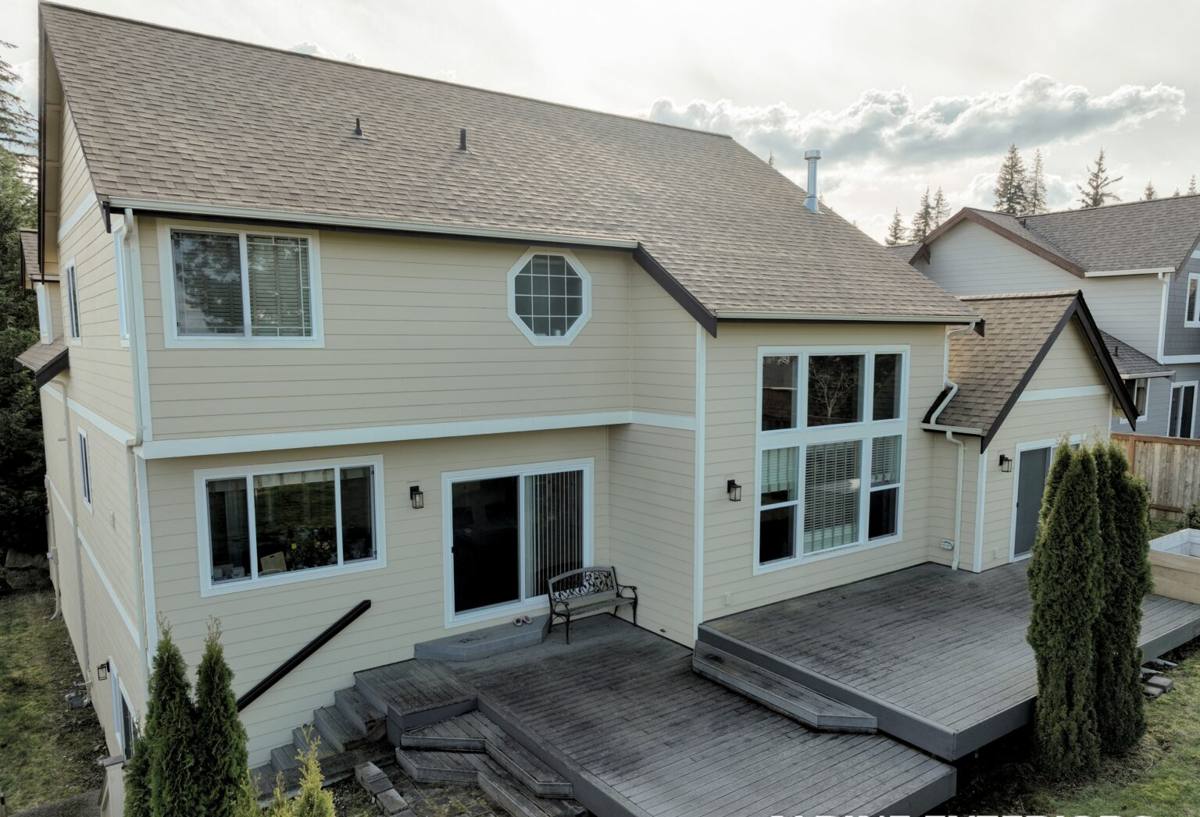
The Deck Problems We Actually Find on Lynden Repair Calls
Every deck is different, but the failure patterns repeat. Here's what shows up most often when we inspect a deck in this area:
- Ledger board rot where the deck attaches to the house — usually from water getting behind inadequate or missing flashing
- Corroded fasteners — nails, screws, or joist hangers that were never rated for coastal moisture and have rusted, weakened, or stained the surrounding wood
- Soft or spongy decking boards, especially near board edges and butt joints where water pools and doesn't drain
- Moss and algae buildup on horizontal surfaces, which holds moisture against the wood long after a rain stops and accelerates decay underneath
- Joist and beam deterioration that isn't visible from the top — often the most serious issue and the easiest to miss without pulling boards
- Railing post rot at the base, where end grain sits in standing water or snow-melt runoff
- Stair stringer cracking from repeated freeze-thaw cycling in wet wood
Some of these are cosmetic annoyances. Others are structural, meaning the deck isn't safe to load the way it was designed for. Telling the difference is the first job of any real inspection.
What a Correct Deck Repair Actually Involves
Structural vs. Cosmetic Repairs
A cosmetic repair — replacing a few weathered boards, re-tightening railings, cleaning moss — makes a deck look better but doesn't address why it failed. A structural repair goes after the cause: rotted framing, undersized or corroded fasteners, missing flashing, or a ledger connection that was never properly sealed to the house. We separate these two categories explicitly in every estimate so you know exactly what you're paying for and why.
Ledger Board and Flashing
The ledger board — where the deck bolts to your house — is the single most common point of failure we see, and it's also the one most homeowners can't inspect themselves without pulling siding or trim. If flashing was skipped or installed wrong, water tracks behind the ledger and rots both the ledger and the wall framing behind it. Fixing this properly means removing the ledger, addressing any hidden rot in the house framing, installing correct flashing, and reattaching with fasteners rated for exterior and coastal use. This is not a job to shortcut, because a failed ledger connection is a safety issue, not just a maintenance one.
Framing and Joists
If joists or beams show soft spots, delamination, or fastener corrosion, we sister in new lumber or replace the affected sections entirely rather than just capping the problem with new decking on top. Decking that looks fine sitting on compromised framing is a repair that will fail again, usually within a couple of seasons.
Decking, Railings, and Fasteners
Once the structure underneath is sound, we replace decking boards, stair treads, and railing components as needed, using fasteners and hardware rated for the moisture and salt exposure typical of this region — not the cheapest option available at a big box store.
Repair or Replace? What Actually Drives That Decision
Homeowners often ask whether it's smarter to repair a deck or just tear it out and start over. The honest answer depends on where the damage is, not how old the deck looks.
| Factor | Favors Repair | Favors Full Rebuild |
|---|---|---|
| Framing condition | Joists and beams are sound, damage is localized | Widespread rot in multiple joists or the main beam |
| Ledger connection | Ledger is solid, flashing just needs correcting | Ledger itself is rotted or was never properly attached |
| Age of decking | Boards are under 10-12 years old with isolated damage | Original decking is at or past typical service life |
| Footings and posts | Footings meet current code and show no movement | Footings are undersized, shifted, or below frost depth |
| Scope of damage | Damage limited to a few boards, posts, or a section | Damage found in multiple structural systems at once |
In our experience, a deck built within the last 15-20 years is usually a repair candidate. Older decks, or ones with damage in the footings or main structural members, often make more financial sense to rebuild — patching a deck that's failing in three places at once just delays the same conversation a year or two down the road.
Our Process, Start to Finish
1. On-Site Inspection
We look at the deck from underneath, not just the walking surface. That means checking the ledger connection, probing joists and posts for soft wood, and checking fastener condition — the things a homeowner walking across the deck can't see.
2. A Clear, Written Plan
You get a repair scope broken into structural and cosmetic items, so you understand what's a safety issue versus what's a maintenance or appearance item. No vague line items.
3. The Repair Itself
We do the structural work first — framing, ledger, flashing — before anything cosmetic goes back on. Fasteners and hardware are selected for this climate, not the national average.
4. Final Walkthrough
Before we consider the job done, we walk the deck with you, point out what was fixed and why, and flag any maintenance items you should keep an eye on going forward.
Materials We Use, and Why
For framing repairs, we use pressure-treated lumber rated for ground contact where it's called for, since that's the standard that actually holds up against Whatcom County's rainfall totals. For decking surfaces, both quality pressure-treated wood and composite decking are reasonable choices — the right one depends on your budget, how much upkeep you want to do, and how the deck is used. We're upfront about the trade-offs of each: wood costs less up front but needs periodic sealing and cleaning to fight moss and moisture staining; composite costs more initially but needs far less maintenance and resists moisture damage better over time. Neither is objectively "better" — it depends on what you want to be doing five years from now.
For fasteners and hardware, we use products rated for exterior, high-moisture, and coastal-adjacent exposure. This matters more here than in drier climates, because standard interior-rated hardware corrodes faster than the wood around it, and once fasteners fail, they take the surrounding wood with them.
Maintenance That Actually Extends the Life of a Repair
A good repair job can be undone in a few years by neglect, and a mediocre one can last a long time with the right upkeep. Here's what we recommend for decks in this area:
- Clear leaves, needles, and debris off the deck surface regularly through fall — trapped debris holds moisture against the wood
- Treat moss and algae growth before it spreads, especially on shaded or north-facing sections that dry slowest
- Check that gaps between boards stay clear so water can drain instead of pooling
- Inspect the ledger board area annually, particularly after heavy rain, for any staining or soft spots
- Reseal or restain wood decking on the manufacturer's recommended schedule — don't wait until it looks obviously weathered
- Look at fastener heads periodically for rust streaking, which usually means corrosion has started underneath
- Keep gutters and downspouts near the deck clear so runoff isn't draining directly onto or under it
Why It Matters to Hire a Crew That Already Works in Lynden
Deck repair looks similar everywhere on paper, but the failure patterns in Snohomish and Whatcom County are shaped by this specific climate — the length of the wet season, the moss pressure, and the salt exposure that comes with living near the water. A crew that repairs decks in dry inland climates is going to underestimate flashing needs, fastener grade, and moss-related decay here, because that's not what they see day to day. Working regularly in this area means we know what to check first, what tends to fail here versus elsewhere, and what actually holds up through another wet season rather than just what passes inspection on the day the job wraps up.
If your deck has soft spots, rust-streaked fasteners, or you're just not sure whether it needs a repair or a rebuild, we're glad to take a look and give you a straight answer. Reach out using the form below for a free, no-pressure estimate.