 Snohomish
 Why Silver Firs Homes Need a Different Approach to Windows
Silver Firs sits under a heavy canopy of mature Douglas fir and cedar, which is a big part of what makes the neighborhood feel the way it does — but that same tree cover changes how windows perform. Shaded lots stay damp longer after a storm, driving rain gets pushed sideways into wall assemblies during winter systems off the Sound, and window frames that never get direct sun dry out slower and grow moss and algae faster than a house sitting in the open. None of that is a defect in your house. It's just what Snohomish County's marine climate does to any window, on any home, year after year.
The problem is that most window replacements are sold as a generic upgrade — new glass, new frame, done. On a wooded, shaded Silver Firs lot, that approach misses the actual failure points: seals that give out early because the frame never fully dries between rain events, sills that trap moisture instead of shedding it, and low-quality flashing details that let wind-driven rain track behind the siding instead of down and out. We treat window replacement here as a moisture-management job first and an energy-efficiency job second, because if the moisture side fails, the energy performance fails with it.
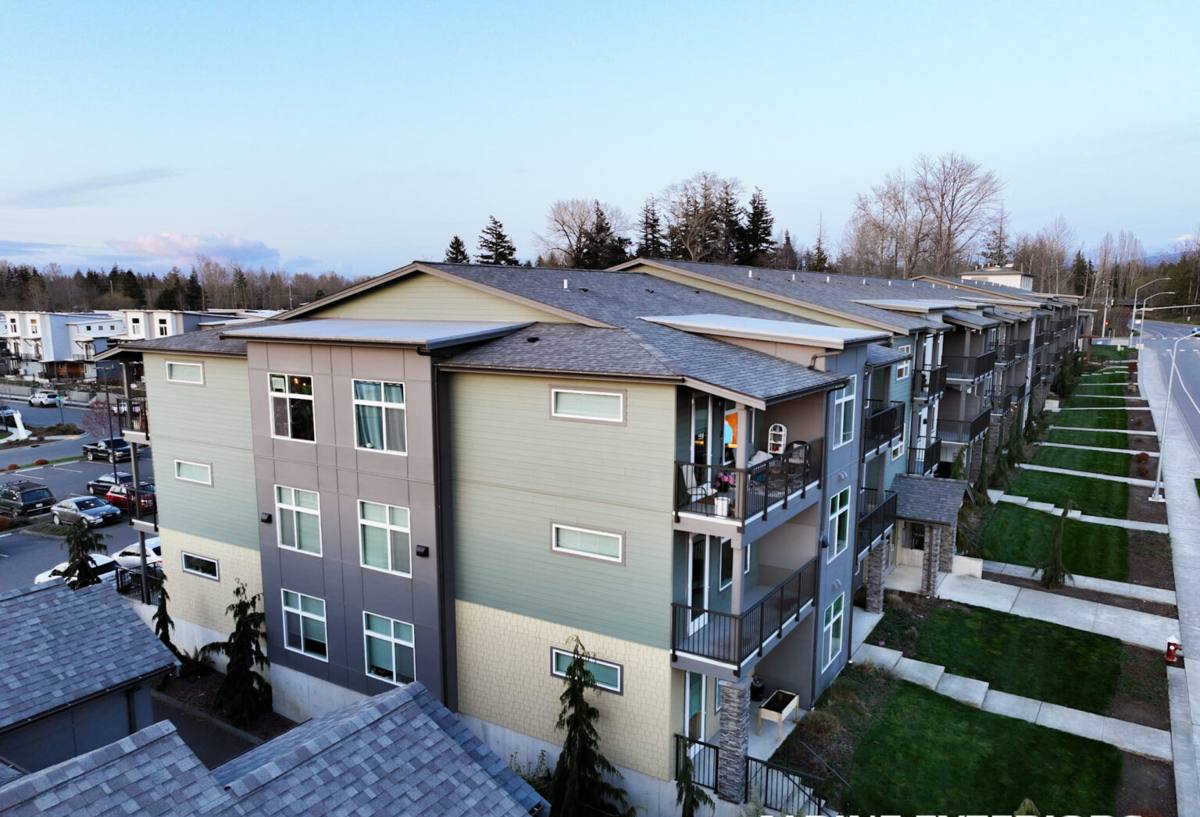
Signs Your Current Windows Are Working Against You
Most homeowners don't think about windows until something is obviously wrong, but there are earlier warning signs worth catching first — especially on a shaded, tree-covered lot where problems tend to hide longer before they show up as a stain on the drywall.
- Visible condensation or fogging between the panes (a failed seal, not a cleaning issue)
- Cold drafts near the frame even when the sash is fully latched
- Soft or discolored wood trim, especially on the north or west-facing sides that get the least sun
- Green or black growth building up in the corners of the frame or on the sill faster than it can be washed off
- Windows that are noticeably harder to open, close, or lock than they used to be
- A noticeable jump in heating costs without any change in usage
- Paint or finish that's peeling from the inside face of the frame, which usually points to moisture getting in from outside
Any one of these on its own might not mean much. Two or three together, especially on a house that's had the same windows for 15-20+ years, usually means the assembly has reached the point where repair is a stopgap and replacement is the real fix.
What "Energy-Efficient" Actually Means in Our Climate
Window marketing throws around efficiency numbers that matter more in other parts of the country than they do here. In western Washington, our climate is defined by mild temperatures, high humidity, and long stretches of overcast, wet weather — not extreme heat or extreme cold. That changes which numbers actually matter for a Silver Firs home.
| Rating | What It Measures | Why It Matters Here |
|---|---|---|
| U-Factor | How well the window resists heat loss (lower is better) | Our biggest energy cost is winter heat loss, not summer cooling — this is the number to prioritize |
| SHGC (Solar Heat Gain Coefficient) | How much solar heat passes through the glass | Less critical under heavy tree cover with limited direct sun, but still worth a mid-range value for shoulder-season comfort |
| Air Leakage (AL) | How much air passes through the frame/sash gaps | Directly tied to driving-rain and wind performance — a bigger factor here than in drier climates |
| Condensation Resistance | How well the window resists interior condensation | High indoor humidity plus cold glass in our wet winters makes this a real, everyday factor, not a lab number |
A window with an excellent SHGC but mediocre air leakage performance will underperform on a shaded Silver Firs lot in a way it might not on an open, sunny site. We size and spec windows around the numbers that actually move the needle in this climate, not just the ones that look best on a brochure.
Glass Packages Worth the Money Here
Double-pane with a low-E coating and argon fill is the baseline we recommend for most Silver Firs homes — it's a proven, well-understood combination that handles our humidity and mild temperature swings well. Triple-pane glass is available and does perform better on paper, but the marginal gain in our climate is smaller than in colder regions, and the added weight and cost only pencil out for homes with specific noise or comfort concerns (a bedroom facing a busy road, for example). We'll tell you honestly when triple-pane is worth it and when it isn't for your situation.
What a Correct Installation Actually Involves
The window itself is only part of the job. On a shaded, rain-exposed lot, the installation details are what determine whether that window performs for 20+ years or starts leaking in five.
Sill Pan and Flashing
Every opening gets a sloped sill pan so any water that does get past the exterior seal drains back out instead of pooling against the framing. Flashing tape integrates with the weather-resistive barrier (WRB) behind your siding in a shingle-lap sequence — top piece over the one below it — so water is always directed down and out, never trapped behind the cladding.
Integration with Existing Siding
Where the new window meets your existing siding, the trim and sealant joints need to be detailed so they shed water rather than catching it. This is especially important on Silver Firs homes with wood or fiber-cement siding, where a poorly sealed window opening is one of the more common hidden moisture entry points we find during tear-out.
Insulation Around the Rough Opening
The gap between the window frame and the rough opening gets filled with a low-expansion foam or backer rod and sealant — never packed tight with fiberglass, which does nothing to stop air movement and can actually hold moisture against the frame.
Interior and Exterior Sealant
We use sealants rated for our climate's temperature and humidity range, applied in a continuous bead with no gaps. A single skipped inch of sealant is often the difference between a window that stays dry for two decades and one that starts showing interior staining in year three.
Frame Material Comparison
Frame material affects both energy performance and how the window holds up against our wet, shaded conditions over time.
| Material | Energy Performance | Moisture/Moss Behavior | Maintenance |
|---|---|---|---|
| Vinyl | Good, cost-effective | Doesn't rot; can show algae/mildew on the surface in shaded spots, cleans off easily | Low — occasional wash |
| Fiberglass | Very good, dimensionally stable | Excellent — resists moisture-driven expansion and contraction better than vinyl in temperature swings | Low |
| Wood-Clad | Very good with proper detailing | Exterior cladding protects the wood, but any breach in the cladding lets moisture reach the core — a real risk under heavy tree shade | Higher — needs the cladding seams checked periodically |
| Aluminum | Weakest without thermal breaks | Doesn't rot, but conducts cold and condenses more in our humid winters | Low |
For most Silver Firs homes under heavy tree cover, we lean toward vinyl or fiberglass for the exterior-exposed openings, and reserve wood-clad for homes where the architectural look calls for it and the owner understands the added upkeep. This is a professional judgment call based on how the material behaves in constant shade and moisture, not a claim that any one material is universally bad.
Our Process
- On-site assessment. We look at every opening individually — sun exposure, tree cover, current signs of moisture or rot — rather than quoting a blanket price sight-unseen.
- Product selection. We walk through frame material, glass package, and U-factor/SHGC tradeoffs based on that specific opening and orientation.
- Careful tear-out. Old windows come out with attention to what's behind them — we flag any hidden rot or WRB damage before it gets covered up again.
- Sill pan, flashing, and WRB integration. Every opening gets the full moisture-management sequence, not just a caulk gun pass.
- Window set and shim. Set plumb, level, and square, with low-expansion foam and proper fastening per the manufacturer's instructions — a requirement for keeping the warranty valid.
- Interior and exterior finish. Trim, sealant, and touch-up work matched to your home's existing look.
- Walkthrough. We show you what was done at each opening and what to expect from the new windows in year one.
Why Hiring a Crew That Already Works Silver Firs Matters
A window installer who's never worked a shaded, tree-heavy lot in Snohomish County will detail the job the same way they would on an open, sunny site in a drier climate — and that's exactly where problems start. We've seen what happens when flashing details are copied from a generic install guide instead of adjusted for a home that stays damp two extra days after every storm. We know to check for the moss buildup patterns that tell us where water is actually running on your specific roofline and siding, and we know which frame materials hold up and which need extra attention under constant shade.
We're also close enough to respond quickly if a storm exposes a problem after the fact — wind-driven rain during a winter system can reveal a sealant gap or flashing issue faster than any inspection would, and being a local crew means we're not weeks out when that happens.
Maintenance After Installation
Energy-efficient windows still need basic upkeep, especially under tree cover:
- Rinse frames and sills once or twice a year to keep moss and algae from building up, especially on shaded elevations
- Check exterior sealant joints annually for cracking or separation, particularly after the first winter
- Keep gutters and downspouts clear near window openings — overflow is a common source of water tracking down onto frames
- Trim back branches that keep foliage in constant contact with the glass or frame
- Operate locks and hardware a few times through the winter to keep them from seizing in the damp cold
None of this is difficult, but skipping it is how a well-installed window ends up looking neglected within a few years — and how small issues turn into ones that need a service call.
If your Silver Firs home has windows showing any of the signs above, or you're just ready to stop losing heat through old glass, we'll come take a look and give you a straight answer on what's actually needed — no pressure, no upsell. Fill out the form below for a free estimate.