 Snohomish
 Why Composite Decking Makes Sense for Arlington Homes
Arlington sits in the part of Snohomish County where tree cover, damp air, and a long wet season are just part of owning a home. A deck here spends most of the year either soaked, shaded, or both. Composite decking was built for exactly that kind of exposure — it doesn't absorb water the way wood does, it won't splinter or cup as it dries out between storms, and it skips the annual sanding-and-sealing routine that a lot of homeowners fall behind on within a year or two. That doesn't mean composite is maintenance-free or foolproof. It still needs to be installed correctly for this climate, on framing that's built to handle constant moisture, with drainage and fastening details that a lot of crews rush past. That's the part of the job that actually determines whether a composite deck holds up here or turns into a problem in five years.
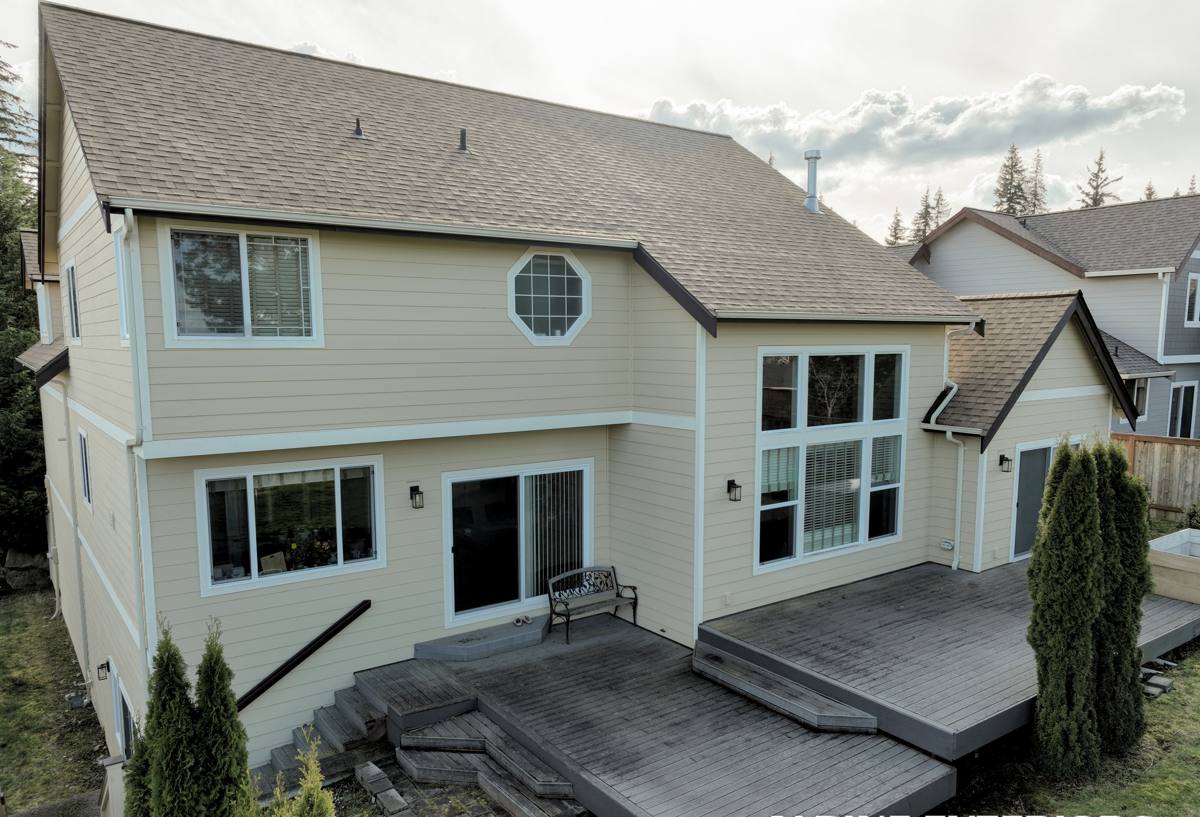
What Snohomish County Weather Actually Does to a Deck
The climate factors that matter most for decking in this area aren't exotic, but they're constant, and they compound over time if a deck isn't built to handle them.
Salt-Tinged Air and Hardware
Homes closer to the water pick up salt-laced moisture in the air, and that air finds every piece of exposed metal on a deck — fasteners, joist hangers, railing brackets, post bases. Standard hardware corrodes faster in that environment than most homeowners expect, and once a fastener starts rusting, it can stain the decking around it or weaken its grip. This is a hardware selection problem, not a decking problem, but it's one we plan for on every job in this area.
Driving Rain and Water That Doesn't Just Fall Straight Down
Wind-driven rain here doesn't stay on top of the deck — it gets pushed sideways, under railings, and into any gap that isn't detailed properly. If the substructure and flashing weren't built to shed that water, it collects where you can't see it: against the house, on top of a ledger board, or pooling under the decking surface. Composite boards resist rot, but the framing underneath them usually isn't composite, and that's where hidden water damage actually shows up.
A Long Moss and Algae Season
Shade plus near-constant moisture means moss and algae aren't a seasonal nuisance here — they're closest to a year-round condition on any north-facing or heavily shaded deck. Composite decking resists rot from this, but it doesn't repel moss growth on the surface any better than wood does. The difference is that composite is easier to clean without damaging the material, and boards with a textured, capped surface tend to hold less growth and stay less slippery than smooth, uncapped boards.
Composite, Wood, or PVC: An Honest Comparison
We install all three at different times, depending on the homeowner's budget and priorities. Here's how they actually compare for a home in this climate, without the marketing spin.
| Material | Moisture Behavior | Maintenance Needed | Typical Lifespan |
|---|---|---|---|
| Pressure-Treated Wood | Absorbs water; prone to cupping, splitting, and rot at fastener points over time | Annual cleaning and re-sealing to hold up in this climate | 10–15 years with consistent upkeep |
| Composite (capped) | Doesn't absorb water into the board; moisture issues usually show up in the substructure, not the boards | Periodic washing to control moss/algae; no sealing or staining | 25–30 years, often with a manufacturer warranty |
| Cellular PVC | Fully water-resistant; can be more prone to expansion/contraction with temperature swings | Low; similar cleaning needs to composite | 25–30+ years |
For most Arlington homeowners, capped composite is the middle ground: it costs more upfront than wood but far less in ongoing labor and materials, and it handles this climate better than uncapped or budget composite products, which can still absorb moisture at cut edges if they aren't detailed properly during installation.
What a Correct Composite Deck Installation Involves
Composite decking is less forgiving of shortcuts than wood in some ways, because problems don't show up as obviously until moisture or movement has already done damage underneath. A correct install pays attention to details that don't show on the surface.
Framing and Joist Spacing
Composite boards typically require tighter joist spacing than wood decking — manufacturers publish minimum spacing for a reason, and it's usually closer than the 16 inches on center a lot of older wood decks were built with. Framing that's too far apart leads to bounce, and over years it can lead to boards sagging between joists.
Drainage and Airflow Underneath
A deck built tight to the ground or without any slope away from the house traps moisture underneath, which is exactly what accelerates rot in the substructure, even when the decking itself is composite. Correct installation includes slope, ventilation at skirting, and keeping the underside of the deck from becoming a permanent damp space.
Fastening and Board Gaps
Composite expands and contracts with temperature more than wood does, so gap sizing between boards has to account for that movement, not just look right on install day. Hidden fastener systems need to be installed per the manufacturer's spec — over-driven or under-driven clips are one of the most common causes of squeaking, lifting, or uneven boards down the line.
Flashing Where the Deck Meets the House
The ledger board connection is the single most common point of hidden rot on any deck, composite or wood. Proper flashing here — installed correctly, not just caulked over — is what keeps driving rain from working its way behind the ledger and into the rim joist over time.
Our Process, Start to Finish
- Site visit and assessment — we look at the existing deck or ground conditions, drainage, sun/shade exposure, and how the space is actually used.
- Substructure evaluation — on replacement projects, we check framing, ledger condition, and footings before quoting anything, since hidden rot changes the scope.
- Material walk-through — we go over composite tiers, color/texture options, and railing choices against your budget, with straight talk about trade-offs.
- Permitting — where required, we handle the permit process so you're not chasing paperwork.
- Build — framing first, then decking, railing, and any stairs, with inspections at the points that matter, not just at the end.
- Final walk-through — we go over the finished deck with you, including what maintenance it actually needs going forward.
Cost Factors for a Composite Deck in Arlington
Composite decking costs more upfront than wood, and the total for any project depends on more than square footage. Broadly, homeowners in this area should expect composite deck projects to run in the range of a few thousand dollars for a small, simple replacement up to well into five figures for a larger deck with railing, stairs, and framing repairs included. The real variables are:
- Condition of the existing substructure — reusable framing costs far less than a full tear-off and rebuild
- Size and shape of the deck, including any picture-framing or pattern work in the decking
- Railing material — composite or metal railing systems cost more than basic wood
- Stairs and landings, which add both material and labor
- Decking tier — entry-level capped composite versus premium composite lines
- Site access — decks that are hard to reach with equipment take longer to build
We give a firm, written estimate after seeing the site — not a phone-quote guess — because the substructure condition alone can shift a project's cost significantly.
Maintenance Composite Decking Actually Needs Here
Composite is low-maintenance, not no-maintenance, and this climate is exactly why that distinction matters. Plan on washing the deck a couple of times a year with a soft-bristle brush and mild soap to keep moss and algae from getting established — a pressure washer used too close or at too high a setting can damage the board surface, so it's not the tool we recommend for routine cleaning. Clear debris out of the gaps between boards periodically, since trapped leaves and needles hold moisture right where you don't want it. And if your deck is close enough to the water to pick up salt-laden air, it's worth a periodic look at fasteners and any exposed metal hardware for early corrosion, since that's the part of the system composite decking doesn't protect on its own.
What to Ask Before You Hire a Decking Contractor
- Are you licensed, bonded, and insured for this work in Washington?
- Will you put the fastening system and joist spacing in writing, not just verbally?
- How do you handle drainage and flashing at the house connection?
- What does the manufacturer's warranty actually cover, and what does your labor warranty cover separately?
- Can you show completed decking projects in this area, not just photos from elsewhere?
- What's your plan if you find rot in the substructure once the old decking comes off?
Why Local Experience in Arlington Matters
A crew that already works in and around Arlington has already seen how the tree cover, drainage patterns, and damp season on a given lot actually behave over a few years — not just on install day. That matters for decisions like joist spacing, ventilation, and hardware selection that don't show their consequences until the second or third winter. It also means a shorter response time if something needs a look under warranty, and a better sense of what permitting looks like locally before the job starts, rather than figuring it out as we go.
If you're weighing composite decking for your Arlington home, we're glad to take a look and give you a straight, no-pressure estimate — just fill out the form below.