 Snohomish
 Building a Deck That Holds Up in Silver Firs
Silver Firs is a wooded, residential area, and most of the lots here share the same basic conditions: mature tree cover, a fair amount of shade, and long stretches of the year where things just stay damp. That's a fine environment for a deck if it's built with those conditions in mind. It's a rough one for a deck that was framed and fastened like it was going up somewhere dry. We build decks for this specific part of Snohomish County, and the difference shows up in the details most homeowners never think to ask about until something starts to fail.
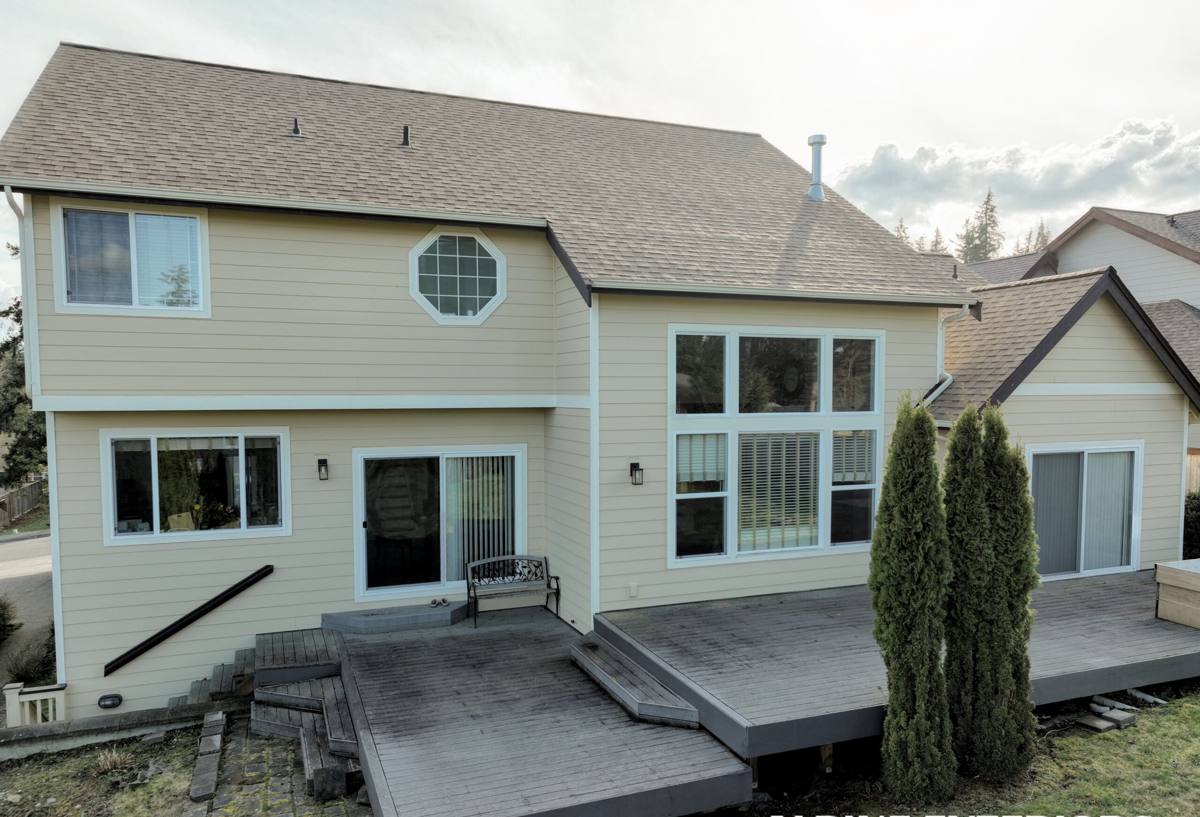
What This Climate Does to an Outdoor Deck
Rain That Doesn't Let Up
It's not the occasional downpour that damages decks here — it's the weeks of steady, driving rain that soak into every exposed seam. If a ledger board isn't flashed correctly where it meets the house, or if decking boards are butted too tight to shed water, moisture finds its way in and stays there. Wood doesn't need a flood to rot. It just needs to stay wet longer than it can dry out, and in this climate that happens fast if the build wasn't done right the first time.
Salt Air and Metal Corrosion
Homes closer to Puget Sound and the surrounding waterways deal with a steady dose of salt-laden air, and it's harder on metal than most people expect. Combine that with modern pressure-treated lumber, which contains copper-based preservatives that are themselves corrosive to the wrong hardware, and you get fasteners that can start rusting or degrading well before the wood around them fails. The hardware has to be rated for both conditions at once, not just one or the other.
A Long Moss Season
Shaded, wooded lots like the ones common in Silver Firs hold moisture in a way that open, sunny yards don't. Moss and algae get a long runway to establish themselves on deck surfaces, especially in corners and under railings where airflow is limited. Beyond looking bad, a mossy deck surface gets genuinely slick — it's a real slip hazard on stairs and near entry points, and it accelerates wear on the wood or coating underneath it.
Choosing the Right Decking Material
There's no single "correct" material for every project — it depends on budget, how much upkeep you want to take on, and how much sun or shade the deck actually gets. Here's how the common options compare for a climate like this one.
| Material | Upfront Cost | Moisture & Moss Resistance | Maintenance | Typical Lifespan |
|---|---|---|---|---|
| Pressure-treated lumber | Lowest | Good if sealed and maintained; prone to moss in shade if neglected | Annual cleaning and periodic sealing | 15–20 years with upkeep |
| Western red cedar | Mid-range | Naturally rot-resistant but still needs sealing in wet, shaded spots | Regular cleaning and re-staining | 15–25 years with upkeep |
| Composite / PVC decking | Highest | Won't rot, but moss and algae still grow on the surface film and need washing off | Periodic washing, no sealing or staining | 25–30+ years |
Composite and PVC products hold up the longest with the least maintenance, but they're not maintenance-free — a shaded composite deck in Silver Firs still needs to be washed to keep moss from getting a foothold. Wood costs less up front and looks the part, but it only performs as well as the sealing schedule behind it. We'll walk through the honest trade-offs for your specific site rather than steering you toward whatever's easiest to install.
What a Correctly Built Deck Actually Involves
Ledger Attachment and Flashing
The ledger board — where the deck ties into the house — is the single most common failure point on decks in this climate. It has to be attached with structural fasteners rated for the load, and it has to be flashed so water is directed away from the house framing, not trapped behind the siding. This is the step that gets rushed on cheap deck jobs and it's the one that causes the most expensive damage down the line.
Footings and Framing
Footings need to bear on solid, undisturbed soil and sit below the required frost depth, which matters here more because of how the Puget lowland's clay-heavy soils hold water than because of how cold it gets. Joists and beams need to be sized for the actual span and load, not just "close enough," and the whole deck surface needs a slight slope away from the house so water sheds instead of pooling.
Fasteners and Hardware
Every screw, bolt, and joist hanger should be rated for use with modern treated lumber and for coastal, moisture-heavy conditions — stainless steel or hot-dip galvanized, not a generic coated fastener that looks fine in the box and starts failing in a couple of wet seasons.
Guardrails, Stairs, and Code Compliance
Guardrail height, baluster spacing, and stair rise-and-run all have to meet current Washington building code, and they get checked at inspection. Beyond passing inspection, correct guardrail and stair construction is what keeps a deck safe to use in the rain, when footing is already less sure than it is on a dry day.
Permits and Local Requirements
Most attached decks, and any deck above a certain height off grade, require a building permit, with inspections typically at the footing stage and again once framing is complete before decking goes down. We handle the permit application and coordinate the inspections as part of the project, so you're not the one tracking down the local building department or figuring out what documentation they want.
Our Process for a Silver Firs Deck Project
- Site visit and assessment — we look at sun exposure, drainage, tree cover, and how the deck will tie into the existing structure.
- Design and material selection — sizing, layout, and an honest conversation about which decking material fits your budget and your yard's actual conditions.
- Permitting — we prepare and submit what's required and schedule inspections around the build.
- Construction — footings, framing, ledger flashing, decking, and railings, built to hold up through wet seasons, not just look good on installation day.
- Final walkthrough — we go over the finished deck with you, including what maintenance it actually needs going forward.
Keeping Your Deck Ahead of the Wet Season
A well-built deck still needs some seasonal attention in this climate. This is the short list we give homeowners after a build:
- Sweep debris out of the gaps between boards so water can drain instead of pooling
- Check the ledger flashing line each fall for any gaps or buildup
- Clean wood decking and reapply sealer on the schedule recommended for that species
- Wash composite or PVC decking to keep moss and algae from establishing
- Look over exposed fasteners and hardware for early signs of rust or staining
- Trim back overhanging branches where possible to cut down shade and improve airflow
- Deal with moss as soon as it appears rather than waiting until it's established
- Walk the deck periodically and note any soft, spongy, or discolored boards
What Affects the Cost of a Silver Firs Deck
| Factor | How It Affects the Project |
|---|---|
| Size and footprint | The most direct driver of material and labor cost |
| Material choice | Pressure-treated lumber costs least up front; composite and PVC cost more but reduce long-term maintenance |
| Height and stairs | Taller decks need more substantial footings, framing, and guardrail work; stairs add framing and code requirements |
| Site access and slope | Sloped or hard-to-reach lots, common in this area's wooded terrain, can add labor time for footings and material handling |
| Structural extras | Multi-level layouts, built-in seating, or roof coverage add both material and complexity |
| Permit and engineering needs | Larger or more complex decks may need engineered plans in addition to the standard permit |
As a very rough range, most straightforward deck projects in this region land somewhere between $40 and $100+ per square foot installed, depending on material and structural complexity — but the only way to get a real number is to look at your specific site and goals.
Why Local Experience Matters in Silver Firs
A lot of deck problems we get called out to fix started with a crew that built the same deck they'd build anywhere else — same materials, same hardware, same assumptions about sun and drainage. Silver Firs' wooded, often-sloped lots and the broader Snohomish County climate don't forgive that approach. Knowing which corners of a yard hold shade and moisture longest, how local soil handles footing work, and what the local permitting process actually requires means fewer surprises during the build and a deck that's still solid well after the crew has left.
If you're planning a new deck or replacing one that's showing its age, we're happy to come take a look and put together a free, no-pressure estimate based on your actual property — not a generic template.