 Snohomish
 Why Ferndale Siding Takes a Different Kind of Beating
Ferndale sits close enough to the Salish Sea that salt-laden air is a constant, low-grade stress on every exterior surface in town — not just near the water, but blocks inland too, carried on the wind. Add Whatcom County's long wet season, where driving rain comes in sideways off frequent storms, and a moss season that can run eight months or more in shaded, north-facing spots, and you get siding conditions that are genuinely harder on a home than what most manufacturers test for in a showroom.
None of this means siding fails fast. It means the failure points are predictable if you know what to look for, and a repair job that ignores any one of these three stressors — salt, wind-driven rain, or moss — tends to come back within a year or two. A repair done right accounts for all three at once.
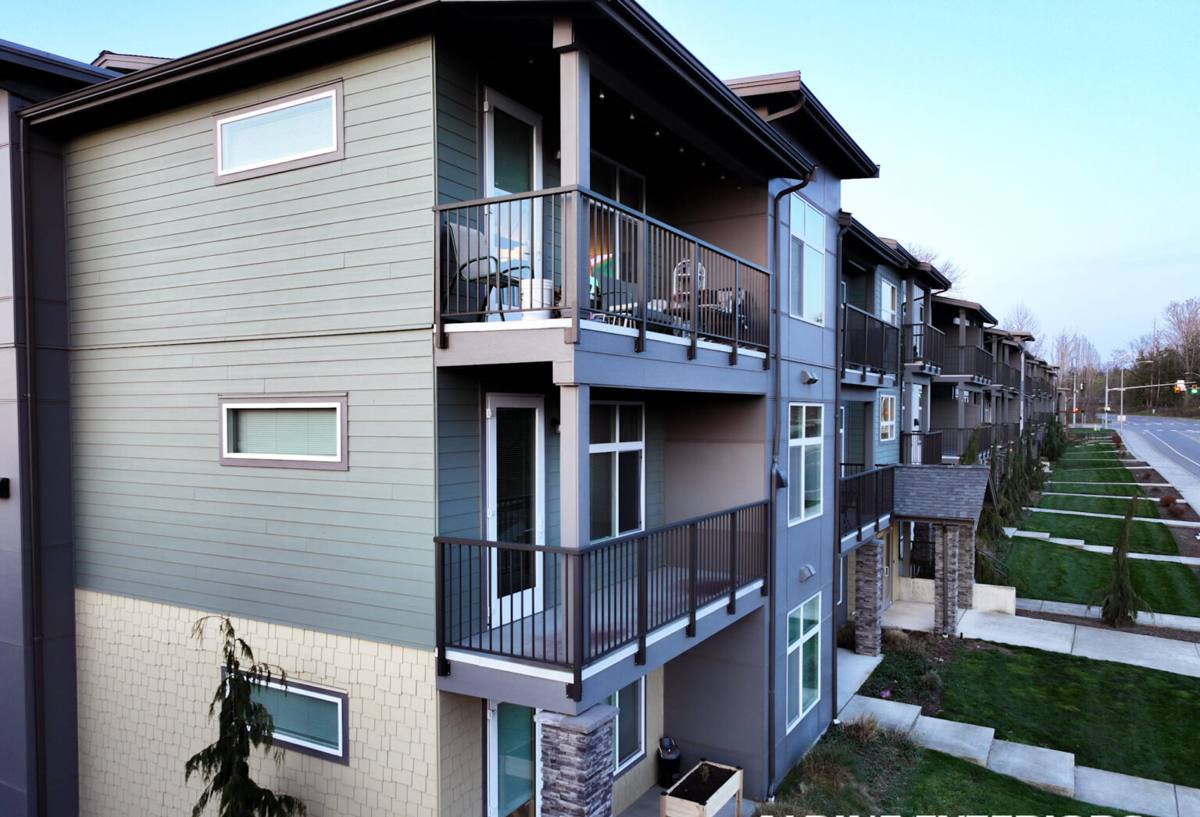
What Salt Air, Rain, and Moss Actually Do to Siding
Salt Air
Airborne salt doesn't rot fiber cement the way it can compromise raw wood or accelerate corrosion on metal, but it does have real effects: it degrades exposed fasteners and flashing faster, it can chalk or dull a factory finish over time if caulk lines and touch-up paint aren't matched to the original coating, and it settles into hairline gaps at trim and seams where it holds moisture longer than it otherwise would.
Driving Rain
Ferndale's storms rarely fall straight down. Wind-driven rain finds horizontal laps, butt joints, and anywhere flashing or caulking has started to separate, and pushes water sideways and upward into places gravity-only design assumes it won't reach. This is the single biggest cause of hidden moisture damage behind siding in this region — not leaks you can see, but ones you can't until the sheathing underneath is already compromised.
Moss and Algae
A long, wet, mild season is exactly what moss needs. On siding, moss and algae growth isn't just cosmetic — it holds moisture against the surface for extended periods, which is the one thing fiber cement siding is engineered to shed quickly. Left long enough, sustained moisture contact at laps and seams can telegraph into soft trim, swollen fascia, or compromised caulk joints even when the siding panel itself is fine.
Repair vs. Replacement: How to Tell Which You Actually Need
Most homeowners call about a repair and it genuinely is one — full replacement is rarely the right first move for isolated damage. The honest markers we look for:
| Signal | Usually Means |
|---|---|
| Isolated cracked or impact-damaged panel, rest of the wall is sound | Spot repair — replace the panel section |
| Caulk failure or gapping at trim and butt joints, panels themselves intact | Re-seal and re-flash, not a panel replacement |
| Moss/algae staining with no soft spots or swelling underneath | Clean and treat, then address the shade/moisture source |
| Soft, spongy, or delaminating siding across multiple courses | Sign of sustained water intrusion — needs inspection behind the siding |
| Widespread fading, chalking, or finish failure across full elevations | Approaching end of finish life — repair won't restore uniform color |
The last two are the cases where we'll tell you honestly if a repair is a short-term patch rather than a real fix. We'd rather lose a small job than sell you a repair that doesn't hold.
What a Correct James Hardie Repair Actually Involves
We only work in James Hardie fiber cement, and that has real advantages for repair work specifically — it's a known, climate-engineered system with consistent panel dimensions, documented fastener and flashing specs, and a factory ColorPlus finish that can be color-matched far more reliably than a field-mixed touch-up on other materials. A repair that's actually going to hold in this climate covers:
- Cutting back to sound material — not just patching over the visible damage, since fiber cement damage often extends slightly past what's visible
- Replacing or re-bedding flashing at the repair point, not just the panel, since flashing failure is usually what let water in to begin with
- Using fasteners and spacing that match Hardie's published installation spec for our exposure zone, not whatever was on hand
- Sealant appropriate for a coastal, high-moisture climate — not a generic caulk that will chalk and crack within a season or two of salt exposure
- Color-matching through Hardie's ColorPlus system or an approved touch-up product, so the repair doesn't stand out as a patch
- Checking the water-resistive barrier and sheathing behind any section that showed signs of moisture intrusion before closing it back up
Skipping that last step is the most common shortcut in siding repair generally — closing a wall back up over damage that's still there because it wasn't visible from the outside. It's also the step most likely to turn a $400 repair into a $4,000 one two years later.
Our Process on a Ferndale Repair Call
1. Inspection First
We look at the whole elevation, not just the spot you called about. Damage from wind-driven rain and moss rarely stays isolated to one panel — if there's a pattern, we want to see it before we quote anything.
2. Honest Diagnosis
We tell you what we actually find: whether it's a clean repair, a repair with some hidden moisture to address, or a case where repair is a stopgap and replacement is the better long-term call. You get that in writing before any work starts.
3. The Repair Itself
Matched materials, correct fastening and flashing, and finish work that blends into the surrounding siding rather than sitting on top of it as an obvious patch.
4. What We Leave You With
A clear explanation of what caused the damage, so you know whether it's a one-time fix or something to watch — a shaded section that will need moss treatment again, a downspout discharging where it shouldn't, or a trim detail that's a recurring weak point on the house.
What Drives the Cost of a Siding Repair
| Factor | Why It Matters |
|---|---|
| Size and location of the damaged area | Ground-level spot repairs are straightforward; second-story and roofline work adds access cost |
| Whether moisture reached the sheathing | Repairs that stop at the panel are far cheaper than ones that require opening the wall |
| Color match complexity | Newer ColorPlus finishes match cleanly; older or discontinued colors take more work to blend |
| Flashing and trim condition | Reusing sound flashing costs less than replacing failed flashing at the same time |
| Number of separate repair locations | Multiple smaller repairs on one trip cost less per repair than separate visits |
We'll always give you a number before starting, and we'll flag anything that could change once we open up the area — that's rare on a straightforward repair, but it happens on ones where hidden moisture is involved.
Why It Matters That We Already Work Ferndale
Siding repair is one of those jobs where local experience shows up in small decisions that add up. A crew that's repaired siding around Whatcom County's coastal exposure knows which trim details tend to fail first in driving rain, which shaded lot layouts grow moss fastest, and which fastener and sealant choices actually hold up to salt air rather than just passing a warranty checklist on paper. That's not something you can fully substitute with a generic repair crew working from a manual, even a good one.
It also matters for scheduling. Repair work in this region is weather-dependent — sealant and touch-up finishes need a dry window to cure properly, and a crew unfamiliar with the local wet season can end up rushing a repair into weather that undermines it on day one.
Maintenance That Prevents the Next Repair Call
- Rinse siding annually, and more often on shaded or north-facing walls where moss and algae take hold fastest
- Check caulk lines at trim, corners, and butt joints yearly — this is the first thing salt air and driving rain break down
- Keep gutters and downspouts clear and directed away from the siding, since concentrated runoff is a common cause of localized damage
- Trim back vegetation that keeps a section of wall shaded and damp longer than the rest of the house
- Address small caulk gaps or hairline cracks promptly — they're a five-minute fix early and a wall-opening repair later
If you're seeing staining, soft spots, gapping trim, or damage from a storm on your Ferndale home, we're glad to take a look and give you a straightforward, no-pressure estimate — including an honest answer if what you're dealing with is a simple repair or something bigger.