 Snohomish
 Why Marysville Decks Age Differently Than Decks Inland
A deck built in Marysville doesn't age the same way as one built forty miles east of here. The combination of marine-influenced air, long stretches of driving rain, and a moss season that can run from October through May puts a specific kind of stress on outdoor structures. None of it is dramatic on its own — no single storm does the damage — but the cumulative effect over a few winters is what separates a deck that's still solid at year fifteen from one that's soft and spongy by year eight.
Snohomish Siding builds and repairs decks throughout Snohomish County, and Marysville jobs come with their own pattern of wear. Understanding that pattern before the first board goes down is what makes the difference between a deck that needs babying every spring and one that just quietly works.
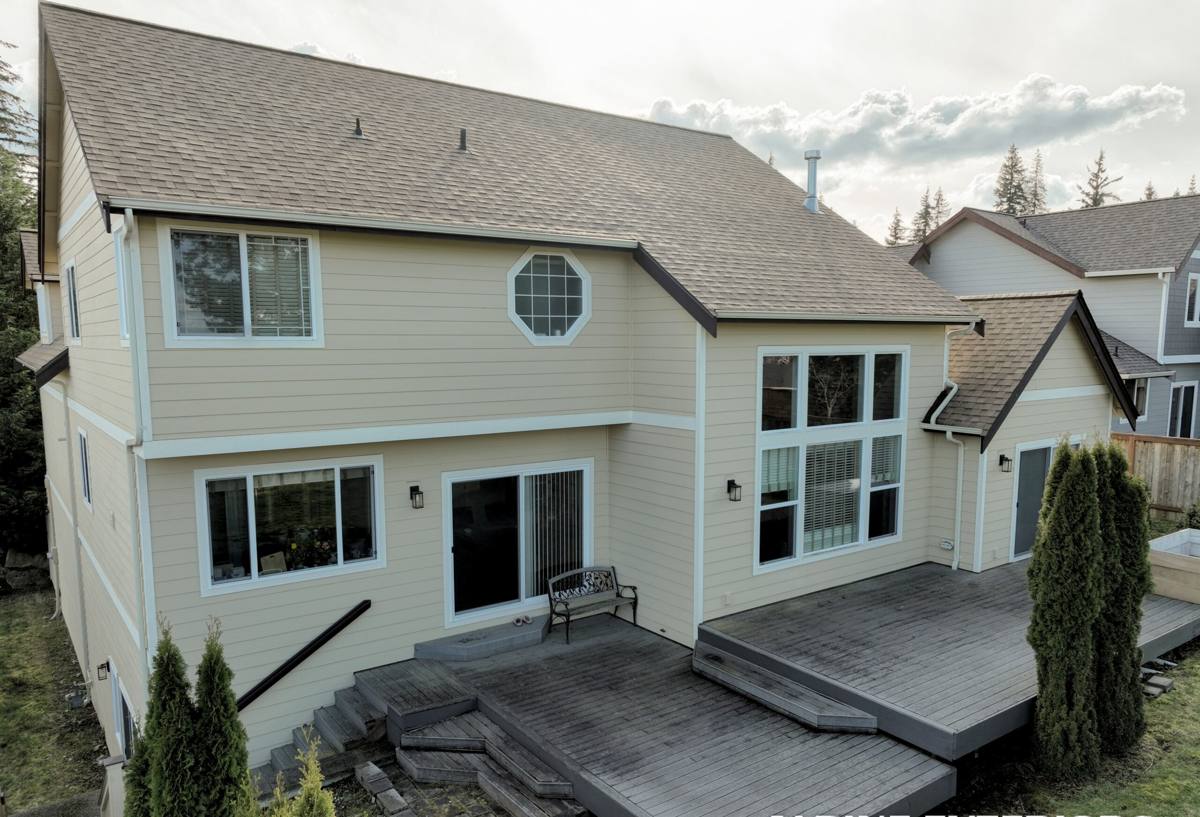
What the Local Climate Actually Does to a Deck
Salt Air and Marine Exposure
Marysville sits close enough to Puget Sound and the surrounding waterways that homes here deal with a mild but persistent salt influence in the air, especially closer to the water. Salt-laden moisture accelerates corrosion on fasteners, brackets, and any exposed metal hardware. It's a slow process, but it's relentless — a deck built with standard hardware in a drier inland climate will often show rust bleed and fastener failure years before the same design would in a less coastal-influenced area. This is why hardware selection matters more here than a lot of homeowners realize.
Driving Rain and Moss Season
Western Washington's rain doesn't just fall straight down — wind-driven rain gets pushed sideways into ledger connections, under railings, and into any gap where end grain is exposed. Combined with our long, low-sun winters, this creates ideal conditions for moss, algae, and mildew to take hold on horizontal surfaces. Moss isn't just cosmetic. It holds moisture against the wood surface for weeks at a time, which is exactly the condition that leads to rot, and it makes decking dangerously slick underfoot. A deck that isn't designed to shed water and dry out quickly will fight moss every single year, no matter how often it's cleaned.
Choosing Decking Material for a Marysville Property
There's no single "best" decking material — the right choice depends on budget, how much upkeep the homeowner wants to do, and how exposed the deck is to rain and shade. Here's how the common options actually perform in this climate:
| Material | Moisture & Moss Resistance | Maintenance | Typical Lifespan Here |
|---|---|---|---|
| Pressure-treated pine/fir | Fair — needs sealing to perform well | Annual cleaning, resealing every 1-2 years | 10-15 years |
| Cedar | Good natural rot resistance, still needs sealing against moss | Cleaning and sealing every 1-2 years | 15-20 years |
| Composite (capped) | Very good — doesn't absorb moisture like wood | Periodic washing, no sealing/staining | 20-25+ years |
| PVC decking | Excellent — fully synthetic, no wood fiber to hold moisture | Low — occasional washing | 25+ years |
We're honest with homeowners about the trade-offs. Composite and PVC cost more up front but remove most of the moss-and-rot maintenance cycle that wood decking demands here. Cedar and treated lumber cost less initially and give a natural look many people want, but they only perform as advertised if the homeowner keeps up with sealing on a real schedule — skip a year or two in this climate and the wood starts to show it.
Railings and Fascia
Railing material deserves its own thought, separate from the decking surface. Metal railing components need to be rated for coastal/marine exposure or they'll show rust streaks down the face of the deck within a few seasons. Wood railings are more exposed to weather than the decking itself, since they don't shed water as efficiently, so they tend to need attention sooner than the deck boards.
What a Correctly Built Deck Actually Involves
A deck that holds up in this climate isn't about using expensive materials everywhere — it's about getting the water management right at every connection point. The parts that matter most, and that are hardest to fix later, are the ones nobody sees once the project is finished:
- Ledger board flashing: Where the deck attaches to the house is the single most common failure point on older decks. Proper flashing keeps water from working its way behind the siding and into the house framing.
- Joist tape or capping: Covering the tops of joists protects the end grain and top surface from sitting water, which is one of the biggest causes of hidden rot under composite decking.
- Fastener selection: Hot-dip galvanized or stainless hardware, matched to the decking material, resists the corrosion that standard fasteners are prone to in this air.
- Footing depth and spacing: Footings need to meet local frost depth and bearing requirements, and post spacing needs to match the actual load, not just a rule of thumb.
- Airflow underneath: A deck built too close to grade, or without enough clearance, traps moisture underneath and never fully dries out between rains.
- Gapping between boards: Correct spacing lets water drain through instead of pooling on the surface, which slows moss growth significantly.
Skip any one of these and the deck will probably still look fine for a few years. The problems show up later, and by then they're usually hidden under the decking where they're expensive to reach.
How We Approach a Deck Build in Marysville
Our process is the same one we'd want if it were our own house:
- On-site assessment: We look at sun exposure, drainage patterns, existing structure (for replacements or repairs), and how close the property is to marine air, which affects hardware choice.
- Material walkthrough: We go over decking, railing, and hardware options honestly, including what each one will actually cost to maintain over time in this climate — not just the sticker price.
- Design and permitting: We handle the structural layout and coordinate permitting requirements so the deck meets current code, not just what was acceptable when the house was built.
- Framing with moisture management built in: Ledger flashing, joist protection, and proper fastener selection happen at this stage — it's not an upgrade we tack on later.
- Decking, railing, and finish work: Boards and railings go in with attention to gapping, fastening pattern, and drainage.
- Final walkthrough: We go over care and maintenance specific to the material chosen, so there are no surprises the first winter.
Permits and Code Considerations
Most new decks and many deck replacements in Snohomish County require a permit, particularly when the deck is attached to the house, elevated above a certain height, or involves structural changes to footings or framing. Requirements can vary depending on the specific jurisdiction and the scope of the project. We handle the permitting process as part of the job so homeowners aren't left guessing about what's required or trying to interpret code language on their own.
Maintenance That Actually Matters Here
Every decking material benefits from some upkeep, but in Marysville's climate, a few habits make an outsized difference in how long a deck lasts:
- Sweep leaves and debris off the deck surface regularly through fall — trapped organic matter is what moss and algae feed on.
- Clean the deck surface at least once a year with a wood- or composite-safe cleaner to break up moss and mildew before it takes hold.
- Check and clear gaps between boards so water can drain instead of pooling.
- Inspect ledger flashing and railing connections annually for signs of water staining or loosening hardware.
- Reseal or re-stain wood decking on the schedule the product actually calls for, not "when it starts looking bad."
- Trim back overhanging vegetation that keeps the deck shaded and damp longer than necessary.
Common Problems We See on Older Marysville Decks
When we're called out to look at an existing deck, the issues tend to repeat themselves: rusted or failing fasteners that were never rated for this air, ledger connections without adequate flashing that have let water into the rim joist, decking laid tight with no drainage gap, and moss buildup that's been painted or pressure-washed over instead of properly addressed. In most cases these aren't failures of the original material — they're failures of detailing at the connection points. It's a useful reminder that the visible surface is rarely where the real problem starts.
Why Local Experience Matters for This Job
Deck building isn't exotic work, but building one that's actually suited to Snohomish County's rain and salt-air exposure takes more than a generic framing plan. A crew that already works in Marysville knows which hardware holds up here, how footing requirements are typically handled locally, and where water tends to cause problems on homes in this area. That familiarity shows up in the details that aren't visible on day one — the ones that determine whether a deck is still solid in fifteen years or needs major repair in eight.
If you're planning a new deck, replacing an aging one, or just want an honest look at what shape yours is in, we're happy to come take a look. Reach out for a free, no-pressure estimate using the form below.