 Snohomish
 Lynden Roofs Face a Specific Kind of Wear
A roof in Lynden doesn't fail the same way a roof does in a dry inland climate. The combination of salt-laden coastal air, driving rain that comes in sideways during fall and winter storms, and a long wet season that keeps roofs damp for months creates a slower, sneakier kind of deterioration. Salt air speeds up corrosion on exposed fasteners, flashing, and gutter hardware. Driving rain finds any weak lap, seam, or nail pattern and pushes water where it shouldn't go. And the long moss season — shaded, damp roof surfaces that rarely get a full dry-out — lets moss and algae take hold, which does more damage than most homeowners realize.
None of this means a roof in this part of Whatcom County is doomed to fail early. It means the details matter more here than they do somewhere drier, and a replacement done without those details in mind tends to show problems years sooner than it should.
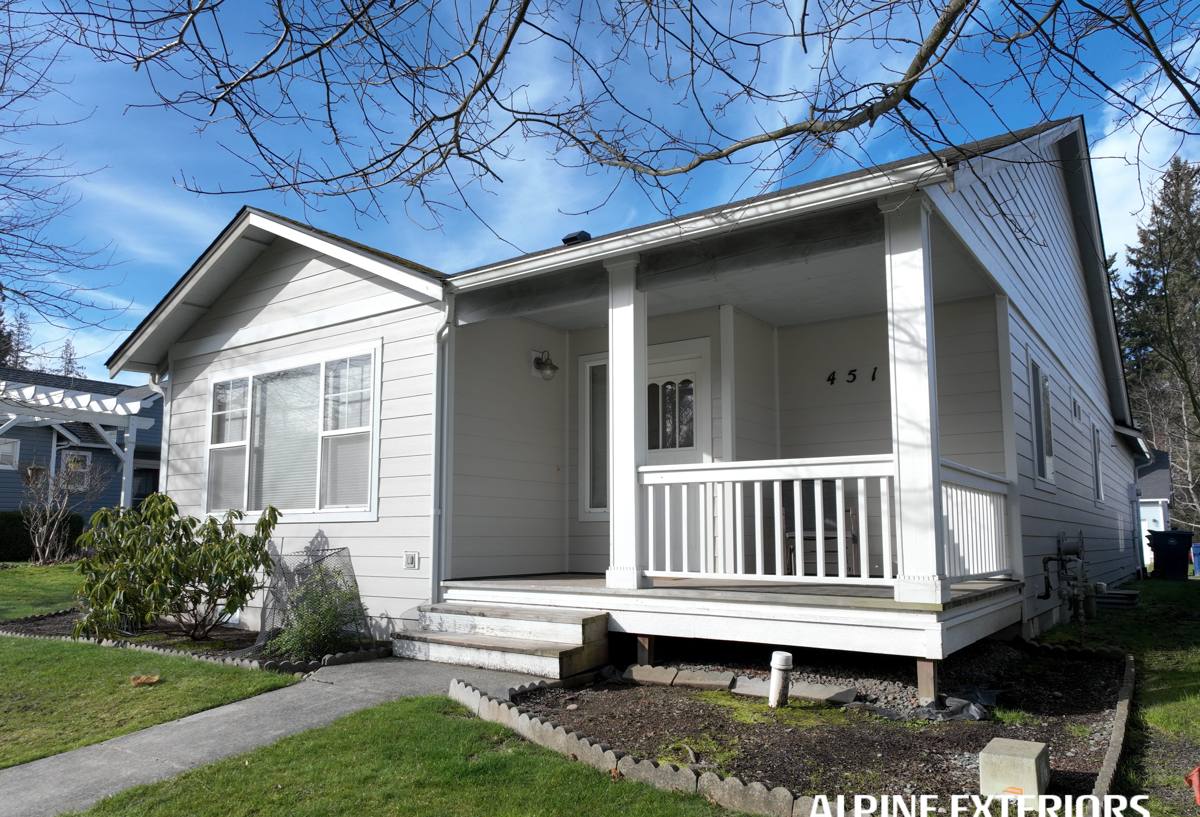
Signs Your Roof Needs Replacement, Not Another Patch
Repairs make sense when a problem is isolated. Replacement makes sense when the roofing system as a whole is wearing out. Here's what usually tips a roof from "repair" to "replace" territory in this climate:
- Granule loss heavy enough that you can see bald patches or find granules collecting in gutters and downspouts
- Shingles that are curling, cupping, or cracking, especially on south- and west-facing slopes that take the most sun and wind exposure
- Moss colonies established on north-facing or shaded slopes, not just surface streaking
- Soft spots underfoot when walking the roof, or sagging visible from the ground
- Daylight, water stains, or musty smell in the attic, particularly near valleys or roof penetrations
- A pattern of repeat repairs in different spots each year rather than one recurring issue
- A roof approaching or past 18–20 years of age on standard asphalt shingle, which is on the shorter end here because of the moisture load
What a Correct Roof Replacement Actually Involves
A roof replacement is only as good as what happens underneath the finished surface. This is where corners get cut on cheap jobs, and where problems in a wet climate show up first.
Tear-Off and Deck Inspection
A proper job means a full tear-off to bare decking, not a layover. Once the old material is off, every square foot of sheathing gets checked — especially around valleys, eaves, chimneys, and any past leak points — and any rotted or delaminated decking gets replaced before anything new goes down. Skipping this step to save time is one of the most common ways a new roof ends up with old problems baked back in.
Underlayment and Water Barrier
Synthetic underlayment across the whole deck is the baseline, but the areas that take the worst of this region's driving rain — eaves, valleys, and around every penetration — need a self-adhering water barrier underneath that underlayment. Wind-driven rain doesn't just run downhill; it can push sideways and even slightly uphill under a shingle edge, and this is the layer that stops it before it reaches the deck.
Flashing Details
Step flashing at walls and chimneys, properly formed valley metal, and continuous drip edge at eaves and rakes all need to be installed correctly, not just present. Given the salt air here, we use corrosion-resistant flashing and fasteners rather than the bare or lighter-gauge metal that shows rust streaks within a few years.
Ventilation
Balanced ventilation — intake at the soffits, exhaust at the ridge — keeps attic moisture from condensing against the underside of the deck. In a climate this damp, a poorly ventilated attic traps humidity that promotes rot from the inside out, working against the new roof from a direction most homeowners never think to check.
Choosing a Roofing Material for This Climate
There's no single "right" material for every home, but some perform noticeably better against salt air, rain, and moss than others. Here's an honest comparison of the options most homeowners in this area weigh:
| Material | Moss & Algae Resistance | Rain / Wind Performance | Maintenance | Typical Lifespan |
|---|---|---|---|---|
| Architectural asphalt shingle (algae-resistant granules) | Good with treatment; moss-resistant granules slow but don't eliminate growth | Strong when properly nailed and flashed | Periodic moss treatment, gutter care | 20–25 years |
| Standing seam metal | Very good; smooth surface sheds moisture and resists moss colonization | Excellent in wind and driving rain | Low; occasional fastener/sealant check | 40–50+ years |
| Cedar shake | Poor without diligent upkeep; natural wood holds moisture and feeds moss/rot | Good when installed and maintained correctly | High; regular treatment and inspection required | 20–30 years with upkeep |
We're candid with clients about cedar: it can look great, but in a climate this wet it demands a maintenance commitment most homeowners underestimate, and moisture behavior under neglect is the main reason we steer people toward asphalt or metal unless they're prepared for that upkeep. That's a maintenance and moisture consideration, not a knock on the material itself.
Our Process, Start to Finish
- On-site inspection of the current roof, attic, and any trouble spots, with straight talk about what we find
- Written estimate laying out material options, scope of work, and timeline — no pressure to decide on the spot
- Permit handling and material ordering once you approve the scope
- Property protection — tarps and staging to protect landscaping, siding, and driveways before work starts
- Full tear-off and deck repair where needed
- Underlayment, water barrier, flashing, and ventilation installed correctly, not rushed
- Final roofing material installed to manufacturer specification
- Full site cleanup, including a magnetic sweep for stray nails and staples
- Final walk-through with you and warranty paperwork handed over
What Drives the Cost of a Lynden Roof Replacement
Every roof is different, so exact pricing takes an on-site look, but these are the factors that move the number most:
| Factor | Why It Matters |
|---|---|
| Roof size and pitch | Larger and steeper roofs take more material, time, and safety setup |
| Number of existing layers | Removing multiple old layers adds labor and disposal cost |
| Deck condition | Rotted sheathing found during tear-off means added repair before install |
| Material choice | Asphalt, metal, and cedar carry very different material and labor costs |
| Access and site complexity | Tight lots, steep driveways, or difficult staging add time |
| Ventilation or structural upgrades | Adding proper intake/exhaust venting where it's missing is worth the added cost |
As a very general sense of scale, straightforward asphalt shingle replacements on typical Lynden-area homes often land somewhere in the low-to-mid five figures, with metal roofing running meaningfully higher due to material and labor. Your actual number depends entirely on the roof in front of us — that's what the on-site estimate is for.
Why a Crew That Already Works in Lynden Matters
Roofing work here isn't generic. A crew that regularly works Whatcom County knows which roof orientations tend to hold moss longest under the tree cover common in this area, which flashing details fail first under sustained wind-driven rain, and what the local permitting process actually requires before a crew shows up with a dumpster. That familiarity shortens the guesswork on your project and reduces the odds of a surprise mid-job. It also means that if a warranty question comes up two years down the road, you're calling a crew that's still working the same area and can actually get back out to your property — not chasing down a company that only passed through once.
Keeping Your New Roof Performing for Its Full Lifespan
A correctly installed roof still needs basic upkeep to hit its full service life in this climate. A simple annual routine covers most of it:
- Clear gutters and downspouts at least once after fall leaf-drop, more often under heavy tree cover
- Have moss treated at the first sign of growth rather than waiting for visible colonies
- Trim back overhanging branches to reduce shade, debris, and the moisture they trap on the roof surface
- Skip pressure washing — it strips protective granules and can force water under shingle laps
- Walk the roofline visually after major windstorms and check for lifted or missing shingles
- Have flashing points around chimneys, vents, and valleys checked during any annual inspection
If your roof is showing its age, or you just want an honest read on how much life it has left, we're happy to take a look. The estimate is free, there's no pressure attached to it, and you'll get a straight answer either way — use the form below to get started.