 Snohomish
 Roof Replacement Built for How Lake Stevens Weather Actually Behaves
Lake Stevens sits inland from Puget Sound, but the marine air that moves through Snohomish County doesn't stop at the water's edge. Homes here deal with long stretches of low, wet weather, wind-driven rain that comes in sideways off passing fronts, and a moss season that can run from early fall well into spring. None of that is unusual for Western Washington, but it does mean a roof here is doing more work, more of the year, than a roof in a drier climate — and a replacement that isn't built with that in mind will show its age fast.
Moss Season Is Longer Than Most Homeowners Expect
Shaded, north-facing slopes and roofs under tree cover hold moisture for days after a storm passes. That's exactly the environment moss and algae need to get established. Once moss takes hold, it lifts shingle edges, traps water against the roof deck, and accelerates wear in a way that's easy to underestimate until you're dealing with soft spots or interior staining.
Wind-Driven Rain Finds Every Gap
A lot of roof failures in this area aren't from a single bad storm — they're from years of rain being pushed sideways into valleys, chimney flashing, and roof-to-wall transitions where the original installation cut a corner. A correct replacement pays as much attention to those transition points as it does to the shingles themselves.
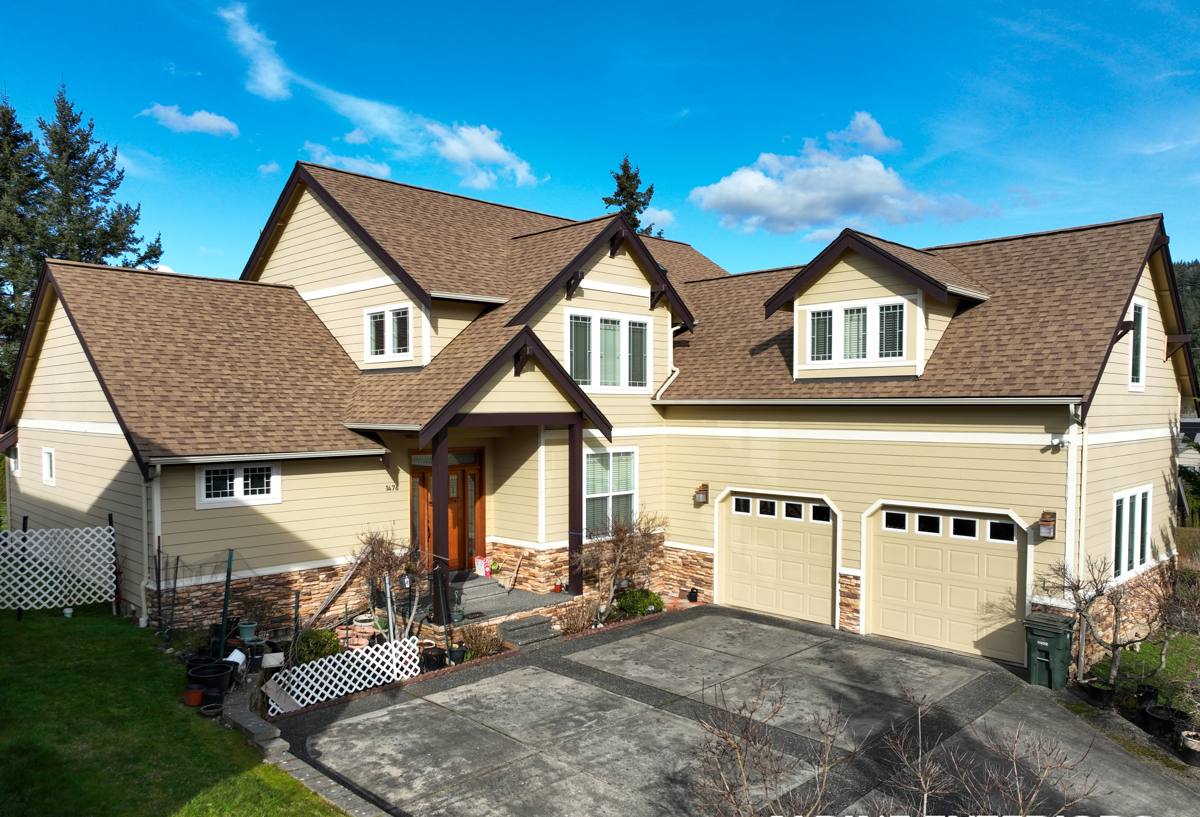
Signs Your Lake Stevens Roof Has Reached the End of the Line
Not every roof problem means a full replacement — some are legitimately repairable. But certain signs mean patching is a short-term fix on a roof that's already failing underneath:
- Granules collecting heavily in gutters and downspouts, or shingles that look bald in patches
- Shingle edges curling, cupping, or cracking, especially on south- and west-facing slopes
- Moss mats thick enough that you can't see the shingle surface underneath on shaded slopes
- Soft or spongy spots when walking the roof, which usually means the deck underneath is compromised
- Daylight visible through the roof boards from inside the attic
- Repeated leaks in the same area even after patch repairs
- A roof at or past the manufacturer's expected service life for its material and installation conditions
If you're seeing two or more of these at once, it's worth getting a straight answer on whether you're looking at a repair or a replacement before more money goes into patches on a roof that's already past its useful life.
What a Correct Roof Replacement Actually Involves
Full Tear-Off and Deck Inspection
A proper replacement starts with removing the existing roofing down to the deck, not roofing over what's there. That's the only way to actually see the condition of the sheathing, catch rot or delamination before it's covered up again, and confirm the deck is solid enough to fasten a new roof to correctly. Any soft or damaged decking gets replaced before anything new goes down — covering it up just hides the problem for the next roof to inherit.
Underlayment and Water-Shedding Layers
The underlayment is the roof's backup plan for the water that gets past the shingles, which in this climate happens more than most homeowners realize. Ice-and-water membrane at eaves, valleys, and penetrations, paired with quality synthetic underlayment across the field, is what keeps a small amount of wind-driven moisture from becoming a deck problem.
Ventilation Is Not Optional Here
A roof that can't breathe traps moisture in the attic, which shortens the life of the decking, the insulation, and the roofing material from underneath — regardless of how good the shingles are. Balanced intake and exhaust ventilation matters as much in a wet, mild climate like ours as it does anywhere with harsher temperature swings, and it's one of the most commonly skipped steps in a rushed reroof.
Flashing Is Where Roofs Actually Fail
Chimneys, skylights, sidewalls, and valleys are where most leaks actually originate — not the open field of shingles. Correct flashing detail, properly layered with the underlayment and shingles rather than just caulked over the top, is the difference between a roof that sheds water for decades and one that leaks within a few winters.
Roofing Material Options for Lake Stevens Homes
There's no single "best" roofing material — the right choice depends on your roof's exposure, your budget, and how much long-term maintenance you want to take on. Here's how the common options stack up for a wet, moss-prone climate like Snohomish County's:
| Material | Moss/algae resistance | Typical lifespan | Relative cost |
|---|---|---|---|
| Standard asphalt shingle | Fair — moss-prone on shaded slopes without treatment | 18–25 years | Lowest |
| Algae-resistant (AR) asphalt shingle | Good — granules include algae-inhibiting compounds | 25–30 years | Low–moderate |
| Standing seam metal | Very good — smooth surface sheds debris and moisture | 40–60 years | Highest |
| Synthetic/composite shingle | Good — engineered to resist moisture absorption | 30–50 years | Moderate–high |
Cedar shake has its fans, but we're upfront with clients about the trade-off in a climate this wet: shake holds moisture longer than manufactured materials and needs more frequent treatment and maintenance to avoid rot and moss colonization. It's not that it can't work here — it's that it demands a level of upkeep that not every homeowner wants to commit to, and we'd rather set that expectation honestly than sell a product that turns into a maintenance burden.
Cost Factors: What Actually Drives the Price of a Lake Stevens Reroof
Two roofs the same size can cost noticeably different amounts depending on what's actually involved. The biggest factors we walk homeowners through are:
| Factor | Why it matters |
|---|---|
| Roof pitch and access | Steeper roofs and difficult access sites take longer and require more safety setup |
| Layers to remove | Tearing off multiple existing layers costs more in labor and disposal than a single-layer tear-off |
| Deck condition | Rot or soft decking found during tear-off requires replacement before new roofing goes down |
| Roof complexity | Valleys, dormers, skylights, and chimneys all add flashing work and labor time |
| Material selection | Standard asphalt, AR shingle, synthetic, and metal all carry different material and labor costs |
Full roof replacements on typical residential homes in this area tend to land in a broad range from the high single thousands into the tens of thousands, depending heavily on the factors above — size alone doesn't tell you much without knowing the roof's condition and complexity. We give a firm, itemized number after actually looking at your roof, not a phone-quote guess.
Our Roof Replacement Process, Start to Finish
- Inspection and estimate — we walk the roof, check the attic for ventilation and moisture issues, and give you a written, itemized estimate
- Material selection — we go over the options above in the context of your budget and your roof's actual exposure
- Permitting — requirements vary by scope of work and jurisdiction; we handle pulling what's required before work starts
- Tear-off and deck repair — old roofing comes off, the deck is inspected, and any damaged sheathing is replaced
- Installation — underlayment, flashing, ventilation, and roofing material go in, in that order, with attention to the details that actually determine how long the roof lasts
- Site cleanup and magnetic sweep — debris and stray fasteners are cleared from the yard and driveway before we leave
- Final walkthrough — we go over the finished roof with you and provide warranty paperwork
Why a Crew That Already Works Lake Stevens Matters
Roofing crews that work this area regularly know things a crew passing through doesn't: which slopes in a given neighborhood tend to hold moss because of tree cover and orientation, how the local building department handles reroof permitting, and how to schedule around the wet-season windows that make certain months harder to get a clean, dry tear-off. That local familiarity isn't marketing — it directly affects how smoothly the job goes and how the finished roof performs once the rain starts again.
It also matters after the job is done. A crew based in and around Snohomish County is reachable if a warranty question or an unexpected issue comes up down the road, rather than being a name you can't get back on the phone once the invoice is paid.
Getting the Most Life Out of Your New Roof
A correctly installed roof still benefits from basic upkeep, especially in a climate that gives moss and algae this much opportunity. A few habits go a long way:
- Keep gutters clear so water isn't backing up under the shingle edge during heavy rain
- Trim back overhanging branches to reduce shade, debris buildup, and moss growth on affected slopes
- Have moss or algae growth treated early rather than letting it establish and spread
- Avoid pressure washing shingles — it strips granules and shortens the roof's life
- Schedule a periodic visual inspection, especially after major windstorms
- Watch for excess granule buildup in gutters as an early sign of shingle wear
If you're weighing a repair against a full replacement, or you just want an honest read on where your roof actually stands, we're happy to take a look. Fill out the form below for a free, no-pressure estimate.