 Snohomish
 Roof Repair Built for Silver Firs' Trees, Rain, and Damp Air
Silver Firs sits under heavy evergreen canopy in Snohomish County, and that canopy is both the neighborhood's best feature and its roofs' biggest headache. Tall firs and cedars mean constant shade, constant needle drop, and constant moisture sitting on shingles and shakes long after a storm has passed. Add in Puget Sound's damp, salt-tinged air moving inland and months of steady winter rain, and you have a climate that is genuinely hard on a roof system — not because any one thing is extreme, but because nothing ever fully dries out. A roof repair here has to account for all of that, not just patch the spot that's leaking today.
This page covers what roof repair means specifically for Silver Firs homes: what the local climate does to roofing materials, what a repair actually needs to include to hold up, and how our process works when you call us out.
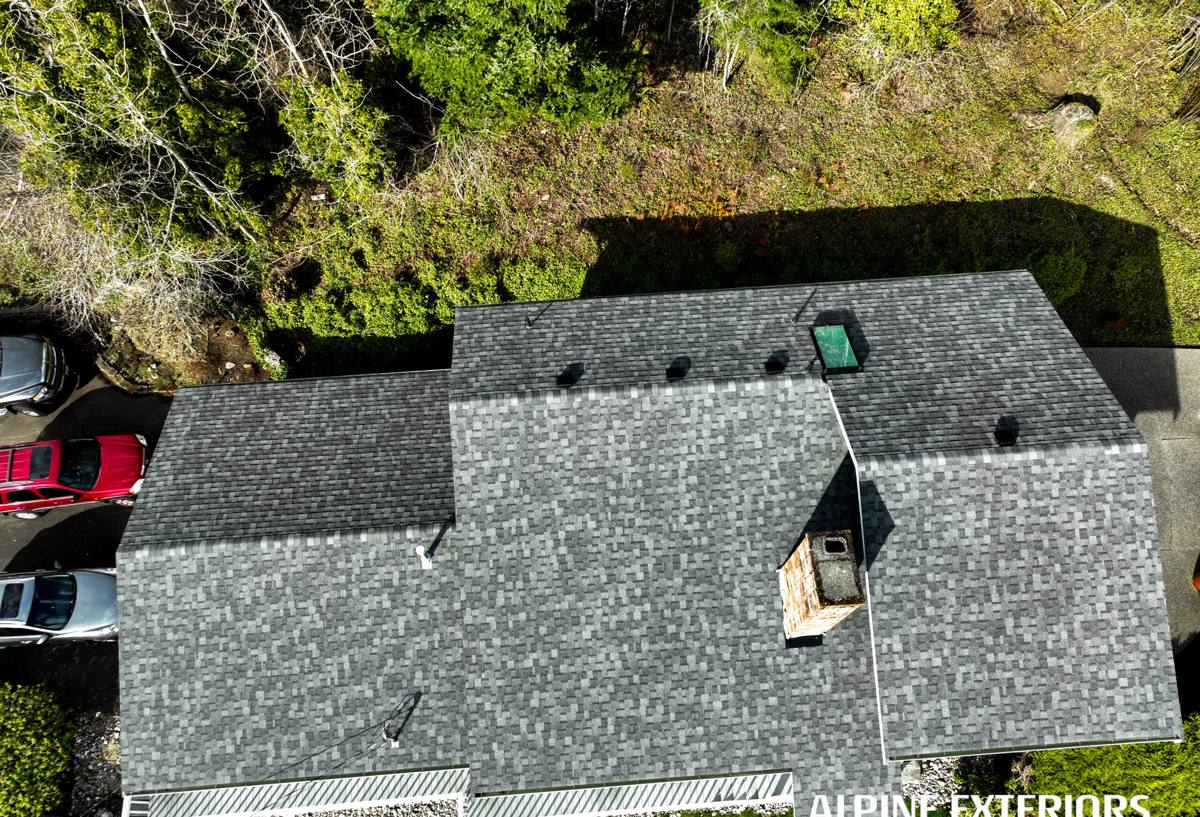
What Silver Firs Roofs Are Up Against
Moss and Organic Growth
Shade-heavy lots like the ones common throughout Silver Firs rarely get enough direct sun to dry a roof surface between rain events. That gives moss, algae, and lichen a long growing season — often nearly year-round on north-facing slopes and anywhere tree cover blocks the sun. Moss isn't just cosmetic. As it establishes, it lifts shingle edges, holds water against the roofing material, and works its root structure into granule surfaces and shake grain. Left unaddressed, a mossy patch that started as a minor nuisance becomes the starting point for a leak.
Wind-Driven Rain and Flashing
Snohomish County storms frequently bring rain sideways, not just down. That matters for repair work because wind-driven rain finds its way past details that would be fine in a straight downpour — step flashing with a weak seal, a valley that's lost its lap, a vent boot that's cracked but hasn't failed outright yet. Most of the leak calls we run in this area trace back to a flashing or transition detail, not a field of bad shingles.
Salt Air and Metal Corrosion
Silver Firs isn't waterfront, but Snohomish County as a whole sits close enough to Puget Sound that airborne salt content is a real factor, especially on exposed metal — flashing, fasteners, gutter hardware, and vent caps. Over years, lower-grade or unprotected metal components corrode faster here than they would inland, which is why the material spec on a repair matters as much as the labor.
Common Roof Repair Issues We See in This Neighborhood
- Moss-lifted shingle tabs allowing water intrusion at the tab edge
- Clogged valleys and gutters from needle and debris buildup, backing water up under shingles
- Cracked or shrunk rubber boots around plumbing vents
- Step flashing that's rusted, loose, or was never properly laced into the siding
- Nail pops and lifted shingles from wind exposure at roof edges and ridges
- Localized rot in sheathing under long-standing leaks that went unnoticed under tree cover
- Ice-dam-adjacent damage from the occasional hard freeze followed by rapid thaw
What a Correct Roof Repair Actually Involves
Diagnosing the Real Problem, Not Just the Symptom
A ceiling stain rarely sits directly below the actual entry point — water travels along the underlayment or framing before it shows up inside. A proper repair starts on the roof itself: checking the suspect area, but also every flashing line, penetration, and valley upstream of it. Chasing the stain instead of the source is how homeowners end up paying for the same repair twice.
Matching Materials Correctly
Patching in the wrong shingle profile, weight, or color is an easy way to create a second weak point right next to the first one. On older roofs where the original product is no longer made, we match as closely as possible on profile and thickness and blend placement so the repair doesn't stand out or perform differently than the surrounding field.
Getting the Underlayment and Flashing Right
Given how much of Silver Firs' leak activity traces back to flashing and moisture-holding debris, we don't consider a repair complete until the flashing at that section is either confirmed sound or replaced, and until the underlayment underneath is dry and intact — not just covered back over. In a climate that stays damp this long, sealing over a wet substrate just traps the problem.
Repair vs. Replacement: How We Help You Decide
Not every roof issue calls for a full replacement, and not every leak is a quick fix. We look at age, extent of damage, and how many separate problem areas exist before recommending either path.
| Factor | Favors Repair | Favors Replacement |
|---|---|---|
| Age of roof | Under 10-15 years, or recent re-roof | Nearing or past manufacturer's expected lifespan |
| Scope of damage | Isolated to one section or detail | Multiple unrelated leak points across the roof |
| Underlying deck condition | Sheathing solid, no rot found | Soft spots or rot in multiple areas |
| Moss/algae coverage | Light, on one or two slopes | Heavy, widespread, granule loss visible |
| Material availability | Matching material still obtainable | Discontinued profile, poor match likely |
Where the evidence supports a repair, we do a repair. We don't upsell a full replacement to solve a problem a focused fix can handle, and we'll tell you plainly if a repair is only buying a few years so you can plan the bigger job on your own timeline.
Our Roof Repair Process in Silver Firs
- Inspection: We walk the roof (or use a ladder assessment where pitch or access requires it) and document every area of concern, not just the reported leak.
- Diagnosis and estimate: You get a plain explanation of what's causing the issue, what it takes to fix it correctly, and a written cost range before any work starts.
- Debris and moss removal: Affected areas are cleared of moss, needles, and organic buildup so we're working on a clean, dry surface.
- Repair execution: Damaged material is removed, decking is checked and repaired if needed, and new material, underlayment, and flashing go in matched to the existing roof.
- Sealing and detail work: Every flashing edge, nail head, and penetration touched during the repair gets properly sealed — this is where a lot of quick patch jobs fall short.
- Final check: We walk the area again and check adjacent sections so you're not calling us back next month for something we could have caught the first time.
Cost Factors for Silver Firs Roof Repairs
Repair costs vary based on a handful of specific factors, and we'd rather explain them than quote a number that doesn't fit your roof:
- Roof access — steep pitch, height, or tree obstruction adds time and equipment
- Extent of decking damage found once the surface material is pulled back
- Material match — common asphalt shingle profiles are quicker and cheaper to source than older cedar shake or discontinued lines
- Number of separate repair locations versus one contained area
- Whether moss and debris removal is needed across the whole roof or just the repair zone
We give you a firm, itemized estimate after inspection — not a phone-quote guess — so you know what you're paying for before we start.
Why Hiring a Crew That Already Works Silver Firs Matters
A roof repair isn't just a technical exercise — it's a judgment call about what a specific roof, in a specific microclimate, actually needs to hold up long-term. Crews that work this part of Snohomish County regularly know which slopes in tree-heavy neighborhoods hold moss the longest, which flashing details tend to fail first under wind-driven rain, and which material choices actually make sense given the salt-air exposure that comes with living near Puget Sound. That's the kind of judgment that only comes from doing this work in this area repeatedly, not from a one-size-fits-all repair checklist.
It also means faster, more accurate estimates. We're not guessing at how your roof will behave through a Pacific Northwest winter — we've seen how roofs just like it perform through several of them.
Maintenance Checklist Between Repairs
A repair holds up longer when the roof gets basic upkeep in between service calls. For Silver Firs homes specifically, we recommend:
- Clear gutters and valleys of needles and debris at least twice a year, more often under heavy tree cover
- Have moss treated or removed before it spreads past a small patch — don't wait for granule loss
- Trim back overhanging branches to cut down on shade and debris accumulation on the roof surface
- Check attic ventilation periodically — poor airflow keeps the underside of the roof deck damp longer
- Walk the perimeter after major windstorms and look for lifted shingles or displaced flashing from the ground
- Schedule a professional inspection every year or two, even without an active leak, so small issues get caught early
If you're dealing with a leak, spotting moss taking hold, or just want an honest read on where your roof stands, we're glad to come take a look. Reach out for a free, no-pressure estimate using the form below.