 Snohomish
 Why Marysville Roofs Take a Different Kind of Beating
Marysville sits close enough to Puget Sound's saltwater sloughs and bays that homes here deal with a combination most roofing guides never address directly: salt-laden air mixing with a wet season that can run from October straight through April. That's a longer stretch of standing moisture than most of the country ever sees, and it changes what a roof actually needs to hold up over time.
The rain itself isn't usually the problem — it's the combination of volume, duration, and wind. Storms coming off the water tend to drive rain sideways instead of straight down, which means water finds its way into laps, flashing seams, and vent penetrations that would stay dry in a calmer climate. Add tree cover common in Snohomish County neighborhoods, and you get shaded, slow-drying roof sections that never fully catch up between storms. That's exactly the environment moss, algae, and slow rot need to get established.
None of this means a roof in Marysville has to fail early. It means the installation details that get skipped in drier climates — proper underlayment, real flashing work, and ventilation that actually balances — matter more here, not less.
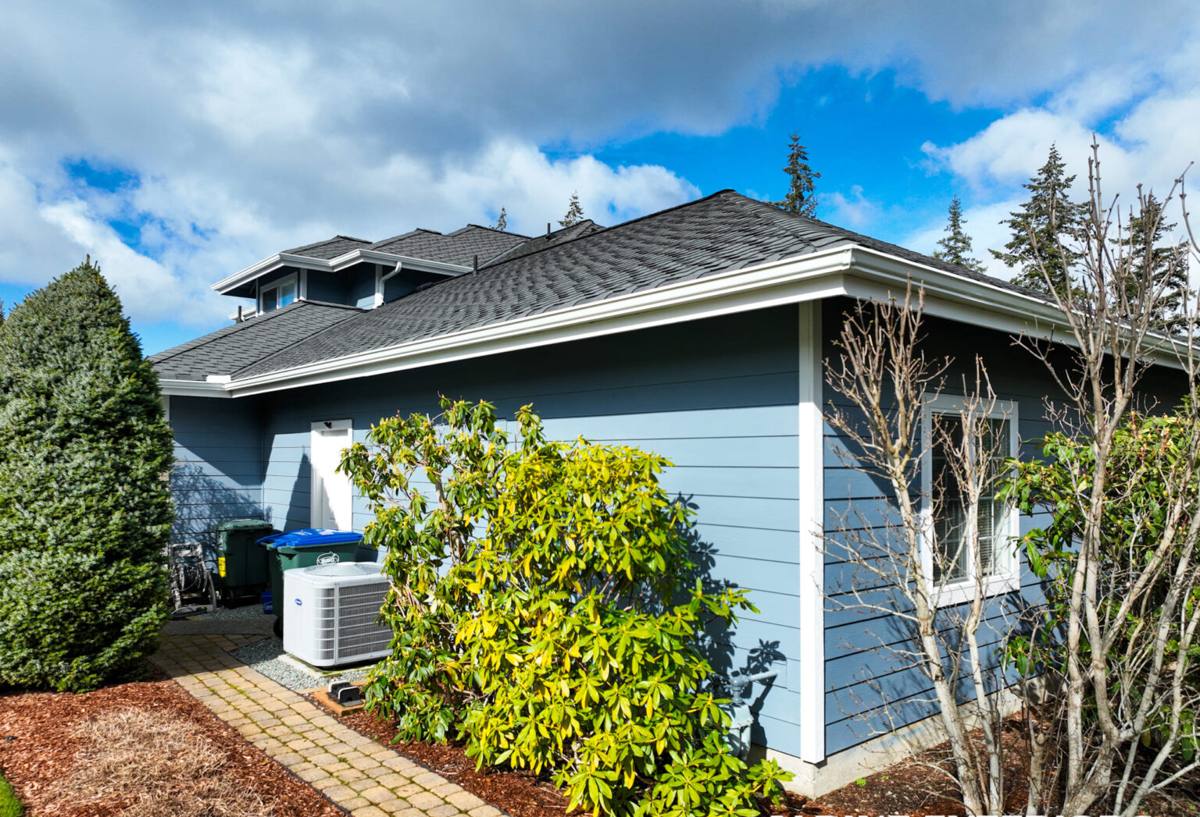
Signs a Marysville Roof Has Reached the End of the Line
Roofs rarely fail all at once. They give warning signs for months, sometimes years, before a leak actually shows up inside the house. Walk your roofline from the ground and check for:
- Shingle edges curling up or granules collecting in gutters and downspouts
- Dark streaking (algae) or thick moss mats, especially on north-facing or shaded slopes
- Soft or spongy spots when walked, or visible sagging between rafters
- Daylight visible through the roof deck from inside the attic
- Ceiling stains, musty attic smell, or insulation that feels damp
- Flashing that's rusted, lifted, or caulked over instead of properly sealed
- A noticeable jump in heating costs, which often points to a compromised, leaky attic space
Moss deserves special mention: a light dusting is cosmetic, but thick, established moss holds water directly against the shingle surface for weeks at a time. By the time it's visibly thriving, it's usually already done some damage underneath.
What "Correct" Actually Means for a Roof Replacement
A roof replacement is more than swapping old shingles for new ones. The parts nobody sees from the ground are what determine whether a roof lasts fifteen years or thirty in this climate.
Full Tear-Off, Not an Overlay
Installing new shingles directly over an old layer is faster and cheaper, and it's a shortcut we don't take. It traps whatever moisture or damage already exists in the old roof against the new one, adds weight the structure wasn't necessarily built to carry twice over, and it hides the one chance you get to actually see and repair the deck underneath. Most manufacturers also restrict or void material warranties on layered installs. Our standard is a full tear-off, every time, so the deck gets inspected and any soft or rotted sections get replaced before anything new goes down.
Underlayment and Ice-and-Water Barrier
Given how much of the year this area spends wet, we treat synthetic underlayment and self-adhered ice-and-water membrane at eaves, valleys, and around penetrations as standard, not upgrades. These layers are the actual waterproofing system; the shingles on top are the wear surface and the first line of defense, not the only one.
Flashing Done Properly
Chimneys, skylights, sidewalls, and vent pipes are where the overwhelming majority of roof leaks actually start — not in the open field of shingles. Correct step flashing, counterflashing, and pipe boots, installed and sequenced properly with the underlayment rather than just caulked on top, are what keep those spots dry through years of wind-driven rain.
Ventilation That Actually Balances
Intake at the eaves has to match exhaust at the ridge or roof needs proper airflow, otherwise moist attic air condenses against the underside of the deck — which rots plywood from the inside and has nothing to do with the shingles themselves. We check and correct ventilation balance as part of every replacement, not as an add-on sale.
Roofing Material Options for This Climate
There's no single "correct" material for every home — it depends on budget, roof pitch, tree cover, and how long you plan to stay in the house. Here's how the common options actually compare for a marine, high-moisture climate like Snohomish County's.
| Material | Moisture / Moss Resistance | Maintenance Burden | Relative Cost |
|---|---|---|---|
| Standard 3-tab asphalt shingle | Fair — needs periodic moss treatment | Moderate | Lower |
| Architectural (dimensional) asphalt shingle | Good — thicker mat sheds water better | Moderate | Mid-range |
| Metal standing seam | Excellent — moss struggles to hold on smooth metal | Low | Higher |
| Cedar shake | Fair — attractive but moisture-sensitive without diligent upkeep | High | Higher |
Architectural shingles are the most common choice we install in this area — they handle wind-driven rain better than 3-tab, resist moss slightly longer, and carry stronger manufacturer warranties, without the cost jump of metal. Metal is worth serious consideration on heavily shaded lots where moss is a constant fight, since it gives moss far less to grip.
Our Roof Replacement Process
- On-site inspection and written estimate — we walk the roof and attic, not just the ground view, before quoting anything.
- Material selection — we go over the real trade-offs between options based on your roof's pitch, shade, and budget.
- Property protection — landscaping, gutters, and siding get covered before tear-off starts.
- Full tear-off and deck inspection — old material comes off completely; any soft, rotted, or delaminated decking gets identified and replaced.
- Underlayment, ice-and-water barrier, and flashing — installed to manufacturer spec at every eave, valley, and penetration.
- Ventilation check and correction — intake and exhaust balanced before the new roofing goes on.
- New roofing installed — correct nailing pattern and exposure per manufacturer requirements, not shortcuts.
- Cleanup and magnetic nail sweep — yard and driveway checked before we consider the job done.
- Final walkthrough — we go over the finished roof and hand over warranty paperwork together.
Why a Crew That Already Works Marysville Matters
A roofing crew that regularly works Snohomish County jobs already knows the local permitting process, the wind exposure differences between waterfront-adjacent lots and more sheltered inland streets, and which neighborhoods have HOA guidelines around roofing color or material. That familiarity saves time and avoids the mid-project surprises that come from a crew learning the area on your job.
It also matters for response time. Storm damage doesn't wait for a convenient week, and a crew based locally can typically get eyes on a damaged roof and a tarp up faster than one dispatching from farther away. Local crews also tend to have steadier relationships with area material suppliers, which helps keep replacement timelines predictable instead of stalled on backordered shingles.
Cost Factors to Understand Before You Get Quotes
Roof replacement pricing varies enough by home that broad national averages aren't very useful. What actually moves the number on a given house is a short list of factors:
| Factor | Why It Matters |
|---|---|
| Roof size and number of layers to tear off | More material to remove and dispose of means more labor |
| Roof pitch and access | Steep or hard-to-access roofs take longer and require more safety setup |
| Deck condition | Rotted or delaminated plywood found during tear-off needs replacing before anything new goes on |
| Material choice | Asphalt, architectural, metal, and cedar carry different material costs and install labor |
| Ventilation or flashing upgrades | Correcting years of inadequate airflow or flashing adds scope beyond a like-for-like swap |
Be cautious of any quote that's dramatically lower than the others you collect — it usually means something is being skipped, whether that's tear-off, proper underlayment, or code-required ventilation, and it tends to show up as a problem within a few years.
After Installation: Keeping a New Roof Performing
A correctly installed roof still benefits from basic upkeep in this climate. Keep gutters clear so water isn't backing up under the eaves, trim back overhanging branches that keep a section of roof shaded and slow to dry, and have moss addressed while it's still light rather than letting it establish into thick mats. Some homeowners choose to have zinc or copper strips installed near the ridge, which release trace metal ions that discourage moss growth over time — it's a reasonable option worth discussing, not something every roof strictly needs.
When you get a written warranty, make sure you understand what's covered by the shingle manufacturer versus what's covered as workmanship by the installing contractor — they're not the same thing, and a manufacturer material warranty typically won't cover a leak caused by an installation error.
If your Marysville roof is showing its age or you just want an honest read on where it stands, we're happy to take a look. Fill out the form below for a free, no-pressure estimate — we'll tell you what we actually see, not just what sells a job.