 Snohomish
 What Marysville's Climate Does to Siding
Marysville sits close enough to Puget Sound and the Snohomish River delta that homes here deal with a steady diet of moisture almost year-round. Winters bring long stretches of driving, wind-pushed rain rather than gentle drizzle, and the salt-laden air coming off the water accelerates corrosion on fasteners, trim, and anything with a weak factory finish. Add in a shaded, damp shoulder season that can run from October into April, and you get one of the longest moss and algae seasons in western Washington. Siding here isn't decorative — it's the first line of defense against water intrusion, and it has to do that job through a lot of wet months every single year.
We see the same failure patterns on Marysville homes again and again: cupped or delaminated wood siding, vinyl that's gone brittle and cracked at the corners, and green-black staining creeping up from grade on north- and west-facing walls that never get direct sun. None of that is purely a workmanship problem — it's a materials and moisture-management problem, and it's exactly why we standardized on one product system instead of installing whatever a homeowner happened to ask for.
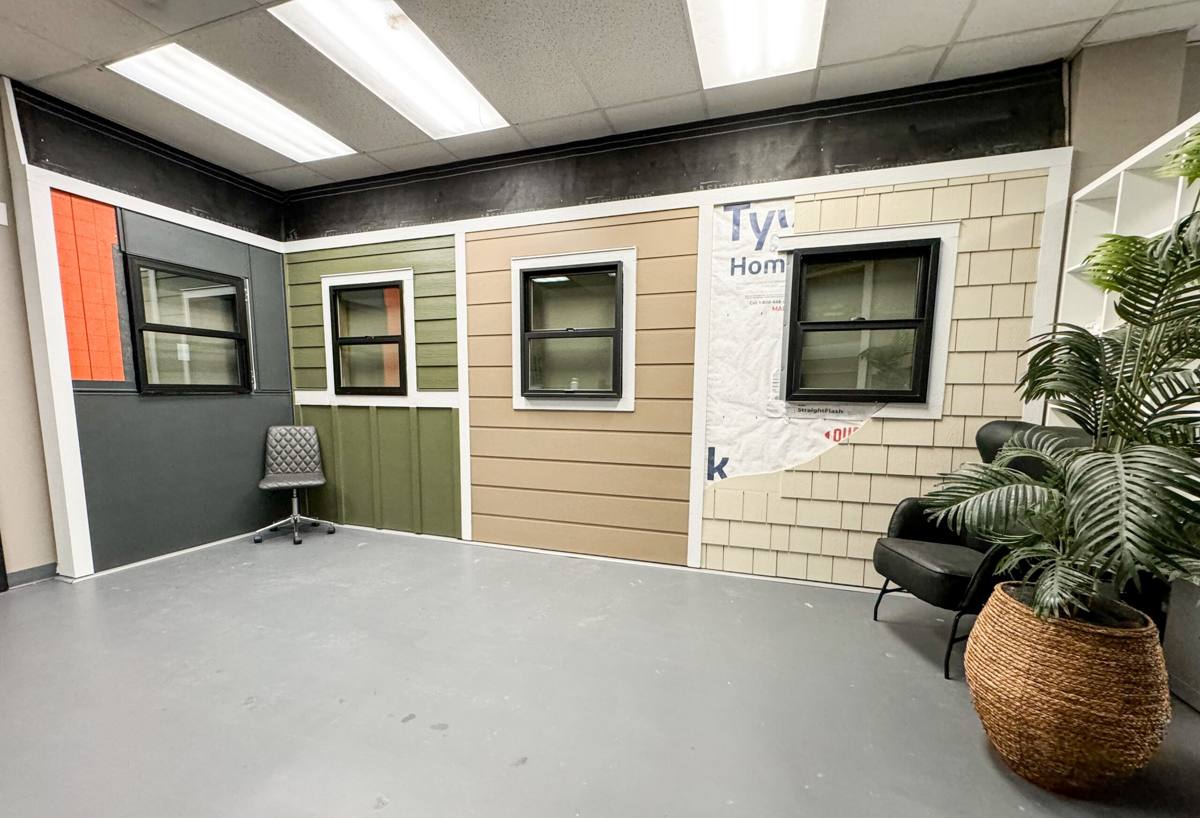
Why We Install Fiber Cement — and Only One Brand of It
Fiber cement is cement, sand, and cellulose fiber pressed into a dense, stable board. It doesn't absorb water the way wood does, it doesn't expand and contract with temperature swings the way vinyl does, and it's non-combustible. That combination matters in a climate like Snohomish County's, where siding spends much of the year wet or damp and needs to shed water rather than hold onto it.
We install James Hardie fiber cement exclusively — not LP SmartSide, not vinyl, not Cemplank or Allura, not primed spruce or cedar. That isn't a claim that every other product on that list is a bad product across the board; some of them are reasonable choices in the right climate or budget. It's that after years of installing and repairing siding in this area's wet, marine-influenced conditions, Hardie's moisture-engineered product lines and factory-cured finish gave us the fewest callbacks and the longest real-world service life. We'd rather know one system inside and out and stand behind it than juggle five different warranty structures and installation quirks.
What Sets Hardie Apart in a Wet Climate
- HZ5 climate-engineered formulation, built specifically for wetter, colder regions like the Pacific Northwest
- ColorPlus factory finish, baked on under controlled conditions rather than field-painted on a ladder in the rain
- A non-combustible core, which some insurers and jurisdictions weigh favorably
- A transferable limited warranty that follows the house to a new owner, not just the person who paid for the install
What a Correct Fiber Cement Installation Actually Involves
Fiber cement is only as good as the installation behind it. A board engineered to manage moisture can still fail early if it's hung like vinyl or nailed up without attention to where water actually goes. On Marysville homes, a few details matter more here than they would in a drier climate.
Drainage and Water Management
We install a drainage gap, or rain screen, behind the siding wherever the wall assembly calls for it, so moisture that gets past the cladding has somewhere to drain instead of sitting against the sheathing. Given how many wet months this area sees in a typical year, that gap isn't optional detailing — it's what keeps a well-built siding job lasting decades instead of trapping moisture behind the walls within a decade.
Flashing and Penetrations
Every window, door, deck ledger, and pipe penetration is a place water wants to work its way behind the siding. Correct step flashing, kick-out flashing at roof-to-wall intersections, and properly lapped house wrap matter far more under driving, wind-pushed rain than they would in a climate where a small gap might never get seriously tested by weather.
Fastening and Clearances
Hardie's installation instructions specify fastener type, spacing, and minimum clearance from grade, decks, patios, and roof lines. We follow those specs exactly — not just because the warranty requires it, but because inadequate clearance from grade is one of the most common reasons we find moss, staining, and soft spots creeping up the bottom courses on older Marysville homes.
Caulking and Touch-Up
Factory-finished ColorPlus siding needs very little field paint, but cut edges and any touch-up work still need the correct sealant and Hardie-matched touch-up paint — not a generic exterior caulk that will fail after a season or two of constant damp and freeze-thaw cycling.
Product Lines We Use on Marysville Homes
Most projects in this area use some combination of the following, chosen based on the home's style and how exposed each elevation is, rather than a one-size-fits-all approach to the whole house.
| Product | Typical Use | Why It Fits This Area |
|---|---|---|
| HardiePlank lap siding | Primary wall cladding on most single-family homes | Widest color and texture range; HZ5 formulation handles sustained damp exposure |
| HardiePanel vertical siding | Accent walls, gables, modern or craftsman styling | Clean lines that hold up well against wind-driven rain on exposed elevations |
| HardieShingle siding | Accent bands, dormers, older or Craftsman-style homes | Traditional look without the ongoing rot risk of real cedar shingle in a wet climate |
| HardieTrim boards | Corners, window and door trim, fascia | Won't absorb water at cut ends the way wood trim does over time |
Signs a Marysville Home Needs Siding Attention
Homeowners often call us after noticing one symptom without realizing it points to a bigger moisture issue underneath. It's worth a closer look if you're seeing any of the following:
- Persistent green or black staining on shaded walls that pressure washing only removes temporarily
- Paint that's peeling or bubbling rather than simply fading
- Soft spots, especially near the bottom courses or around window and door trim
- Visible cupping, warping, or separated seams in existing lap siding
- Gaps opening up at corners or trim boards after a few winters of movement
Any single item on that list can be cosmetic. Several together, especially concentrated on the north or west side of the house, usually means water has been working its way behind the cladding for a while.
How We Approach a Marysville Project
Because we work this area regularly, we already have a sense of which elevations on a given home take the worst of the winter weather and where moss and algae tend to build up fastest. That shapes how we sequence and detail the job, not just how we install the boards. Our typical process on a full re-side looks like this:
- On-site assessment, including moisture readings on any suspect areas of the existing siding and sheathing
- Removal of the existing siding and inspection of the sheathing underneath, where hidden damage from a prior installation most often turns up
- Repair or replacement of any damaged sheathing before new material goes on top of it
- Installation of a compliant water-resistive barrier and drainage gap
- Fiber cement installation per Hardie's fastening, clearance, and flashing specifications
- Trim work, caulking, and touch-up paint matched to the ColorPlus finish
- Final walkthrough with the homeowner and warranty registration
What Affects the Cost of a Fiber Cement Project
We don't quote a job sight unseen, but a handful of factors consistently move the price up or down on homes in this area.
| Factor | Effect on Cost |
|---|---|
| Removal of existing siding | Tear-off, disposal, and any sheathing repair found underneath add to the base cost |
| Home height and access | Two-story homes and steep or tight lots need more staging and take longer per square foot |
| Trim and architectural detail | More corners, gables, and window trim mean more labor-intensive cuts and flashing work |
| Product mix | Shingle-style and vertical panel accents typically run higher per square foot than standard lap siding |
| Extent of hidden damage | Rotted sheathing found during tear-off is priced once it's actually exposed, not guessed at up front |
As a rough starting point, full re-side projects with James Hardie siding in this region commonly fall somewhere between $15,000 and $45,000 depending on home size and the factors above. That's a wide range on purpose — the only way to get a real number for your house is to have us walk it and look at what we're actually dealing with.
Living With Fiber Cement Siding in This Climate
Hardie siding is low-maintenance compared to wood or vinyl, but low-maintenance doesn't mean no-maintenance in a climate that grows moss on north-facing roofs. A short annual routine keeps it looking right and keeps small issues from turning into water-intrusion problems.
- Rinse siding annually with a garden hose and soft brush — skip the pressure washer, which can force water behind seams and joints
- Check caulking at trim, windows, and penetrations each fall before the wet season sets in
- Keep gutters clear and downspouts directed away from the foundation so runoff isn't sheeting down the wall
- Cut back vegetation and tree cover that keeps a wall shaded and damp, since that's where moss and algae take hold fastest
- Touch up chips or scratches with Hardie-matched paint before they become an entry point for moisture
Why It Matters That We Already Work in Marysville
A crew that installs and repairs siding across Snohomish County regularly knows which elevations on a Marysville home are going to take the worst of the winter weather off the water, and can detail them accordingly instead of treating every wall the same. We're also familiar with the local permitting and inspection expectations for a re-side, so there aren't surprises partway through a project. That local track record is part of why we're comfortable standing behind the warranty on every job we install — we're not guessing at how this climate treats a wall assembly over time, we're building for the one we see every week.
If your Marysville home's siding is showing its age, or you're planning ahead for a replacement before it becomes an emergency, we're glad to take a look and give you a straight, no-pressure estimate — fill out the form below and we'll get back to you.