 Snohomish
 Building Decks in Machias: A Different Job Than It Looks Like
Machias sits in the wooded, low-lying pockets east of Snohomish, where tree cover, seasonal ground moisture, and long stretches of overcast, rainy weather shape how a deck actually performs over time. A deck built to a generic national spec will often look fine the first summer and start showing problems by year three or four — soft spots near the house, black streaking on the boards, footings that have shifted slightly because the ground beneath them never fully dries out between storms. Building correctly for this specific area means designing around moisture from the start, not trying to fix it after the fact.
We've framed and rebuilt enough decks around Machias and the rest of the Snohomish area to know which details matter here and which ones are just extra cost. This page covers what we actually do differently for this location, not a generic overview of deck building.
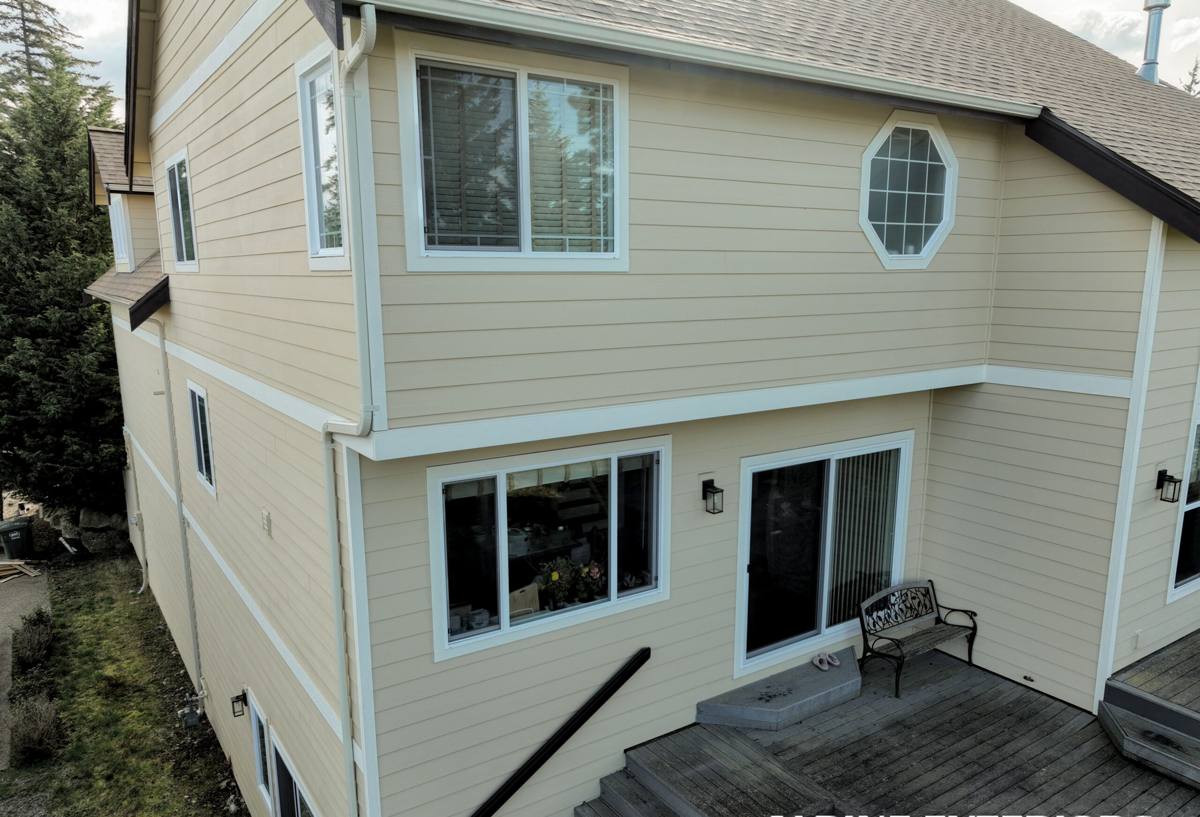
What Machias's Climate Does to a Deck Over Time
Snohomish County gets a long wet season, and Machias's mix of tree cover and low, shaded terrain means moisture sits longer on structural wood, decking boards, and hardware than it would in a more open, sun-exposed yard. A few specific effects we plan for:
- Extended moss and algae growth on horizontal surfaces that don't get much direct sun, especially decks tucked under mature trees or on the north side of a house.
- Slower drying between rain events, which is hard on end grain, fastener heads, and any spot where two boards sit tight against each other.
- Ground movement and softening around footings during the wettest months, which is why footing depth and bearing matter more here than in a drier climate.
- Driving rain reaching areas that are technically "covered," including ledger connections and rim joists near the house, if flashing wasn't detailed correctly.
None of this means a deck can't last decades in Machias — it means the framing, fasteners, and decking material all need to be chosen with this specific pattern of exposure in mind, not just picked off a standard materials list.
The Structural Details We Don't Skip
Ledger Attachment and Flashing
The ledger board — where the deck attaches to the house — is the single most common failure point on older decks we're called out to inspect or rebuild. In a climate that stays damp as long as this one does, a ledger without proper flashing will trap water against the house's rim joist, and by the time it's visible from inside, there's often already rot. We flash every ledger connection so water sheds away from the house, not into it, and we use lag bolts or through-bolts sized for the actual load, not undersized fasteners that were "close enough."
Footings and Post Bases
Footings need to sit below frost depth and on undisturbed, well-bearing soil — not backfill, and not soil that stays saturated through the winter. We also keep every post base off the concrete with a standoff bracket, so the post end doesn't sit in a puddle every time it rains. This one detail is the difference between a post base lasting the life of the deck and one that needs replacing in ten years.
Joist Spacing and Airflow
Tighter joist spacing than the board manufacturer's minimum, plus a bit of extra clearance underneath the deck, helps airflow move moisture out from under the structure instead of letting it sit trapped against the ground — a real issue on shaded Machias lots where the space under a deck rarely sees direct sun.
Choosing the Right Decking Material for This Area
There's no single "best" decking material — there's a best material for a given budget, sun exposure, and how much upkeep the homeowner actually wants to do. Here's how the common options compare for a shaded, damp-climate lot like a typical Machias yard:
| Material | How It Handles This Climate | Maintenance | Typical Lifespan |
|---|---|---|---|
| Pressure-treated wood | Good if properly sealed and kept clear of standing debris; moss-prone in shade | Annual cleaning/sealing recommended | 15–25 years with upkeep |
| Cedar | Naturally moisture-resistant but still needs sealing in a wet climate | Sealing every 1–2 years | 20–25 years with upkeep |
| Composite decking | Resists rot; can still grow surface algae in deep shade if not cleaned | Periodic washing, no sealing | 25–30+ years |
| PVC decking | Fully moisture-resistant; performs well in shaded, wet spots | Occasional washing | 30+ years |
We don't push one product line over another — we walk the site, look at how much sun the deck footprint actually gets, and give an honest recommendation based on that, along with the real cost and maintenance trade-offs, not just the sticker price.
Permits, Setbacks, and Local Code
Most decks over 30 inches off grade, and many attached decks regardless of height, need a permit through Snohomish County, and that permit review will check guardrail height, stair geometry, footing size, and the ledger connection detail. We handle the permit drawings and inspections as part of the build so the homeowner isn't the one chasing down a county inspector or figuring out setback requirements on their own. Skipping this step to save time almost always costs more later — either at resale, when an unpermitted structure shows up in a home inspection, or if the county requires it to be opened up and corrected after the fact.
Our Process for a Machias Deck Project
- Site visit: We look at sun exposure, drainage, soil condition, and how the deck will tie into the house before recommending a design or material.
- Design and material selection: Layout, size, and decking material are chosen together, with the climate factors above built in from the start — not added as an afterthought.
- Permit drawings: We prepare and submit what the county requires and handle the inspection scheduling.
- Demo (if replacing an existing deck): Old footings are evaluated — reused only if they meet current depth and bearing requirements, otherwise replaced.
- Framing: Ledger flashing, footings, post bases, and joist layout are all built to the standards above, not the bare code minimum.
- Decking and railing installation: Fastener pattern and spacing account for board expansion and drainage, whichever material is chosen.
- Final inspection and walkthrough: We go over the finished deck and basic care with the homeowner before calling the job done.
What We See Most Often on Existing Machias Decks
When we're called out to look at a deck that's having problems rather than build a new one, the issues cluster around a handful of causes:
- Rot at the ledger board from missing or failed flashing
- Post bases set directly in standing water or backfilled soil
- Persistent moss and slickness on boards in shaded corners, made worse by boards installed tight with no drainage gap
- Undersized or shallow footings that have shifted, causing a slight lean or bounce in the deck
- Fastener corrosion where the wrong hardware was used for treated lumber
Some of these are repairable in place; others mean rebuilding the affected section correctly rather than patching over a structural problem.
Keeping a Deck Solid Between Builds
A well-built deck in this climate still needs some seasonal attention. This is the basic maintenance checklist we give homeowners after a Machias installation:
- Sweep leaves and debris out of gaps between boards before they trap moisture
- Rinse off moss and algae buildup at least once a year, more often in heavily shaded areas
- Check that gutters and downspouts near the deck aren't dumping extra water onto or under it
- Inspect the ledger flashing area yearly for any sign of staining or softness
- Reseal wood decking on the schedule appropriate for the product — don't wait until it's visibly gray and dry
- Confirm post bases and footings still sit solid, with no new gaps or settling, especially after a wet winter
Why a Crew That Already Works Machias Is Worth Choosing
A contractor who mainly works drier, more open parts of the region can still build a structurally sound deck — but the material choices, drainage details, and maintenance advice that make sense in a sunny yard don't automatically transfer to a shaded, damp Machias lot. We work this specific area regularly, which means we've already seen how decks here age, where they fail first, and what actually holds up over years of Snohomish County's wet seasons rather than just the first summer.
If you're planning a new deck or dealing with problems on an existing one in Machias, we're happy to come take a look and give you a straightforward, no-pressure estimate — just fill out the form below.