 Snohomish
 Why Roofs in the Lynden Area Wear Differently
A roof in Lynden doesn't fail the same way a roof does in a dry climate. Out here, the damage is usually slow and cumulative: driving rain finds its way under lifted shingles or worn flashing, salt-laden air off the coast accelerates corrosion on metal fasteners and flashing, and a long moss season keeps the roof surface damp for months at a stretch. None of that shows up as a dramatic failure overnight. It shows up as a soft spot in the decking, a stain on a ceiling, or a shingle that finally lets go during the next windstorm.
Because the damage builds gradually, a lot of Lynden homeowners end up paying for a full section replacement that could have been a repair if it had been caught a year or two earlier. That's really the core argument for roof repair as its own service, separate from replacement: catch the problem while it's still a repair, not a rebuild.
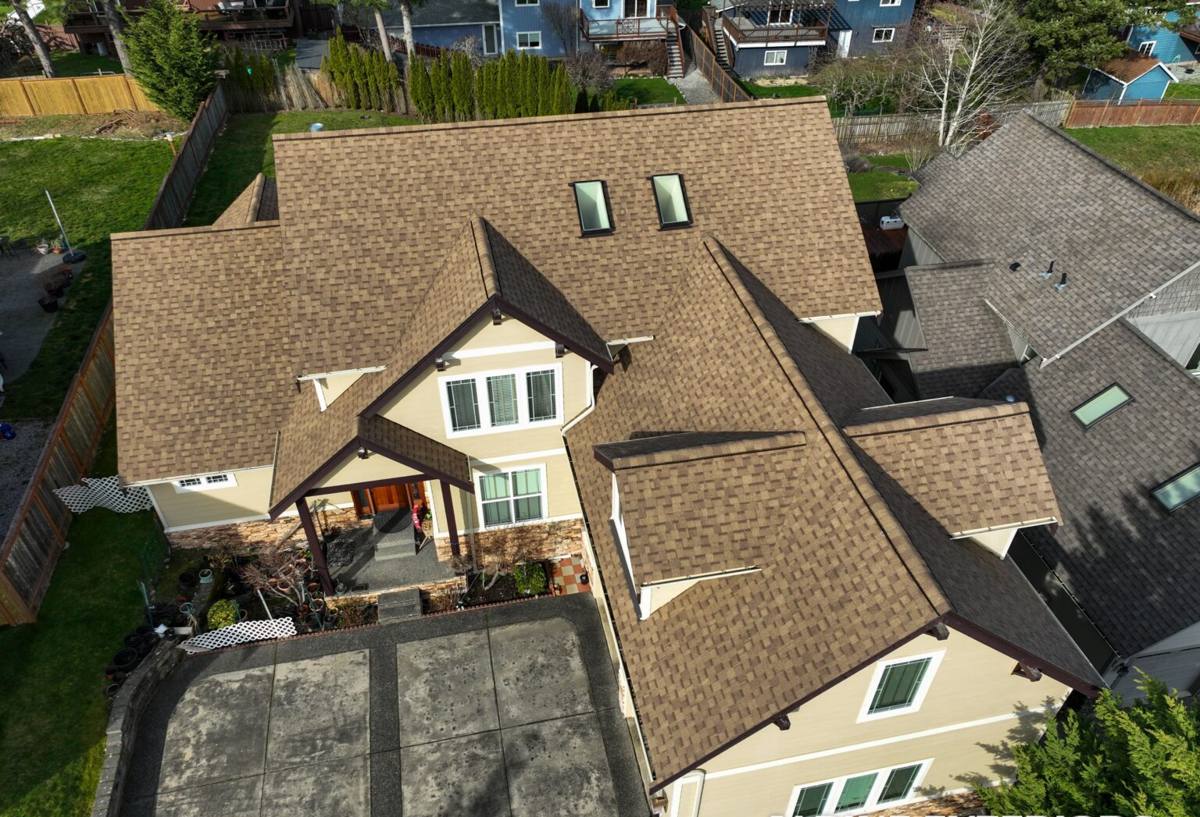
Signs Your Roof Needs Attention
Most roof problems give warning before they become emergencies. The trouble is that a lot of these signs are easy to miss from the ground or don't seem urgent until water actually gets inside.
- Granules collecting in gutters or at downspout outlets, which means shingles are wearing thin
- Dark streaking or thick moss growth, especially on north-facing slopes that stay shaded and damp longest
- Curling, cracked, or missing shingles after a windy stretch of weather
- Rust staining or gaps around flashing at chimneys, vents, and roof-to-wall transitions
- Sagging in the roofline, which can mean the decking underneath has taken on moisture
- Water stains on interior ceilings or in the attic, even faint or old-looking ones
- Daylight visible through the roof deck when viewed from inside the attic
If you're seeing one or two of these, it's usually still a repair. If you're seeing several at once, or the same leak keeps coming back after being patched, it's worth having someone look at the whole roof rather than just the symptom.
What a Correct Roof Repair Actually Involves
Finding the Real Source, Not Just the Symptom
Water doesn't always show up where it enters. It can travel along rafters or sheathing before dripping somewhere inside the house, which means a stain on your ceiling might be several feet from the actual leak. A proper repair starts with tracing the water path back to its source — checking flashing, underlayment, and decking condition, not just patching the spot that's visibly wet.
Matching the Existing Roofing System
Repairs need to work with what's already on the roof, not fight it. That means matching shingle profile and, where possible, color; using compatible underlayment; and making sure new flashing ties into the old roofing correctly so water sheds the way it's supposed to instead of finding a new path in at the seam.
Flashing and Ventilation Get Checked Too
A huge share of the leaks we see aren't shingle failures at all — they're flashing failures around chimneys, skylights, plumbing vents, and roof valleys. We also check attic ventilation while we're up there, because poor airflow traps moisture underneath the roof deck and speeds up rot, which is a bigger problem here given how many months of the year stay damp.
Common Roofing Materials in the Lynden Area
The right repair approach depends heavily on what's already on your roof. Here's a general comparison of how the common roofing types in this area hold up and what repairs typically involve for each:
| Roofing Type | Typical Lifespan | Moss/Moisture Sensitivity | Repair Considerations |
|---|---|---|---|
| Composition (asphalt) shingle | 20–30 years | Moderate — moss lifts shingle edges over time | Straightforward to patch section-by-section; matching color on older roofs can be difficult |
| Cedar shake | 25–35 years with upkeep | High — retains moisture, moss and rot-prone without maintenance | Individual shake replacement is possible but labor-intensive; often reveals deck rot underneath |
| Standing-seam metal | 40–50+ years | Low for moss, but fasteners and flashing are vulnerable to salt air corrosion | Repairs are usually isolated to seams, fasteners, or flashing rather than the panels themselves |
| Low-slope / torch-down membrane | 15–20 years | Moderate — ponding water is the bigger risk than moss | Seam and penetration repairs require heat-welding skill specific to the membrane type |
We don't push homeowners toward a particular material when a repair is all that's needed. If your existing roof is sound and the damage is localized, the honest answer is almost always to repair what's there rather than talk you into a full tear-off.
Our Roof Repair Process
- Inspection. We get on the roof (not just a look from the ground) and check the full roof surface, flashing, and attic where accessible, not only the spot you called about.
- Written assessment. You get a clear explanation of what's actually wrong, what caused it, and whether it's a repair or something bigger — with photos of the problem areas so you're not taking our word for it sight unseen.
- Straightforward quote. One price for the scope of work, explained plainly, before anything gets touched.
- The repair itself. Matched materials, proper flashing integration, and cleanup of the work area, including removing old materials and roofing debris.
- Follow-up. We tell you what to keep an eye on afterward and back the work with a warranty on our labor.
What Roof Repair Costs Depend On
There's no single price for "roof repair" because the range of jobs under that label is wide — a small flashing fix and a section of rotted decking are both technically repairs, but they're very different jobs. Broadly, minor localized repairs (a section of shingles, a flashing reseal) often land in the low hundreds to around a thousand dollars, while repairs involving rotted decking, moss damage across a large area, or difficult roof access run higher. The factors below are what actually move the number:
| Factor | Why It Matters |
|---|---|
| Roof pitch and access | Steep or hard-to-reach roofs take longer and require more safety setup |
| Extent of decking damage | If moisture has reached the plywood underneath, that has to be replaced before new roofing goes on |
| Material availability/age | Matching an older or discontinued shingle line can add cost and time |
| Number of penetrations | Chimneys, skylights, and vents each need their own flashing detail |
| Season and roof moisture | Wet or moss-covered surfaces need extra prep time before repair work can start |
Why Hiring a Crew That Already Works in Lynden Matters
Roofing crews that regularly work in this part of Whatcom County already know which flashing details tend to fail first here, which roof orientations hold moss the longest, and how the region's driving rain finds gaps that would never be a problem in a drier climate. That local pattern recognition matters more than it might seem — it's the difference between a repair that solves the actual problem and one that just re-covers it.
There's also a practical side: a crew already working in the area can typically get to an active leak faster, has a working sense of what local suppliers stock, and isn't learning the region's quirks on your roof for the first time.
Keeping a Repaired Roof in Good Shape
A repair holds up longest when it's not fighting the same conditions that caused the original problem. A little regular maintenance goes a long way here:
- Clean gutters and downspouts at least twice a year so water actually drains instead of backing up under the roof edge
- Treat or remove moss before it thickens — a light growth is a quick job, a mat of moss is not
- Trim back tree limbs that shade the roof and keep it from drying out between rains
- Check attic ventilation, since trapped moisture underneath the deck causes damage you won't see until it's advanced
- Have flashing points looked at every couple of years, especially around chimneys and vents
- Address small leaks right away rather than waiting to see if they get worse — they generally do
Getting an Honest Look at Your Roof
If you're dealing with a leak, missing shingles, or a roof that just looks tired, the first step is a straightforward inspection — not a sales pitch for a full replacement you may not need. We'll tell you plainly what we find, what it will take to fix it, and what it costs, and we'll say so if a repair genuinely isn't the right call anymore.
If you're in Lynden or nearby and want a second opinion or a first look at a roof problem, reach out for a free, no-pressure estimate using the form below.