 Snohomish
 Siding That Has to Work in Lynden's Climate, Not Just Look Good on Install Day
Lynden sits in a part of Washington where siding earns its keep. Homes here deal with salt-laden air moving in off the water, driving rain that hits walls sideways for days at a time, and a moss season that can stretch from fall through spring. That combination is hard on siding materials that aren't built for it, and it's even harder on siding that was installed without the right flashing, gaps, and drainage details. We install James Hardie fiber cement siding exclusively, and on projects in and around Lynden we build every job around what this specific climate does to a wall over the next 20-30 years, not just what it looks like the day we finish.
This page is about one service, in one area: James Hardie siding installation for Lynden homes. We'll walk through what the local climate demands, what a correct installation actually involves, how our process works, and why it matters that the crew showing up already knows this area.
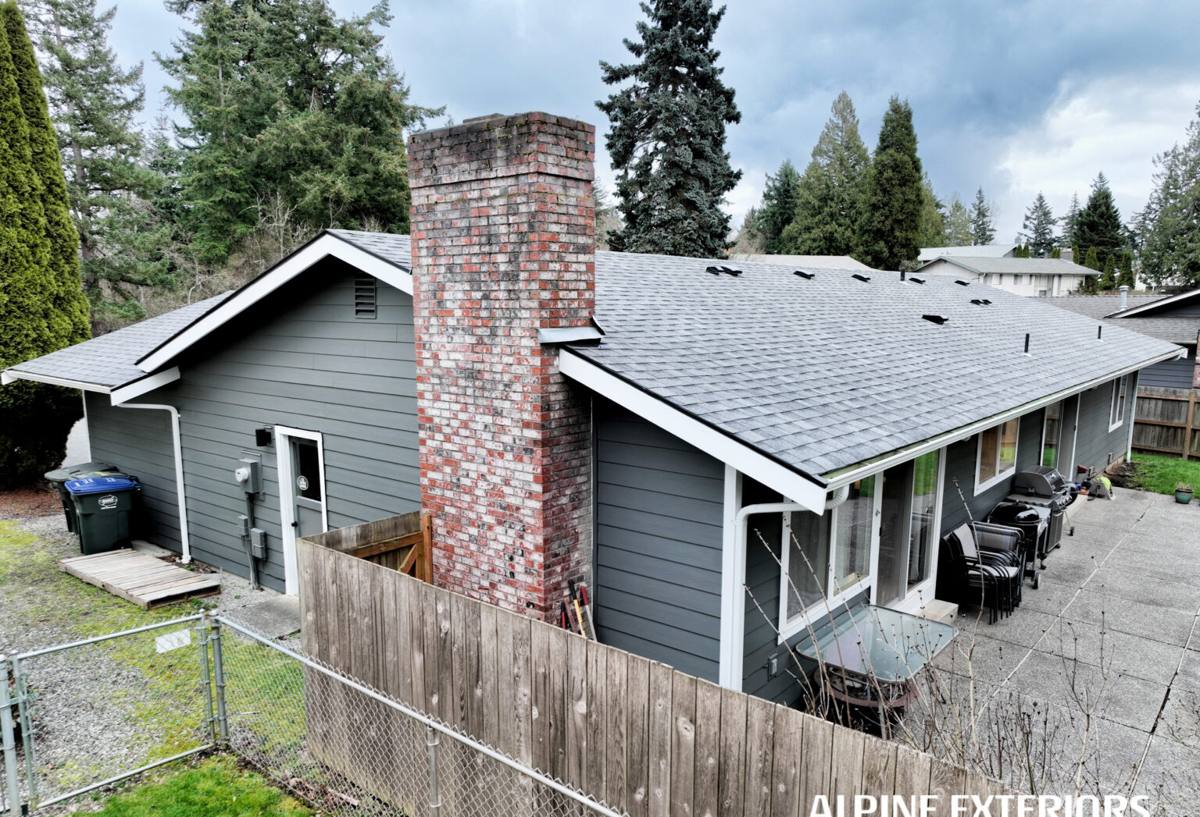
What Snohomish and Whatcom County Weather Does to a House
Salt Air and Moisture Load
Proximity to the water means airborne salt settles on exterior surfaces and accelerates corrosion of exposed metal fasteners, trim, and hardware. It also means the air carries more moisture on an average day than it would further inland. Siding materials that rely on paint film alone for protection, or that swell and contract with humidity, take a slower but steady beating from this environment.
Driving Rain
Wind-driven rain doesn't just run down a wall — it pushes sideways and finds every gap, unsealed joint, and poorly lapped seam. A siding system is only as good as its weakest flashing detail. Most siding failures we see in this region aren't material failures; they're installation failures where water got behind the cladding and had nowhere to go.
Extended Moss and Algae Season
Cool, damp conditions for a large part of the year create ideal growing conditions for moss, algae, and mildew on north-facing and shaded walls. Some siding materials are more porous or more prone to holding surface moisture, which gives organic growth a foothold. This is as much a maintenance issue as it is an installation issue.
Why We Install Only James Hardie in This Area
James Hardie fiber cement is engineered specifically for wet, variable climates like this one. It's non-combustible, dimensionally stable (it doesn't swell and shrink the way wood-based or wood-adjacent products can), and it comes with a factory-applied ColorPlus finish that's baked on rather than field-painted, which matters when your siding is going to spend three seasons a year damp. Hardie also builds climate-specific product lines (HZ5 for this region) engineered around moisture and temperature performance for the Pacific Northwest specifically, not a one-size-fits-all national spec.
We don't install LP SmartSide, vinyl, Cemplank, Allura, or unfinished wood siding, and it's worth being straightforward about why. Each of those products has legitimate strengths, but each also carries a trade-off — moisture sensitivity, maintenance burden, seam and gapping behavior, or finish durability — that we're not willing to put our name behind on a home that has to survive this specific climate for decades. Hardie is the product we've standardized on because, installed correctly, it holds up to the conditions Lynden actually throws at a house.
What a Correct Installation Actually Involves
The siding board itself is only part of the system. Most of what determines whether a Hardie installation lasts 30+ years or starts showing problems in year five happens in details that aren't visible once the job is done.
- Weather-resistive barrier: A continuous, properly lapped water-resistive barrier behind the siding, with no gaps or punctures left unsealed.
- Flashing at every penetration: Windows, doors, hose bibs, light fixtures, and vents all need correctly integrated flashing so water sheds outward instead of tracking behind the cladding.
- Rainscreen or drainage gap where appropriate: A small air gap behind the siding lets any incidental moisture drain and dry instead of sitting against the substrate.
- Correct fastener pattern and type: Hardie specifies fastener spacing, embedment depth, and corrosion-resistant fastener types — this is not a place to save time or use whatever is on the truck.
- Proper clearances: Minimum gaps between siding and grade, roofing, decks, and other transitions so water and debris don't wick moisture into the board's edge.
- Caulking only where Hardie specifies it: Over-caulking traps moisture; under-caulking lets it in. Both are common mistakes from crews who don't install Hardie regularly.
Get these details right and you have a wall system that's genuinely built for wind-driven rain and long damp seasons. Get them wrong and even the best siding material on the market will show problems — just more slowly than a lesser product would have.
Our Process for a Lynden-Area Project
1. On-Site Assessment
We look at your home's current siding condition, exposure (which walls take the most weather), existing moisture damage if any, and the trim, window, and roofline details that affect how the new siding needs to be integrated.
2. Product and Color Selection
We walk you through the Hardie product line that fits your home — lap siding, panel, shingle-style, or a mix with trim and accent details — and the ColorPlus palette options, including which finishes tend to hold up best on shaded or north-facing walls where moss and algae are more persistent.
3. Tear-Off and Substrate Check
Old siding comes off and we inspect the sheathing underneath for rot or moisture damage before anything new goes up. This is the point where hidden problems from a prior installation typically surface — and it's much cheaper to address them now than after new siding is closed up over them.
4. Weather Barrier and Flashing Install
This is the step that matters most and gets rushed most often on lower-bid jobs. We install the water-resistive barrier and flashing system to spec before a single piece of Hardie board goes on.
5. Hardie Installation to Manufacturer Spec
Boards are cut, fastened, and gapped according to Hardie's published installation guidelines for our climate zone — not generic best-guess spacing.
6. Final Walkthrough
We review the finished job with you, including basic care guidance for the first year and what to expect from the ColorPlus finish over time.
Why Hiring a Crew That Already Works Lynden Matters
Fiber cement installation is not forgiving of guesswork, and a crew that's worked a lot of homes in this specific area has already seen how the local weather patterns interact with different roof lines, wall exposures, and lot conditions common around Lynden and greater Snohomish. That familiarity shows up in small decisions — where to add extra flashing attention on a west-facing gable, how to handle a wall that stays shaded and damp longer than the rest of the house — that a crew unfamiliar with the area might not think to flag.
It also matters for scheduling and weather planning. Hardie installation requires reasonably dry working conditions for certain steps (particularly barrier and flashing work), and a local crew has a realistic sense of this area's rain patterns and can plan around them instead of pushing through wet-weather shortcuts.
Cost Factors for a Lynden-Area Hardie Project
Every home is different, and we'll give you a firm number after an on-site assessment — but these are the factors that typically move the price on a Hardie siding project in this area:
| Factor | Why It Matters |
|---|---|
| Home size and wall complexity | More corners, gables, and dormers mean more cutting, flashing, and labor time |
| Current siding removal | Tear-off, disposal, and substrate repair add time and cost versus siding over existing sheathing (when appropriate) |
| Substrate condition | Rot or moisture damage found during tear-off requires repair before new siding goes on |
| Product line and profile | Lap, panel, and shingle-style Hardie products carry different material and labor costs |
| Trim and accent work | Window trim, corner boards, and accent bands add detail work and material |
| Access and site conditions | Steep lots, limited access, or multi-story walls affect equipment and labor time |
Signs Your Lynden-Area Home May Need Siding Attention Soon
- Persistent moss or algae staining that returns quickly after cleaning, especially on shaded walls
- Visible gaps, warping, or separation at seams and corners
- Soft spots or discoloration near window and door trim, which often indicate water intrusion behind the siding
- Peeling or bubbling paint on wood-based siding, a sign the finish is no longer shedding moisture
- Rising energy bills that may point to a compromised weather barrier, not just insulation
None of these mean you need to act immediately, but they're worth having a professional look at before they turn into structural repairs.
Get a Straight Answer for Your Home
If you're weighing a siding project for a home in the Lynden area, we're glad to come take a look, walk you through what your specific walls and exposure need, and give you a clear, no-pressure estimate for a correctly installed James Hardie system. There's a form below — reach out and we'll get you scheduled.