 Snohomish
 Why Lake Stevens Siding Takes More Punishment Than It Looks Like
Lake Stevens sits back from Puget Sound, but the marine air that moves through this part of Snohomish County doesn't stop at the shoreline. Homes here still deal with damp, mild winters, long shoulder seasons where siding never fully dries out between storms, and stretches of shade from mature fir and cedar trees that keep north- and west-facing walls wet well after a system has passed through. None of that is dramatic on its own, but stacked up year after year, it's exactly the kind of slow, steady exposure that separates siding that lasts thirty years from siding that starts failing at twelve.
Rain That Drives Sideways, Not Just Down
Western Washington's fall and winter storms don't just fall straight down — wind pushes rain sideways into wall assemblies, working it into seams, butt joints, and anywhere trim meets siding. A wall that sheds water fine in a light drizzle can still take on moisture during a wind-driven system, which is why the flashing and water-resistive barrier behind the siding matter as much as the siding itself.
A Moss Season That Barely Ends
Between the tree cover on many Lake Stevens lots and the number of overcast, humid days in a typical year, moss and mildew have a long growing season here — realistically most of the year outside of a dry summer stretch. Siding that can't handle sustained moisture contact starts showing it as dark streaking, soft spots, or paint failure long before the underlying structure is actually compromised.
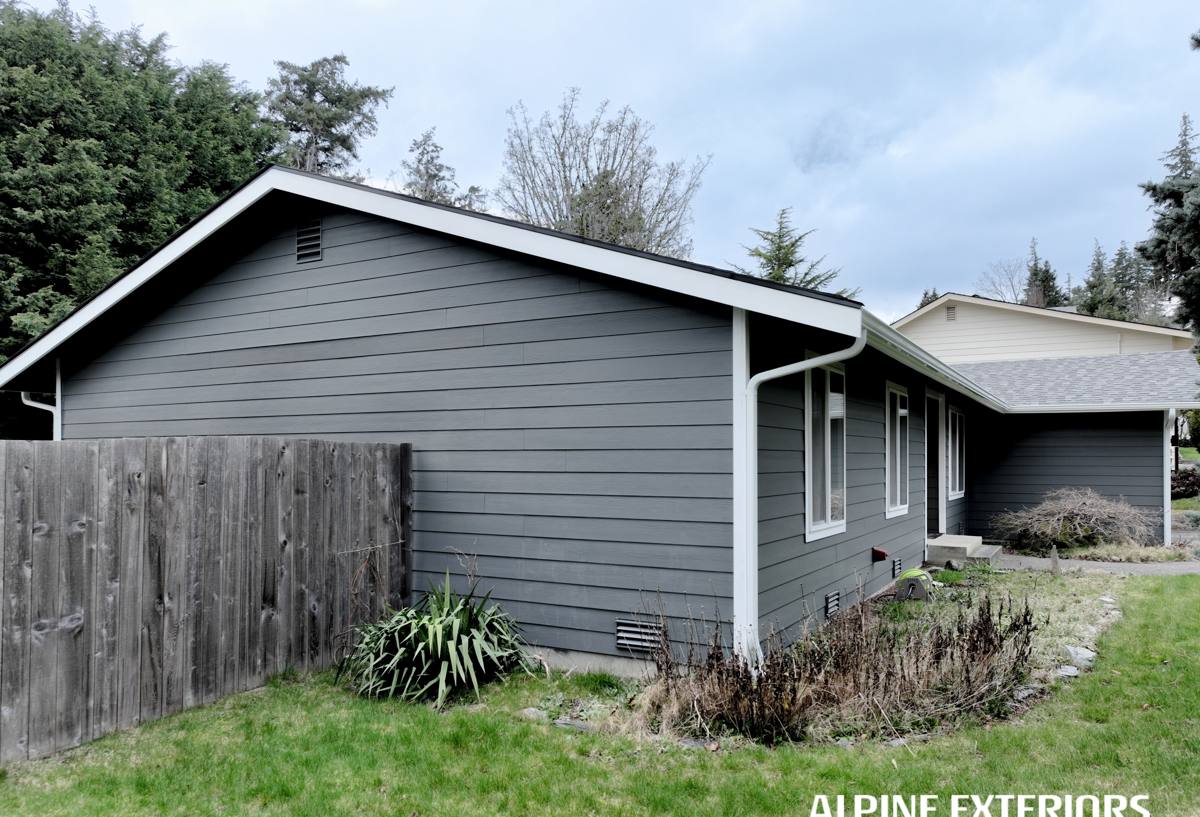
Signs a Lake Stevens Home Needs Replacement, Not a Patch
Not every siding problem calls for a full replacement. But there's a point where patching individual boards or repainting stops making sense, because the material itself — or what's happened underneath it — has gone past what a repair can fix. Signs worth a real inspection include:
- Siding that feels soft, spongy, or crumbles at the edges when pressed
- Paint that won't hold more than a couple of years no matter how it's prepped
- Persistent moss or algae staining that returns within months of cleaning
- Visible buckling, warping, or panels pulling away from the wall
- Gaps opening up at trim, corners, or window and door casings
- Rot or soft sheathing discovered once a section of siding is pulled back
- Mismatched siding styles or seams left over from multiple past repairs
If more than one or two of these show up at once, it's usually a sign the whole wall system — not just the visible surface — needs attention.
What a Correct Siding Replacement Actually Involves
Siding replacement done right is a wall system project, not a cosmetic swap. Skipping steps here is exactly how a new-looking wall ends up with the same problems in five years.
Full Tear-Off and What's Underneath
Every project should start with removing the old siding down to the sheathing so it can actually be inspected — not just the parts that are visibly bad. Soft or delaminated sheathing, rotted framing at window sills, and old, undersized flashing are all things you only find once the wall is open. Any of that gets repaired before a single new panel goes up.
Flashing and the Water-Resistive Barrier
A correctly installed water-resistive barrier, lapped the right direction and sealed at every penetration, is what actually keeps a wall dry — the siding is the first line of defense, not the only one. Flashing at windows, doors, and roof-to-wall intersections has to be detailed so water is directed out and down, never trapped behind the cladding.
Fastening and Clearances
Fiber cement siding has manufacturer-specified fastening patterns, nailing zones, and minimum clearances from grade, decks, and roof lines — get those wrong and you create the exact moisture entry points that shorten a job's life. This is also where manufacturer warranties get voided most often, because the failure traces back to installation, not the product itself. A crew that treats these details as optional is trading a fast install for problems you won't see until years later.
Why We Install Only James Hardie Fiber Cement
We've made a deliberate call to install James Hardie fiber cement siding exclusively, and it comes down to how the product performs in exactly the conditions Lake Stevens sees every year.
Built for This Climate: the HZ5 Line
James Hardie engineers its siding by climate zone, and the HZ5 product line is built for wetter, milder regions like Western Washington — manufactured to resist moisture damage, hold paint, and stand up to the freeze-thaw swings that happen here even without harsh winters. It's a fiber cement product designed around this specific kind of weather, not a general-purpose panel sold everywhere in the country.
ColorPlus Factory Finish
Hardie's ColorPlus finish is baked on at the factory under controlled conditions, which gives it better fade and chip resistance than most field-applied paint jobs, and a longer stretch before a home needs to be repainted at all. In a climate where paint is constantly working against moisture and UV cycling, that difference shows up over time.
The Warranty Behind It
James Hardie backs its siding with a long, transferable limited warranty on the material, which matters both while you own the home and if you sell it. A strong warranty is only worth something when it's backed by a product with a real track record — which is a big part of why we don't split our installation standards across multiple siding brands.
How Hardie Compares to What Else Lake Stevens Homeowners Consider
Homeowners researching siding replacement usually come across the same handful of materials. Here's an honest look at how they compare in a climate like this one.
| Material | Moisture Performance Here | Maintenance | Typical Lifespan |
|---|---|---|---|
| James Hardie fiber cement | Engineered for wet marine climates (HZ5); resists moisture-driven warping and rot | Occasional wash; factory finish holds color for years | 30+ years with correct installation |
| Vinyl siding | Sheds bulk water but can warp or crack in temperature swings and trap moisture behind panels | Low, but damage usually means full panel replacement | 15–25 years |
| Engineered wood (LP SmartSide) | Wood-based core is more moisture-sensitive at cut edges and seams | Requires diligent caulking and repainting to protect exposed edges | 15–30 years depending on upkeep |
| Cedar or primed wood | Natural material that moves with humidity and needs consistent sealing to resist rot | High — regular refinishing and edge sealing | 20–30 years with heavy maintenance |
None of these are bad products in the right application. But for the amount of sustained moisture exposure a Lake Stevens home sees, we don't think the maintenance burden or moisture sensitivity of the alternatives makes sense compared to what fiber cement offers — which is why it's the only siding we put our name behind.
Our Siding Replacement Process, Start to Finish
- On-site inspection of the existing siding, sheathing, and trim to scope the real condition of the wall, not just the surface
- A written estimate that separates material, labor, and any sheathing or framing repair so you know exactly what you're paying for
- Scheduling built around Western Washington's wet season, since tear-off exposes bare sheathing and timing matters
- Full tear-off, sheathing repair where needed, and correct water-resistive barrier and flashing installation
- James Hardie installation to manufacturer fastening, clearance, and joint specifications
- Final walkthrough and cleanup before we consider the job done
Why a Local Lake Stevens Crew Matters
Siding replacement isn't a job you want a crew learning on your house. A contractor who already works in Lake Stevens and the surrounding Snohomish County area has seen how homes in this area are built, what the common trouble spots are on the lots here — heavy tree cover, sloped and lake-adjacent properties, homes spanning a range of building eras — and how the local permitting process works, so a project doesn't stall waiting on paperwork nobody anticipated. It also means a faster response if something needs a follow-up look after installation, instead of waiting on a crew that has to drive in from another county. We're based out of Snohomish and treat Lake Stevens as one of our regular service areas, not a one-off trip we squeeze in between jobs elsewhere.
What Drives the Cost of a Lake Stevens Siding Replacement
Every home is priced on its own scope, but the same handful of factors move the number up or down on most projects:
- Total square footage of wall area and the home's number of stories
- How much of the existing siding, trim, and any damaged sheathing has to come off and be hauled away
- Whether sheathing or framing repair is needed once the old siding is removed
- Complexity of trim, corners, and architectural details
- Access — steep or heavily treed lots common around the lake can add setup time
- Siding profile, plank width, and color selection within the James Hardie lineup
We walk through all of this on-site before giving you a number, so the estimate reflects your actual house — not a generic per-square-foot guess pulled from an average.
Caring for Hardie Siding After It's Installed
Part of why we like standing behind this product is that it doesn't ask much of homeowners afterward. An occasional rinse to keep moss and pollen from building up, prompt attention to any caulking that separates at trim joints over time, and keeping gutters clear so water isn't dumping directly onto a wall section are really the extent of it. There's no repainting cycle to manage the way there is with wood or field-finished siding — the factory finish is doing that job for you, year after year, through everything the Lake Stevens climate throws at it.
If your Lake Stevens home is showing any of the signs above, or you're just planning ahead, we're happy to come take a look and give you a straight, no-pressure estimate — use the form below to get started.