 Snohomish
 Why Lake Stevens Siding Has to Work Harder Than the Brochure Suggests
Lake Stevens sits in the wet, mild, marine-influenced climate that defines this part of Snohomish County. That combination sounds pleasant until you own a house here for a decade or two. Long stretches of driving rain, humidity that never fully lets up, and a moss season that can run from fall through spring all put steady pressure on whatever material is covering your walls. Add the salt-tinged marine air that moves inland off Puget Sound on a west wind, and you've got a climate that rewards durable, correctly installed siding and punishes anything that cuts corners.
This isn't a page about siding in general. It's about what James Hardie fiber cement siding needs to do, specifically, on a Lake Stevens home, and what a job has to include to actually hold up to these conditions rather than just look good on installation day.
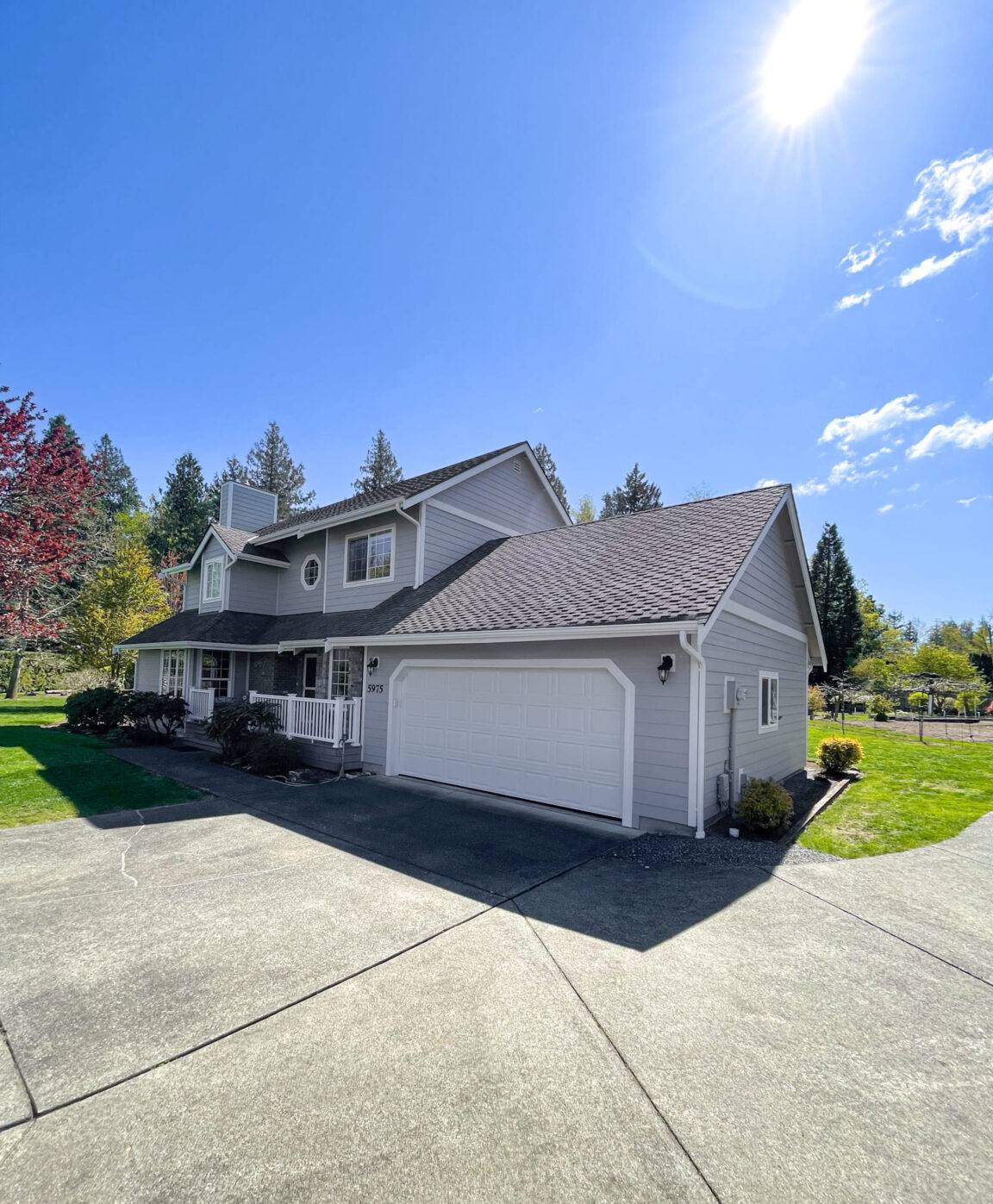
What This Climate Actually Does to a House
Three things drive almost every siding failure we see in this area, and they're worth naming plainly:
- Sustained moisture exposure. Western Washington doesn't get occasional storms so much as weeks of low-grade dampness. Any material that absorbs water, swells, or relies on paint film alone for protection is fighting a losing battle year-round.
- Moss and organic growth. Shaded north walls, tree cover, and constant humidity make moss and algae a near-permanent feature on siding that isn't engineered to resist it. Moss holds moisture against the wall surface, which accelerates whatever underlying problem already exists.
- Wind-driven rain. Rain in this region rarely falls straight down. It hits siding at an angle, which means lap joints, butt seams, and penetrations (hose bibs, light fixtures, vents) take on water that a calmer climate would never test.
None of this is unique to Lake Stevens as a single spot on the map — it's the reality across most of Snohomish County and the greater Puget Sound region. But it's exactly the reality James Hardie's HZ5 product line was engineered around.
Why James Hardie Is the Product We Install Here
We only install James Hardie fiber cement siding, and in a climate like this the reasoning is straightforward. Hardie's HZ5 formulation is engineered specifically for regions with high moisture exposure and freeze-thaw cycling — it's not a generic product with a marketing overlay, it's a different manufacturing recipe than what Hardie sells in dry climates.
A few specific things matter on a Lake Stevens house:
- It's fiber cement, not wood or wood-based. It won't swell, rot, or delaminate the way wood-based siding products can when they take on repeated moisture. Fiber cement is dimensionally stable wet or dry.
- ColorPlus factory finish. The color is baked on at the factory under controlled conditions, not brushed on-site. That finish resists fading and holds up to UV and moisture far longer than field-applied paint, and it comes with its own finish warranty separate from the product warranty.
- Non-combustible core. Not a climate factor specific to moisture, but a real advantage over vinyl and wood-based alternatives, and part of why we standardized on Hardie across the board.
- Surface texture resists moss anchoring better than porous or heavily grained surfaces. Moss still needs to be kept off any siding through normal maintenance, but Hardie's surface doesn't give organic growth the same foothold that untreated wood or degraded paint film does.
We'll say this plainly: Hardie siding still needs a correctly built wall behind it to perform. The product is only half the equation.
What a Correct Installation Actually Involves
This is where most siding problems actually originate — not from the siding material itself, but from installation shortcuts that don't show up until years later. On a Lake Stevens home, we pay particular attention to:
Weather-Resistive Barrier and Drainage Plane
Every wall needs a continuous weather-resistive barrier behind the siding, properly lapped and sealed at seams, with flashing integrated at every window, door, and penetration — installed shingle-style so water sheds outward and down, never inward. In a climate that gets this much wind-driven rain, a gap in this layer is where a wall starts failing from the inside out, long before the siding itself shows any sign of trouble.
Rainscreen / Drainage Gap
James Hardie's own installation instructions call for a drainage space behind the siding in high-moisture climates. This gap lets any water that does get past the siding drain and dry out instead of sitting against the wall sheathing. It's a detail that's easy to skip and impossible to see once the job is finished — which is exactly why it matters who's installing it.
Fastening and Clearances
Hardie specifies exact nailing patterns, fastener types, and minimum clearances from grade, roof lines, and other surfaces. Under-fastening leads to boards working loose in wind; incorrect clearance from grade or a roofline lets moisture wick into the bottom of a board long-term. These are manufacturer specs, not preferences, and following them is also what keeps the warranty valid.
Caulking and Joint Treatment
Butt joints, trim intersections, and penetrations need the right sealant, applied correctly, and Hardie's own guidance is increasingly toward minimizing caulked joints in favor of flashed and lapped details wherever possible — caulk is a maintenance item, not a permanent seal.
Signs an Older Lake Stevens Home May Need Attention
If your current siding is wood, vinyl, or an aging fiber cement job, a few signs tend to show up first in this climate:
| What You See | What It Usually Means |
|---|---|
| Dark green or black staining, especially on north-facing or shaded walls | Moss or algae growth holding moisture against the siding surface |
| Soft spots, bubbling paint, or visible swelling | Moisture intrusion behind the siding, often at a failed joint or flashing detail |
| Cracked or missing caulk at trim and window edges | A maintenance item that, left alone, becomes a moisture entry point |
| Visible gaps or warping at board seams | Fastening or expansion issues, common with wood-based products in wet climates |
| Peeling or chalky paint film | Field-applied finish reaching the end of its service life faster than a factory finish would |
None of these mean a full replacement is automatically necessary — but they're worth having looked at before they become structural.
How Our Process Works
The job runs the same way for every Lake Stevens property, whether it's a full re-side or a section replacement:
- On-site walkthrough. We look at the existing siding, wall assembly, problem areas, and anything specific to your lot — tree cover, sun exposure, drainage patterns — that affects the job.
- Written estimate. Scope, product line, color, and cost factors laid out clearly, with no pressure to decide on the spot.
- Tear-off and inspection. Once old siding comes off, we inspect the sheathing and framing underneath for any moisture damage that needs addressing before new siding goes on — this step matters more in this climate than almost any other.
- Weather barrier and drainage plane installation. Done to manufacturer spec, not shortcut, regardless of whether it's visible in the finished product.
- Hardie installation. Fastening, flashing, and joint treatment per James Hardie's published installation guidelines for this climate zone.
- Final walkthrough. We go over the finished job with you before calling it done.
Cost Factors on a Lake Stevens Job
Every house is different, but the variables that actually move the price on a local job are consistent:
| Factor | Why It Matters |
|---|---|
| Extent of tear-off and sheathing repair | Moisture damage found once old siding comes off adds labor and material before new siding can go on |
| Product line and profile | Lap siding, shingle-style panels, and trim/board-and-batten combinations carry different material and labor costs |
| Home size and wall complexity | Dormers, multiple gables, and cut-up wall lines increase both material waste and labor time |
| Access and site conditions | Slope, tree cover, and how close the house sits to property lines affect staging and scaffolding needs |
| Trim and detail work | Window and corner trim, fascia, and any custom detailing add to the scope beyond flat wall coverage |
We'll walk through where your project lands on each of these during the estimate — there's no reason to guess at a number before someone's actually looked at the house.
Maintenance That Actually Matters After Installation
Correctly installed Hardie siding is low-maintenance, not no-maintenance. In this climate, a short annual routine keeps it performing the way it's supposed to:
- Rinse siding annually, and more often on shaded or north-facing walls where moss tends to establish first
- Trim back vegetation and tree branches that keep siding sections damp and shaded longer than the rest of the house
- Check and refresh caulking at trim, window edges, and penetrations every couple of years
- Keep gutters and downspouts clear so water isn't sheeting down or pooling against wall sections
- Address any moss growth before it spreads — treat it, don't just pressure-wash and ignore the cause
Why It Matters That We Already Work in This Area
A crew that installs siding across Snohomish County day in and day out knows how Lake Stevens weather behaves through a full year, not just how it looks on the day of the estimate. That familiarity shows up in small decisions — where extra flashing attention is worth it, which wall orientations need it most, how local permitting and inspection typically go — that a crew unfamiliar with this specific climate might not think to prioritize. It also means we're not learning a new region's problems on your house; we've already seen how these details play out over years, not just during installation week.
If you're weighing a full re-side or want a second opinion on siding that's showing its age, we're happy to take a look and give you a straight assessment — no pressure, no inflated scope. Reach out for a free estimate using the form below.