 Snohomish
 Mill Creek's Climate Is Harder on Siding Than It Looks
Mill Creek sits in the Puget Sound lowlands, and that comes with a specific set of demands on exterior siding. Moisture-laden marine air moves through the region most of the year, rain is frequently wind-driven rather than falling straight down, and the tree canopy that makes this area attractive also keeps a lot of exterior walls shaded and damp for long stretches of fall and winter. None of that is exotic weather, but it is relentless, and siding that isn't built or installed for it shows the wear faster than homeowners expect.
Salt Air, Driving Rain, and a Long Moss Season
Salt-tinged marine air off Puget Sound accelerates the breakdown of paint films and unsealed wood fiber over time, even at some distance inland. Driving rain — pushed sideways by wind rather than falling vertically — finds every gap in flashing, caulking, and lap overlaps that vertical rain would never reach. And the extended damp season means moss, algae, and mildew get a real foothold on north-facing and shaded walls, especially under mature trees, which are common throughout Mill Creek. Siding here needs to shed water aggressively, resist moisture intrusion at the panel itself, and hold a finish that doesn't chalk or peel under repeated wet-dry cycling.
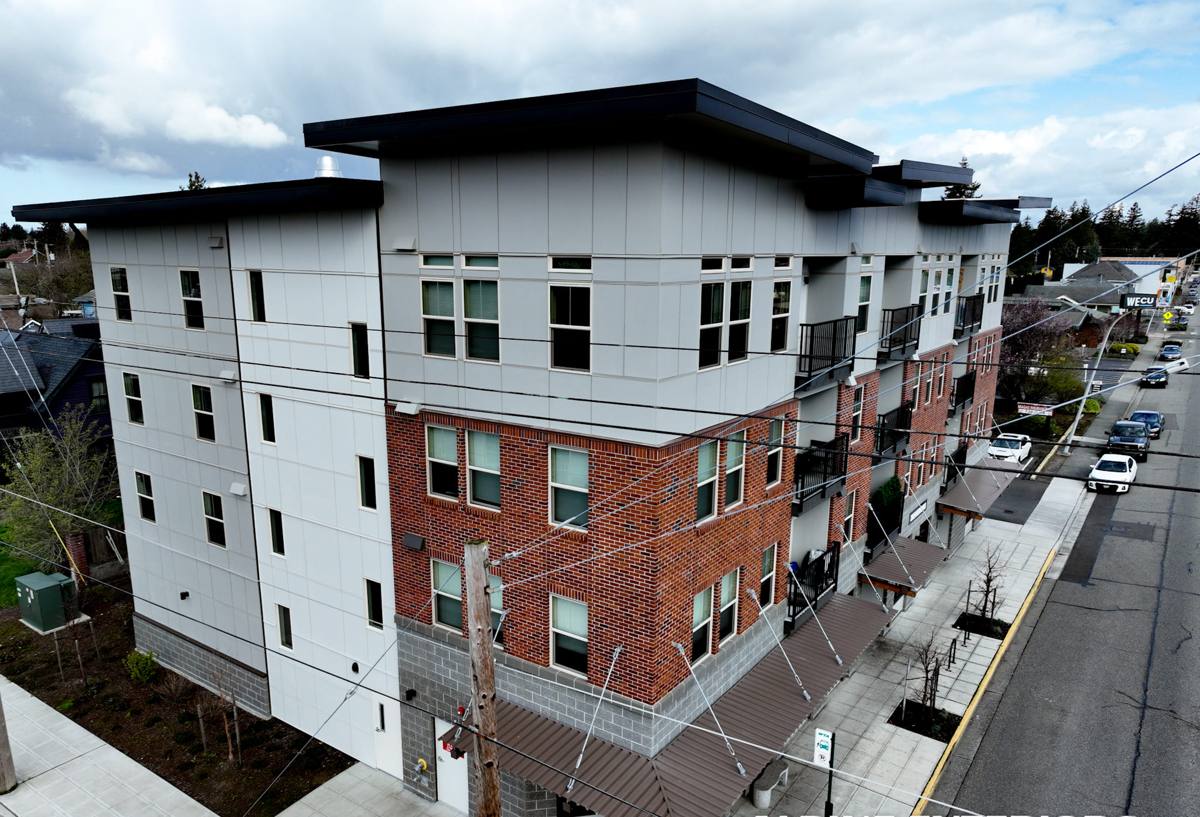
What Correct Siding Installation Actually Involves
Most siding failures aren't a materials problem — they're an installation problem. The panel or plank is only one layer of a system that has to work together to keep water out and let the wall assembly dry when it does get wet.
The System Behind the Panels
A correct installation includes a continuous weather-resistive barrier behind the siding, properly lapped and taped at seams; flashing at every horizontal transition, window head, and door — not caulk used as a substitute for flashing; a drainage gap so bulk water can escape instead of sitting against the sheathing; and fastening that follows the manufacturer's nailing pattern and clearance requirements rather than whatever gets the panel to stay up fastest. Skipping any one of these doesn't usually cause a visible problem on day one — it shows up two, five, or ten years later as rot, staining, or a panel that's cupping at the edges.
Where Mistakes Usually Hide
The most common failure points on siding jobs, regardless of who installed them, are missing or undersized flashing above windows and doors, caulk-only seams where flashing should have been used, face-nailing that splits or over-drives fasteners, and siding installed too close to grade, decks, or roof lines with no clearance for water to drain away. On a rainy-climate job, these aren't cosmetic issues — they're the difference between siding that lasts decades and siding that needs re-work inside of five years.
Why We Install Only James Hardie Fiber Cement
Snohomish Siding installs James Hardie fiber cement exclusively. We don't install vinyl, LP SmartSide, cedar, primed spruce, Cemplank, or Allura. That's not a marketing position — it's a standard we hold because of how these products actually perform once they're on a wall in a wet marine climate over the long term.
Built for This Climate Zone
James Hardie engineers region-specific product lines, and the HZ5 line is formulated for climates like ours — moisture-heavy, with real seasonal wet-dry cycling. Fiber cement doesn't absorb water the way engineered wood products can at cut edges and seams, and it won't combust, which matters given how much of the Pacific Northwest sits in increasing wildfire-risk mapping. The ColorPlus factory finish is baked on under controlled conditions rather than field-applied, which means better adhesion and color consistency than a site-painted finish, and it comes with its own finish warranty separate from the substrate warranty.
The Honest Trade-Offs of the Alternatives
Vinyl is inexpensive and low-maintenance, but it expands and contracts significantly with temperature swings, can warp or crack in impact, and isn't repaintable if a homeowner wants a different color down the road. Engineered wood products like LP SmartSide perform reasonably well when installed and maintained exactly to spec, but they're wood-based, which means cut edges and any breach in the factory coating are vulnerable points for moisture absorption in a climate that gives wood a lot of chances to get wet. Cedar and primed spruce are real wood — beautiful, but they demand ongoing refinishing, and in a long wet season that maintenance schedule is unforgiving if it slips. We'd rather put one product on a home that we know performs and stand fully behind it than offer several and hedge our recommendation.
| Factor | James Hardie Fiber Cement | Vinyl | Engineered Wood (LP SmartSide) |
|---|---|---|---|
| Combustibility | Non-combustible | Combustible | Combustible |
| Moisture behavior at cut edges/seams | Resists moisture absorption | Not moisture-absorbent, but seams can gap | Vulnerable if coating is breached |
| Dimensional stability | Minimal expansion/contraction | Expands/contracts noticeably with temperature | Moderate |
| Factory finish | Baked-on ColorPlus finish, repaintable | Color molded through, not repaintable to a new color easily | Factory primed/finished, repaintable |
| Typical maintenance | Occasional wash, caulk checks | Occasional wash | Coating inspection and touch-up over time |
Our Installation Process for Mill Creek Homes
The process is the same discipline on every home, but a few steps get extra attention here because of the tree cover, shaded exposures, and wet-season timing common to this area.
- On-site assessment. We look at wall exposures, existing moisture or rot damage, roofline and deck intersections, and how much shade and tree canopy a given elevation gets — north- and west-facing walls in Mill Creek often need extra attention.
- Removal and sheathing inspection. Old siding comes off and the sheathing underneath gets inspected before anything new goes on. Hidden water damage gets addressed at this stage, not covered over.
- Weather-resistive barrier and flashing. A continuous, properly lapped barrier goes on first, with flashing detailed at every window, door, and horizontal transition — this is the layer that actually keeps driving rain out.
- Hardie installation to manufacturer spec. Panels or lap siding go on with correct fastener spacing, clearances from grade and roof lines, and factory-specified overlaps.
- Caulking, touch-up, and finish check. Joints get sealed with the correct sealant, and any factory finish that needs field touch-up is matched and applied properly.
- Final walkthrough. We go over the completed job with the homeowner before calling it done.
What Drives Cost on a Mill Creek Siding Project
Every home is different, but the same handful of factors move the price up or down on most projects in this area.
| Cost Factor | Why It Matters |
|---|---|
| Home size and number of stories | More wall area and taller elevations mean more material and labor, plus added staging for upper stories |
| Condition of existing sheathing | Rot or water damage found during tear-off adds repair work before new siding can go on |
| Siding profile chosen | Lap siding, panel systems, and shingle-style Hardie products differ in material and install time |
| Trim and architectural detail | Corner boards, window/door trim, and accent bands add labor even on a straightforward wall |
| Site access | Mature trees, slopes, and tight side yards common in Mill Creek can slow staging and material handling |
As a broad range, professionally installed James Hardie siding in this region typically runs in the low-to-mid teens per square foot installed, with the final number depending on the factors above. We'll always walk a specific home before giving a real number rather than quoting off a general estimate.
Signs Your Siding Needs Replacing, Not Just Patching
- Soft or spongy spots when you press on the siding, especially near the bottom edges or corners
- Moss or algae that comes back within weeks of cleaning, particularly on shaded or north-facing walls
- Paint that's peeling, chalking, or failing across large sections rather than one isolated spot
- Visible warping, buckling, or gaps opening up between boards or panels
- Staining or discoloration that tracks below window sills or roof transitions — a sign water is getting behind the siding, not just sitting on top of it
- A noticeable jump in heating costs with no other explanation, which can point to a compromised wall assembly
Why a Crew That Already Works Mill Creek Matters
Siding installation isn't identical everywhere, and a crew that regularly works this area brings a few practical advantages. They already understand the permitting expectations that apply in Snohomish County, they've seen how the tree canopy and shaded exposures common here affect moss and moisture patterns wall by wall, and they know how to sequence a job around the wetter months instead of getting caught mid-installation by a stretch of driving rain. That familiarity shows up in fewer surprises during the job and a finished install that's detailed for the conditions the home will actually face, not a generic install pulled from a different climate.
Questions Worth Asking Before You Commit
- Is the siding you're proposing engineered for a wet marine climate, or is that just what you happen to install?
- Will you show me the flashing detail plan before the job starts, not just after?
- What's covered under the manufacturer's warranty versus your own workmanship warranty, and is either transferable if I sell the home?
- How do you handle sheathing repair if you find water damage once the old siding comes off?
- Can I see the manufacturer's specified fastening and clearance requirements for my home's siding profile?
If your Mill Creek home's siding is showing its age or you're planning ahead for a replacement, we're happy to walk the property and give you a straightforward, no-pressure estimate — use the form below to get started.