 Snohomish
 Mill Creek's Climate Puts Decks to the Test
A deck in Mill Creek doesn't fail because of one big storm. It fails slowly, from months of standing moisture, moss that never fully dries out, and wood movement from constant wet-dry cycling. Western Washington's marine climate means long stretches of drizzle followed by damp, shaded mornings where a deck surface can stay wet for days at a time. Add in the driving rain that comes sideways during fall and winter storms, and you have conditions that punish any deck built with the wrong materials or the wrong details.
Snohomish County homes, including the established neighborhoods around Mill Creek, tend to have mature tree cover and landscaping that keeps decks shaded and slow to dry. That's good for privacy and curb appeal, but it's exactly the environment where moss, algae, and wood rot get a foothold. A deck built the same way you'd build one in a dry climate simply won't hold up the same way here.
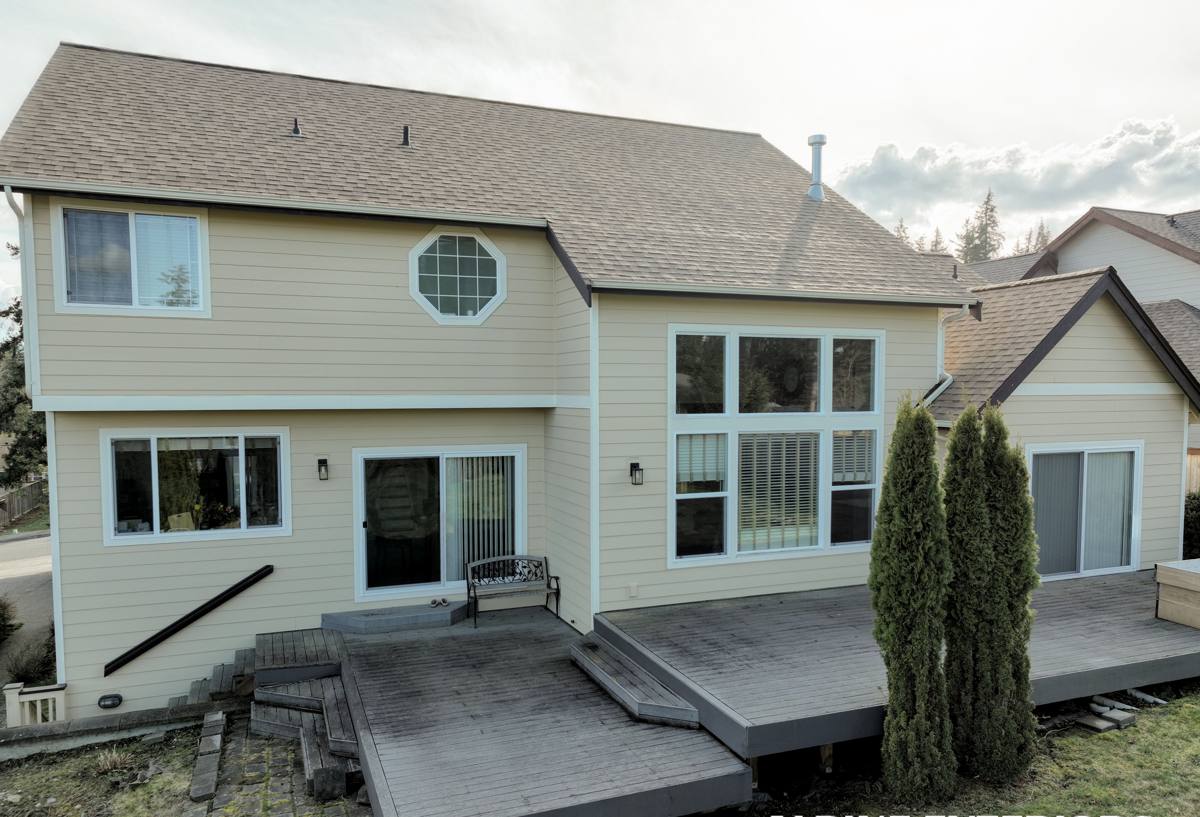
What a Properly Built Deck Requires Here
The visible parts of a deck — decking boards, railings, stairs — get all the attention, but the parts that determine whether a deck lasts 10 years or 30 are underneath and out of sight. In this climate, we treat the structural details as non-negotiable, not upgrades.
Framing and Fasteners That Won't Corrode
Pressure-treated lumber used for framing today is treated with a higher concentration of copper than older lumber, which means it's more corrosive to standard steel fasteners and hardware. Pair that with our wet season and you get a recipe for rusted, weakened connections within a few years if the wrong screws or joist hangers are used. We build with stainless steel or coated fasteners rated for contact with modern treated lumber, and we don't mix hardware types on a single structure.
Footings, Ledger Boards, and Drainage
Footings need to be sized and set below frost depth per local code, on undisturbed soil, not backfill. Where a deck attaches to the house, the ledger board connection is the single most common point of failure we see on older decks — improper flashing lets water track behind the siding or into the rim joist, and rot sets in where you can't see it until the deck starts to feel spongy. Proper ledger flashing, a gap between decking boards and the house, and sloped grading underneath the deck to move water away from the foundation are basic requirements, not optional add-ons.
Choosing a Decking Material for Long-Term Performance
There's no single "correct" decking material — the right choice depends on budget, how much upkeep you want to do, and how much shade and moisture the deck sees. Here's how the common options actually perform in a wet, moss-prone climate like ours.
| Material | Moisture Behavior | Maintenance | Typical Lifespan |
|---|---|---|---|
| Pressure-treated wood | Absorbs and releases moisture; prone to cupping and splitting if not sealed | Annual cleaning and re-sealing recommended | 10-15 years with upkeep |
| Cedar | Naturally rot-resistant but still needs finish to shed water long-term | Regular cleaning and periodic refinishing | 15-20 years with upkeep |
| Composite decking | Doesn't absorb water like wood; some capped products resist mold better than others | Periodic washing to prevent surface algae/moss buildup | 25-30 years |
| PVC/synthetic decking | Fully non-absorbent; least affected by standing moisture | Occasional cleaning | 25-30+ years |
We're straightforward with clients about trade-offs. Wood costs less up front and has a natural look many homeowners want, but it demands real maintenance discipline in this climate — skip a year of sealing and you'll feel it. Composite and PVC cost more initially and some lower-grade composite products can still trap moisture and grow mildew on their surface if they're not the capped, solid-core type, so we're selective about which composite products we'll install and stand behind.
The Moss and Algae Problem on Wet-Season Decks
Moss doesn't just grow on roofs here — it takes hold on decking, especially on the shaded side of a house or under tree canopy, anywhere airflow is limited. Once moss establishes itself between deck boards or in the wood grain, it holds moisture against the surface and accelerates rot underneath. On composite decking, algae shows up as a greenish film rather than moss, but the underlying cause is the same: moisture sitting on a surface that doesn't dry out fast enough between rains.
Board spacing matters more than most homeowners realize. Gaps that are too tight trap debris and slow drying; gaps that are properly sized let air move and water drain through instead of pooling. Deck orientation and any structures built over or near the deck also affect how much sun and airflow it gets during our shorter winter days, which is worth thinking through at the design stage rather than after the moss shows up.
Our Custom Deck Process, Start to Finish
- On-site consultation: We walk the property, look at drainage, sun exposure, and how the deck will connect to the house, and talk through how you actually plan to use the space.
- Design and material selection: We put together a layout and material plan that fits your budget and maintenance preferences, with honest pros and cons for each option.
- Permitting: We handle the permit application and any required structural details so the project meets current code before a shovel goes in the ground.
- Framing and structural work: Footings, framing, ledger flashing, and hardware go in first, built to hold up under our wet-season loads for decades.
- Decking, railings, and finish work: Surface material, railings, stairs, and any lighting or finish details are installed and inspected.
- Final walkthrough: We go over care and maintenance specific to the material you chose, so you know what upkeep to expect going into your first wet season.
Permits, Codes, and the Local Building Department
Mill Creek is its own incorporated city within Snohomish County, and most attached decks — as well as many freestanding ones above a certain height — require a building permit before construction starts. Requirements typically cover guardrail height, baluster spacing, stair rise and run, and structural connections back to the house. If your property is part of a homeowners association, as many neighborhoods in and around Mill Creek are, there may also be design review for materials, colors, or footprint before the county or city permit is even pulled.
We handle the permit process as part of the job rather than leaving it to the homeowner. Skipping a required permit can create real problems later — from failed home inspections at resale to insurance complications if there's ever storm or structural damage to an unpermitted structure.
Cost Factors for a Mill Creek Deck Project
Every deck is priced around its own footprint and details, but the same handful of factors drive cost up or down on nearly every project we build in this area.
| Factor | Why It Affects Cost |
|---|---|
| Decking material | Pressure-treated wood costs less upfront than composite or PVC, which cost more but need less ongoing maintenance |
| Deck height and grade | Elevated decks need more substantial framing, footings, and often guardrails and stairs |
| Structural attachment | Attached decks require ledger flashing and structural tie-in work that freestanding decks don't |
| Railings and stairs | Cable, glass, and custom railing styles cost more than standard baluster railings |
| Site access and grading | Sloped lots or limited equipment access can add labor time |
| Permitting and HOA review | Additional design review or engineering can add time and cost to the front end of a project |
Keeping Your Deck Healthy Season After Season
Whatever material you choose, a little seasonal attention goes a long way toward stopping moss and rot before they start. We give every client a maintenance rundown specific to their decking material, but the basics apply across the board:
- Sweep debris and standing leaves off the deck regularly, especially in fall
- Clean moss and algae off the surface before it spreads, using a deck-safe cleaner rather than a pressure washer set too aggressively
- Check gaps between boards each year to make sure they haven't clogged with debris that traps moisture
- Inspect railings and stair connections annually for any looseness or corrosion at fastener points
- Reseal wood decking on a regular schedule rather than waiting until it looks weathered
- Look under the deck occasionally for signs of moisture pooling or rot at the ledger board and posts
Why Hire a Crew That Already Works in Mill Creek
A deck built by a crew unfamiliar with this specific climate and jurisdiction tends to show its weaknesses within the first few wet seasons — undersized drainage, the wrong fastener choice, or a design that traps moisture in ways that weren't obvious on a sunny installation day. Crews who regularly work in Mill Creek and the surrounding Snohomish County area already know what the local building department expects for permits and inspections, understand how neighborhood HOA guidelines typically apply to deck projects, and build with the area's rain and shade patterns in mind from the design stage forward. That local knowledge shows up less in what the deck looks like on day one and more in how it holds up ten wet seasons later.
If you're planning a new deck or replacing one that's showing its age, we're happy to walk your property and talk through what makes sense for your home. Reach out for a free, no-pressure estimate using the form below.