 Snohomish
 Building New in Granite Falls: What the Climate Asks of Your Windows
Granite Falls sits up against the Cascade foothills east of Snohomish, in a part of Snohomish County that gets more shade, more standing moisture, and a longer wet season than the lowland areas closer to Puget Sound. New construction here isn't just "install windows and move on" — it's the one chance to get the water management right before siding, trim, and interior finish cover everything up. A window that's flashed wrong on a new build doesn't show a problem for a year or two. Then it shows up as a stain on drywall, a soft spot in sheathing, or mildew at a sill that never should have gotten wet in the first place.
A Wetter, Shadier Microclimate Than Downtown Snohomish
Even within the same county, Granite Falls runs cooler and damper than the valley floor. Tree cover is heavier, lots tend to be larger and more wooded, and homes often sit in partial shade for much of the day. That combination — driving rain off the foothills plus limited sun exposure to dry things out — is exactly the setup that grows moss and keeps building materials wet longer after a storm passes. Windows on a new build need to be selected and installed with that reality in mind, not treated like it's the same job as a house going up in a drier, more open part of the region.
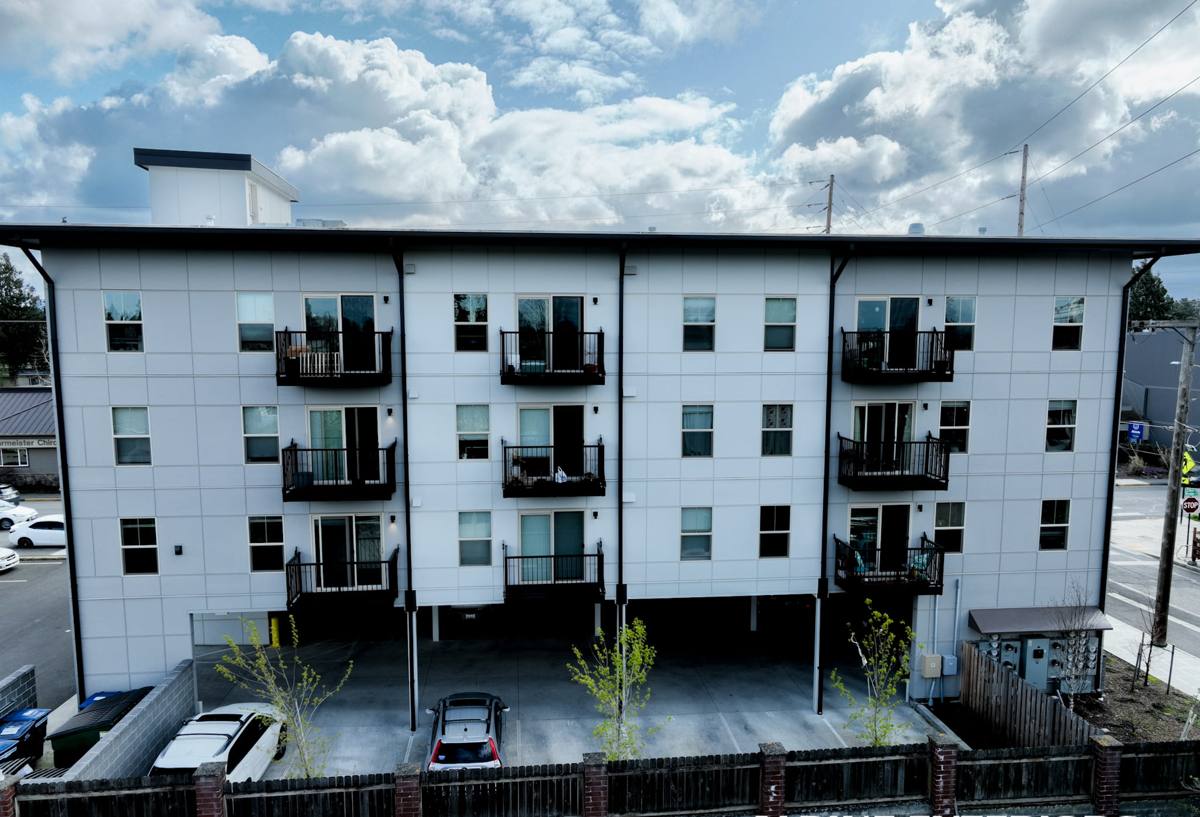
New-Construction vs. Replacement Windows — Why the Distinction Matters
New-construction windows and replacement windows are not interchangeable products, and the installation method is different enough that mixing them up on a build causes real problems. Getting this right at the framing stage saves a lot of grief later.
Nail Fin (Flange) Windows
Most new-construction windows use a nailing flange around the perimeter of the frame. The flange gets fastened directly to the sheathing before the weather-resistive barrier (house wrap) and siding go on, which lets the flashing and wrap lap over the top and sides of the window in a shingle-style sequence that sheds water downward and outward. This is the correct approach for a home being built from scratch, and it's a very different sequence than a replacement window, which gets set into an existing opening after the siding is already there.
Sequencing With Your Builder
Window installation on a new build has to line up with the general contractor's schedule — framing complete, rough openings checked for square and level, house wrap started, then windows set before siding begins. If that sequence gets rushed or windows go in out of order with the wrap and flashing, you end up with gaps in the water-management layer that are nearly impossible to fix correctly once the siding is up. We coordinate directly with builders and framers on timing rather than showing up whenever it's convenient for us.
The Water-Management Details That Make or Break the Install
The window unit itself matters, but most leaks trace back to the details around it — the flashing, not the glass.
Sill Pan Flashing
A sill pan creates a sloped, sealed pocket under the window that catches any water that gets past the frame and directs it back outside instead of into the wall. On a foothill lot with a long rainy season, skipping or improvising this step is one of the most common causes of hidden rot we see traced back to a build that was rushed.
Head Flashing and Drip Caps
Flashing above the window needs to direct water out and away from the top of the frame, lapped correctly under the house wrap so gravity does the work. Done right, it's invisible once siding is on. Done wrong, wind-driven rain finds its way behind the flashing and tracks down inside the wall cavity.
Integrating With House Wrap and Siding
Every layer — sill pan, window flange, jamb flashing, head flashing, house wrap — has to overlap in the right order, sealed with the right tape or sealant for the substrate. We follow the window manufacturer's installation instructions to the letter, because that's also what keeps the manufacturer's warranty intact if something ever does go wrong.
Choosing Frame Material for a Foothill, High-Moisture Site
Frame material affects how a window handles years of damp, shaded exposure and how much upkeep it asks of the homeowner. There's no single right answer for every project — it depends on budget, the home's design, and how much maintenance the owner wants to take on.
| Frame Material | Moisture Handling | Maintenance | Typical Cost Tier |
|---|---|---|---|
| Vinyl | Won't rot; performs well in wet climates | Low — occasional cleaning | Lower |
| Fiberglass | Very stable; resists warping and moisture damage | Low | Mid to higher |
| Wood-clad | Good if detailed correctly, but the interior wood core is vulnerable if the cladding or seals ever fail | Higher — finish and seals need periodic attention | Higher |
| Bare wood | Most vulnerable to a long wet season without diligent upkeep | Highest | Varies |
Our standard recommendation for shaded, damp lots like much of Granite Falls leans toward vinyl or fiberglass, simply because they hold up with the least amount of homeowner maintenance. If a homeowner or builder wants a wood-clad look for design reasons, that's a legitimate choice too — we just make sure the installation and flashing details are done conservatively, since that product has less margin for error in a wet, shaded setting.
Energy Performance and Washington Energy Code
Washington's state energy code sets performance requirements for new-construction glazing, and those requirements are part of what your building department checks before final approval. We work from current code minimums as a floor, not a ceiling — most homeowners building new in this area end up choosing windows that beat the minimum, because the marginal cost difference is small compared to the lifetime energy and comfort difference.
| Factor | Why It Matters Here |
|---|---|
| U-factor | Lower U-factor means less heat loss through the glass and frame — matters through a long, cool, wet Snohomish County winter |
| Solar heat gain coefficient (SHGC) | Affects how much solar warmth comes through; less critical on shaded, tree-covered lots than on open, south-facing ones |
| Air leakage rating | Tighter seals reduce drafts and keep driving rain from finding gaps |
| Glazing package | Double or triple pane with low-E coatings — your builder or plans may already specify a target |
Moss, Algae, and Long-Term Upkeep in a Shaded Lot
Frame Material and Growth
Moss and algae need shade and moisture to take hold, and a heavily treed Granite Falls lot provides both for a good part of the year. Smooth, non-porous frame materials like vinyl and fiberglass don't give moss anything to grip onto the way a textured or unfinished wood surface can, which is part of why we lean toward them on shaded sites.
Placement and Drainage Planning
Where windows sit relative to roof lines, overhangs, and nearby trees affects how much standing moisture they see over the years. During design and framing review, we'll flag anything that looks likely to trap water — a window tucked under a valley with no kick-out flashing, for instance — so it can be addressed while it's still cheap and easy to fix, rather than after the siding is closed in.
Our New-Construction Window Process in Granite Falls
- Plan review: We look at the window schedule and rough opening sizes against the actual framing before ordering anything.
- Product selection: We help match frame material and glazing package to the site's exposure, budget, and any energy code targets.
- Lead-time coordination: Custom sizes and certain frame materials take weeks to arrive — we order early enough that the build schedule doesn't stall waiting on windows.
- Schedule coordination with the builder: Windows go in at the right point in the framing-to-siding sequence, not before the opening is ready and not after wrap is already closed up wrong.
- Flashing and installation: Sill pans, jamb and head flashing, and house wrap integration done to manufacturer specs.
- Quality check: Every opening gets checked for level, square, proper shimming, and a clean seal before we call it done.
- Documentation: Homeowners get manufacturer warranty paperwork and a record of what was installed, for their own files and for resale down the line.
Why Hire a Crew That Already Works Granite Falls
New construction in a foothill community brings its own logistics — longer driveways, wooded lots with limited staging space, and homes spread out enough that a quick drop-in visit isn't always simple. A crew that already works this part of Snohomish County knows what to expect from the terrain, has a working relationship with local builders and framers, and isn't guessing at how the local climate should shape material choices and flashing details. That familiarity shows up as fewer surprises during the build and fewer callbacks after it.
It also matters for supply timing. Window lead times vary by manufacturer and frame material, and a crew that orders for this area regularly has a better sense of realistic timelines — which helps keep a new build on schedule instead of sitting open to the weather longer than it needs to.
What to Ask Before You Sign a New-Construction Window Contract
- Does the installer follow the window manufacturer's written installation instructions, and will they provide the warranty paperwork?
- Who is responsible for sill pan flashing and head flashing — the window installer, the framer, or the siding crew? It should be spelled out, not assumed.
- What frame material is being quoted, and why, given the site's sun and shade exposure?
- What are the U-factor and SHGC ratings on the quoted glazing package, and do they meet or beat current code minimums?
- How will installation be coordinated with the rest of the build schedule so windows go in at the right point in the sequence?
- What's the realistic lead time on the specific windows being quoted, and how does that fit the overall build timeline?
If you're building new in Granite Falls and want the window work done right the first time — correctly flashed, matched to the site's shade and moisture exposure, and coordinated cleanly with your builder's schedule — we're happy to walk the plans with you. Reach out for a free, no-pressure estimate using the form below.