 Snohomish
 Why Ferndale Siding Has to Work Harder Than Siding Inland
Homes near the water in Whatcom County deal with a combination of stressors that inland siding rarely sees at the same time: salt-laden air off the coast, wind-driven rain that hits walls sideways instead of falling straight down, and a moss season that can run eight or nine months out of the year in shaded, damp spots. Any one of these will shorten the life of the wrong siding material. Together, they turn a marginal product or a marginal installation into a five-to-ten-year problem instead of a thirty-year investment.
This page is about one job, done right, in one place: siding installation for Ferndale homes, sized to what this specific stretch of coastline actually does to a wall over time.
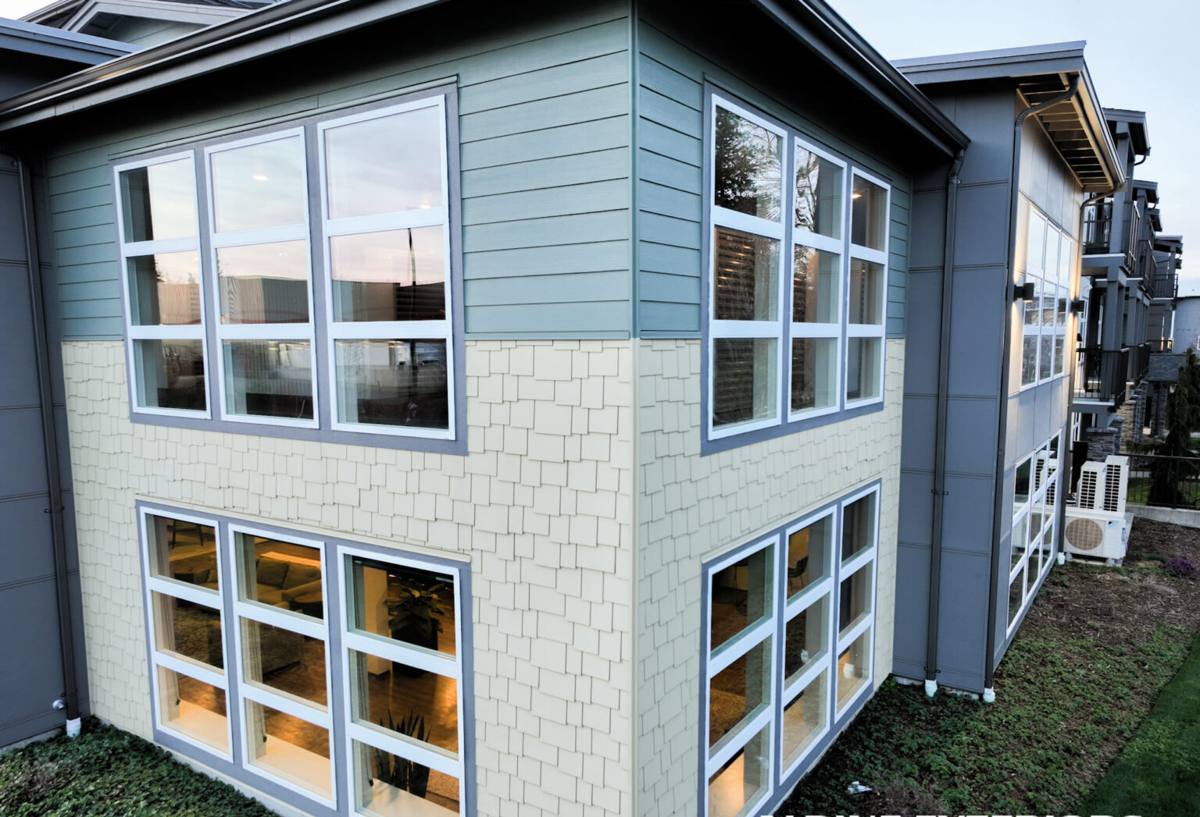
What Salt Air Actually Does to Siding and Trim
Salt air isn't just "humid air." Airborne salt is corrosive and hygroscopic — it draws moisture to any surface it lands on, including fasteners, flashing, and the face of the siding itself. On homes with any coastal exposure, this shows up as:
- Fastener corrosion and staining where the wrong nail or screw was used
- Premature paint and finish breakdown on painted wood or lower-grade composite products
- Accelerated corrosion at any exposed metal flashing, trim, or hardware
- Faster buildup of grime and biological growth in corners that stay damp
None of this is exotic — it's the same reason boats and dock hardware near the water need marine-grade materials. A siding system for a Ferndale home needs the same mindset: corrosion-resistant fasteners, properly rated trim, and a wall assembly that manages moisture instead of trapping it.
Driving Rain: The Problem Most Siding Jobs Get Wrong
Straight-down rain is easy for almost any siding to shed. Driving rain — rain pushed sideways by wind off open water — is a different problem. It gets forced up under laps, into gaps around trim, and behind panels that were installed with tight or missing clearances. Most siding failures we see on coastal-exposed homes aren't failures of the siding material itself; they're failures of the details around it:
- Butt joints and panel seams that weren't flashed or sealed correctly
- Missing or under-sized weep paths at the bottom of the wall
- Window and door trim that wasn't integrated with a proper water-resistive barrier
- Panels fastened too tight to the wall, with no room for the assembly to dry
A siding installation built for driving rain treats the water-resistive barrier, flashing, and drainage plane as the actual weatherproofing system — the siding is the durable, good-looking layer on top of it, not the only line of defense.
Moss Season and What It Means for Material Choice
Long moss season in this part of Washington isn't just a roof problem. North-facing walls, shaded elevations, and anything under overhanging trees stay damp for extended stretches, and that dampness supports moss, algae, and mildew growth on siding faces — especially on porous or absorbent materials. Siding that can't tolerate sustained moisture contact without swelling, softening, or feeding growth is a poor match for these conditions. The right material needs to be dimensionally stable when wet, resistant to moisture absorption at the core, and able to hold a factory finish that doesn't give biological growth an easy foothold.
Why We Install Only James Hardie Fiber Cement Siding
We standardized on James Hardie fiber cement siding for every job we take on, including Ferndale, and we don't install vinyl, LP SmartSide, Cemplank, Allura, primed spruce, or cedar. That's not a marketing position — it's a decision based on what holds up under salt air, driving rain, and moss season without turning into a maintenance project for the homeowner.
Fiber cement is non-combustible and doesn't swell, rot, or delaminate the way wood-based products can when they take on repeated moisture exposure. Hardie's HZ product lines are engineered for specific climate zones — for wet, marine-influenced regions like this one, that means a formulation built to resist moisture-related damage rather than a one-size-fits-all product. The factory-applied ColorPlus finish is baked on under controlled conditions, which gives it better adhesion and fade resistance than field-applied paint, and it holds up better against the grime and biological growth that coastal, shaded walls tend to collect.
We're not saying every other product is unusable everywhere — we're saying that for the specific combination of conditions Ferndale homes face, we won't put our name behind an installation using materials we don't think will hold up to spec over decades, not years.
What We Give Up by Not Installing Other Products
Being honest about trade-offs: some alternative products cost less up front, and some homeowners prefer the traditional look of real wood siding regardless of maintenance demands. We're not the right contractor for a homeowner who has decided on one of those materials. We're the right contractor for a homeowner who wants a fiber cement system installed correctly for this climate, backed by a manufacturer warranty that's meaningful because the installation was done to spec.
Choosing the Right Hardie System for This Location
| Factor | Why It Matters in Ferndale | What We Do About It |
|---|---|---|
| Coastal/salt exposure | Corrodes standard fasteners and metal trim over time | Use corrosion-resistant fasteners and flashing rated for coastal exposure |
| Driving rain | Forces water into laps, joints, and trim gaps | Correct clearances, flashed joints, and a continuous water-resistive barrier |
| Shaded/damp walls (moss zones) | Sustained moisture supports moss and mildew growth | Panel and lap siding with factory ColorPlus finish, installed with drainage in mind |
| Wind exposure on open lots | Increases uplift and fastening demands | Fastener spacing and type matched to Hardie's published specs for the exposure |
| Existing trim and window details | Old flashing is a common hidden failure point | Inspect and, where needed, replace flashing as part of the siding job, not after |
Panel style (lap, board-and-batten, or shingle profile) is a look and budget decision. The moisture-management details above apply regardless of which Hardie profile a homeowner chooses — they're not optional add-ons for "coastal" jobs, they're standard practice for any home in this part of Whatcom County.
What a Correct Installation Actually Involves
Tear-Off and Wall Inspection
We remove the old siding and inspect the sheathing and framing underneath before anything new goes on. Hidden rot or old moisture damage needs to be addressed at this stage — covering it up with new siding doesn't fix it, it just hides it for a few more years.
Water-Resistive Barrier and Flashing
A continuous, properly lapped water-resistive barrier goes on first, with flashing integrated at every window, door, and penetration so water is directed out and down, never trapped behind the siding.
Fastening to Hardie's Published Specs
Fastener type, spacing, and placement follow James Hardie's installation instructions for the specific product and exposure — this is what keeps the manufacturer's warranty valid and what keeps panels secure through the wind this area gets off open water.
Trim, Joints, and Finish Details
Joints and butt seams get flashed or treated per spec rather than just caulked and painted over. Trim is installed to shed water away from the wall, not funnel it toward a seam.
Our Process, Start to Finish
- Free on-site estimate: we look at your home's actual exposure — sun, shade, wind, and water — not just square footage
- Product and color selection from Hardie's line-up, matched to the exposure factors above
- Written scope covering tear-off, any needed repairs, and the full installation spec
- Installation following manufacturer instructions, with flashing and moisture details treated as core work, not extras
- Final walkthrough so you know what was done and why
Signs Your Current Siding Is Already Struggling
- Soft spots or visible swelling, especially near the bottom of walls or under windows
- Persistent moss, algae, or dark staining that returns soon after cleaning
- Paint that's peeling, chalking, or failing faster than it used to
- Visible rust streaks below fasteners or metal trim
- Gaps, warping, or panels that have pulled away from the wall
- Rising energy bills that may point to a wall assembly no longer sealing properly
Any of these on a Ferndale home is worth a look before the next wet season, since coastal moisture problems tend to accelerate once they start rather than stay static.
Why a Crew That Already Works This Area Matters
Installing siding correctly for salt air, driving rain, and a long moss season isn't a different skill set — it's the same James Hardie installation done with more attention to the details that matter most here: fastener choice, flashing, and drainage. A crew that regularly works homes in this part of Whatcom County has already seen which details get skipped on lower-bid jobs and which ones actually determine whether the siding still looks and performs well in fifteen years. That's the standard we hold every Ferndale installation to.
If you're weighing a siding replacement or just want an honest look at how your current siding is holding up, we're happy to come take a look. The estimate is free, there's no pressure, and you'll get a straight answer about what your home actually needs — use the form below to get started.