 Snohomish
 Why Ferndale Roofs Wear Out Differently Than Roofs Inland
A roof in Ferndale doesn't fail the same way a roof fails on the dry side of the state, and it doesn't even age the same way a roof fifty miles inland does. Ferndale sits close enough to the water that salt-laden air is a constant, low-grade stressor on fasteners, flashing, and metal components. Add in the driving, wind-pushed rain that comes off the Strait through the fall and winter, and you've got moisture finding its way into laps and seams that would stay dry in a calmer climate. Then there's moss season, which in this part of Whatcom County isn't really a season at all — it's most of the year, thanks to shade, humidity, and mild temperatures that never dry a north-facing slope out for long.
None of that means Ferndale homes need exotic materials or complicated systems. It means the ordinary parts of a roof — underlayment, flashing, ventilation, fastener choice — have to be done correctly, because there's less margin for a shortcut here than there would be somewhere drier. We've replaced enough roofs in this area to know exactly which details matter and which ones are just upsells.
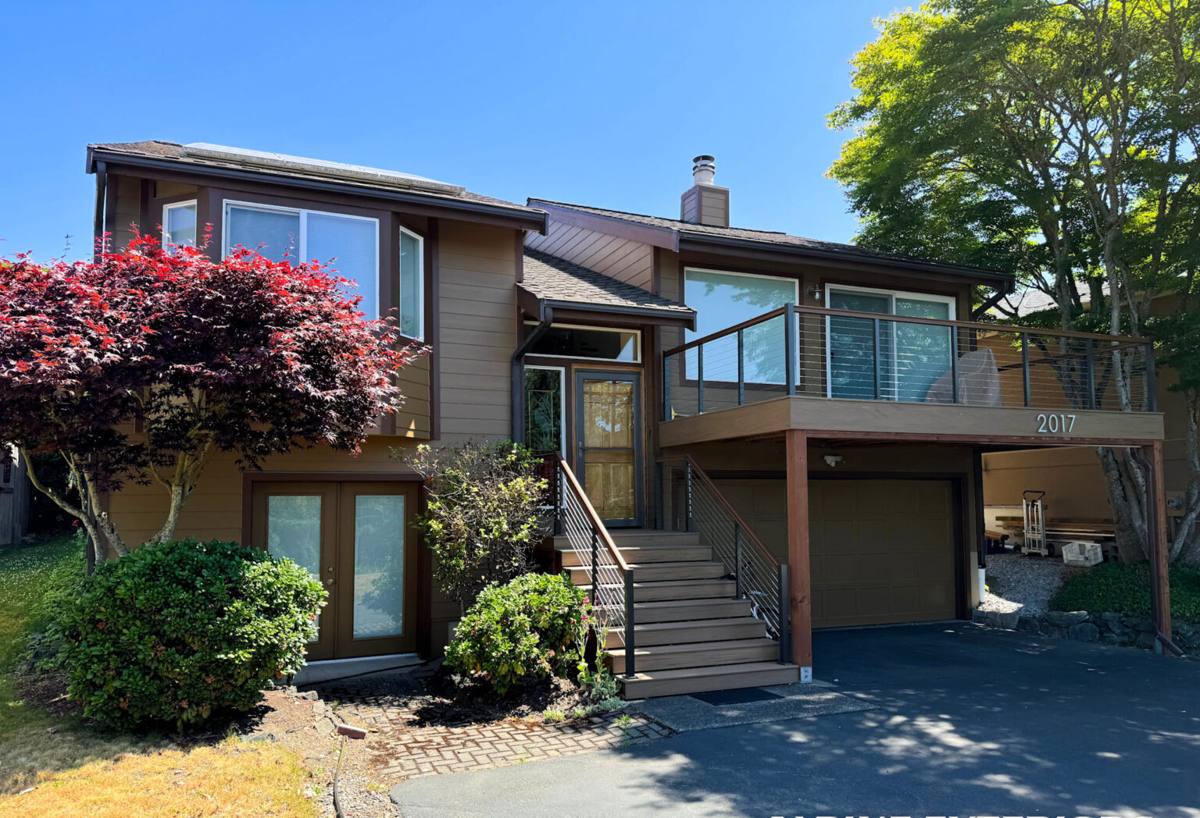
Signs a Ferndale Roof Is Ready for Replacement
Most homeowners call us after noticing one obvious problem, but roofs usually give several warning signs before that point. Worth checking for:
- Granules collecting in gutters or at downspout outlets — a sign the shingle surface is wearing thin
- Shingles that are cupping, curling at the edges, or visibly lifting in wind
- Dark streaking or thick moss growth, especially on shaded north- and west-facing slopes
- Soft spots in the decking felt when walking the roof, or sagging visible from the ground
- Daylight visible through the attic roof boards, or damp insulation below the roofline
- Repeated flashing leaks around chimneys, vents, or skylights despite patching
- A roof that's 20+ years old, regardless of appearance — most asphalt systems in this climate are near end of life by then
Any one of these alone might just call for a repair. Two or three together, especially combined with age, usually means it's cheaper in the long run to replace than to keep patching.
What a Correct Roof Replacement Actually Involves
Full Tear-Off, Not a Layover
We remove the existing roofing down to the decking rather than installing new shingles over old ones. A layover traps moisture, hides decking damage, and voids most manufacturer warranties. It also means we can't catch problems until they're already inside your attic.
Decking Inspection and Repair
Once the old roofing is off, we inspect every sheet of decking. In a climate as wet as this one, it's common to find soft or delaminated plywood around old leak points, chimneys, or valleys. Any bad decking gets replaced before anything new goes down — skipping this step is one of the most common ways a "new" roof fails early.
Underlayment Built for Wind-Driven Rain
Given how much of Ferndale's weather arrives sideways off the water, we use synthetic underlayment with self-adhering, waterproof membrane at the eaves, valleys, and any low-slope transitions — the spots where wind-driven rain is most likely to work its way backward under standard felt.
Flashing Done Right, Not Reused
Flashing around chimneys, skylights, walls, and vent penetrations is where the majority of roof leaks actually originate — not in the field of the roof itself. We install new step, counter, and valley flashing rather than reusing old pieces, since salt air and years of expansion and contraction take a real toll on flashing metal.
Ventilation That Matches the Climate
A roof that's sealed tight without balanced intake and exhaust ventilation traps moisture in the attic, which shows up later as rot, mold, or premature shingle failure from underneath. We check and correct attic ventilation as part of every replacement, not as an add-on.
Choosing the Right Roofing Material for This Climate
There's no single "best" roofing material — the right choice depends on your budget, your roof's slope and exposure, and how much long-term maintenance you're willing to take on. Here's how the common options compare for a Ferndale-area home:
| Material | Typical Lifespan | Moss/Moisture Behavior | Maintenance |
|---|---|---|---|
| Architectural asphalt shingle | 25–30 years | Good with proper ventilation and zinc/copper strips; needs periodic moss treatment | Low to moderate |
| 3-tab asphalt shingle | 15–20 years | Wears faster in constant damp/shade; more prone to moss lifting edges | Moderate |
| Standing seam metal | 40–50+ years | Excellent — moss struggles to root on smooth metal; sheds water fast | Low |
| Wood shake/shingle | 20–30 years, weather-dependent | Highest moss and rot risk in this climate without diligent upkeep | High |
Most Ferndale homeowners land on architectural asphalt shingle for the balance of upfront cost and durability, or standing seam metal when they want to largely stop thinking about moss and moisture for decades. We'll walk through the real trade-offs for your roof's specific slope and exposure rather than pushing one product across the board.
Our Roof Replacement Process
- On-site inspection and estimate — we walk the roof (weather permitting) or inspect from ladder and attic access, checking decking, ventilation, flashing points, and overall condition
- Written scope and pricing — a clear breakdown of materials, tear-off, any decking allowance, and timeline, with no vague line items
- Material selection — we go over shingle or metal options, colors, and warranty terms based on your home and budget
- Scheduling around weather — we plan installation for the driest stretch we can get, since a roof needs dry decking to install correctly
- Tear-off and decking repair — full removal, decking inspection, replacement of any damaged sheathing
- Underlayment, flashing, and roofing installation — installed to manufacturer spec, with extra attention to valleys, eaves, and penetrations
- Cleanup and magnetic sweep — job site and yard cleared of debris and stray fasteners
- Final walkthrough — we go over the finished roof with you before calling the job done
What Affects the Cost of a Ferndale Roof Replacement
| Factor | Why It Matters |
|---|---|
| Roof size and pitch | Steeper roofs take longer to work safely and use more material per square |
| Material choice | Asphalt shingle, metal, and premium underlayment systems all carry different material costs |
| Decking condition | Rotted or soft sheathing found during tear-off adds material and labor to replace |
| Number of penetrations | Chimneys, skylights, and multiple vents each need individual flashing work |
| Roof accessibility | Steep lots, limited driveway access, or tall roofs affect staging and disposal costs |
| Layers to remove | Tearing off multiple existing layers takes more labor than a single layer |
We don't quote a roof over the phone — every one of these factors needs an actual look at your house. What we can promise is that the estimate you get is itemized and explained, not a single lump number.
Keeping a New Roof Performing in This Climate
A properly installed roof still benefits from some upkeep in a climate this wet and shaded. A short list worth keeping in mind after replacement:
- Keep gutters and downspouts clear so water isn't backing up under the eave edge
- Trim back overhanging branches to cut down on shade, debris, and moss spores landing on the roof
- Have moss growth treated before it thickens — light growth is easy to manage, heavy growth can lift shingle edges
- Check attic ventilation isn't blocked by insulation or storage, since airflow protects the roof from underneath
- Schedule a periodic visual inspection, especially after major windstorms
Why a Crew That Already Works in Ferndale Matters
Roofing crews that mostly work in drier or more sheltered areas sometimes underbuild for what this stretch of Whatcom County actually deals with — less waterproof underlayment at valleys, standard flashing where heavier-gauge material would hold up better, or ventilation specs that work fine inland but leave a coastal-influenced attic too humid. A crew that's replaced roofs here repeatedly knows which slopes catch the worst of the wind-driven rain, how aggressive the moss growth gets on shaded sides, and how salt air shortens the working life of cheap fasteners and flashing. That's not a marketing point — it changes real decisions on your roof, from where we add extra membrane to what fastener and flashing metal we spec.
Get a Straight Answer About Your Roof
If your roof is showing wear, has moss you can't get ahead of, or you're just trying to plan ahead before a small leak becomes a bigger repair, we're happy to take a look. Fill out the form below for a free, no-pressure estimate — we'll tell you honestly whether you need a full replacement, a repair, or just some maintenance to buy more time.